How to Use Gemini’s Lyria 3 Music Generator: A Complete Guide (With Copy-Paste Prompts)
Learn how to use Lyria 3 in Gemini with this step-by-step guide. Includes prompt templates, image-to-music workflows, and copyright tips…
MUSIC GENERATOR
How to Use Gemini’s Lyria 3 Music Generator: A Complete Guide (With Copy-Paste Prompts)
Learn how to use Lyria 3 in Gemini with this step-by-step guide. Includes prompt templates, image-to-music workflows, and copyright tips for creators.
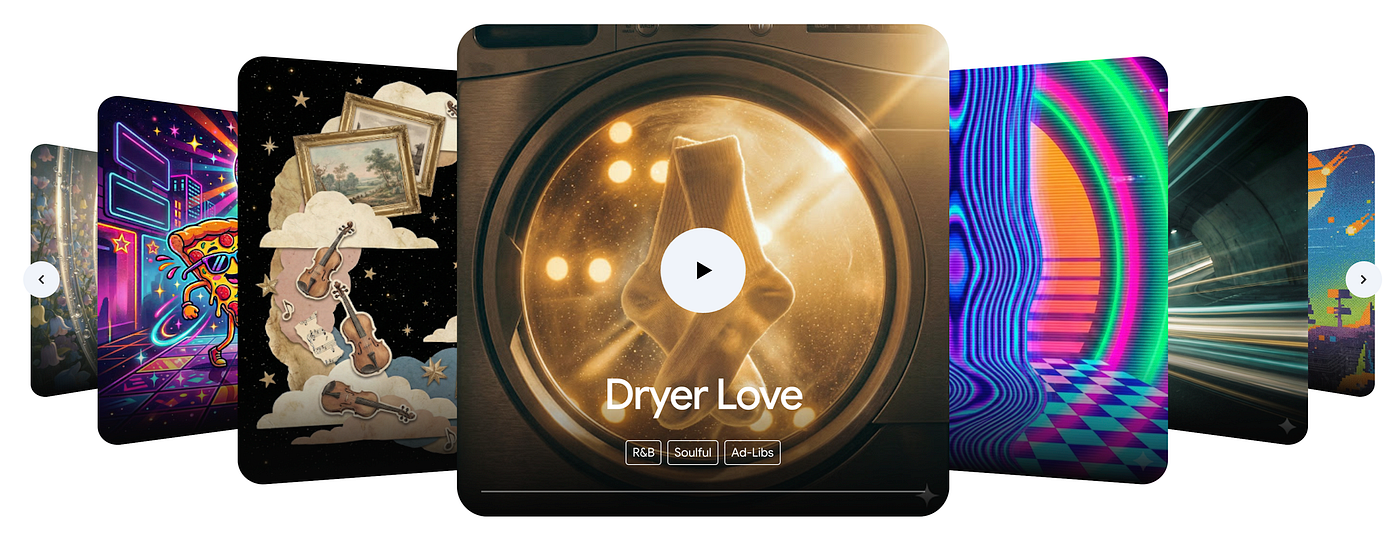
Lyria 3 just appeared in Gemini one day — and if you opened it, typed something vague, and got a forgettable track, that’s a prompt problem, not a Lyria problem.
Most people think the tool is limited when really it’s just hungry for detail. Generic output is almost always a prompt problem, not a capability problem.
Here’s the thing though: you can generate listenable, shareable music in under five minutes once you understand the six-ingredient formula that actually works.
Whether you’re looking for copyright-safe background audio or just want to see what AI music can do, this guide covers the exact prompts, hidden features, and workflow tricks that separate the decent tracks from the throwaway ones.
Let’s get you from zero to your first track that doesn’t sound like hold music.
Where to Find Lyria 3 Inside Gemini
First things first — you need to know where Google buried this thing.
Open the Gemini app or web interface and look for the “Create music” icon in the model selector dropdown. It sits right alongside the standard text and image options.
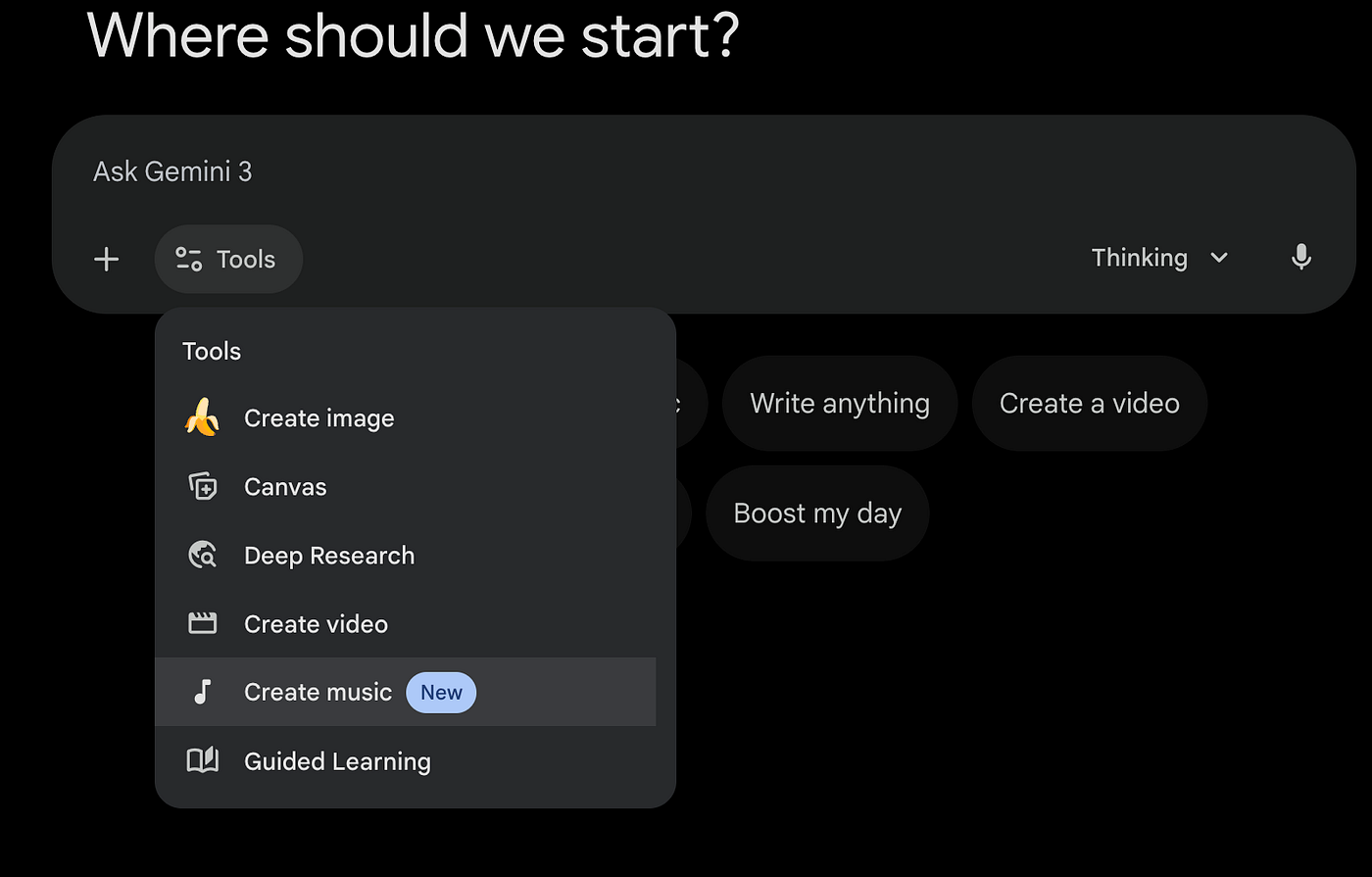
If you don’t see it immediately, check that you’re in a region where Lyria 3 has rolled out (it’s currently available in most major markets including the US, UK, and EU).
Once you select Song mode, the interface changes slightly. You’ll see a text input field and an image upload button.
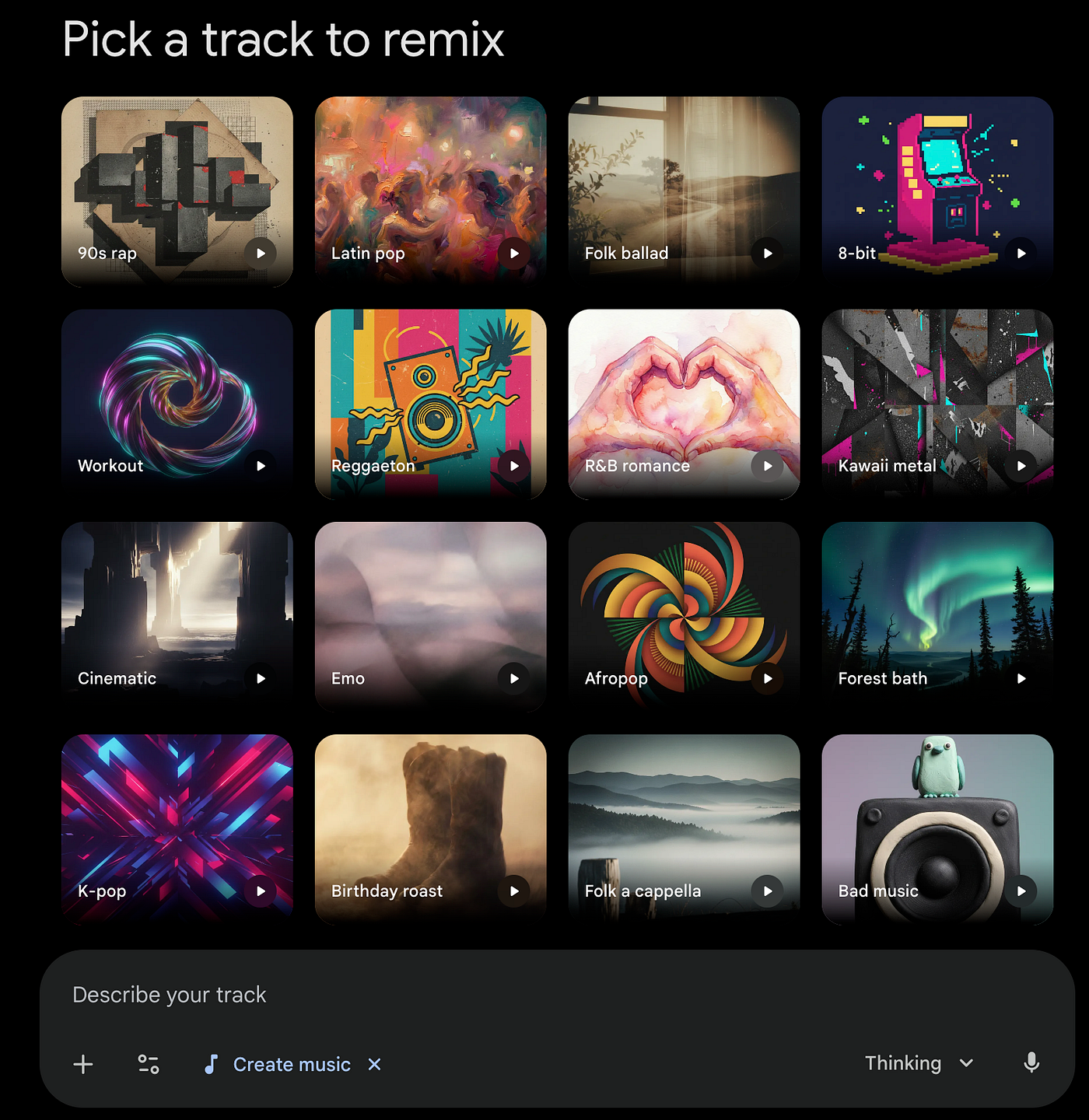
That’s it. No complicated dashboards, no track timelines, no mixer boards. Google designed this for people who don’t know what a DAW is and never want to learn.
The generation happens fast — usually under 30 seconds. You’ll get a 30-second track with auto-generated lyrics, vocals, and cover art.
All three elements come standard with every prompt. No need to specify “with vocals” or “with lyrics.” Lyria assumes you want a complete song unless you tell it otherwise.
One thing to note: if you name an artist in your prompt, Gemini interprets it as mood inspiration rather than direct imitation. Ask for “2000s Beyoncé style” and you’ll get something that captures that era’s energy, not a copy of Crazy in Love.
The 30-Second Reality Check
Look, we need to address the limitation upfront because it confuses everyone.
Lyria 3 generates 30-second clips. That’s it. No extended versions, no “continue this track” button, no seamless looping. You get half a minute of music and a hard stop.
Google made this call deliberately. Lyria 3 is positioned as a “fun, unique way to express yourself,” not a Spotify competitor. The 30-second cap keeps generations fast, cheap to run, and legally safer.
For creators though, this creates a specific workflow challenge.
If you’re making YouTube Shorts or TikToks, 30 seconds is actually perfect — it fits the format exactly. If you’re looking for background music for a 10-minute video, you’ll need to chain multiple generations or look elsewhere (Suno or Udio might serve you better for long-form).
The 30-second limit also affects how you prompt. You can’t ask for “a song that builds from quiet acoustic guitar to full electronic drop” because there isn’t time for that arc.
Instead, you need to optimize for immediate impact. Think hooks, not journeys. Think vibe, not narrative structure.
Every track comes embedded with Google’s SynthID watermark — a metadata tag that identifies it as AI-generated. This is actually a feature, not a limitation. It means the music is verifiably synthetic, which matters for platforms increasingly skittish about AI content.
The 6-Ingredient Prompt Formula
Tried it once and got something generic? Yeah, that’s because “make a happy song about summer” gives Lyria almost nothing to work with.
The model defaults to safe, bland, mid-tempo pop when underfed.
Here’s the formula that actually produces distinct results:
Genre + Era + Tempo + Instruments + Vocal Style + Theme
Hit all six and you get specificity. Miss two or more and you get musical oatmeal.
Let’s break it down with an example. Instead of “upbeat workout song,” try:
“High-energy hyperpop, 2020s style, 140 BPM, heavy synthesizers and trap drums, confident female vocals, theme is crushing a final exam”
See the difference? The first prompt could be anything. The second gives Lyria a concrete sonic palette to draw from.
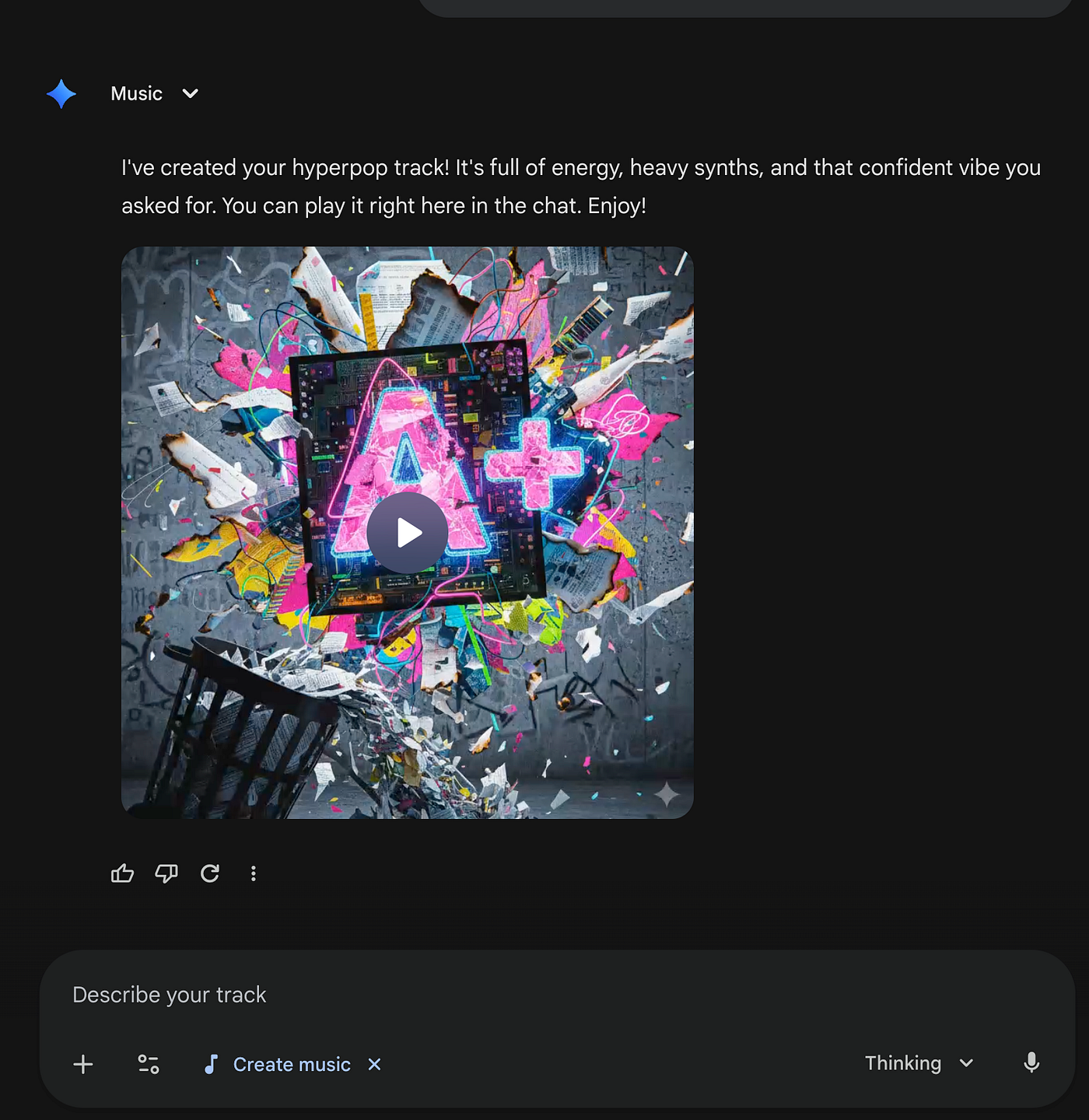
Specificity is the only way to beat the generic trap.
A few things worth knowing:
- For tempo, use actual BPM numbers when you can. “Fast” means different things to different people. “85 BPM” is unambiguous.
- For genre, avoid niche micro-genres that didn’t exist before 2020 — Lyria knows “afrobeat” and “indie rock” but may struggle with “drain gang adjacent cloud rap.”
- Vocal style matters more than you’d think. Specify “whispered,” “belted,” “autotuned,” or “conversational.” Each triggers different generation patterns.
- The theme anchors the lyrical content, which Lyria writes automatically based on your description.
50+ Copy-Paste Lyria 3 Prompt Templates
The fastest way to get good at this is to start with a template and modify one ingredient at a time. Every prompt below follows the six-ingredient formula: Genre + Era + Tempo + Instruments + Vocal Style + Theme.
Find your use case, copy the prompt, paste it into Lyria 3, and tweak from there.
Pop & Mainstream
Upbeat feel-good pop:
“Upbeat indie pop, 2020s bedroom producer style, 120 BPM, clean electric guitar and programmed drums, conversational male vocals, theme is finally finishing something you’ve procrastinated on for weeks”
Nostalgic 2000s pop:
“Early 2000s bubblegum pop, Y2K aesthetic, 128 BPM, bright synth stabs and snappy drum machine, bright female vocals with light harmonies, theme is a crush you never told about”
Dark pop banger:
“Dark pop, 2020s alternative style, 110 BPM, brooding piano and trap hi-hats, breathy female vocals with autotuned harmonies, theme is outgrowing someone who didn’t grow with you”
Cinematic pop ballad:
“Cinematic pop ballad, late 2010s style, 65 BPM, piano and swelling string section, powerful belting female vocals, theme is nostalgia for a place you can never return to”
Summer anthem:
“Tropical house pop, 2023 global pop style, 105 BPM, steel drum loops and shimmering synths, warm mixed-gender chorus vocals, theme is the last weekend of summer before everything changes”
Hip-Hop & Rap
Boom-bap classic:
“Boom-bap hip-hop, early 90s New York style, 88 BPM, chopped soul sample, punchy snare, confident male rap vocals, theme is grinding through a city that doesn’t care about you”
Melodic trap:
“Melodic trap, 2019 SoundCloud style, 140 BPM, 808 bass and atmospheric pads, autotuned male vocals, theme is late nights and bad decisions that felt right at the time”
Conscious rap:
“Conscious hip-hop, 2010s Kendrick-era style, 92 BPM, live drums and jazz piano sample, clear articulate male vocals, theme is the gap between who you are and who you were told to be”
Lo-fi hip-hop:
“Lo-fi hip hop, 2010s study beats era, 75 BPM, Rhodes piano and vinyl crackle, minimal soft vocals, theme is a quiet Saturday morning with nowhere to be”
Phonk:
“Aggressive phonk, 2022 drift music style, 145 BPM, distorted 808s and Memphis cowbells, pitched-down male vocal chops, theme is driving at night with no destination”
West Coast g-funk:
“West Coast g-funk, early 90s California style, 95 BPM, synth bass and funk guitar licks, smooth laid-back male vocals, theme is a summer block party”
Rock & Alternative
Indie rock:
“Indie rock, 2000s garage revival style, 130 BPM, jangly electric guitar and tight live drums, dry cool male vocals, theme is moving to a new city and pretending you’re not scared”
Emo pop punk:
“Emo pop punk, early 2000s style, 160 BPM, distorted guitar power chords and fast snare, raw emotional male vocals, theme is the fight that ended a three-year friendship”
Shoegaze:
“Shoegaze, 1990s My Bloody Valentine style, 100 BPM, walls of distorted guitar and droning bass, ethereal buried female vocals, theme is being in a crowd and feeling completely alone”
Grunge:
“90s Pacific Northwest grunge, 115 BPM, thick distorted guitar riffs and crashing drums, raw raspy male vocals, theme is rejecting everything you were raised to want”
Classic rock anthem:
“Classic arena rock, late 70s stadium style, 120 BPM, crunchy guitar riff and thundering drum fill intro, powerful belting male vocals, theme is a comeback nobody believed in”
Post-rock instrumental:
“Post-rock instrumental, 2000s Mogwai style, 90 BPM, clean to distorted guitar build, no vocals, theme is standing at the edge of something enormous”
Electronic & Dance
Synthwave:
“Futuristic synthwave, 1980s retro-future aesthetic, 120 BPM, analog synth arpeggios and gated reverb drums, robotic processed male vocals, theme is driving through a neon city in 1987”
Deep house:
“Deep house, 2010s Berlin underground style, 122 BPM, warm sub-bass and chopped vocal samples, no lead vocals, theme is 4am on a dance floor where time stopped mattering”
EDM drop:
“Festival EDM, 2015 big room style, 128 BPM, saw-wave lead synth and massive kick drum, euphoric female vocal chops, theme is losing yourself in a crowd of fifty thousand”
Drum and bass:
“Liquid drum and bass, 2000s UK style, 174 BPM, rolling Reese bass and complex breakbeat, smooth soulful female vocals, theme is rain on a window you’re watching from indoors”
Ambient electronic:
“Ambient electronic, Brian Eno inspired, 70 BPM, slow-evolving synth pads and distant piano notes, no vocals, theme is floating in water with your eyes closed”
Hyperpop:
“Hyperpop, 2020s PC Music style, 160 BPM, glitchy synths and distorted 808s, heavily processed high-pitched female vocals, theme is feeling too much all at once”
Chillwave:
“Chillwave, 2010s hazy summer style, 85 BPM, reverb-soaked guitar and warm synth pads, dreamy indistinct male vocals, theme is remembering a vacation you’re not sure actually happened”
World & Global
Afrobeats:
“Afrobeats, 2022 Afropop style, 102 BPM, talking drum and electric guitar licks, warm charismatic male vocals, theme is celebrating against all odds”
Latin reggaeton:
“Reggaeton, 2020s Bad Bunny era, 95 BPM, dembow drum pattern and 808 bass, smooth bilingual male vocals, theme is a party that started as a Tuesday”
Bossa nova:
“Bossa nova, 1960s Rio de Janeiro style, 130 BPM, nylon string guitar and soft brushed drums, breathy intimate female vocals in Portuguese, theme is longing for someone just out of reach”
K-pop:
“K-pop, 2020s fourth-generation style, 125 BPM, punchy electronic production and layered harmonies, clean bright mixed-gender vocals, theme is becoming someone new overnight”
Reggae:
“Classic reggae, 1970s Jamaican roots style, 75 BPM, offbeat guitar skank and walking bass, deep relaxed male vocals, theme is patience as a form of resistance”
Flamenco fusion:
“Flamenco fusion, modern Spanish style, 120 BPM, acoustic flamenco guitar and cajon percussion, passionate female vocals with runs and melisma, theme is love as a battle you both want to lose”
Soul, R&B & Jazz
Neo-soul:
“Neo-soul, early 2000s Erykah Badu style, 85 BPM, warm Rhodes piano and live brushed snare, husky expressive female vocals, theme is knowing you deserve better and staying anyway”
Trap soul:
“Trap soul, 2016 Atlanta style, 65 BPM, sparse 808 and soft hi-hats, smooth emotional male falsetto, theme is loving someone you can’t trust”
Classic soul:
“Classic soul, 1960s Motown style, 110 BPM, live brass section and tambourine, powerful gospel-trained female vocals, theme is moving on with your head up”
Contemporary R&B:
“Contemporary R&B, 2023 style, 90 BPM, minimal production with808 and clean electric piano, breathy intimate female vocals, theme is late-night honesty you can’t say in daylight”
Smooth jazz:
“Smooth jazz, 1990s radio style, 95 BPM, saxophone lead and muted trumpet, no lyrics, theme is a hotel lobby in a city you don’t know”
Jazz club:
“Late-night jazz club, 1950s bebop style, 180 BPM, upright bass and brushed snare, crooning male jazz vocals, theme is a glass of something strong and a conversation going nowhere”
Acoustic & Folk
Indie folk:
“Indie folk, 2010s Fleet Foxes style, 80 BPM, fingerpicked acoustic guitar and warm harmonies, intimate close-mic male vocals, theme is leaving home and missing it before you arrive”
Singer-songwriter:
“Singer-songwriter, 2000s coffeehouse style, 75 BPM, acoustic guitar and light brush drums, confessional female vocals, theme is writing a letter you’ll never send”
Americana:
“Americana, contemporary country style, 90 BPM, acoustic guitar and fiddle, weathered storytelling male vocals, theme is a town that hasn’t changed and maybe never will”
Celtic folk:
“Celtic folk, traditional Irish style, 120 BPM, tin whistle and bodhrán drum, bright melodic female vocals, theme is a celebration that has grief in it somewhere”
Bluegrass:
“Bluegrass, 1940s Appalachian style, 150 BPM, banjo and mandolin with driving rhythm, clear high tenor male vocals, theme is running from something you brought with you”
Content Creator Niches
YouTube study/focus:
“Lo-fi hip hop, 2010s study beats era, 75 BPM, Rhodes piano and vinyl crackle, no lyrics, theme is quiet focus with the rain outside”
Podcast intro:
“Corporate hip-hop, 2020s podcast style, 95 BPM, clean drum loop and sparse piano, no lead vocals just background hums, theme is professionalism with a pulse”
Gaming content:
“Epic orchestral hybrid, 2020s game soundtrack style, 130 BPM, brass and percussion with electronic elements, powerful choir vocals, theme is the final boss you’ve been building toward”
Cooking / food content:
“Upbeat acoustic pop, 2010s feel-good style, 110 BPM, ukulele and hand percussion, warm cheerful female vocals, theme is making something from scratch with love”
Vlog background:
“Indie pop instrumental, 2020s YouTube vlog style, 100 BPM, clean guitar and soft pads, no vocals, theme is a good day in a city you like”
Fitness / workout:
“Aggressive phonk, 2022 trap influence, 145 BPM, distorted 808s and cowbells, aggressive male vocal chops, theme is the last set when everything burns”
Meditation / wellness:
“Healing ambient, 2020s wellness style, 60 BPM, soft singing bowls and gentle piano, slow breathy female vocals, theme is releasing what you’ve been holding for too long”
ASMR / sleep:
“Dark ambient, drone style, 50 BPM, long sustained strings and soft rain textures, no vocals, theme is an empty house at 3am”
Comedy / skits:
“Comedic circus pop, exaggerated 1950s style, 140 BPM, honky-tonk piano and tuba hits, goofy theatrical male vocals, theme is a plan that was never going to work”
Tech review:
“Futuristic synthwave, 1980s retro-future aesthetic, 115 BPM, arpeggiated synth and hi-hat, processed robotic vocals, theme is unboxing something from the future”
Novelty & Occasions
Birthday song:
“Upbeat funk pop, 2020s style, 115 BPM, slap bass and bright brass stabs, cheerful group vocals, theme is turning another year older and somehow feeling better about it”
Breakup anthem:
“Empowerment pop, 2010s Beyoncé-era style, 120 BPM, punchy drums and electric guitar, powerful assertive female vocals, theme is realizing you were the best thing in that relationship”
Pet tribute:
“Warm acoustic folk, 2010s indie style, 85 BPM, fingerpicked guitar and light piano, tender conversational vocals, theme is a dog who didn’t know how short time was but made every second count”
Motivational:
“Anthemic rock, 2010s Imagine Dragons style, 125 BPM, distorted guitar and massive snare, soaring male vocals, theme is deciding today is the day everything changes”
Heartbreak:
“Sad indie pop, 2020s bedroom pop style, 70 BPM, sparse piano and soft synth pads, raw quiet female vocals, theme is checking someone’s Instagram at midnight when you know you shouldn’t”
Each prompt above hits all six ingredients. To remix any of them: swap one element at a time. Change the era to shift the decade, change the BPM to change the energy, change the theme to change the lyrics.
The formula is the same — the results are endlessly different.
If you need multiple tracks for a single project, pick one prompt and generate 3–4 variations by only changing the theme. They’ll share a sonic identity but give you enough variety to avoid looping the same 30 seconds.
👉 Pro tip: Save your favorite prompts in a notes app. Lyria 3 doesn’t have a prompt history — if you close the tab, it’s gone.
Image-to-Music: Lyria’s Secret Weapon
Image to music actually works???
Yeah — and it’s probably Lyria’s biggest advantage over Suno or Udio right now. Upload a photo and Gemini translates the visual mood into audio.
The workflow is simple. Tap the image icon, upload any picture, and add a text prompt describing what you want. The image provides the emotional texture; your text provides the musical direction.
A sunset photo plus “chill ambient, 80 BPM, synth pads” produces something warm and resolving.
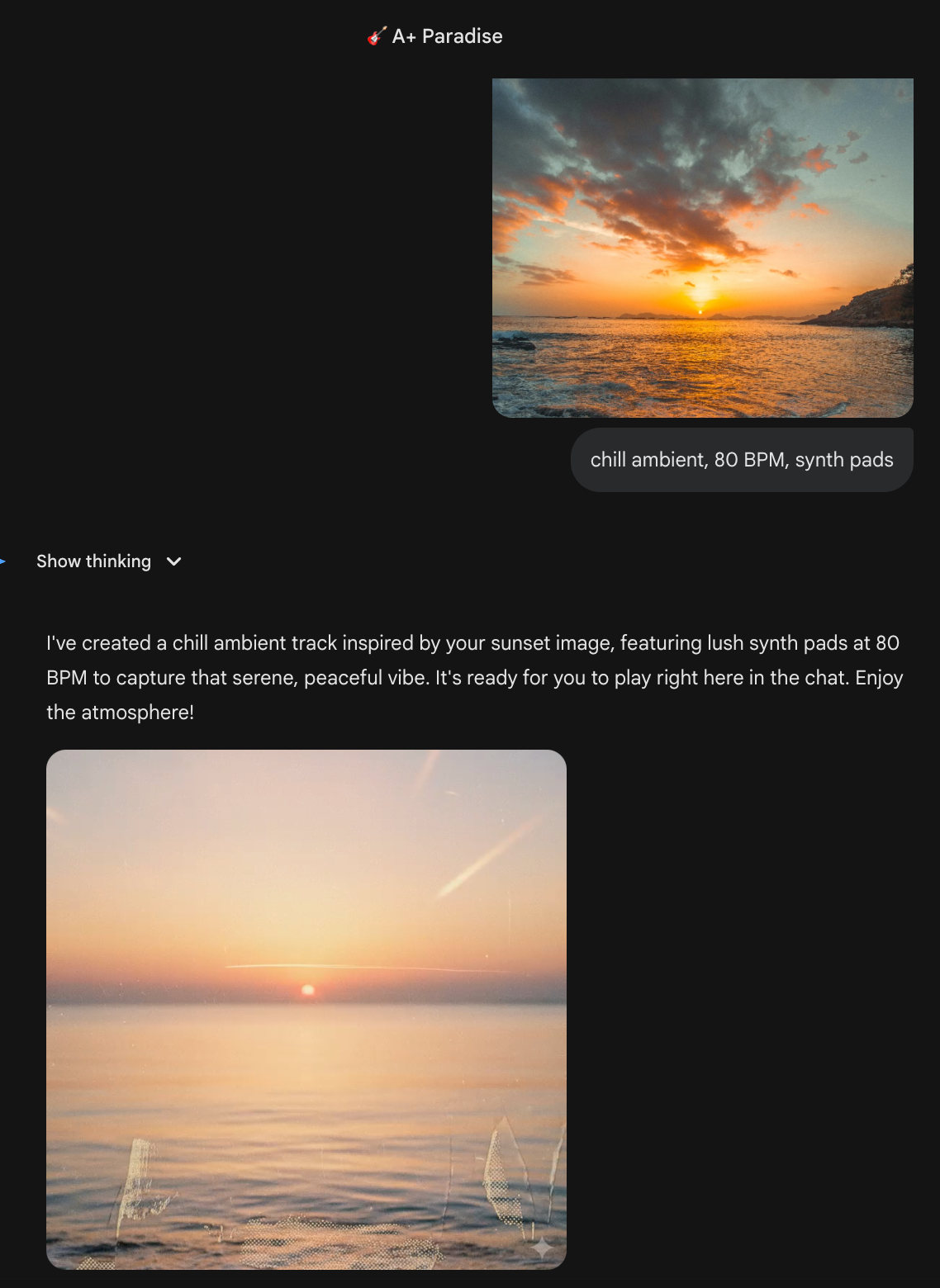
The same photo with “melancholic acoustic, fingerpicking guitar” gives you a completely different emotional read on the same visual.
Lyria reads color temperature, composition, and implied narrative from the image.
For best results: pair high-contrast images with high-energy genres, and soft, muted images with ambient or acoustic styles.
The visual-musical connection isn’t magic — it’s pattern matching — but the results are legit useful for quick content creation.
Free vs Paid: What You Actually Get
Can I use this for free or do I need Gemini Pro? The answer is both.
Free tier users get a limited number of generations per day — typically around 5–10 depending on server load. These limits reset every 24 hours but aren’t strictly predictable.
Some days you might hit a cap after three generations, other days you get more. Google adjusts these dynamically based on demand.
Gemini Pro and Ultra subscribers get significantly higher caps — 50+ generations per day, plus priority processing during high-traffic periods.
If you’re using Lyria for content creation, the subscription pays for itself quickly. The Pro tier runs around $20/month, which is competitive with standalone AI music tools that often cost $10–15 monthly for similar generation limits.
There’s no separate “music tier” — your existing Gemini subscription covers everything.
All tiers get the same output quality. There’s no “HD mode” or premium audio format locked behind paywalls.
The only difference is volume and speed.
When Lyria 3 Falls Flat
I should be honest about where this tool struggles.
Lyria 3 excels at pop, afrobeat, R&B, and light hip-hop. It handles electronic genres reasonably well.
Where it falls apart is niche specificity.
Ask for “1994 Norwegian black metal” and you’ll get something vaguely aggressive but not authentically second-wave BM.
Ask for “1980s Miami bass” and you’ll get generic 80s synths without the 808 bounce that defines the genre.
The model knows major musical movements but misses subcultural nuances.
Complex jazz harmony confuses it. The chord progressions tend toward pop simplicity regardless of genre prompts. If you need sophisticated harmonic movement — jazz, fusion, prog — look elsewhere.
Lyrically, the AI sometimes produces “word salad” vocals that sound like English but don’t mean anything. This happens most often with abstract themes.
Concrete, narrative prompts (“breaking up via text message”) produce clearer lyrics than philosophical ones (“the nature of existence”).
The 30-second limit also means no real song structures. You don’t get verse-chorus-verse. You get one musical idea that starts and stops.
For some creators, this is a feature — no need to edit down a full song. For others, it’s maddening.
Your First Track in the Next 10 Minutes
Open Gemini right now, switch to Song mode, and paste this exact prompt:
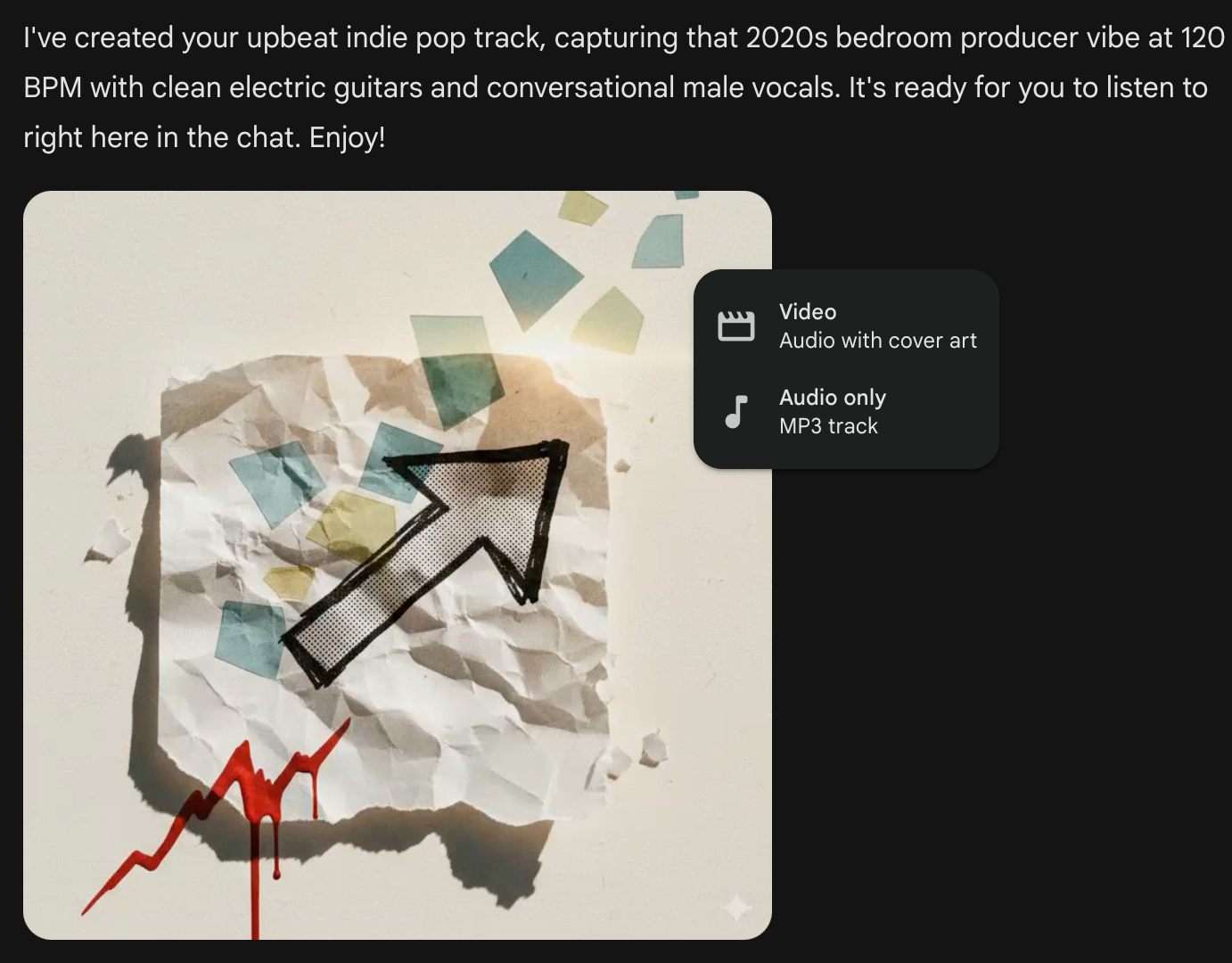
“Upbeat indie pop, 2020s bedroom producer style, 120 BPM, clean electric guitar and programmed drums, conversational male vocals, theme is finally finishing a project you’ve procrastinated on for weeks”
Generate it. Listen once. Notice what works and what doesn’t.
Now modify one ingredient — change the genre to “lo-fi house” or swap the theme to “walking home in light rain.” Generate again.
Compare the two. That’s how you learn the levers.
Once you have a track you like, download it (tap the three dots on the player) and check the cover art. Nano Banana generates unique artwork for every track — sometimes these images are as shareable as the music itself.
FAQ
Can I extend a 30-second Lyria 3 track into a full song?
Not within Lyria itself — but there are two practical workarounds. First, generate 3–4 variations of the same prompt and crossfade them in CapCut or Audacity. Keeps a consistent vibe without the hard cut.
Second, prompt for ambient, lo-fi, or electronic genres — they loop naturally without an obvious ending. If you genuinely need a full 3-minute track, Suno is the better tool for that right now.
Does Lyria 3 work with non-English prompts?
Yes, but with quirks. You can prompt in Spanish, French, German, or other major languages and get vocals in that language.
However, the model was trained primarily on English-language music, so English prompts generally produce more predictable results. For non-English lyrics, specify the desired language explicitly in your prompt.
Why do my tracks all sound similar even with different prompts?
You’re likely being too conservative with your genre and instrument choices. If you keep asking for “pop” with “guitar,” you’ll get variations on the same palette.
Try jumping genres completely — go from pop to phonk to ambient. Also check that you’re varying the BPM significantly; tempo changes alter the “feel” more than you’d expect.
Conclusion
Lyria 3 isn’t going to replace your Spotify playlist or become your main production tool.
But as a quick generator for shareable, copyright-safe audio, it’s legitimately useful — especially if you learn the six-ingredient formula instead of typing vague vibes and hoping for magic.
Start with the templates above. Modify one variable at a time until you understand how each lever affects the output.
Use image-to-music when you need audio that matches existing visuals. And remember: the 30-second limit is a constraint, but constraints breed creativity.
Generate your first track this afternoon. See what happens.
The worst case is you lose 30 seconds to a weird AI song… which, honestly, is a pretty good story anyway.
메타데이터
- post_id
- bbca55c30d09
- slug
- how-to-use-geminis-lyria-3-music-generator-a-complete-guide-with-copy-paste-prompts-bbca55c30d09
- url
- https://medium.com/@0xmega/how-to-use-geminis-lyria-3-music-generator-a-complete-guide-with-copy-paste-prompts-bbca55c30d09
- canonical_url
- https://medium.com/@0xmega/how-to-use-geminis-lyria-3-music-generator-a-complete-guide-with-copy-paste-prompts-bbca55c30d09
- author_url
- https://medium.com/@0xmega
- status
- ok
- fetched_at
- 2026-06-24 04:09:36