The Revolution that Turned PR Experts into Publishers, Editors, and Reporters
By Maxim Behar
The Revolution that Turned PR Experts into Publishers, Editors, and Reporters
By Maxim Behar
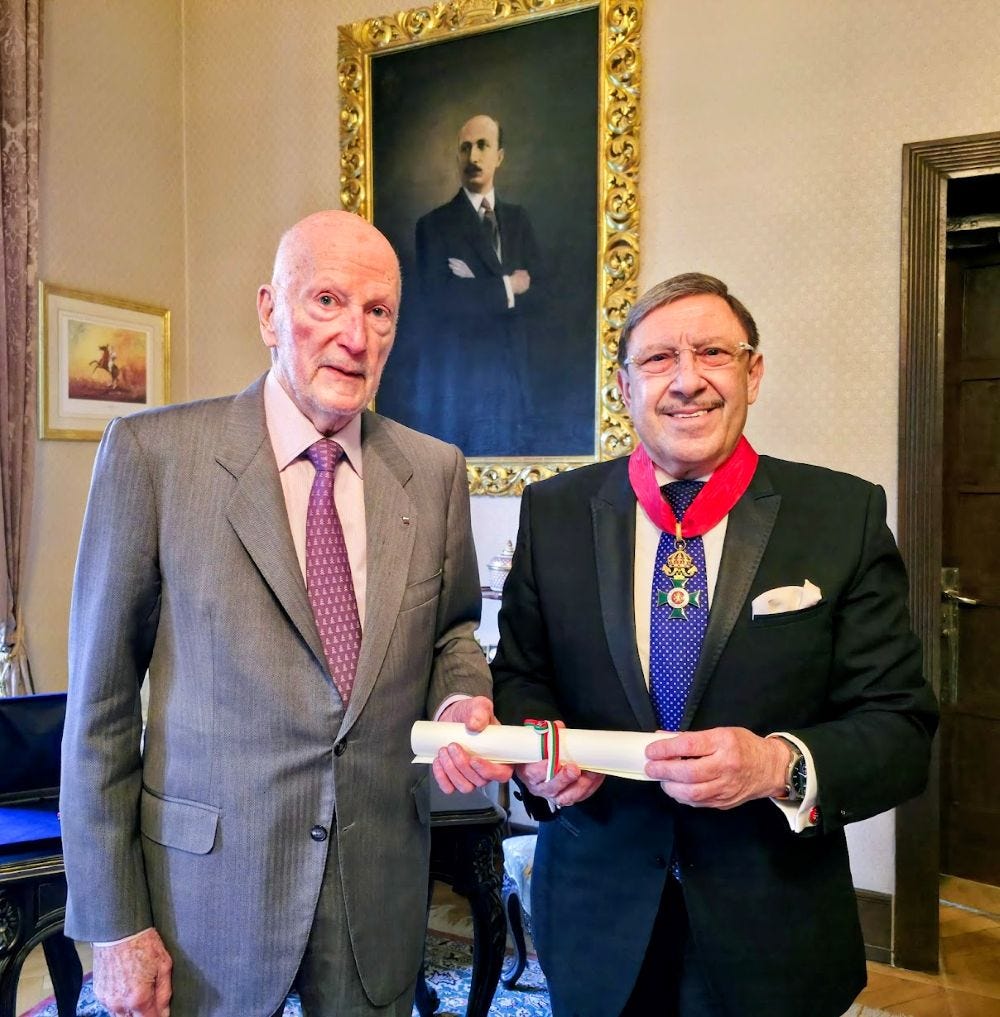
![Maxim Behar. Photo courtesy of Maxim Behar [Source: Maxim Behar, Private Archive]](https://miro.medium.com/v2/resize:fit:517/0*v_jKmBvzFN81lgNW.jpg)
Maxim Behar. Photo courtesy of Maxim Behar [Source: Maxim Behar, Private Archive]
Throughout all those years that I’ve spent in the PR business, I’ve been repeating almost every day that the players in this game should be honest, reputable, and creative. That was our business’s peremptory mantra — do your job professionally, come up with ideas (whenever you can), be honorable (if you can), and say the truth (any way you can). And everything in this business was in its place.
The client, figuratively and loosely described, knocked on our office door, timidly stepping forward and perplexedly saying:
“I… I discovered that… you are making PR here… can you help me increase my sales… and, if possible, arrange one or two interviews with me somewhere.”
Well, when this used to happen, all of us in the office exhilaratingly started working as we have for years.
And then — a press conference, product presentation, media breakfast, a visit to the factory or the office, two press releases a month…
The same tools are used for so many different clients. Sometimes, it all seemed like an assembly line business in a factory. And it was the same for all of us.
Naturally, big international companies knew exactly what they wanted from a PR company, understood very clearly how their project should be done, and, of course, had the same standards for Bulgaria as any other country.
Then… the business was becoming a little more interesting;
the swing, the budgets, and the projects were slightly different, not to say large-scale, but the tools and the approach were the same: classic media, classic PR, and classic messages.
Until the Day X came — February 4, 2004,
the sacred date that changed the world. For one pretty simple reason — it unified all popular communication services known by then: messages, chats, videos, and photos, in just one platform, in one place. Practically, one media called Facebook.
I don’t dramatize this date or this media as much, but it was the key to change in our business that, in my new book, I call a “revolution,” and I believe it truly is.
There are several important reasons for this.
In the first place — the ownership over the media changed drastically.
Fifteen years ago, media was divided into state and private media worldwide.
Facebook, and later on the other social media — Twitter, LinkedIn, Instagram, and many others, allowed their billions of users to write, share, like, or hate. They gave them something that no one until that moment had complete and uncontrolled access to — the right to own a media. And while for the people from downtown Sofia or the suburbs, from Japan or Australia, from large India to the tiny Vatican, this was a chance to share, write, or meet as much as they want, it was a completely different picture for our business.
Here comes the second important reason for the revolutionary change in our profession. From typical consultants and organizers of press conferences, for a few days, the PR experts turned into a strange amalgam of publishers, editors, and reporters.
Publishers — because this is the main characteristic of someone who owns a media.
Editors — because we could hardly imagine a modern PR expert who does not pay attention to every comma in the text they write or — naturally — publish on behalf of their clients or even under their name.
And finally, reporters because the essence of modern PR communication is telling stories, not stories, but ones containing news and unknown facts and events.
I remember well how, at the end of the 20th century, I was giving interviews all over, saying how newspapers were dying and would be replaced by online media that would occupy their territory so that everybody would believe them. Even the word social was missing in the dictionary of the familiar strategist trying to evaluate what would happen in the new media era. It was not so hard to predict because of several clear reasons, even then, 20 years ago.
Online media was lightning fast; even then, it was interactive, meaning everyone had the chance to express their opinion under every post, and it was easy to measure the effect of each advertisement and each text.
So then, my phones wouldn’t stop ringing, and my ex-colleagues (I spent 15 great years in journalism) would not be so friendly, coming at me with objurgations that I would almost predict the end of their profession. At this time, I did not even think of that; I only thought of newspaper paper and distribution, but now it has happened
— the end of journalism as we know it,
and hundreds of millions of people, if not billions, would still want it to be. There is no risk of offending the editors of this beautiful magazine — they have long ago embraced online and social media and are an example of a combination of the two kinds of journalism — passive and interactive.
Of course, one of the most critical changes, maybe the most important one, in our business is the fact that PR experts from traditional consultants, waiting for the final decision of their client for publishing this or that text, more and more dramatically are becoming people, who should make final decisions fast.
In the newspaper era, the time was as stretchy as Turkish delight. In those very careless times, from my perspective, we had from 8 to 10 hours to decide to react to a harmful publication or any mention of our client’s name. Now, we don’t even have 10 minutes; if it does not meet a fast and professional response, every word on social media can cause an avalanche of opinions that can ruin the reputation of a client, a product, a brand, or a service.
These days, this reaction is placed in the hands of PR experts, which means a much bigger responsibility and a significant amount of new knowledge, daily education, extensive general knowledge, and precise professionalism. A fast but unprofessional reaction can often cause more damage than keeping silent and letting things settle.
And finally, one significant historical change in our business. The irrevocable merge of the three elements of the public communication business
— advertising, PR, and digital marketing.
Of course, social media caused this unification because, practically, everyone rushed to prove that they could complete the best project for their client. The reason is that everyone had access to the media and started thinking they were the editor-in-chief. Against the background of the many discussions about what this unified future business will be called and who will have the leading role, this will be a PR business. I have two strong arguments:
the need for crisis management will increase,
and the clients will need management of their brands and texts.
If not PR business, who else is the king of handling crises and managing intelligent, creative, and impactful content…
And at the end — the most significant change.
PR business is forever business for leaders only. I do not mean the higher management, the CEOs, or any other “boss,” of course; I mean every PR expert who is already a leader in their media, projects, ethics, and corporate loyalty. Simply a modern leader.
Originally published at https://www.maximbehar.com.
메타데이터
- post_id
- bbceee6de753
- slug
- the-revolution-that-turned-pr-experts-into-publishers-editors-and-reporters-bbceee6de753
- url
- https://medium.com/illumination/the-revolution-that-turned-pr-experts-into-publishers-editors-and-reporters-bbceee6de753
- canonical_url
- https://medium.com/illumination/the-revolution-that-turned-pr-experts-into-publishers-editors-and-reporters-bbceee6de753
- author_url
- https://medium.com/@maxbehar
- status
- ok
- fetched_at
- 2026-08-04 19:22:56