Hinduism A Clarification
The Lone Path Home
Hinduism A Clarification
The Lone Path Home

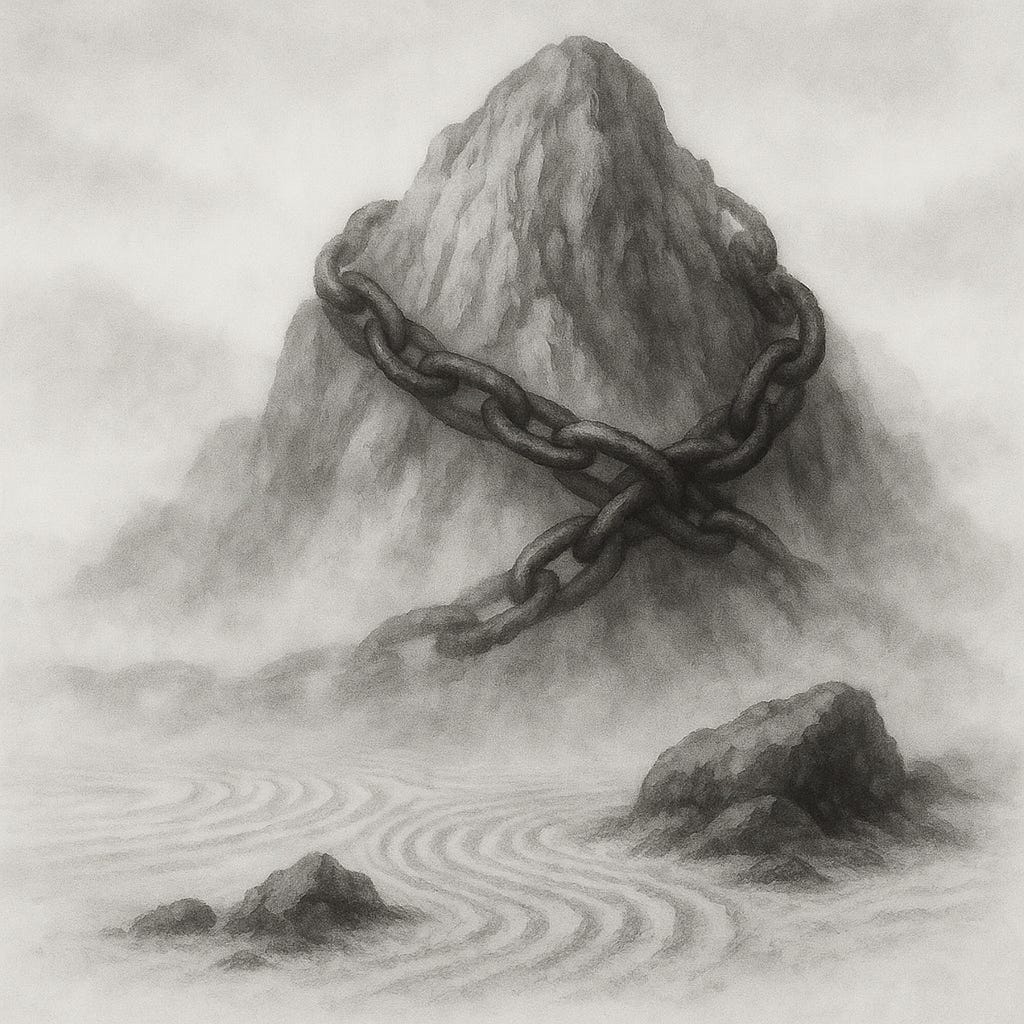
Graphic by the author Mantralayam Srinath
Introduction
This article will be kept as short as possible.
Please note that I do not mean to sound arrogant. It is just that there is a lot of unfortunately ridiculous explanations and representations on Internet.
Hence, this article aims to set a counter argument against some misconceptions.
The reading will be difficult. Reader discretion is advised.
I shall not enter into any debate. The readers are requested to seek the knowledge by themselves.
Caution
Please note that I am a practising sanātani (aka Hindu) and belong to a specific āgamic sampradāya (tradition) and am bound by my oath to secrecy. Hence, I need to honour that.
Here, for the sake of brevity, I shall be referring to sanātana Dharma as Hinduism.
The Limitations of Language
The language of Hinduism is Samskṛtam. In English, you know it as Sanskrit. I shall use the former term for valid reasons.
For most of the terms in Hinduism, there are no translations. Many people refer to the books (even the term /book/ is not right) as scriptures. That is not right. Scriptures have nothing to do with Hinduism. Hence, I am referring to them as Granthās.
Hinduism is not a Religion
In Samskṛtam there is no word for religion. There is only one term and that is मतम् /matam/. The /t/ is not alveolar but dental, a milder of form of /θ/ as in /nothing -> nᴧθiŋ/. The only difference is there is no aspirate (no expulsion of air). Hence soft.
matam means opinion. The other term is /Dharma/. Again, it is a complex word. The path of righteousness is the rough meaning.
Before You Interpret or Opine
The entire superstructure of Hinduism is made up of approximately 16008 texts (Granthās). Hence, before anybody writes anything about Hinduism, he should asks himself, whether he has at least an iota of knowledge of these sixteen thousand and eight texts.
A butcher is not qualified to discuss surgery and a surgeon is not qualified to discuss slaughter.
Monotheism and Polytheism
Hinduism is neither polytheistic nor monotheistic. If you are thinking of 330 million “gods” think again. From where did you get the information
ekam sad vipra bahudha vadanti एकम् सद विप्रा बहुधा वदन्ति| [1]
Roughly translated: (that) one is called as many by the learned. A misinterpretation, here is easy. the word /one/ does not mean there is more than one. We are in the realm of language. Hence, a word has to be used for conveying a connotation.
A word here about the concept of trinity in Hinduism
Please do not interpret in the western way as “god of creation”, “god of sustenance”, and “god of destruction”. creation, sustenance and dissolution (not destruction) are functionalities of the dual world
Caste
One of the hottest topics. People with no knowledge try to interpret and explain. The origin of the word /caste/ is in Portuguese and not in Samskṛtam. I have had innumerable discussions with quite a few persons.
There is only one advice I have for anybody wanting an explanation. Go and read all the books by the qualified monks and the ancient texts.
The only hint I can give the reader is the Hindu texts speak about /varṇa/. There is another word / jāti/.
Those who are curious about the topic are requested to consult the Bhagavadgita Śānkarabhāṣya.[2]
When the teachings are misunderstood, misinterpretations take place.
Here is another example: This is in the language Maṇipravāḻam. A mixture of Malayalam and Samskṛtam. It is taken from the poem Mayūrasandeśam
The poem begins with the term śrīmān. The word is an adjective śrī + mān. The word śrī can be used as an address, just like Mr. śrī also means exalted. Hence it can mean His Highness. Hence śrī + mān means, he who is exalted or he who is graced with wealth (metaphor).
However, śrī has another meaning, too. It means venom. and mān means with. Hence, he who is with venom, meaning the venomous.[3]
Vedas
The Vedas are not books! Vedas are teachings that were transmitted orally and continues to be transmitted orally.
Some of the translations (by western scholars) are worse than jokes. The translators learned the language but not the culture.
Just imagine a person going to London and telling a traditional English lady in London, “You have a lovely fanny pack.” If you do not know what that term in British English means, do look up using your favourite search engine. Save yourself a tight slap across the face.
Śiva and Destruction
Śiva is not the god of destruction, as one sees often on internet and unfortunately even in books. By the way the word /god/ has no equivalent in Samskṛtam. Hinduism does not share the idea of the western terminology.
The function ascribed to Śiva is dissolution and not destruction.
Śaivism
One of the most ancient branches of Hinduism is Śaivism, the branch that follows the philosophy of Śiva.
Aghoris and Nagas
There are too many ridiculous interpretations about these two branches of Hinduism. If you want to write about them, go to them, get accepted (good luck) and live with them for at lease five years! Then write about them.
Tantra and Śāktēyam
Tantra is one of the most terribly interpreted words in the West. Not going into that here. I come from that philosophy and belong to one of the oldest living (if not the oldest) unbroken tradition of this branch of philosophy.
What is practised in the west has nothing to do with our tradition. Absolutely nothing. I consider the interpretations disgusting.
The text Saundaryalahari is a very famous work and is a part of the Śāktēya philosophy. The hymn begins with śivaḥ śaktyā yuktō [4]. The meaning is, when Śiva conjoins with Śakti. However, it does not just mean coitus. It is a symbolism and extremely subtle. The right half of the body is male and the left half is female. The female is referred to as Śakti in Hinduism. Śakti means energy, power etc.
The philosophy of Śāktēyam is the path of worshipping the Goddess. Even the term /worship/ is to be taken with a pinch of salt.
Tāntriks are sworn to secrecy. It is an age old tradition. The branch of knowledge directly deals with the attainment of powers. Nobody wants to hand over the secrets of the atomic bomb to the terrorists. One knows the result, if that is done. Not going to discuss politics here. No interest.
Symbolism in Hinduism
In order to understand the symbolism in Hinduism, you have an extremely long journey. Learn Samskṛtam and as many genuine texts from qualified Hindu monks. Keep away from western interpretations.
Srinath 08.11.2024
References
[1] Ṛk Veda 1.164.46
[2] Bhagavadgita Śānkarabhāṣya, Chapter 4, Verse 13
[3] Mayūrasandeśam: the first word of the opening verse
[4] Saundaryalahari, by Sri Sankaracarya. The opening verse.
메타데이터
- post_id
- bbd0d0522ba4
- slug
- hinduism-a-clarification-bbd0d0522ba4
- url
- https://medium.com/@srinath-mantralayam/hinduism-a-clarification-bbd0d0522ba4
- canonical_url
- https://medium.com/@srinath-mantralayam/hinduism-a-clarification-bbd0d0522ba4
- author_url
- https://medium.com/@srinath-mantralayam
- status
- ok
- fetched_at
- 2026-07-22 06:14:43