The Inventory Count That Nobody Trusts — and the Fix That Actually Works
Every operations team that runs periodic inventory counts has a version of the same experience: the numbers come back, get compared to what…
The Inventory Count That Nobody Trusts — and the Fix That Actually Works
Every operations team that runs periodic inventory counts has a version of the same experience: the numbers come back, get compared to what the system says, and there is a gap. Not always a large one. But a consistent one. And rather than investigating why the gap keeps appearing, most teams adjust the system to match the count and carry on, because that is faster than finding the root cause.

This is not a people problem. It is a method problem. Barcode scanning and manual tracking both require someone to do the right thing at the right time. Scan an item when it moves. Update the record when stock gets pulled. Log the location when something gets placed temporarily somewhere new. Under time pressure, on a busy floor, those steps get skipped. Not from carelessness, but because the process was designed for a slower and more controlled environment than most active warehouses actually are.
Why Inventory Drift Is Structural
The gap between recorded inventory and actual inventory grows predictably in environments where items move frequently. Each unscanned movement adds a small error. Those errors compound. By the time the quarterly audit happens, the system is describing a warehouse that only exists in the database.
The standard response is tighter scanning discipline — more training, spot checks, stricter procedures. These interventions help at the margins but do not address the structural issue, which is that the accuracy of the data depends entirely on consistent human behavior across every shift. That is an unreliable foundation for operational decisions.
The consequences are not abstract. Operations teams make procurement decisions based on inventory records they know are not fully accurate. Production runs get delayed because components appear unavailable when they are in the wrong aisle. Compliance audits get complicated because calibration records for equipment were never updated after the equipment moved to a different room.
What RFID Actually Changes
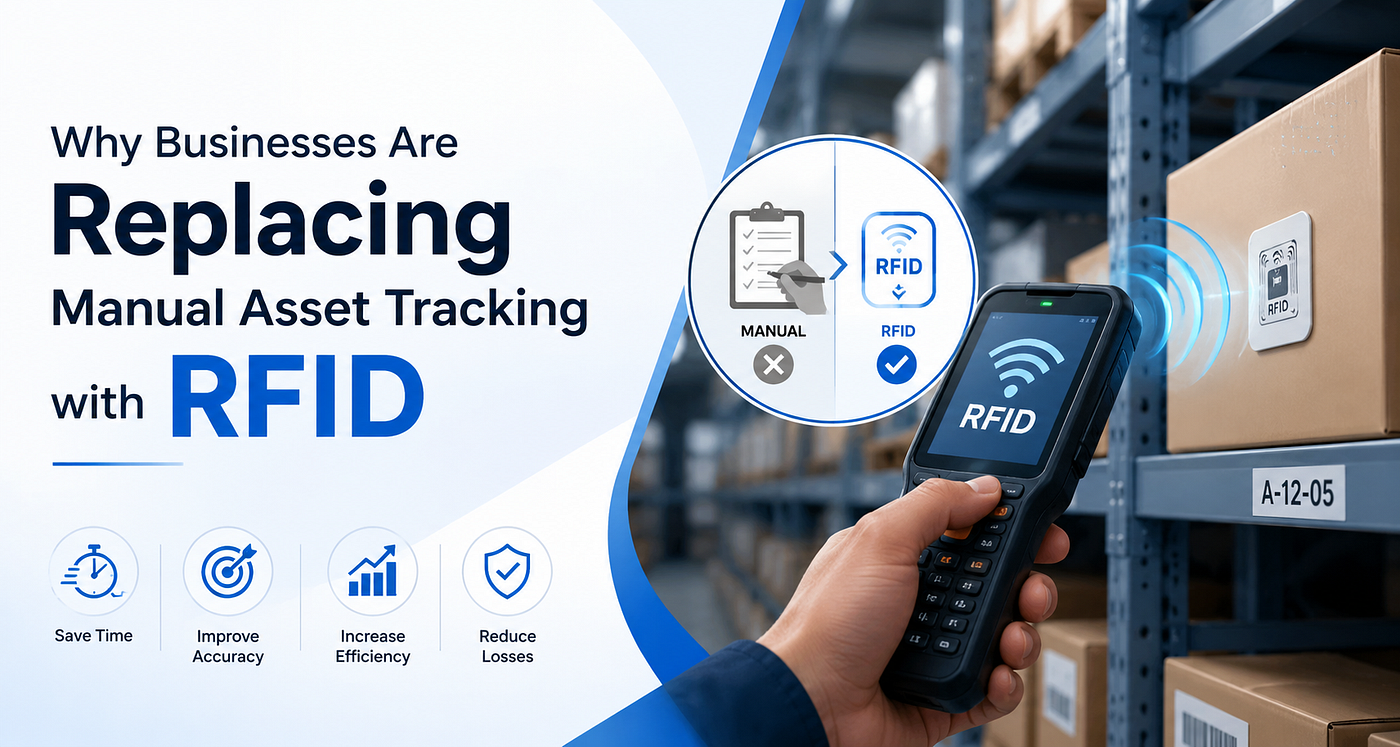
**RFID tags** attached to inventory items, equipment, or pallets broadcast a unique identifier that readers pick up automatically. The tags do not need to be visible. They do not require someone to point a device at them. Fixed readers at doorways and key storage locations update the system as items move through. Handheld readers can audit an entire storage area — picking up every tagged item simultaneously — without touching or repositioning anything on the shelves.
The practical result is that inventory data stays current between counts rather than only at the moment of the count. When something moves, the system records it. When something is in the wrong location, the system can flag it. When a lab manager needs to find equipment that is due for calibration, the system shows where it is without requiring a manual search across multiple rooms.
Companies using RFID across manufacturing, healthcare, logistics, and lab environments report a consistent shift in how the operations team relates to their inventory data. The records become reliable enough to act on directly — which is a meaningfully different operational state from treating every system output as a starting point for physical verification.
The Cost Question Deserves a Straight Answer
RFID infrastructure costs more upfront than barcode labels. Tags are more expensive per unit. Fixed reader installation requires planning, site surveys, and configuration. These are real costs and worth acknowledging directly.
What changes the calculation is what accurate inventory is actually worth in a specific operation. For a warehouse where inventory errors cause wrong shipments, for a manufacturer where missing components stop a production line, for a healthcare facility where equipment availability affects patient outcomes — the value of current, accurate data is substantial. For a small stockroom with predictable, slow-moving inventory, barcodes remain a reasonable tool.
The question is not whether RFID is better in the abstract. It is whether the cost of inaccurate inventory in your specific operation justifies the investment in automated tracking. For most operations managing high-value assets, frequent movement, or compliance requirements, the answer tends to be yes, and the payback tends to arrive sooner than initially expected.
One More Thing Worth Noting
RFID systems are designed to integrate with existing warehouse management and ERP platforms. The data collected feeds into the tools operations teams already use rather than requiring a parallel system. Implementation can be phased — starting with the highest-value asset categories and expanding as confidence builds.
The full breakdown of how RFID inventory tracking works across industries — including manufacturing, healthcare, labs, logistics, and automotive — is here: assetpulse.com/blog/rfid-inventory-tracking-software/
메타데이터
- post_id
- bbd295e84845
- slug
- the-inventory-count-that-nobody-trusts-and-the-fix-that-actually-works-bbd295e84845
- url
- https://medium.com/@aemuthu/the-inventory-count-that-nobody-trusts-and-the-fix-that-actually-works-bbd295e84845
- canonical_url
- https://medium.com/@aemuthu/the-inventory-count-that-nobody-trusts-and-the-fix-that-actually-works-bbd295e84845
- author_url
- https://medium.com/@aemuthu
- status
- ok
- fetched_at
- 2026-06-12 18:14:10