How to Choose the Right 800G Optical Transceiver?
In today’s digital age, the demand for high — speed, reliable data transmission is insatiable. As data centers, cloud computing, and high…
How to Choose the Right 800G Optical Transceiver?
In today’s digital age, the demand for high — speed, reliable data transmission is insatiable. As data centers, cloud computing, and high — performance computing continue to expand, the 800G optical transceiver has emerged as a crucial component for achieving ultra — fast connectivity. But with a plethora of options on the market, how do you choose the right one for your specific needs? This blog post will guide you through the key considerations when selecting an 800G optical transceiver.
- Understand Your Transmission Distance Requirements
The first and foremost factor to consider is the transmission distance. Different 800G optical transceivers are designed for various ranges:
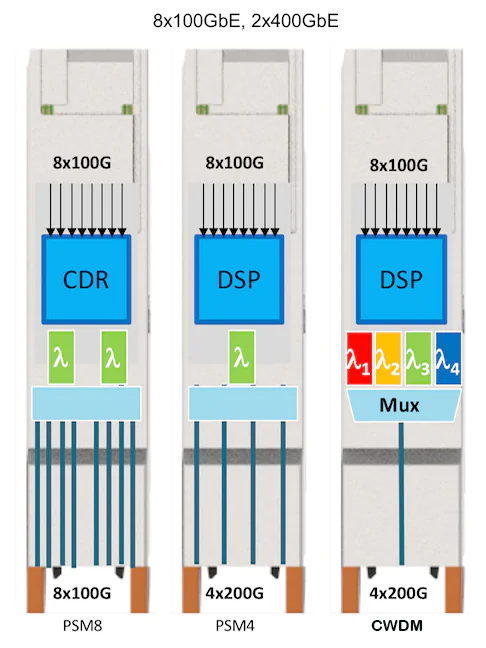
- Short — distance (up to 100m): For applications within a data center, such as connecting servers to top — of — rack switches, the 800G SR8 transceiver is an excellent choice. It uses multi — mode fiber and can transmit data up to 100m, making it ideal for high — density short — distance interconnects. For example, in a large data center where servers are densely packed, the 800G SR8 can efficiently handle the high — volume data transfer between adjacent racks.
- Medium — distance (100m — 500m): When you need to connect different parts of a data center or campus over longer distances, modules like the 800G DR8 come into play. These transceivers use single — mode fiber and can support transmission up to 500m. They are suitable for long — distance connections within data centers, such as connecting core — to — core switches or across different data center pods.
- Long — distance (1km — 10km): For inter — data center connectivity or long — haul network applications, the 800G 2FR4 or 2LR4 transceivers are designed to cover distances up to 2km and 10km respectively. They are essential for scenarios where data needs to be transmitted over significant distances, like connecting data centers in different cities.
- Compatibility with Existing Infrastructure
Ensuring compatibility with your current network infrastructure is vital. Check the following aspects:
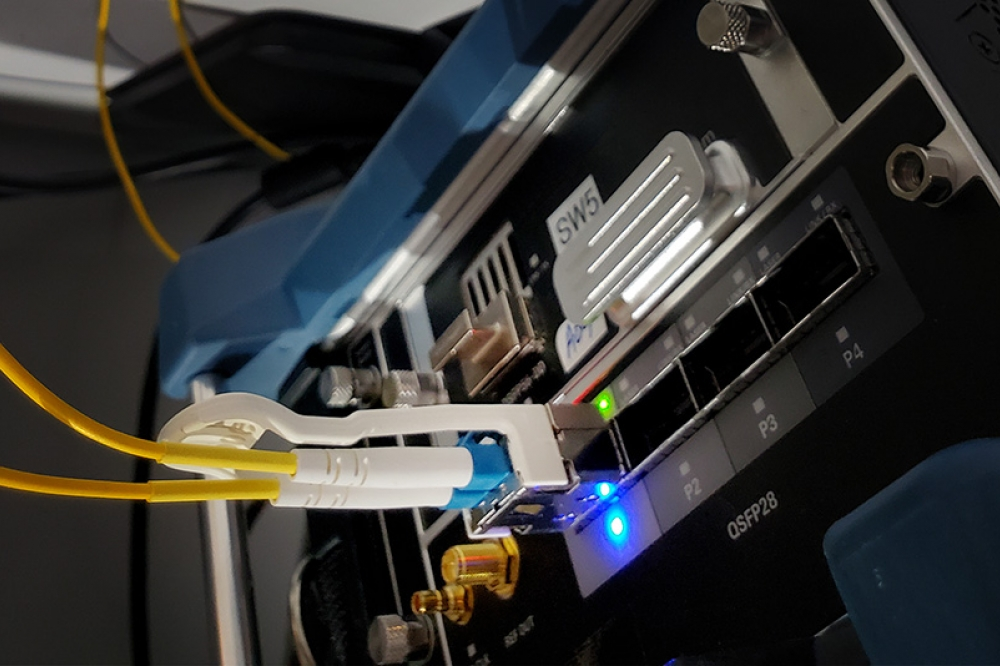
- Connector Types: The **800G optical transceivers** come with different connector types, such as MTP/MPO and LC. Make sure the transceiver you choose has a connector that is compatible with your existing fiber optic cables. For instance, if your data center already has a large number of MTP/MPO — terminated cables, selecting an 800G transceiver with an MTP/MPO connector will ensure seamless integration.
- Network Equipment: Verify that the 800G optical transceiver is compatible with your network switches, routers, and other devices. Most modern network equipment is designed to support 800G transceivers, but it’s always a good practice to double — check the specifications. Some older switches may require firmware upgrades or additional modules to work with 800G transceivers.
- Consider the Power Consumption
Power consumption is not only an operational cost factor but also an environmental consideration. 800G optical transceivers vary in their power requirements. Look for transceivers with low — power consumption without sacrificing performance. For large — scale data center deployments, even a small reduction in power consumption per module can lead to significant savings in electricity bills over time. For example, some advanced 800G transceivers are designed with energy — efficient components and power — management features that can automatically adjust power usage based on the traffic load.
- Evaluate the Heat Dissipation Design
As data rates increase, so does the heat generated by the optical transceivers. Adequate heat dissipation is crucial to maintain the performance and lifespan of the modules. Some 800G transceivers, especially those in high — density applications, are equipped with advanced heat — sink designs or cooling mechanisms. For instance, the OSFP — based 800G transceivers often have larger form factors that allow for better heat dissipation, making them suitable for applications where heat management is a challenge.
- Look for Quality and Reliability
When investing in 800G optical transceivers, quality and reliability should be non — negotiable. Choose products from reputable manufacturers with a track record of producing high — quality optical components. Reliable transceivers are less likely to experience signal degradation, data loss, or hardware failures, ensuring the smooth operation of your network. Look for products that have undergone rigorous testing for factors such as temperature variations, humidity, and electromagnetic interference.
Why Choose UnitekFiber’s 800G Optical Transceivers?
At UnitekFiber, we offer a range of 800G **optical transceivers** that are designed to meet the highest standards:
- Superior Performance: Our 800G transceivers are engineered to deliver exceptional data transmission speeds with low latency, ensuring that your network can handle even the most demanding applications, such as real — time AI processing, high — definition video streaming, and large — scale data analytics.
- Unmatched Compatibility: Our products are extensively tested to be compatible with a wide range of network equipment, making it easy for you to integrate them into your existing infrastructure without any hassle.
- Energy — Efficient Design: We understand the importance of energy conservation, and our 800G transceivers are designed to consume minimal power, helping you reduce your operational costs and carbon footprint.
- Reliability You Can Trust: Backed by years of industry experience and strict quality control measures, our 800G optical transceivers are built to last. You can rely on them for continuous, stable performance, even in the most challenging network environments.
In conclusion, choosing the right 800G optical transceiver is a critical decision that can significantly impact the performance and efficiency of your network. By considering factors such as transmission distance, compatibility, power consumption, heat dissipation, and reliability, and by choosing a trusted provider like **UnitekFiber**, you can ensure that your network is future — proofed for the ever — increasing demands of the digital world. Contact us today to learn more about our 800G optical transceiver solutions and take your network to the next level.
메타데이터
- post_id
- bbd9093abc08
- slug
- how-to-choose-the-right-800g-optical-transceiver-bbd9093abc08
- url
- https://medium.com/@unitekfiber/how-to-choose-the-right-800g-optical-transceiver-bbd9093abc08
- canonical_url
- https://medium.com/@unitekfiber/how-to-choose-the-right-800g-optical-transceiver-bbd9093abc08
- author_url
- https://medium.com/@unitekfiber
- status
- ok
- fetched_at
- 2026-08-06 00:37:01