“We voted for it, we want that to happen”: Puerto Rico’s status question in the age of Trump
Written by Diego Mojica
“We voted for it, we want that to happen”: Puerto Rico’s status question in the age of Trump
Written by Diego Mojica
Any views and opinions expressed in this article are those of the author and do not reflect the views or positions of any entities they are associated with or represent.
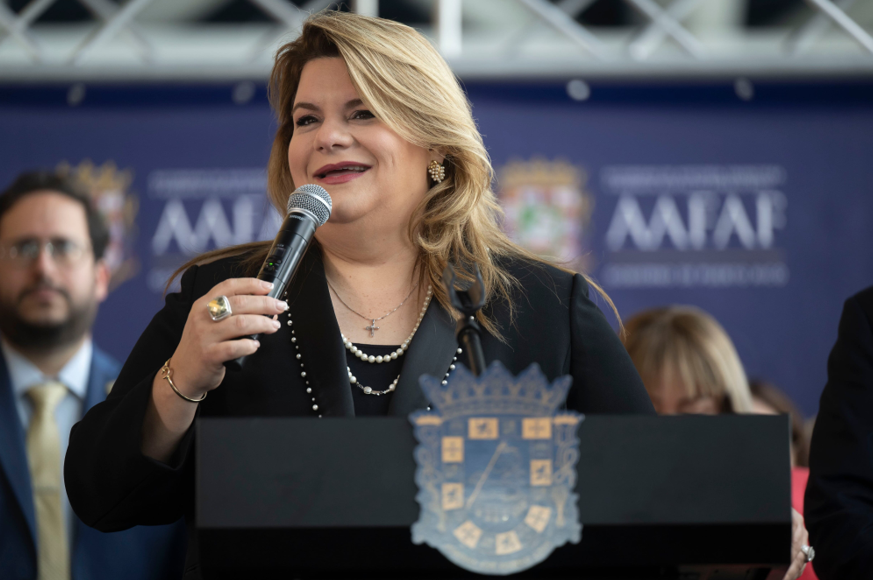
Photo provided by Primera Hora (Puerto Rico). “Gobernadora Lidera En Washington Esfuerzos a Favor de la Estadidad.” March 3, 2026.
In the midst of recent headlines about the escalating conflict between the United States, Israel and Iran and its impacts on the global economy, there have been interesting developments occurring in Puerto Rico in regards to its future within the United States. In March, the current, pro-statehood governor of Puerto Rico, Jenniffer González Colón, visited Washington D.C. to participate in a summit promoting Puerto Rico’s annexation into the United States as its 51st state. This summit, which took place from 3–5 March, was hosted by a Puerto Rican government agency known as the Puerto Rico Federal Affairs Administration. According to the local newspaper ‘Primera Hora’, the main purpose of this summit was to ‘provide various forms in which elected federal officials and civil society members can discuss various aspects of Puerto Rico’s relationship with the United States’.¹ In her speech on the opening day of the summit, González argued that she didn’t mind if Puerto Rico became a state ‘after Greenland or after Canada’ so long as the archipelago is admitted to the union as a state.² Unfortunately for the governor, the timing of this event, alongside previous failed efforts to promote statehood in the US capital, has only caused commotion in local newspapers as US policy audiences turn their attention to the Middle East. Furthermore, Puerto Rico’s non-voting representative in Congress and leader of the pro-Commonwealth Popular Democratic Party (PPD for its Spanish initials), Pablo José Hernández, declined to participate in the summit. Specifically, Hernández argued that the local Puerto Rican government should focus more on the archipelago’s water and cost of living crises over pursuing statehood when the US is actively engaged in a war with Iran.³ Although this summit had little to no impact on inching Puerto Rico closer to statehood, it highlighted a change in strategy for the pro-statehood Puerto Rican government, as is is focused on further entrenching itself in US partisan politics in order to eventually achieve statehood.
Before unpacking pro-statehood New Progressive Party’s (PNP from its Spanish initials) change in political strategy, it is important to expand upon Puerto Rico’s ongoing political status debate and the arguments which shape pro-statehood discourses in Puerto Rico. Since the Spanish-American War of 1898, Puerto Rico has been defined by the US Supreme Court as an unincorporated territory of the United States which ‘belongs to’ but is not ‘a part of’ the United States.⁴ It is this precedent established by the Supreme Court which has dramatically shaped the archipelago’s politics, as this decision grants Congress absolute authority over Puerto Rico, including the ability to determine when the clauses of the Constitution apply.⁵ This reality hasn’t changed even after Puerto Ricans were granted US citizenship in 1917 nor when Puerto Rico’s Constitution created the Commonwealth of Puerto Rico, known as the Estado Libre Associado de Puerto Rico (ELA) in Spanish, in the 1950s.⁶ It is this confusing reality of Puerto Rico’s territorial status as ‘belonging’ but not a ‘part of’ the US which led to the creation of a pro-statehood movement.
In the 1950s, the statehood movement was relatively weak with little representation in the Puerto Rican government. This was largely due to both the public perception that US statehood would inevitably eliminate Puerto Rico’s distinct culture and the initial popularity of the ELA, reflected in the referendum approving the Puerto Rican Constitution, which passed with approximately 84 percent of the popular vote.⁷ Furthermore, the status was effectively presented as a reasonable ‘middle ground’ between statehood and independence after the violent repression of the 1950s nationalist uprising organised by the Puerto Rican Nationalist Party. Luis Muñoz Marín, the first democratically elected governor of Puerto Rico, was able to win the gubernatorial elections by arguing that the ELA established a middle ground between statehood and independence, creating a republican government based on consent that provided the benefits of being part of the US, including US citizenship, tariff-free access to US markets and defence, without requiring the payment of federal taxes.⁸ Although there would be no voting representation in the US government as a territory, this was made up for with the position of the resident commissioner who has a seat in the House of Representatives which, as initially argued by Luis Muñoz Marín, had “all the privileges of a member except for voting”.⁹
However, the pro-statehood movement would gain traction by the 1960s as a result of the civil rights movement in the United States. As US president Lyndon B. Johnson approved the Civil Rights Act, declared a ‘War on Poverty’ and launched various social programs under his Great Society initiative, statehood activists could not only argue that Puerto Rican identity could survive under statehood due to greater recognition of multiculturalism in the US but also equate statehood with equality.¹⁰ This view was espoused by former governor and resident commissioner Carlos Romero Barceló, as he argued that statehood was ‘for the poor’ and the ELA was a form of ‘discrimination’ since it prevented Puerto Rico from benefiting from welfare programs that only applied to US states.¹¹ Furthermore, the increasing salience of African American suffrage during the 1960s also influenced the Puerto Rican statehood movement, as calls to expand suffrage and voting representation for Puerto Ricans became a prominent issue that further highlighted the discriminatory nature of the ELA. The fact that Puerto Ricans have been US citizens since 1917 further reinforced the perception that the ELA constituted a discriminatory arrangement which relegated Puerto Ricans to second-class status and prevented them from fully enjoying the rights and benefits of US citizenship. This argument is bolstered by the ‘blood tax’ argument advanced by the pro-statehood PNP, which contends that Puerto Ricans should be fairly compensated for their service in the US military.¹² According to pro-statehood organisations, the roughly 90,000 US veterans residing in Puerto Rico are adversely affected by the island’s territorial status since they lack voting representation in the federal government they served, face constrained economic opportunities stemming from differential US tax treatment and experience reduced funding for public institutions compared with those on the mainland.¹³ It is this view of statehood that would shape the politics of the pro-statehood movement and the PNP which represents their interests. Founded after it split from the Puerto Rican Republican Party due to disagreements following a non-binding referendum in 1967¹⁴, the PNP would become the main opposition party to the pro-ELA Popular Democratic Party (PPD from its Spanish initials) by the 1970s, starting the mainstream political duopoly that shaped Puerto Rican politics until the mid-2010s.¹⁵ It was this framing of statehood as ‘equality’ to access federal programs and receive federal political representation rather than ‘cultural erasure’ that would dominate pro-statehood discourses towards Puerto Rican audiences moving forward.
Apart from the discourses of equality, the PNP also began to focus on non-binding referendum results to argue that Puerto Rico should be admitted into the US as a state due to the current popularity of statehood within Puerto Rico. While the PNP championed “equality” in its rhetoric to Puerto Rican audiences, this message was not directly translated into English. Instead, the Puerto Rican government relied on referendum results to persuade Congress to support Puerto Rican statehood. This reliance on referendum results for US policy audiences is highlighted in Governor González’s remarks at the summit. During her address in the Equality and Statehood Summit, Jenniffer González Colón explicitly made reference to the results of the 2024 referendum hosted alongside the 2024 gubernatorial elections, mentioning that not only did 58 percent of Puerto Ricans vote for statehood but also that statehood itself obtained more votes than any of the candidates running for the position of governor or resident commissioner.¹⁶ The referendums themselves are nothing new. Since the foundation of the ELA in the 1950s, there have been around seven non-binding referendums held in Puerto Rico over whether Puerto Rico should maintain its current status as an overseas territory of the US, be incorporated as a US state or become a sovereign nation.¹⁷ What makes these referendums non-binding is that they are called by the Puerto Rican government rather than approved by the US Congress. Since they are not approved by the US Congress, the US government is not obligated to act upon the results of these referendums, meaning that they functionally serve as an indicator of popular support over the current status rather than a binding solution to the status issue.
What is novel about recent nonbinding referendums is how they have increasingly been used by the PNP to further their goals of promoting Puerto Rican statehood. Of these aforementioned seven referendums, six were held from the 1990s onwards, coinciding with election years in which the PNP performed well. This is further emphasised in the manner in which the status question has been presented in these ballots. During the 1993, 1998, 2012 and 2017 referendums, the options tended to be either independence, the ELA, free association (which entails granting political sovereignty to Puerto Rico while being bound to a bilateral agreement with the US) or statehood. In the 2020 referendum, the ballot was merely a “yes or no” question as to whether Puerto Rico should join the US as a state. In the most recent referendum in 2024, the ballot contained the options for statehood, independence and free association, with statehood receiving 58.6 percent of the popular vote while free association received around 30 percent and independence won just 12 percent of the vote.¹⁸ However, these referendums have grown increasingly controversial among the public, as their results are largely disregarded by the US Congress despite their high costs and the PNP’s sustained efforts to boost voter turnout. After the low turnout which occurred in the 2017 referendum, the 2020 and 2024 referendums were held on the same day as the gubernatorial elections. This not only increased participation but also allowed the pro-statehood PNP to encourage voters to support both its candidates and the statehood option simultaneously, a strategy that played a crucial role in both gubernatorial elections. Moreover, in the recent referendum, Jeniffer González omits the fact that around 200,000 votes, which represented around 19 percent of all ballots counted by Puerto Rico’s electoral committee, are not counted in her claim that 58 percent of Puerto Ricans voted for statehood.¹⁹ Governor González likely excludes these blank ballots because their inclusion would lower support for statehood to approximately 49 percent, resulting in a mere plurality rather than the decisive majority she seeks to convey to federal policymakers.²⁰ Apart from this omission, the most recent referendum cost around $1.3 million, yet it ended up being ignored by the US Congress, furthering criticisms about the effectiveness of this tactic.²¹ Due to these controversies and repeated failures, the referendum is now widely viewed as a weak tool for promoting statehood since, even when it demonstrates support, it fails to generate the confidence and enthusiasm needed to persuade a Congress that is increasingly hostile to Puerto Rican statehood.
As the referendum results have been continuously ignored by the White House and the Senate, the pro-statehood PNP has sought to reinvent its strategy by focusing more on alignment with the current US administration under Donald Trump rather than the results of these non-binding referendums. Even before the US captured former President Nicolas Maduro in January 2026, Jeniffer González has continuously criticised the Venezuelan government and urged for more aggressive actions to be taken against him. After her inauguration in January 2025, González has also used Maduro’s comments to support her pro-statehood offensive. In a speech during an “International Anti-Fascist Festival”, Maduro mentioned that Venezuela has “an agenda of liberation” which entailed “freeing Puerto Rico with the assistance of Brazilian troops”.²² Although this claim was largely intended to bolster his legitimacy as Venezuela’s president and as a vanguard against US imperialism, particularly in response to Donald Trump’s rhetoric about annexing the Panama Canal and Greenland, González used the opportunity to emphasize Puerto Rico’s alignment with the United States and its geopolitical significance. In the immediate aftermath of these comments, González wrote a letter to President Trump where she not only stressed the results of the status referendum to argue against Maduro’s claims but also mentioned that her administration was “ready to work with you and your administration to counter this and other threats posed by the illegitimate Maduro dictatorship and support the people of Venezuela in their quest for freedom”.²³ Furthermore, she argued that Puerto Rican statehood should be considered by the Trump administration by emphasizing the island’s strategic importance. Specifically, she contended that Puerto Rico has supported US military exercises and operations, hosting key US Army installations such as Fort Buchanan as well as National Guard facilities like Camp Santiago, Fort Allen and Muñiz Air National Guard Base, which she claimed have been used in efforts to combat drug trafficking allegedly linked to Nicolás Maduro’s government.²⁴ This letter, sent immediately after González’s inauguration, marked the beginning of how the pro-statehood PNP would align itself with the Trump administration’s foreign policy goals in order to advance Puerto Rico’s admission into the United States. This is further evidenced by the aftermath of Maduro’s capture. In her recent press conferences this March, González argued that Puerto Rico ‘demonstrated’ its importance to the US’s national security due to “the events which transpired in regards to Maduro in Venezuela”.²⁵ Furthermore, González’s administration stressed that Puerto Rico’s alignment with Trump’s foreign policy is yielding tangible benefits, highlighting Pentagon investments to modernize an aging naval base on the island’s east coast, as well as approximately $2.2 billion in funding for key manufacturing industries.²⁶ Although Puerto Rico has become geopolitically important for a Trump administration interested in reasserting the US’s position in Latin America, it is crucial to stress that this geopolitical importance will not translate into US statehood for Puerto Rico due to how US Republicans have reacted to Puerto Rican US statehood both in the recent past and the present.

Map provided by Wagenheim, “Puerto Rico”.
The hostility towards Puerto Rican statehood in Washington, D.C. is present in how the governing Republican Party discusses the issue. Even though Jeniffer González herself is a registered Republican, US Republicans, led by President Donald J. Trump, have demonstrated that they believe Puerto Rican statehood presents a threat to their dominance in both the Senate and the House of Representatives. This is evident in the remarks made by Republican Senate leaders past and present. Following the 2020 referendum, then–Senate Majority Leader Mitch McConnell described statehood for Washington, D.C. and Puerto Rico as elements of the Democrats’ “socialist agenda,” arguing that such measures would “give the Democrats two more senators.”²⁷ Furthermore, his replacement, Senator John Thune of South Dakota, has consistently defended the filibuster, a congressional mechanism which requires 60 votes for most legislation to pass the US Senate, since becoming Senate Majority Leader. Specifically, he has called the filibuster’s 60-vote rule as being the “greatest impact on preserving the founders’ vision of the United States Senate.”²⁸ As a result, it is likely that Thune will follow McConnell’s opposition to Puerto Rican statehood, as it could threaten the Republican filibuster. Apart from Senate leadership, Donald Trump has also demonstrated his hostility to statehood for both Washington D.C. and Puerto Rico by arguing that it would give the Democrats “4 Senate seats, many House seats, and at least 8 Electoral Votes, and many other highly destructive things”.²⁹ The Republican assumption that Puerto Rico would be a safe Democratic state is not completely unfounded. In the most recent election for Puerto Rican governor, there was a “symbolic vote for US president” in 2024 in which Puerto Rican voters could vote for their preference between Democratic candidate Kamala Haris and Donald Trump. In this symbolic vote, Kamala Harris received approximately 73 percent of the vote while Donald Trump garnered about 27 percent.³⁰ Since Republicans frame Puerto Rico’s status issue primarily in terms of partisan advantage rather than genuine expressions of popular support for statehood, the PNP have reframed their argument to show that the Puerto Rican government aligns with Republican goals rather than presenting statehood solely as a quest for equality and the full exercise of democracy, as they have done previously. Since Senate leaders and the President appear to share a similar vision of preserving Republican dominance in the US government, Jeniffer González is likely to be continually sidelined. Even if González’s government entrenches itself further in the geopolitical goals of the Trump Administration, the Republican administration she supports remains actively hostile to the prospect of Puerto Rican statehood.
As President Trump continues to float the idea of statehood, whether jokingly or as a geopolitical threat, for places such as Canada, Greenland, Venezuela or Cuba, Puerto Rican statehood appears to be increasingly viewed as a non-issue at best and a potential threat to Republican efforts to consolidate power in the Senate and the House of Representatives at worst.³¹ With the rise of Trumpism and Republican efforts to undermine the Democrats in the 2026 midterms through redistricting³², it is likely that the push for Puerto Rican statehood will remain unachievable so long as the Republicans maintain their majority or slim minority in the US Congress. Although Jennifer González has sought to adapt to this reality in Washington D.C. by aligning herself with Trump’s geopolitical goals in Latin America, Trump and US Republicans have either been mute about or antagonistic towards any plans to provide a Washington-backed plan for Puerto Rican statehood. As the status debate continues in Puerto Rico, the words of pro-independence figure Rubén Berríos remain relevant: ‘there is no right to statehood, but there is a right to self-determination.’³³ However, while Puerto Ricans continue to question whether independence is the ideal path, the status issue persists as the Puerto Rican government repeatedly seeks US statehood from a federal government increasingly demonstrating its disinterest in an issue affecting 3.2 million US citizens.
[1]Primera Hora (Puerto Rico). “Gobernadora Lidera En Washington Esfuerzos a Favor de La Estadidad.” March 3, 2026.
[2]Equality and Statehood Summit 2026. Government of Puerto Rico, 2026.
[3]Díaz Rolón, Ayeza. “‘No Importa Si Es Después de Groenlandia’: Gobernadora Defiende Estadidad Para Puerto Rico.” El Vocero, March 3, 2026.
[4]Downes v. Bidwell, 182 U.S. 244 (1901).
[5]Downes v. Bidwell, 182 U.S. 244 (1901).
[6]Ayala, César J., and Rafael Bernabe. Puerto Rico en el siglo americano: su historia desde 1898. Third edition. Ediciones Callejón, 2016, p. 90, p. 236.
[7]Muñoz Marín, Luis. “Puerto Rico and the U.S., Their Future Together.” Foreign Affairs, January 1, 1954, p. 541–542.
[8]Muñoz Marín, “Puerto Rico and the U.S., Their Future Together.”, p. 542, 547, 548–549.
[9]Muñoz Marín, “Puerto Rico and the U.S., Their Future Together.”, p.548.
[10]Ayala and Bernabe, Puerto Rico en el siglo americano, p. 390.
[11]Ayala and Bernabe, Puerto Rico en el siglo americano, p. 390–391.
[12]Fact Sheet: Puerto Rican Participation in the U.S. Armed Forces. Puerto Rico 51st, 2021.
[13]Fact Sheet: Puerto Rican Participation in the U.S. Armed Forces.
[14]Ayala and Bernabe, Puerto Rico en el siglo americano, p. 318.
[15]The pro-independence Puerto Rican Independence Party (PIP from its Spanish initials) did participate in elections but received less than 10% of the vote for Puerto Rican governor between the 1970s until the 2016 general elections.
[16]Equality and Statehood Summit 2026. Government of Puerto Rico, 2026.
[17]These referendums were held in 1967, 1993, 1998, 2012, 2017, 2020, 2024.
[18]”Resultados del Plebiscito de Estatus 2024 — Escrutinio General”. Comisión Estatal de Elecciones de Puerto Rico. Actualizado el Febrero 11, 2025.
[19]“Resultados del Plebiscito de Estatus 2024 — Escrutinio General”. Actualizado el Febrero 11, 2025.
[20]“Resultados del Plebiscito de Estatus 2024 — Escrutinio General”. Actualizado el Febrero 11, 2025.
[21]Coto, Dánica. “Puerto Rico Finaliza Ajustes de Referéndum Sobre Estatus Político Entre Críticas Por Su Alto Costo.” AP News, July 24, 2024.
[22]Wallace, Danielle. “Puerto Rico Governor Asks Trump to Intervene after Venezuela’s Maduro Threatened to Invade the US Territory.” Fox News, January 15, 2025.
[23]Wallace, “Puerto Rico Governor Asks Trump to Intervene after Venezuela’s Maduro Threatened to Invade the US Territory.”
[24]Wallace, “Puerto Rico Governor Asks Trump to Intervene after Venezuela’s Maduro Threatened to Invade the US Territory.”
[25]Delgado, José. “Jenniffer González Sobre La Estadidad: ‘Vamos a Presentar Un Proyecto de Ley.’” El Nuevo Día (Puerto Rico), March 3, 2026.
[26]Delgado, “Jenniffer González Sobre La Estadidad: ‘Vamos a Presentar Un Proyecto de Ley.’”
[27]Portnoy, Jenna. “McConnell Seems to Call the Prospect of D.C. Statehood ‘Full-Bore Socialism.’” The Washington Post, June 18, 2019.
[28]Murray, Ashley. “In First Speech as U.S. Senate Majority Leader, Thune Pledges to Protect Filibuster.” Maine Morning Star, January 3, 2025.
[29]Trump, D. [@realDonaldTrump]. “I just got back from Asia where I met the Leaders of many Countries…” [Truth Social post]. Truth Social.
[30]”Resultados del Voto Presidencial 2024 — Escrutinio General”. Comisión Estatal de Elecciones de Puerto Rico. Actualizado el Febrero 11, 2025.
[31]Delgado, “El Coqueteo de Donald Trump Con Groenlandia, Canadá y Ahora Venezuela Ha Acentuado La Exclusión de Puerto Rico de La Oferta de Estadidad.”
[32]Lieb, David. “Gerrymandering Is Spreading across US States after Trump Pushed for New Congressional Districts.” AP News (United States), December 11, 2025.
[33]Martínez, Rubén Berríos. “Puerto Rico’s Decolonization.” Foreign Affairs 76, no. 6 (1997), p. 108, 114.
Bibliography
- Primera Hora (Puerto Rico). “Gobernadora Lidera En Washington Esfuerzos a Favor de La Estadidad.” March 3, 2026. https://www.primerahora.com/noticias/gobierno-politica/notas/gobernadora-lidera-en-washington-esfuerzos-a-favor-de-la-estadidad/.
- Equality and Statehood Summit 2026. Government of Puerto Rico, 2026. https://www.youtube.com/live/FGXo1W754Bo.
- Díaz Rolón, Ayeza. “‘No Importa Si Es Después de Groenlandia’: Gobernadora Defiende Estadidad Para Puerto Rico.” El Vocero, March 3, 2026. https://www.elvocero.com/gobierno/no-importa-si-es-despu-s-de-groenlandia-gobernadora-defiende-estadidad-para-puerto-rico/article_00e1de32-9c71-4c3a-b4cc-a9edc099d436.html.
- Downes v. Bidwell, 182 US 244 (1901).
- Ayala, César J., and Rafael Bernabe. Puerto Rico en el siglo americano: su historia desde 1898. Third edition. Ediciones Callejón, 2016.
- Muñoz Marín, Luis. “Puerto Rico and the US, Their Future Together.” Foreign Affairs, January 1, 1954, 541–51. https://doi.org/10.2307/20031053.
- “Resultados del Plebiscito de Estatus 2024 — Escrutinio General”. Comisión Estatal de Elecciones de Puerto Rico. Actualizado el Febrero 11, 2025. https://elecciones2024.ceepur.org/Escrutinio_General_123/index.html#es/default/PLEBISCITO_Resumen.xml
- Coto, Dánica. “Puerto Rico Finaliza Ajustes de Referéndum Sobre Estatus Político Entre Críticas Por Su Alto Costo.” AP News, July 24, 2024. https://apnews.com/world-news/general-news-2209e11abad180862e6771eb5954cc37.
- Portnoy, Jenna. “McConnell Seems to Call the Prospect of D.C. Statehood ‘Full-Bore Socialism.’” The Washington Post, June 18, 2019. https://www.washingtonpost.com/local/dc-politics/mcconnell-seems-to-call-the-prospect-of-dc-statehood-full-bore-socialism/2019/06/18/2c3e0fd4-9216-11e9-b570-6416efdc0803_story.html.
- Murray, Ashley. “In First Speech as US Senate Majority Leader, Thune Pledges to Protect Filibuster.” Maine Morning Star, January 3, 2025. https://mainemorningstar.com/2025/01/03/repub/in-first-speech-as-u-s-senate-majority-leader-thune-pledges-to-protect-filibuster/.
- Trump, D. [@realDonaldTrump]. “I just got back from Asia where I met the Leaders of many Countries…” [Truth Social post]. Truth Social. https://www.instagram.com/p/DQiWKVKDMvN/?utm_source=ig_web_copy_link&igsh=MzRlODBiNWFlZA==
- “Resultados del Voto Presidencial 2024 — Escrutinio General”. Comisión Estatal de Elecciones de Puerto Rico. Actualizado el Febrero 11, 2025. https://elecciones2024.ceepur.org/Escrutinio_General_123/index.html#es/default/PRESIDENTE_Resumen.xml
- Fact Sheet: Puerto Rican Participation in the US Armed Forces. Puerto Rico 51st, 2021. https://www.pr51st.com/wp-content/uploads/2022/03/Fact-Sheet-Puerto-Rican-Participation-in-the-US-Military-February-2021.pdf.
- Wallace, Danielle. “Puerto Rico Governor Asks Trump to Intervene after Venezuela’s Maduro Threatened to Invade the US Territory.” Fox News, January 15, 2025. https://www.foxnews.com/world/puerto-rico-governor-asks-trump-intervene-after-venezuelas-maduro-threatened-invade-us-territory.
- Delgado, José. “Jenniffer González Sobre La Estadidad: ‘Vamos a Presentar Un Proyecto de Ley.’” El Nuevo Día (Puerto Rico), March 3, 2026. https://www.elnuevodia.com/corresponsalias/washington-dc/notas/jenniffer-gonzalez-sobre-la-estadidad-vamos-a-presentar-un-proyecto-de-ley/.
- Delgado, José. “El Coqueteo de Donald Trump Con Groenlandia, Canadá y Ahora Venezuela Ha Acentuado La Exclusión de Puerto Rico de La Oferta de Estadidad.” El Nuevo Día (Puerto Rico), March 23, 2026. https://www.elnuevodia.com/corresponsalias/washington-dc/notas/el-coqueteo-del-presidente-donald-trump-con-groenlandia-y-canada-ha-acentuado-la-exclusion-de-puerto-rico-de-la-oferta-de-estadidad/?templateId=OTB2HAZL1TSY&templateVariantId=OTB2HAZL1TSY&experienceID=EX6EM0NN2JJ3.
- Lieb, David. “Gerrymandering Is Spreading across US States after Trump Pushed for New Congressional Districts.” AP News (United States), December 11, 2025. https://apnews.com/article/redistricting-congress-trump-gerrymandering-79892dffce5c4f91abcbafd6fbea7bde.
- Martínez, Rubén Berríos. “Puerto Rico’s Decolonization.” Foreign Affairs 76, no. 6 (1997): 100–114. https://doi.org/10.2307/20048279.
- Wagenheim, Kal. “Puerto Rico.” Britannica, April 11, 2026. https://www.britannica.com/place/Puerto-Rico.
메타데이터
- post_id
- bbe5b6d8049c
- slug
- we-voted-for-it-we-want-that-to-happen-puerto-ricos-status-question-in-the-age-of-trump-bbe5b6d8049c
- url
- https://medium.com/@ch_commonfutures/we-voted-for-it-we-want-that-to-happen-puerto-ricos-status-question-in-the-age-of-trump-bbe5b6d8049c
- canonical_url
- https://medium.com/@ch_commonfutures/we-voted-for-it-we-want-that-to-happen-puerto-ricos-status-question-in-the-age-of-trump-bbe5b6d8049c
- author_url
- https://medium.com/@ch_commonfutures
- status
- ok
- fetched_at
- 2026-06-23 17:05:31