The Difference Between Jade Carving and Gem Cutting
Many people assume jade carving and gem cutting are similar processes because both involve shaping stone. In practice, they follow…
The Difference Between Jade Carving and Gem Cutting
Many people assume jade carving and gem cutting are similar processes because both involve shaping stone. In practice, they follow different technical approaches, use different tools, and aim for different outcomes.
This article explains the core differences between jade carving and gem cutting in terms of material properties, processing methods, and final use.
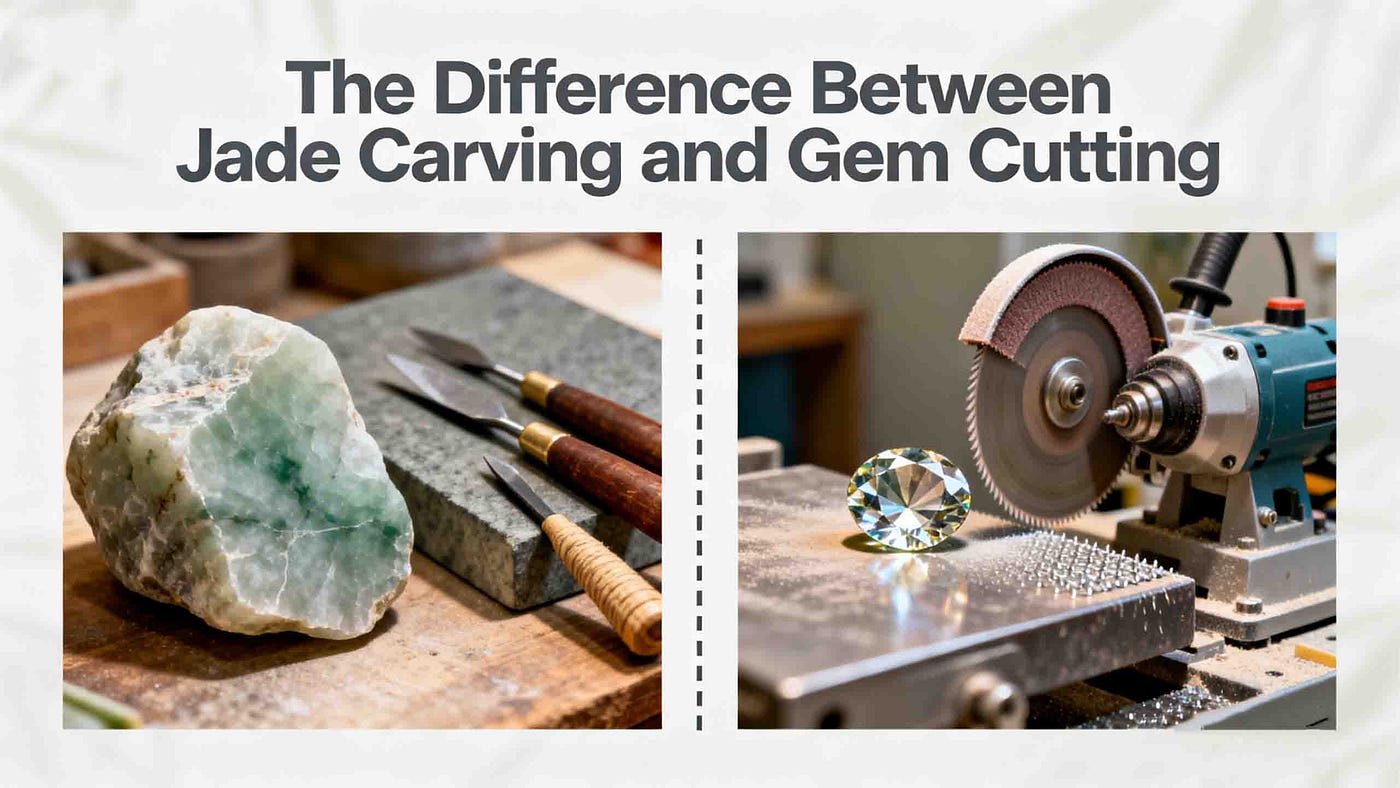
Material Characteristics
The distinction begins with the material itself.
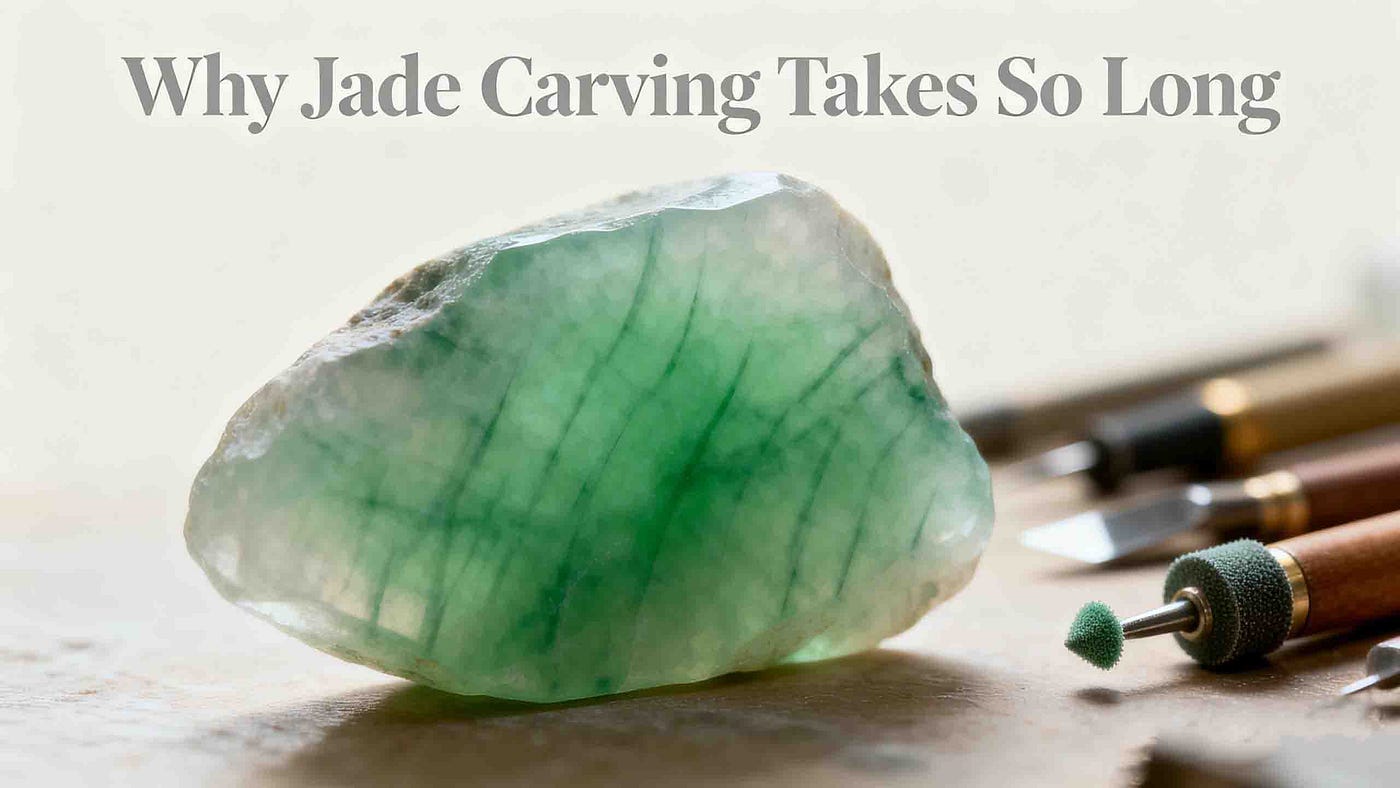
Jade — commonly referring to nephrite or jadeite — is a polycrystalline aggregate. Its structure is interlocking and fibrous, which gives it high toughness but makes it unsuitable for traditional faceting.
Most gemstones used in cutting (such as quartz, sapphire, or topaz) are single crystals. They have consistent internal structures and defined cleavage or fracture behavior, which allows precise geometric cutting.
Because of this structural difference, jade resists fracture but cannot produce the same optical effects as faceted stones.
Processing Techniques
Jade Carving
Jade is shaped through abrasion rather than cutting. The process involves:
- Grinding with diamond-coated tools
- Continuous material removal using friction
- No direct “cutting edge” in the conventional sense
Carving can be:
- Relief carving
- Openwork (pierced) carving
- Fully three-dimensional (round carving)
The process is relatively slow and requires careful control to avoid uneven surfaces or internal stress.
Gem Cutting
Gem cutting (lapidary faceting) relies on precise angles and flat surfaces. The process includes:
- Sawing rough material into workable pieces
- Grinding facets at calculated angles
- Polishing each facet to maximize light reflection
Each facet is placed intentionally to control how light enters and exits the stone, directly affecting brilliance and fire.
Design Objectives
Jade Carving
The goal is to work with the material’s natural structure. Key considerations include:
- Preserving structural integrity
- Adapting to natural color distribution
- Avoiding internal flaws
Designs are often dictated by the raw material rather than imposed on it.
Gem Cutting
The goal is optical performance. Cutters aim to:
- Maximize light return
- Enhance color saturation
- Achieve symmetry and proportion
Standardized cuts (round brilliant, oval, emerald cut) are widely used because their optical behavior is predictable.
Surface and Finish
Carved jade typically has:
- Curved or sculpted surfaces
- A smooth, waxy polish
- Diffuse light reflection
Faceted gemstones have:
- Flat, mirror-like surfaces
- Sharp edges between facets
- High reflectivity and sparkle
These differences are a direct result of processing methods and material structure.
Durability in Use
Jade is known for toughness, meaning it resists breaking under impact. This makes it suitable for:
- Carved pendants
- Bracelets
- Objects with thin or intricate sections
Faceted gemstones vary in hardness and brittleness. While some are very hard, they may still chip along edges or cleavage planes, especially in exposed settings.
Typical Applications
Jade carving is primarily used for:
- Sculptural jewelry (pendants, bangles)
- Decorative objects
- Detailed artistic forms
Gem cutting is used for:
- Faceted jewelry stones (rings, earrings)
- Standardized settings requiring precise dimensions
Conclusion
Jade carving and gem cutting differ fundamentally in material structure, technique, and purpose. Jade carving focuses on shaping a tough, non-crystalline aggregate through abrasion and adapting to natural features. Gem cutting focuses on optimizing the optical performance of crystalline materials through precise faceting.
Understanding this distinction helps explain why jade jewelry and faceted gemstone jewelry look, behave, and are manufactured differently.
Reference site: https://wildfireatelier.com/
메타데이터
- post_id
- bbed52a71c2e
- slug
- the-difference-between-jade-carving-and-gem-cutting-bbed52a71c2e
- url
- https://medium.com/@virginiatgraham2/the-difference-between-jade-carving-and-gem-cutting-bbed52a71c2e
- canonical_url
- https://medium.com/@virginiatgraham2/the-difference-between-jade-carving-and-gem-cutting-bbed52a71c2e
- author_url
- https://medium.com/@virginiatgraham2
- status
- ok
- fetched_at
- 2026-06-17 16:37:43