You Were Trained to Mistake Compliance for Kindness
And narcissists can see it from a mile away

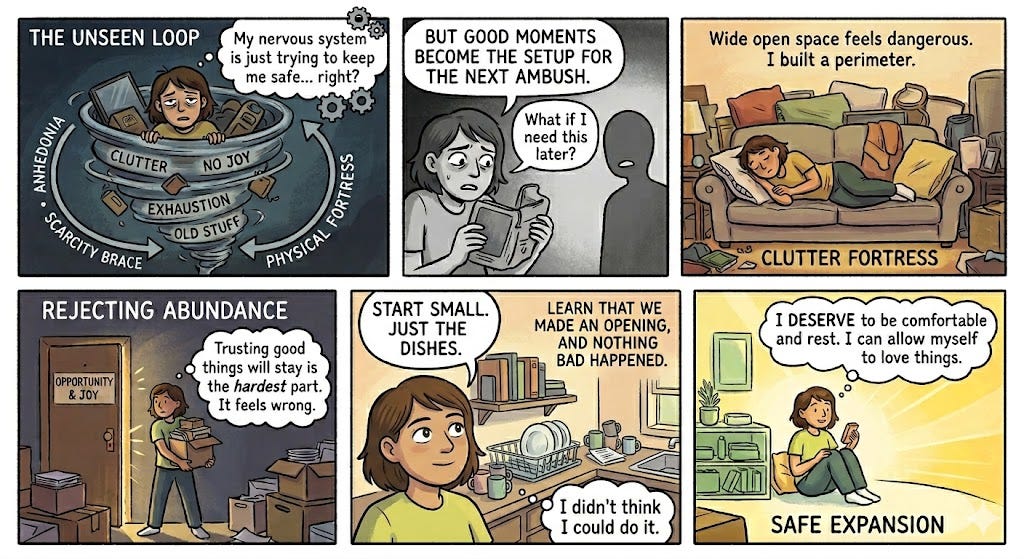
Image design by Author / Image generation by Gemini
You Were Trained to Mistake Compliance for Kindness
And narcissists can see it from a mile away
Narcissists feed on compliance. For a long time, I thought accepting people for who they are and focusing on the good was just part of my personality. I thought I was just a good person who cared deeply about others. An “Empath.” A highly sensitive soul. Although I am certainly all those things, turns out I am also a people pleaser — but never knew it. And if you resonate with these feels, this article will help you.
Not a Medium Member? Read here for FREE.
The Trap of “Familiar”
Years of conditioning taught you that making others comfortable was your only job, so protecting your own peace now feels like an attack.
We are not “too nice” or just victims of bad luck who are taken advantage of, over and over. The problem is, we don’t even realize we are bending ourselves to make others happy. We always put our own needs aside because it is all we have known, and it feels “right.” We are being kind, thinking of others, and that is good, right?
I thought so too.
But now I realize that I spent decades cramming myself into spaces that weren’t meant for me. Putting others first. Taking the shitty end of the deal, over and over. And not one of these people was ever there for me in the long haul. Sound familiar?
I’m 50 now. Looking back at the relationships where my boundaries were trampled upon, I see the truth. My inability to say “no” and looking on the bright side isn’t just a personality trait. And you know what else? Accepting other people’s shitty behavior because we care isn’t a weakness. We make excuses for someone mistreating us like “they must have meant well” or “they’re just going through a hard time.” That isn’t just seeing the good in someone. It’s all survival mechanisms. It’s buried deep in our nervous system from years, even decades, of conditioning.
Six years after breaking it off with my emotionally abusive “partner,” I’m still discovering just how deep the damage goes. If I can save you just one moment, one night curled up on your couch crying, one ounce of anxiety; that is my goal. To help you out of where I was.
Our Brains Are Wired to Feel Familiar = Safe
People pleasing — and the way we tolerate bullshit — crosses over to how our nervous system works. We are hardwired to mistake what is known for what is safe. Whatever we are used to, toxic or not, equates to safety. Even if it is bad for us.
Take that in deeply, and remember it.
Childhood Conditioning
If you grew up in an unstable environment with intermittent or transactional affection, your nervous system became an expert at reading other people’s moods while completely ignoring your own needs. When we enter adulthood, toxic individuals can spot that early conditioning from a mile away. If you’ve ever said “I feel like I have a beacon over my head attracting toxic people” — turns out, we kinda do. To those who thrive on ego-fulfillment and manipulation, an empath with nonexistent boundaries isn’t just a partner or a friend. We are source energy. We are the perfect prey. They seek energy, and they can see how freely we give. So they latch on, and — well, you know how this story goes.
Toxic Adult Relationships
When you spend years in toxic adult relationships, your nervous system adapts to a permanent state of high alert. Chaos becomes normal. Peace doesn’t feel safe. Calm feels only like the quiet before a storm — pensive, waiting for the other shoe to drop. You find yourself anxious during those quiet moments, subconsciously adding to the tension. Your body becomes physically addicted to the adrenaline and cortisol spikes of the fight-and-reconciliation cycle.
This is a trauma bond. You are staying because your nervous system has been rewired to mistake stress and emotional trauma for safety, because it is familiar. Staying feels “safer” than leaving. Staying feels “good” because you get your next fix when they are actually nice to you and pass out crumbs of affection.
A trauma bond is a deep psychological attachment that forms when an abuser uses a repeating cycle of neglect or abuse followed by affection and rewards. It physically rewires your nervous system, making you chemically addicted to the unpredictable highs and lows of the relationship.
How We Get Hooked
Every single time a toxic person gets into our heart, whether they are knowingly manipulative or just emotionally damaged, the result is the same. We suffer, but we stay.
We ignore the red flags. We look on the bright side. We see the good in them. Once we begin to feel horrible, it’s already too late. We are in a familiar place, and we are hooked. We envision that magical happy golden future, and the person we “know they could be.”
Trauma Bonding & The Cycle of Abuse
Trauma bonds are more addictive than healthy relationships because they thrive on intermittent reinforcement, usually set in early childhood by an unhealthy or not-present caregiver, and repeated in adult relationships. Your brain gets hooked on the toxic, unpredictable cycle and it feels like “love.”
The Crisis: An episode of intense conflict, neglect, or emotional abuse leaves you yearning and craving affection.
The Love Bombing: An overwhelming outpouring of affection and intense promises from the person who caused the crisis makes you feel like everything is amazing. It is the best (worst) feeling ever. A craving, and when it comes, it feels unexplainably good.
The Calm: A temporary baseline where hope exists. You feel like everything is perfect and you are finally safe.
The Tension: The horrible shift as tension reappears. You start walking on eggshells, trying not to upset them, overfunctioning, people pleasing. Doing everything you can to get back to The Calm.
The Blow Up: The tension breaks. The fight happens, followed by the punishment — usually the silent treatment, withdrawal of affection, or passive aggressive behaviors that make you scramble to do every fucking thing imaginable to get back to those good places. And then the loop resets, eroding a little more of your identity every single time.
Future Faking
Manipulative people are master architects of a tomorrow that never arrives. They use empty promises of a golden future as hooks to keep us trapped today, handing out little crumbs of “happy future” throughout the relationship to support the grand fantasy they’ve helped construct in our minds. This is how it could be, if only — followed by whatever hoops you need to jump through to supposedly get there. And that, my friends, is the lock on the trap.
The goal keeps moving. They make you believe you are the only obstacle to your own happiness, keeping you locked into investing emotional energy into a fake person and a fake future, designed purely for getting what they want out of you.
The Empath’s Trap
All of this is especially devastating for those of us who deeply absorb other people’s emotions. Boundaries feel like a punishment inflicted on the other person rather than self-preservation. We confuse helping with enabling. We carry the guilt of believing we are responsible for an adult abuser’s happiness, pouring out everything we have just to “make them happy.” And the more we invest, the more we cannot leave.
If you feel it, please get out. Save yourself. Cut off the fake future. I know how hard it is. It’s been six years for me, and I have gotten healthier and happier since cutting the attachment.
Mindshift Micro Meditation for Self-Peace
When putting yourself last is automatic and you’ve been trained to treat your personal space as a threat, protecting your peace can feel foreign. Your body triggers a survival response whenever you attempt to set a boundary or pause before offering help. This meditation is designed to move your nervous system out of that old pattern and remind your body that it is safe to preserve your own energy.
- Find a comfortable space to sit or stand. Take a slow, intentional breath through your nose into your lower belly, expanding it fully. Hold for a moment before you let it out through your mouth. Make your exhale longer than your inhale.
- Cross your arms over your chest, hands on your upper arms, like you are giving yourself a hug. Apply steady pressure and begin slowly alternating taps — left, right, left, right — at a pace that feels good to you.
- Take a few more deep belly breaths. On your slow exhales, let out a low voooo or hummm. Feel the vibration in your chest and throat. This signals safety to your vagus nerve, deactivating high alert mode.
- Speak or think these words, or your version of them: I am here. I am safe. I am the owner of this space.
- Bring to mind a clear boundary you need to set, or a past moment where you wish you had. A time you said yes but meant no. Visualize your personal space around you protected by a beautiful golden bubble. This space is yours. Remind yourself: I am not setting a boundary or saying no to punish them or because I don’t care. I am setting a boundary to preserve me.
- Think about the boundary you need to (or wish you would have) set. Imagine yourself saying no, refusing to help, or walking out. Whatever it is for you. Feel what it feels like to be empowered by putting yourself and your needs first. Continue your deep belly breathing and tapping. Make this moment yours and you are safe (we are stopping the nervous system reaction and teaching our body that boundaries and saying no is safe).
- Condense that feeling into a statement. Something like: My peace is non-negotiable. Or simply: I matter too. Make up your own so it is very special to you. Keep tapping. Repeat your statement in rhythm with your tapping.
- Feel the ground or the chair under you. It’s solid. It’s safe. So are you. Stay here for as long as you need to, keeping your breathing deep in your belly, tapping, and empowering yourself with your statement.
- When you feel you are done, write down your statement and carry it with you. With practice, saying no and enforcing boundaries becomes easier. You can do this.
Choosing Your Reality
Breaking these cycles takes time because your brain needs to physically rewire and rebuild its safety thresholds. Your nervous system needs to get used to a new baseline. You need to feel safe to say NO.
The beautiful future you’re waiting for belongs to you. It starts the moment you say I matter too.
When you grow up in an environment where a boundary is treated as an insult, saying “I matter too” feels terrifying. It’s all we have ever known, a childhood rule that leaves us completely unprotected in our adult relationships. But trust me, you DO matter, and putting your own peace ahead of everyone else’s demands is the only way to break free from toxic cycles!
메타데이터
- post_id
- bbf8952998ce
- slug
- you-were-trained-to-mistake-compliance-for-kindness-bbf8952998ce
- url
- https://medium.com/self-to-be/you-were-trained-to-mistake-compliance-for-kindness-bbf8952998ce
- canonical_url
- https://medium.com/self-to-be/you-were-trained-to-mistake-compliance-for-kindness-bbf8952998ce
- author_url
- https://medium.com/@MurphyFreelance
- status
- ok
- fetched_at
- 2026-07-09 10:10:35