Magh Bihu as we celebrate it
Today feels like a milestone — it’s my first-ever Uruka spent entirely on my own. It’s an unusual experience, sitting down to a solitary…
Bihu Away From Home: A Personal Reflection on Assamese Traditions
Today feels like a milestone — it’s my first-ever Uruka and Magh Bihu spent entirely on my own. It’s an unusual experience, sitting down to a solitary ‘Uruka’ meal of spaghetti and Coke. (The combination wasn’t planned — I’m simply doing my best not to let leftovers go to waste.)
Living alone comes with undeniable perks: the freedom to discover yourself, the joy of growing comfortable in your own company, and the thrill of experimenting with new hobbies. But for someone like me, who grew up in a culturally vibrant and diverse environment, the absence of shared celebrations can feel a little strange. There’s something irreplaceable about the warmth of family and friends coming together, especially during festive moments like these.
That said, being part of a very small Assamese community here in Europe has inspired me to reflect on the beauty of our cultural traditions. I realized how challenging it can be to explain the essence of our celebrations to people from other communities. So, I felt compelled to write this blog — not just to celebrate Magh Bihu myself but to share its significance with others who might not be familiar with it.
Magh Bihu, also known as Bhogali Bihu, one of the three major ‘Bihus’ celebrated in Assam, India. This vibrant regional festival marks the end of the harvest season and is a joyful celebration of abundance and gratitude. It brings together all communities and tribes of Assam in a shared expression of thanks for the year’s bountiful harvest, making it a cornerstone of Assamese culture.
The name ‘Magh’ comes from the Assamese calendar, corresponding to the months of January and February in the Gregorian calendar. The alternate name, ‘Bhogali,’ translates to ‘feast,’ which perfectly captures the spirit of this festival — it’s all about food, festivities, and warmth.
Photo by Liz Pullan Pattathy on Unsplash
Breaking Down the Celebrations of Magh Bihu
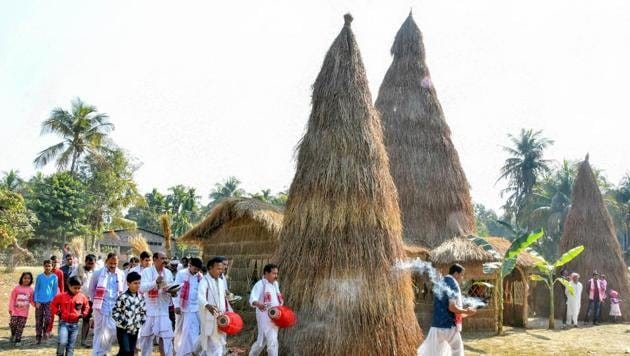
- Pre-Magh Bihu (a week before the 14th of January): This period marks the end of the Assamese Pasua month, setting the stage for Magh Bihu. It’s a time of preparation and excitement as everyone gathers raw materials to build the iconic Meji. Traditionally made of hay and bamboo, the Meji can be a community effort or created by individual households. In some villages, people also construct a Bhelaghor — a temporary hut made of hay and wood — which adds to the festive charm. Additionally everyone also collects wood for the Uruka night bonfire.
Picture credit : Sentinel Digital Desk (Published on 13th Jan 2025, 9.25 am) ; In the image the hut is called the ‘Bhelaghor’ and the cone shaped structure is called ‘Meji’.
Meanwhile, the women in the family are busy preparing Bihu delicacies. These snacks, made with love, are shared with visitors during the festival. Some of the most popular treats include:
- Pithas: Rice flour rolls stuffed with grated coconut or jaggery.
- Laru: Sweet balls made of ingredients like coconut, jaggery, black sesame seeds, or semolina.
- Sira: A crispy mix of grated and dried coconut, beetroot, and carrot.
- Mah-Karai: A roasted blend of rice and black gram. These delicacies are often served with tea to friends and family dropping by during Bihu.
Picture Credit : ZeeZest Article — ‘How To Build A Delicious Assamese Pitha Platter For Rongali Bihu’ by Joyoti Mohonto ; These are some of the delicacies prepared during the Bihu celebrations
On the afternoon of the 13th, families — especially the men and children — head to the bustling farmer markets to shop for the much-anticipated Uruka feast. The priority is to source the freshest harvest directly from the farms. Must-have items include:
- Large, freshly caught fish.
- Duck, local chicken (not farmed), and mutton.
- Yoghurt, jaggery, sesame seeds, and flattened rice.
- Pulses and freshly harvested rice for the feast.
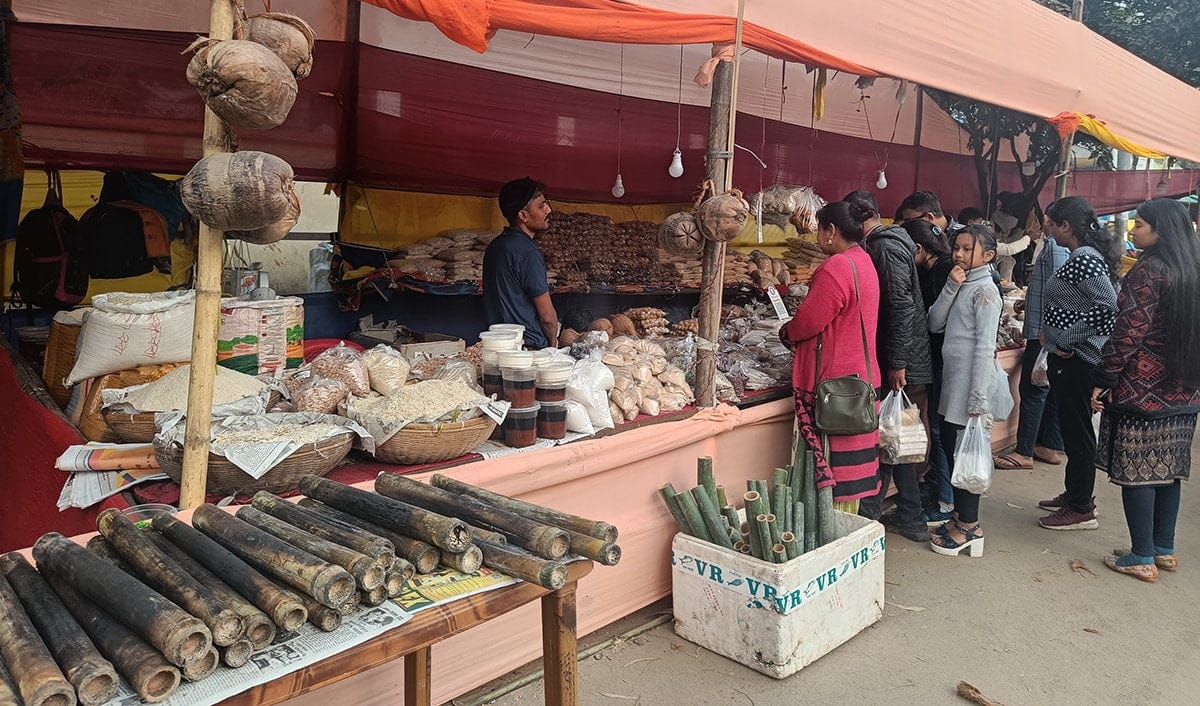
Picture Credits : The News Mill
Fun Tradition: One of the most unique aspects of this time is the playful tradition of vegetable stealing. In villages, young kids and even adults sneak around at night, ‘stealing’ vegetables or even wooden fences to fuel the bonfire and the feast. Garden owners often stay up all night guarding their produce and fences, stick in hand, to scare off would-be thieves.
When I was a child, I vividly remember our bamboo fences mysteriously disappearing during the night, along with some garden harvest like gourds and tomatoes. My father often pretended not to notice the sneaky kids, allowing them to take part in this age-old tradition. Today, this practice has become less common due to modernization — concrete fences and changing attitudes have made the tradition fade, except in some rural areas. You can read this childern’s story here.
2. Uruka (Evening of January 13th)
The evening of January 13th, known as Uruka, is the heart of Magh Bihu celebrations. It’s a time when families, friends, and sometimes entire villages come together to share a grand feast. This feast is a true celebration of the harvest, with dishes centered around fresh meat, fish, and the finest seasonal produce.
Traditionally, the food is cooked outdoors, often using the fire from a bonfire. The smoky aroma of freshly prepared dishes fills the air, creating an atmosphere of warmth and togetherness. As the food cooks, everyone gathers around, sharing stories, laughter, and moments of connection. It’s a beautiful sight — people of all ages bonding under the open sky, united by tradition and community spirit.
In some parts of Assam, it’s customary to save a portion of the food prepared on Uruka for the next day. Eating these leftovers is considered auspicious and adds an element of continuity to the celebrations.
The journey leading up to this feast is just as special. From wandering through lively farmer markets to sourcing the best ingredients and preparing the food together, every step contributes to the joy of Uruka. The process is a reminder of the effort, love, and unity that define Magh Bihu.
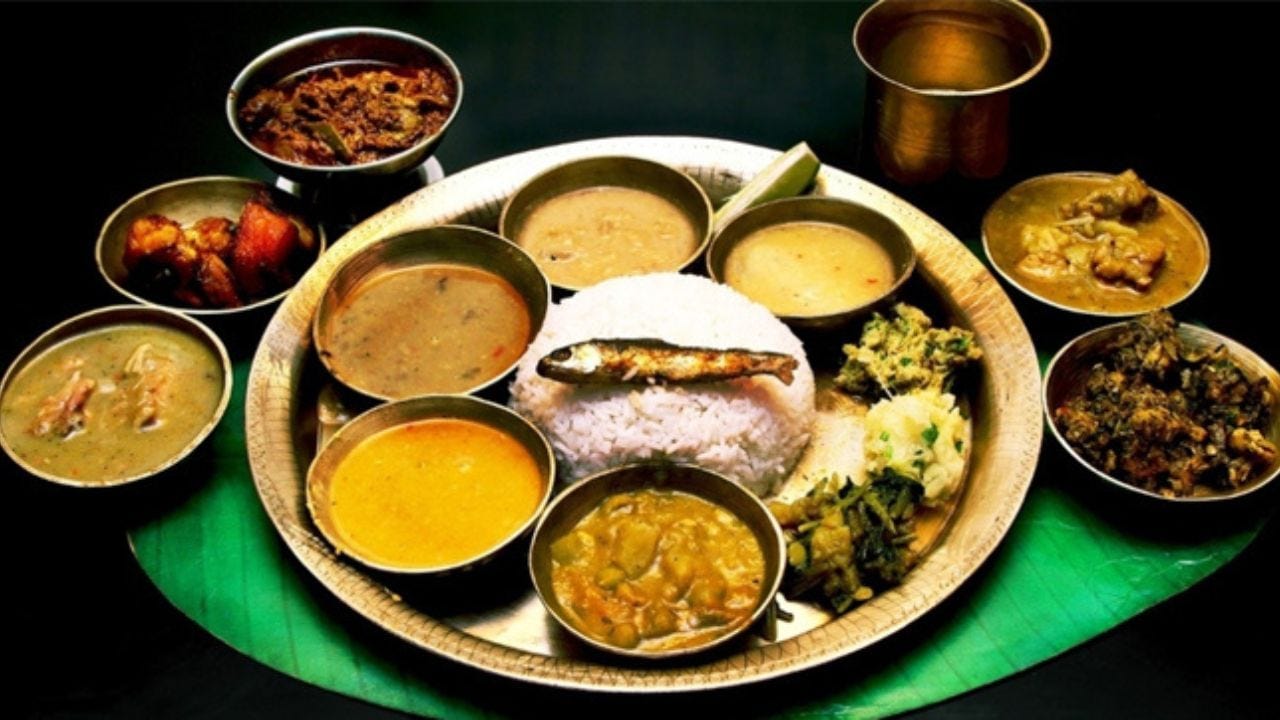
Picture Credits : TV9 Assam
3. Bihu Day (January 14th)
The main day of Magh Bihu begins early, as everyone wakes up at the break of dawn to prepare for the ceremonial burning of the Meji. After a refreshing morning shower, families gather around the grand bonfire they had built in the preceding days. A portion of all the Bihu delicacies prepared earlier — pithas, larus, and other treats — is offered to the fire as a mark of respect and gratitude to the Fire God. During this ritual, prayers are offered for a bountiful harvest in the coming year.
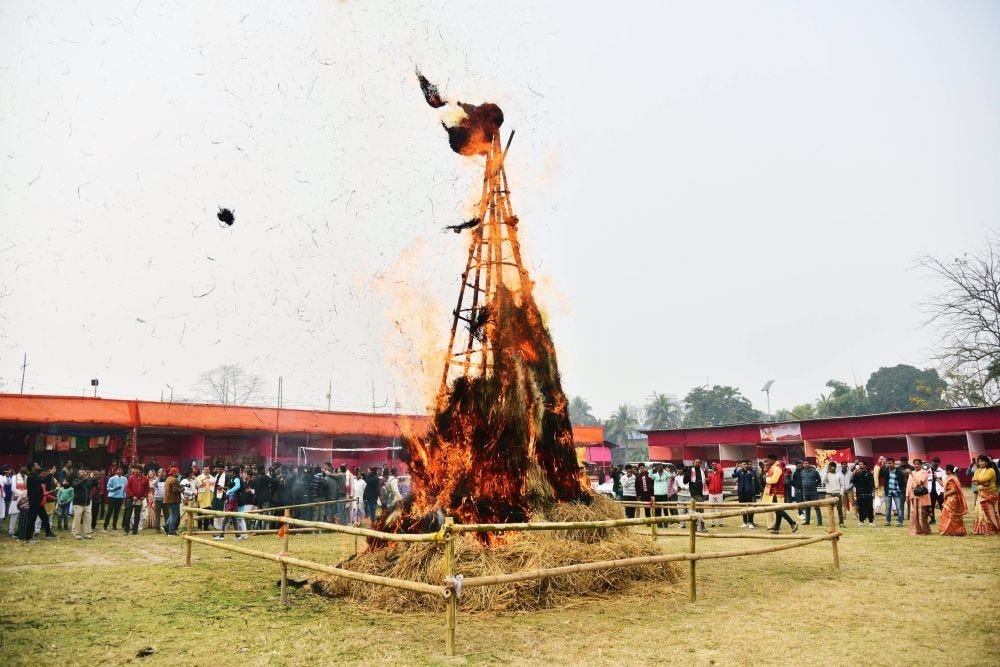
Picture Credit : Morong Express
The ashes of the Meji hold a special significance in Assamese tradition. They are sprinkled in agricultural fields to enhance soil fertility, symbolizing the cyclical connection between nature and community.
In villages or larger communities, where communal Meji bonfires are built, people gather to exchange homemade delicacies as a gesture of goodwill. This tradition strengthens bonds within the community and celebrates the diversity of local culinary creations.
Another cherished custom is having Jolpan after the Meji-burning ceremony. Jolpan is a quintessential Assamese breakfast delicacy made of flattened rice, yogurt, and jaggery. The combination is simple yet deeply satisfying, symbolizing the connection to nature’s purest offerings. This is followed by enjoying pithas, larus, and cups of black Assamese tea. In some communities, indigenous rice beers such as Aapong are also prepared and shared, adding to the festive cheer.
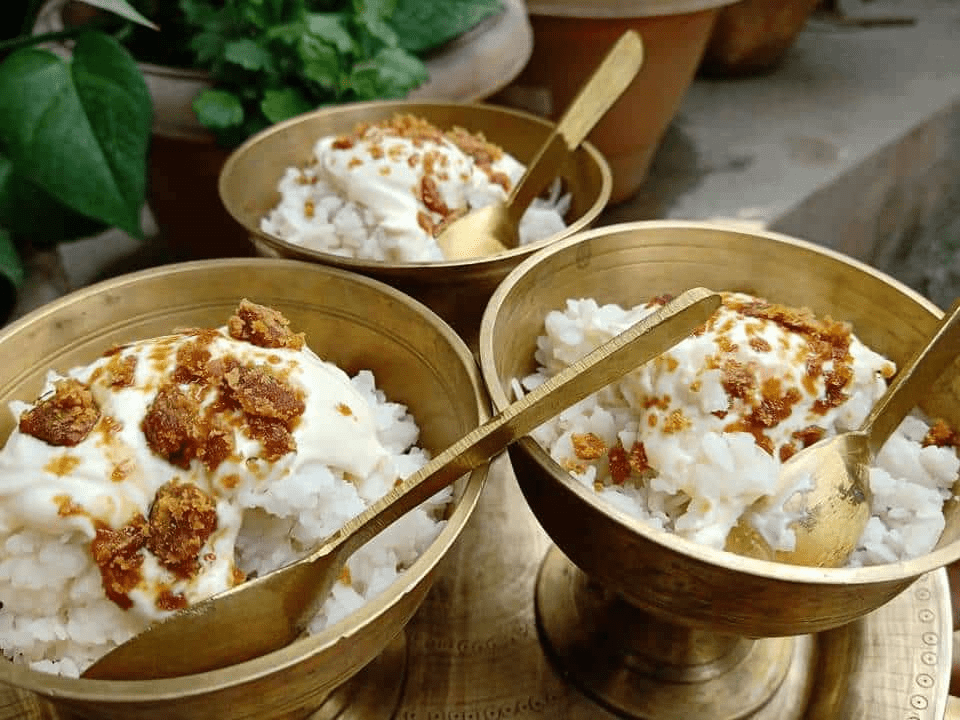
Picture Credit : Khalsavox.com ; Assamese Joplin
The day is filled with vibrant energy, thanks to traditional games and competitions that bring everyone together. Some of the most popular games include:
- Tekeli Bhanga: A game where participants, blindfolded, try to break an earthen pot.
- Kukura Juj: Cockfighting, a traditional spectacle.
- Moh Juj: Buffalo fights, a dramatic and competitive event in some regions.
- Egg fights, tug of war, and other playful contests that reflect the festive spirit.
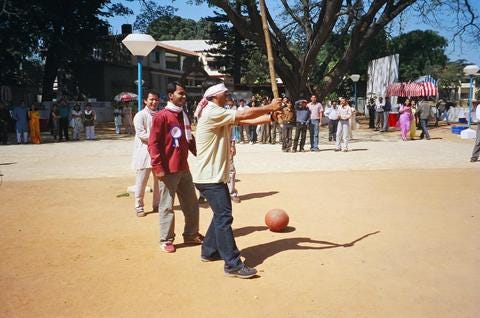
Picture Credit : Atanu Bhuyan Homepage
The celebrations culminate in joyous dancing to traditional Assamese Bihu songs. The lively rhythm of drums (dhol), the tunes of the pepa (a buffalo horn-pipe), and the claps and cheers of the community create an atmosphere of pure happiness and cultural pride.
Picture Credit : Hindustan Times
Magh Bihu ends not just as a celebration of the harvest but as a beautiful reminder of community, gratitude, and the enduring traditions of Assam.
The celebrations don’t end with Bihu Day. In the week that follows, people continue the festivities by visiting each other, organizing meetups, and exchanging the Assamese Gamusa as a gesture of respect and goodwill. Assamese Gamusa is a traditional Assamese cloth, often woven with intricate patterns (usually red patterns in white cloth), symbolizing respect, hospitality, and cultural pride. It is worn as a scarf (seen in the picture above). These gatherings keep the spirit of Magh Bihu alive, extending the warmth and joy of the festival beyond a single day.
For me, Magh Bihu is more than just a festival — it’s a feeling of home, warmth, and belonging. Even far from Assam, celebrating it reminds me of the joy of togetherness, the beauty of our traditions, and the gratitude we owe to nature. No matter where we are, the spirit of Bihu stays with us, keeping our roots alive.
메타데이터
- post_id
- bbffb7904d01
- slug
- magh-bihu-as-we-celebrate-it-bbffb7904d01
- url
- https://medium.com/@manpabarman/magh-bihu-as-we-celebrate-it-bbffb7904d01
- canonical_url
- https://medium.com/@manpabarman/magh-bihu-as-we-celebrate-it-bbffb7904d01
- author_url
- https://medium.com/@manpabarman
- status
- ok
- fetched_at
- 2026-06-15 20:49:13