A Simple Blood Test May Soon Detect Dozens of Cancers Early
Why researchers and healthcare companies are racing to develop the next generation of liquid biopsy technology.
A Simple Blood Test May Soon Detect Dozens of Cancers Early
Why researchers and healthcare companies are racing to develop the next generation of liquid biopsy technology.
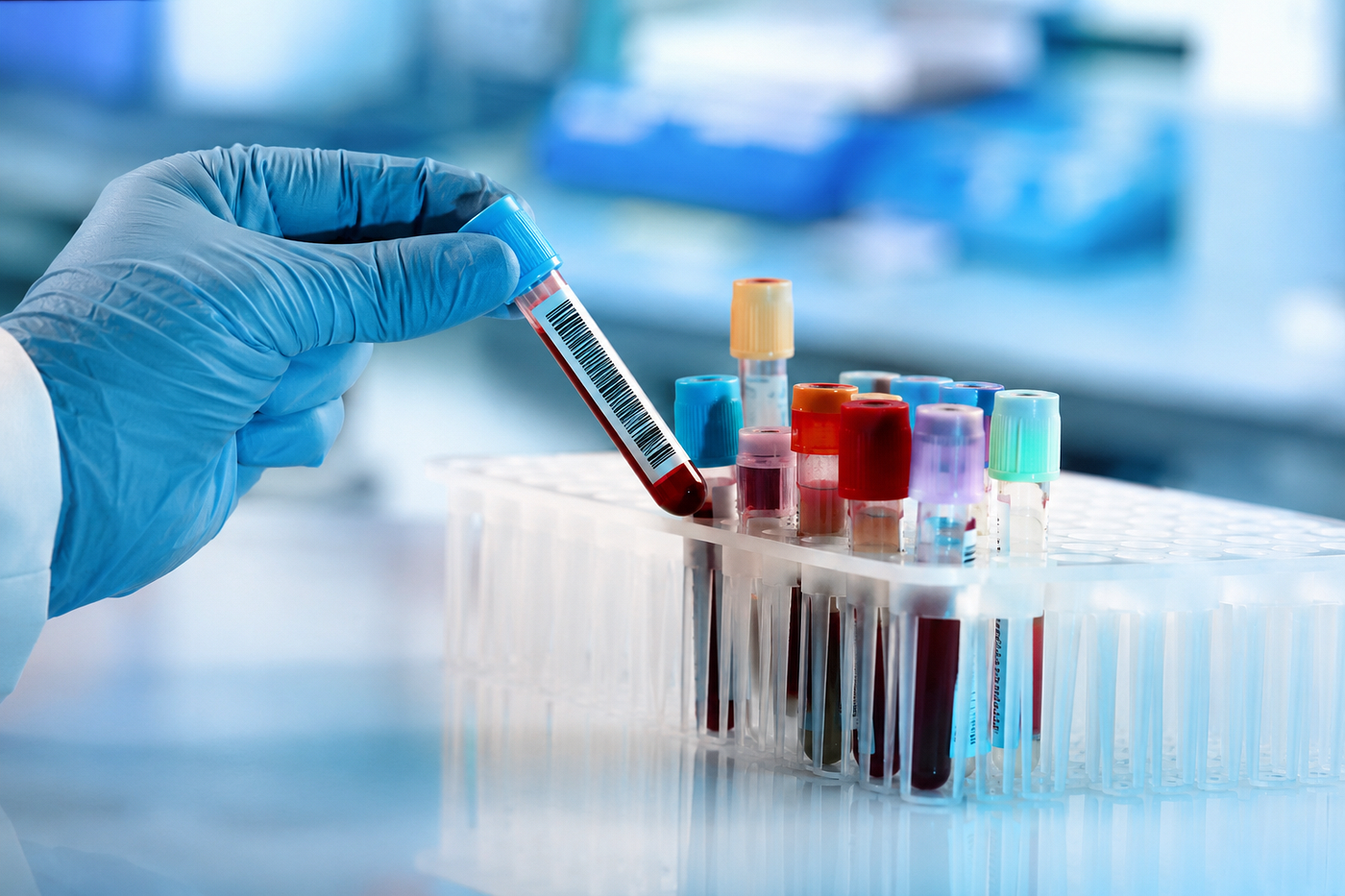
One of the fastest changes in the approach to cancer care involves an entirely different kind of blood test.
For years, a standard tool used for diagnosing and treating cancer has been tissue biopsies. Although reliable, tissue biopsies are invasive, uncomfortable, expensive and difficult to perform regularly.
Healthcare organizations around the globe have increasingly adopted liquid biopsy techniques which utilize blood tests or other body fluids to find cancer-associated signals.
The idea that a blood test could find cancer seemed once a far-off dream, but is quickly becoming reality in oncology.
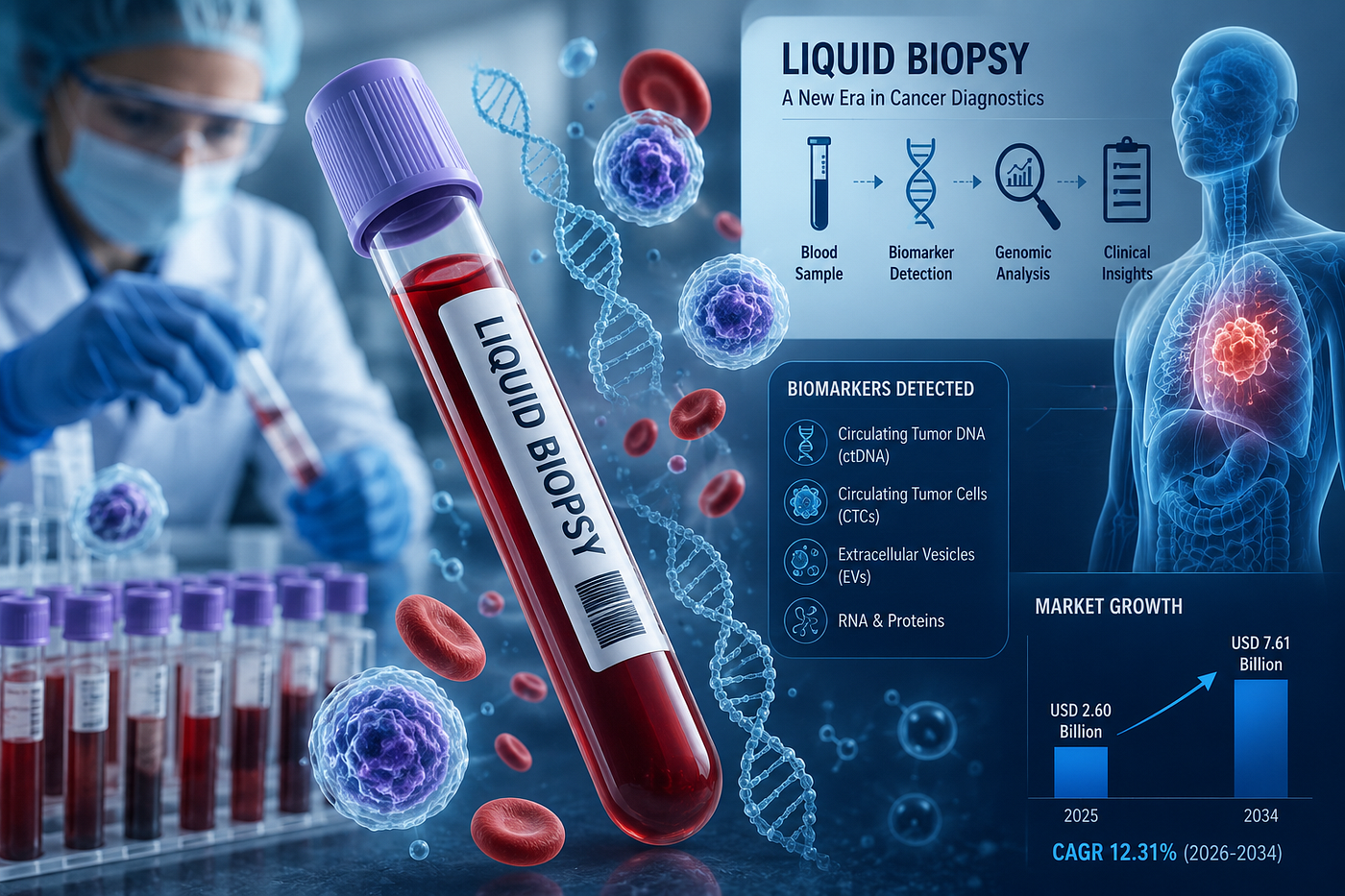
In 2025, the global liquid biopsy market size was worth almost $2.60 billion and is expected to grow to almost $7.61 billion by 2034 at a rate of 12.31% annually.
This enormous growth can be attributed to the medical system’s eagerness for faster and more precise cancer testing solutions.
What is liquid biopsy In details?
Liquid biopsy is a type of diagnostic test that can search blood, urine, saliva and even cerebrospinal fluid for indicators of cancer.
Instead of undergoing surgery to take tumor tissue out of your body, doctors are able to analyze small parts of the tumor present in your blood stream.
These indicators include:
- Circulating tumor DNA (ctDNA)
- Circulating tumor cells (CTCs)
- Extracellular vesicles/exosomes
- RNA fragments and proteins
This means that patients no longer have to undergo painful procedures if they need to monitor the progression, treatment effectiveness or recurrence of their cancer. Many researchers believe this technique will also lead to more advanced early-stage cancer detection over the next ten years. A recent report in Nature Cancer Precision Oncology suggests that because this technology provides rapid and minimally invasive solutions for monitoring cancer, developments in liquid biopsy techniques are expanding rapidly.
Why are more health systems turning to liquid biopsy tests lets see?
The rapid growth is partly fueled by the growing global rates of cancer diagnoses. Hundreds of thousands of people worldwide are diagnosed with cancer each year and healthcare systems worldwide struggle to expand detection rates while lowering diagnostic time. Tissue biopsies are usually done with the help of imaging, then surgical procedure and recovery time and sometimes additional procedures to monitor development. Liquid biopsy, on the other hand, only requires a blood draw and can thus be done far more frequently, allowing medical professionals to examine tumor development in real-time. It is particularly important for personalized medicine, in which specific treatments can be devised and adjusted based on a patient’s unique mutations or characteristics.
One major example: the NHS-Galleri cancer blood test trial in England
The NHS-Galleri trial, led by GRAIL, one of the world’s leading health companies, is the largest study that will explore whether multi-cancer early detection via blood test can find the existence of many different types of cancer with only one sample. In this trial, 140,000 individuals aged between 50 and 77 were examined for cancer and researchers aimed to see if the blood test could find traces of DNA from cancerous tissue, without prior indication of cancer in the subject. As stated by the NHS-Galleri Trial official website, the primary objective of this trial is to see whether the multi-cancer early detection test can accurately identify cancers before any noticeable symptoms have been developed.
This groundbreaking trial is one of the biggest on multi-cancer early detection in the world, and the research it generates continues to emphasize how seriously health organizations around the world are taking innovation in the field of liquid biopsy.
Early Multi-Cancer Detection to Transform the medical field
Among all developments within liquid biopsy, one of the most significant opportunities are MCED tests that aim to detect numerous types of cancer from one blood test instead of one at a time. This could change medical screenings universally and allow patients to be diagnosed with some of the most deadly cancers far earlier. Doctors are exploring the use of MCEDs as an early and precise way to diagnose cancer, according to American Association for Cancer Research (AACR).
Companies like GRAIL, Exact Sciences, and Freenome are heavily invested in the developing this technology.
AI is becoming integral to the use of liquid biopsy tests, lets see
AI is proving to be revolutionary in liquid biopsy since it aids medical professionals in analyzing and comprehending the massive quantities of genomic and molecular data generated from each test. AI can interpret mutation patterns and cancer signatures, thus increasing accuracy and reducing the time to interpret a test. Applications for AI in liquid biopsy include fragmentomics analysis, variant interpretation, predictive diagnostics, and methylation profiling. Medical scientists are developing multimodality liquid biopsy systems to analyze several types of data simultaneously. In recent experiments using AI and spectroscopy, a remarkable rate of diagnostic accuracy has been demonstrated, which scientists say will surely increase cancer screening capabilities in the coming years.
North America continues to lead the way, wow
Currently, North America holds the largest revenue share in the global liquid biopsy market. There are several reasons for this: excellent healthcare infrastructure, high usage of genomic testing, approval of many liquid biopsy products by the FDA and widening insurance reimbursement benefits. The United States has become a hot bed for innovation in precision oncology, which means that Guardant Health, Thermo Fisher Scientific, Illumina and Roche, all of which heavily invest in liquid biopsy, are located in one of the leading locations for liquid biopsy.
Asia-Pacific shows fast and significant growth
While North America remains the market leader, the Asia-Pacific market is showing incredible growth in liquid biopsy. Nations like China, Japan, and India have the advantage of both growing healthcare infrastructures and expanding interest in cancer research. This region has already demonstrated massive adoption in this field due to increasing awareness, advanced precision medicine initiatives and rising investment in healthcare infrastructure. Researchers believe Asia-Pacific could prove to be one of the fastest-growing markets for liquid biopsy over the coming years.
Ongoing Challenges for liquid biopsy technology, what challanges?
Although the global momentum behind liquid biopsy is strong, the industry continues to face some hurdles, such as detecting even the smallest of tumors. Challenges such as false positives, standardized tests and regulatory approval still need to be overcome, but also test affordability in widespread medical use. Some researchers worry that, despite showing promise, the validation process for using liquid biopsies as a standard part of medical testing needs much more testing. As stated by recent reports on the NHS-Galleri trial, testing thousands of individuals is not a simple feat, even with groundbreaking new technology.
The liquid biopsy market looks exceptionally promising.
Despite current obstacles, liquid biopsy offers hope that doctors can identify cancers early, provide precision treatment, utilize less invasive diagnostic methods and use advanced AI technologies in the detection process. In ten years’ time, liquid biopsy has the potential to be a common part of preventive health. The experts envision liquid biopsy being able to analyze genetic material, proteins, and even methylation signatures to achieve more accurate results when combined with AI-driven analysis. Such innovations could significantly transform the worldwide detection and treatment of cancer.
Here is our Final Thoughts
Liquid biopsy has officially moved from the realm of the laboratory into a prominent area of modern medical practice. It holds tremendous potential for earlier, safer and more accessible cancer detection. While some issues remain, this innovative technology and its ability to combine genetic analysis, AI and precision medicine may revolutionize how cancer care evolves over the next decade.
As cancer diagnostics continue to evolve, liquid biopsy is expected to play an increasingly important role in early detection and personalized treatment strategies. The coming years will reveal how quickly healthcare systems can integrate these technologies into routine clinical care.
메타데이터
- post_id
- bc554f87bc23
- slug
- a-simple-blood-test-may-soon-detect-dozens-of-cancers-early-bc554f87bc23
- url
- https://medium.com/@aj.jeswal44/a-simple-blood-test-may-soon-detect-dozens-of-cancers-early-bc554f87bc23
- canonical_url
- https://medium.com/@aj.jeswal44/a-simple-blood-test-may-soon-detect-dozens-of-cancers-early-bc554f87bc23
- author_url
- https://medium.com/@aj.jeswal44
- status
- ok
- fetched_at
- 2026-06-16 19:09:56