History of Jonathan Edwards
America’s greatest theologian
History Series: Jonathan Edwards
History of Jonathan Edwards
America’s greatest theologian

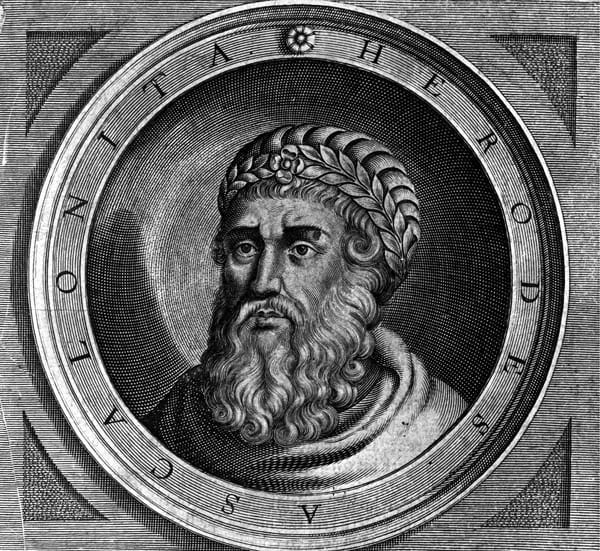
Reverand Jonathan Edwards. Image: Wikipedia
Jonathan Edwards (1703–1758) was the most important American preacher during the Great Awakening. He has been called “America’s greatest philosophical theologian.”
A revival in his church in Northampton, Massachusetts, between 1734 and 1735, was considered a harbinger of the Awakening, which unfolded a few years later. Edwards was more than an effective evangelical preacher, however. He was the principal intellectual chronicler, interpreter, and apologist for the Awakening.
What did he preach, what was the impact, and what was his legacy?
Edwards: Theologian and Revivalist
He wrote analytical descriptions of the revival, situating it within a broader theological context. Edwards was a world-class theologian, writing some of the most original and important treatises ever produced by an American.
Perhaps Jonathan Edwards’ only writing familiar to most modern audiences, Sinners in the Hands of an Angry God (1741), was not representative of his vast theological output, which includes some of the most learned and profound religious works ever written in America.
Edwards: Lover of Science and Religion
Edwards loved Enlightenment science and saw no conflict with faith. At 11, he wrote an essay on ballooning spider webs, including a drawing of the spider web.
Years later, he said in his aforementioned sermon:
Mankind’s own attempts to avoid falling into the “bottomless gulf” due to the overwhelming “weight and pressure towards hell” are insufficient, as “a spider’s web would have to stop a falling rock”.
Jonathan Edwards’ spider illustration from “Sinners in the Hands of an Angry God”. New York Historical Society and Museum.
Like most evangelical preachers during the Great Awakening, Edwards employed the fear of divine punishment to bring his audiences to repentance. However, it is a distortion of his and his colleagues’ messages and characters to dismiss them as mere “hellfire” preachers.
Early Revival in Massachusetts
Jonathan Edwards’s account of a revival in his own church at Northampton, Massachusetts, and in the neighboring 35 churches along the Connecticut River Valley was considered a portent of major spiritual developments throughout the British Empire. Consequently, his work A Faithful Narrative of the Surprising Work of God was first published in London in 1737 with an introduction by two leading English evangelical ministers, Isaac Watts, the famous hymn writer, and John Guyse.
In their introduction to Edwards’ work, the two divines said that,
“Never did we hear or read, since the first Ages of Christianity, any Event of this Kind so surprising as the present Narrative hath set before us.”
Edwards: A Timeline
- Oct 5, 1703: Born the only son of 11 children, a 4th-generation New Englander, with ministers on both sides of his parents’ families. His father was a minister and college-prep tutor. Mother was the daughter of the famous preacher, Solomon Stoddard.
- As a boy: he built forts in the woods not to play Settlers vs. Indians but for prayer meetings
- 1716: before he was 13, he entered Yale University not as a rationalist Anglican but as a Puritan of Reformed orthodoxy. When social drinking was popular, he’d attend events but sip the same cup all evening long. But he did like chocolate!
- Age 17: his conversion was neither intellectual nor moral, but aesthetic. God’s absolute sovereignty, which seemed formerly “repugnant,” now seemed beautiful to him; he now loved Calvinistic harmony and ethical fittingness. He found the doctrine of Election to be:
“exceedingly pleasant, bright and sweet.”
- 1723–26: Following college, he served a Presbyterian congregation in New York as “pulpit supply.” He returned to Yale as a tutor. Wrote his *Resolutions* for his conduct during this time.
- 1727: ordained as a minister and became assistant to his grandfather Solomon Stoddard in Northampton. He served as a scholar-pastor, not doing visitations. He spent 14 hours a day in study.
- 1741: he preached Sinners in the Hands of an Angry God in Enfield, CT, and Northampton, MA.
Monument in Enfield, Connecticut, commemorating the location where Sinners in the Hands of an Angry God was preached. Image: Wikipedia
- 1747: he joined the movement started in Scotland called the “concert in prayer,” and in the same year published An Humble Attempt to Promote Explicit Agreement and Visible Union of God’s People in Extraordinary Prayer for the Revival of Religion and the Advancement of Christ’s Kingdom on Earth.
Edwards’ Wife: Sarah Pierpont
As a young man, Edwards met Sarah Pierpont. Her father, James Pierpont, a founder of Yale, where Edwards studied and tutored, was donating books to the college, and Edwards would go by the Pierpont home to collect them. He saw her as he visited the house, a pretty brunette, cheerful and pious.
He prayed for her for 3 years until the time she was 17, when he married her.
A great woman makes up for all the insufficiencies of a pretty good man — she made him great:
- He studied 14 hours a day.
- He spent 1 hour with the children and 1 hour with her.
- They had 11 children, all of whom survived infancy, a testament to Sarah’s care.
Edwards’ Preaching During the Great Awakening
Sinners in the Hands of an Angry God, in Enfield, CT, July 8, 1741. Image: Wikipedia
Among the 1,500 sermons we have of Jonathan Edwards, there were only a handful like Sinners in the Hands of an Angry God.
Edwards said of preaching:
“If you only move the emotions without the head, you’ve not moved the soul. “If you only move the head without the emotions, you’ve not moved the soul.”
He stood 6’2” tall and was nearsighted. He’d preach with a quiet, emotive voice, concluding that man was “lost without God’s grace.”
He preached the Sinners in the Hands of an Angry God sermon twice. The first time, nothing happened. Congregants would greet him at the door following the sermon and shake his hand.
But the second time he preached it, congregants would respond by crying out,
“I’m going to hell, I’m going to Hell!”
He wrote a book about this revival, titled The Faithful Narrative of the Surprising Work of God in the Conversion of Many Hundred Souls in Northampton.
A Faithful Narrative of the Surprising Work of God, 1737. Image: Wikipedia
Results of the Great Awakening
In 6 months, 300 converts were added to his church in Northampton, a town of only 1,000.
Overall, 10% of American Colonial citizens were added to the professed faith in Christ. 80% of Americans were unified in a common understanding of Christian life and faith. And while not all were converted, Americans, North and South, shared a common evangelical vocabulary and view of life.
It was said of this time,
“The Holy Spirit moved like a fire across the land.”
Edwards: After Northampton
First Church of Christ (now Fifth Meetinghouse) in Northampton, Massachusetts. Author’s photo
Due to a disturbance he was involved with, he was ejected from his Connecticut Valley church at Northampton after 21 years and served in the “wilderness” of western Massachusetts.
Between 1751 and 1758, Edwards served at Stockbridge, a frontier church to the Mohawks, Mohegans, and Housatonic Native American tribes and townspeople. During these 7 years, his output was prodigious. While riding, he carried a blank white page, on which he would write notes and pin to his black jacket, so it looked like a checkerboard.
His son-in-law, Aaron Burr Sr, president of the College of New Jersey (now Princeton University), had died young, and Edwards was invited to replace him as the third president of the college in 1758
Edwards, always a scientific innovator, encouraged others to take the smallpox inoculation by doing so himself, but it went badly for him.
His last words were his love for Sarah, who was still packing up the house in Stockbridge and was not there. Then he urged his children to find faith in God. He asked for a small funeral, with the unspent money given to charities.
Those around him thought him dead, when he said,
“Trust in God, and you need not fear.”
The Legacy of the Edwards Family
In the late 19th century, A.E. Winship, an American educator, traced the descendants of Edwards almost 150 years after his death. Jonathan Edwards and his wife, Sarah, had produced a considerable American legacy:
- Third U.S. Vice-President (Aaron Burr, Jr.), Edith Roosevelt, and O. Henry
- 1 Dean of a law school and 1 dean of a medical school
- 3 U.S. Senators, 3 governors, and 3 mayors
- 13 college presidents and 30 judges
- 60 doctors and 60 authors
- 65 professors and 75 military officers
- 80 public office holders and 100 lawyers
- 100 clergymen and 285 college graduates.
Bill Petro, your friendly neighborhood historian billpetro.com
*Subscribe* to have future articles delivered to your email.
메타데이터
- post_id
- bc6d862b8346
- slug
- history-of-jonathan-edwards-bc6d862b8346
- url
- https://medium.com/illumination/history-of-jonathan-edwards-bc6d862b8346
- canonical_url
- https://medium.com/illumination/history-of-jonathan-edwards-bc6d862b8346
- author_url
- https://medium.com/@billpetro
- status
- ok
- fetched_at
- 2026-06-09 15:37:30