Want and Need: The Unspoken Bias in Faith, Family, and Dhansak
In every story, there’s a tug-of-war between want and need. In cinema, this battle often shapes the spine of a character’s journey. But…
Want and Need: The Unspoken Bias in Faith, Family, and Dhansak
In every story, there’s a tug-of-war between want and need. In cinema, this battle often shapes the spine of a character’s journey. But sometimes, this tug isn’t just emotional, it’s systemic. That’s the journey I found myself exploring with Dhansak… A story deeply rooted in my community, yet universal in its struggle.
As a Parsi man who married a Gujarati woman, my fight for my faith wasn’t so dreadful. Our marriage wasn’t exactly celebrated, but my children, despite having a non-Parsi mother, were welcomed into the fold. They were initiated into Zoroastrianism, embraced by our rituals, and blessed by the fire.
But what if I were a woman?
Would I be allowed to step inside the Agiyari? Would my children carry forward the faith that I so deeply loved? In many cases across our community, the answer is heartbreakingly: No.
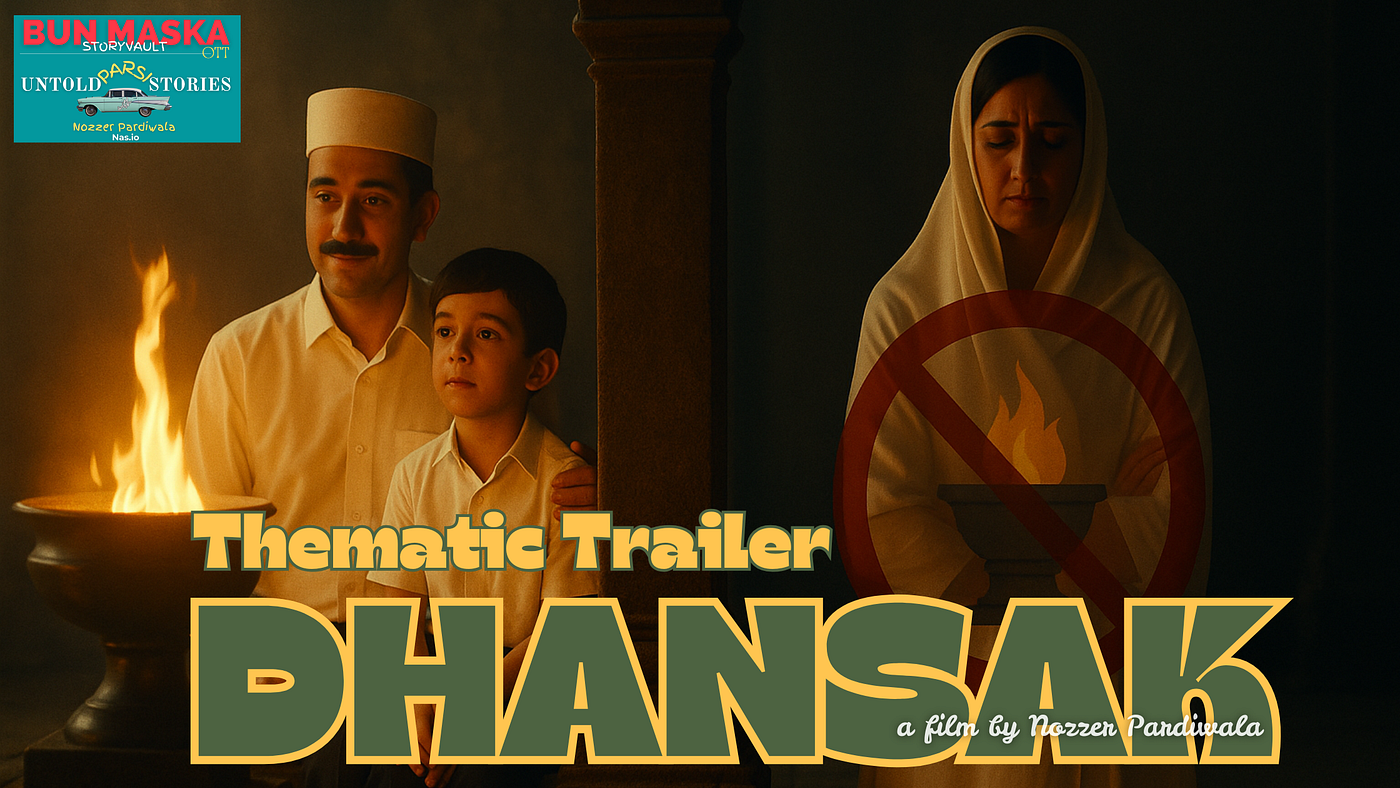
Thematic Trailer: Dhansak
Dhansak is not just a culinary metaphor. It is symbolic of the layered, simmering conflicts that brew beneath the surface of our tradition-rich but change-resistant community.
At its heart, the film is about identity, belonging, and the cost of choice.
In many ways, it’s about a woman who wants love but needs acceptance.
And a society that wants preservation, but desperately needs introspection.
The central theme of Dhansak is this conflict … a woman’s right to belong. It is about the unspoken, often unquestioned gender bias in how religious identity is inherited, enforced, and even policed.
Watch the thematic trailer
https://youtube.com/shorts/EUbuJ539kJY?feature=share
Let’s be clear: we are a small community. We often use this fragility as an argument to control who enters and who doesn’t. But we don’t use it as urgently when it comes to empowering women within it. A Parsi man can marry outside, and still retain full religious privileges. His children can be Parsi. His place in the Agiyari remains uncontested. But a Parsi woman who marries outside? She is seen as stepping out. And in many cases, locked out …. of fire temples, of community customs, and most heartbreakingly, of her own family’s final rites.
Why does lineage only flow through the father?
Why is a woman’s love punished with exile from her own community? Why must her children be denied the right to the same rituals and roots?
As artists, we don’t always provide answers. But we must ask the right questions.
The world is moving. Faith must evolve, or it risks becoming fossilized. If the goal is preservation, then exclusion is a short-sighted strategy.
Inclusion, especially of the very women who nurture, protect, and pass down culture, is not just a progressive ideal. It’s a spiritual necessity.
We like to believe that religion is sacred. But often, it’s the institution around it that distorts the spirit. Zoroastrianism, in its essence, stands for good thoughts, good words, and good deeds. Nowhere in that trinity is there space for exclusion based on gender or marriage.
And yet here we are — watching Parsi women struggle to say goodbye to their own parents, barred from the very rituals they were raised with. Watching their children grow up disconnected from a heritage that should have been their birthright.
What does that do to faith?
It turns it into fear. Into silence. Into division.
And yet, in every Parsi home, a mother still tells her children the stories of Zarathustra. Faith endures not because of gatekeeping, but because of continuity. And women have always been at the heart of that continuity.
To deny them is to deny the future.
Because at the end of the day, what we want is to belong. But what we need desperately and urgently is to evolve.
That’s the theme of *Dhansak*. That’s the theme of life.
Love
Nozzer
Dhansak streams EXCLUSIVELY on BUN MASKA OTT Pay-per-view
Viewer discretion is advised.
Duration: 18 minutes 28 seconds Language: English
9 by 16 Vertical Format. Best viewed on a Mobile Phone held vertically.
메타데이터
- post_id
- bc9ffc8ce59a
- slug
- want-and-need-the-unspoken-bias-in-faith-family-and-dhansak-bc9ffc8ce59a
- url
- https://medium.com/@nozzer.p/want-and-need-the-unspoken-bias-in-faith-family-and-dhansak-bc9ffc8ce59a
- canonical_url
- https://medium.com/@nozzer.p/want-and-need-the-unspoken-bias-in-faith-family-and-dhansak-bc9ffc8ce59a
- author_url
- https://medium.com/@nozzer.p
- status
- ok
- fetched_at
- 2026-07-09 08:45:44