Changatham-the saviours of temple, travellers and country
Changatham is a special wing of soldiers who protect the temple from plunderers, accompany and provide safety for the travelers and chiefs…
Changatham-the saviours of temple, travellers and country
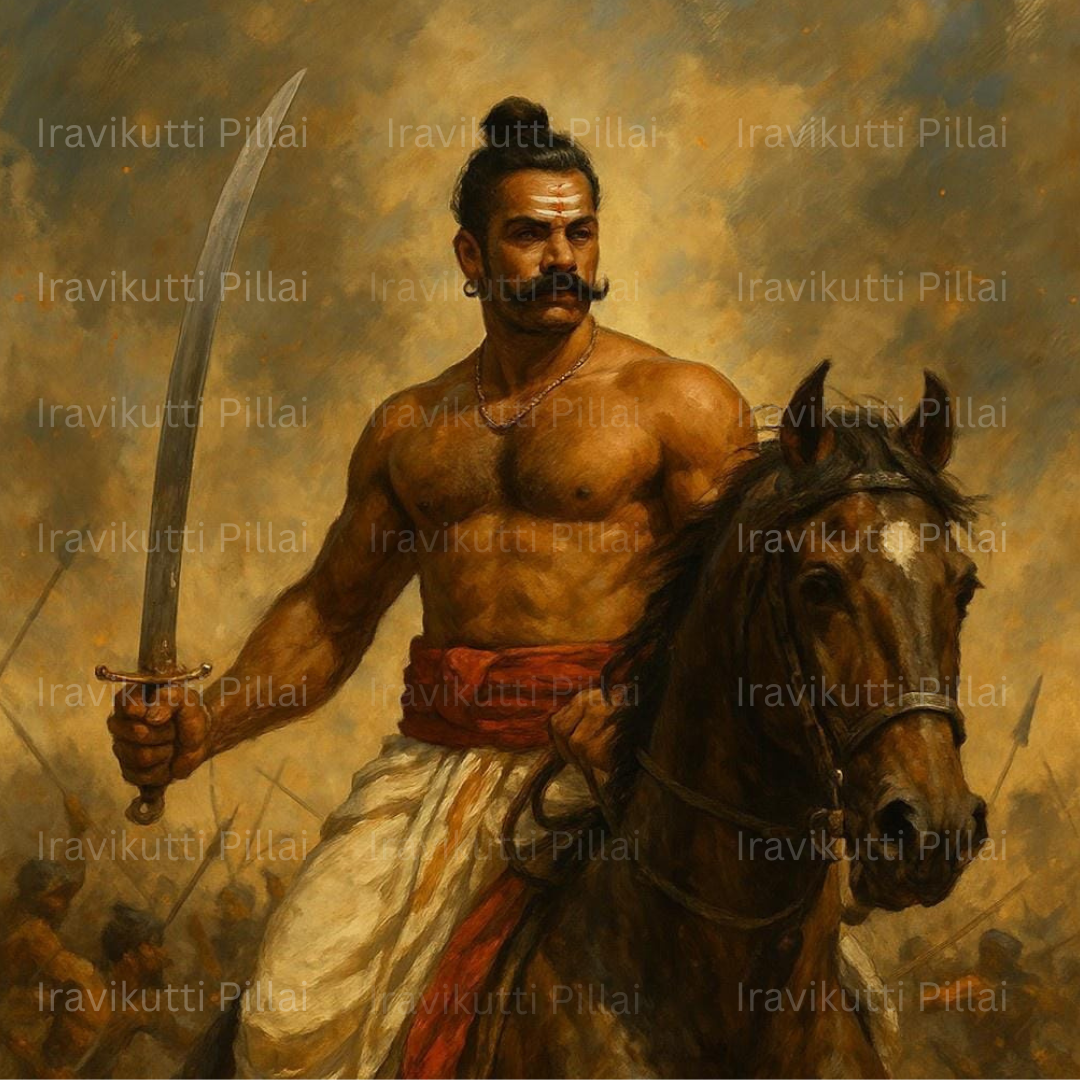
Changatham is a special wing of soldiers who protect the temple from plunderers, accompany and provide safety for the travelers and chiefs during their travel. Changatham was one of the source of revenue for Kerala kingdoms. The unit generated “protection money” for the kingdom. The trust in changatham was high for travelers and chieftains since the soldiers in the unit after taking an oath to protect the lives and belongings of the beneficiary would even dare to lose their lives in the conflict. In addition, the death of the changatham soldiers will invite blood feuds and death of enemies from the soldier’s relatives. Two men are selected in the Changatham as captains who are men of honor and also good at horse riding. Such men of expertise have several soldiers under their guidance. The king was directly involved in the appointment and changing of these men at service. The historical events and narrations of Changatham by foreign authors throw more light on this topic.
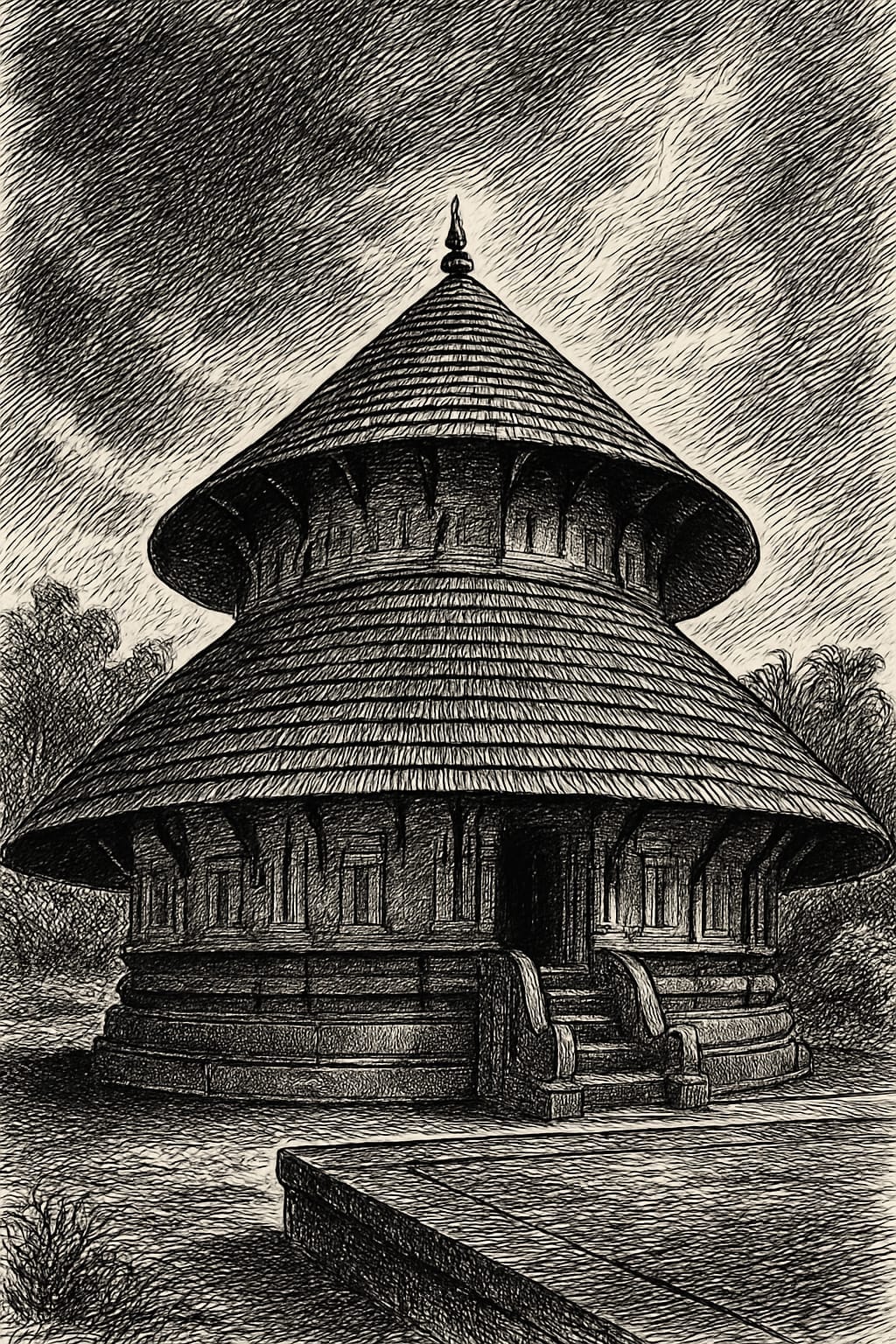
Portugese governor of Cochin Martin Al Fonso de Sousa had a history of plundering of Hindu temples under the direction of Portugal king. The governor has plundered several temples in Goa and razed them into grounds. After the unsuccessful attempts of his plundering attempt in Vijayanagara he headed towards Kerala for trade. Though he ceased from plundering in Kerala,in the year 1542–45 governor of Portuguese Martin AL-Fonso de Sousa led his team of soldiers to plunder the temple of Tevalakara near Kollam. The governor directed the expedition from the local information that the temple had huge reserves of gold. There are two Changatham/Jangadas assigned with the task of protecting the temple. On the day of the expedition, the Changatham units moved to the south of the temple thereby avoiding a conflict. The plunder was organized by the soldiers at midnight. The governor and his men entered the temple and closed the door before starting the plunder. The Brahmins inside the temple were tortured and his soldiers started to dig the floor and found the gold worth of 50 Euros. With the help of slaves they carried the digging with the barrels of matchlock powder. In the morning, when the soldiers were returning with the plundered gold the Nairs numbering from ten to twelve encountered them and attacked the Portuguese. In the conflict, some Nayar men belonging to the Changatham died in the fighting. The sacrifice of the nayars drew the attention of the people which resulted in death of 30 and 150 were wounded.
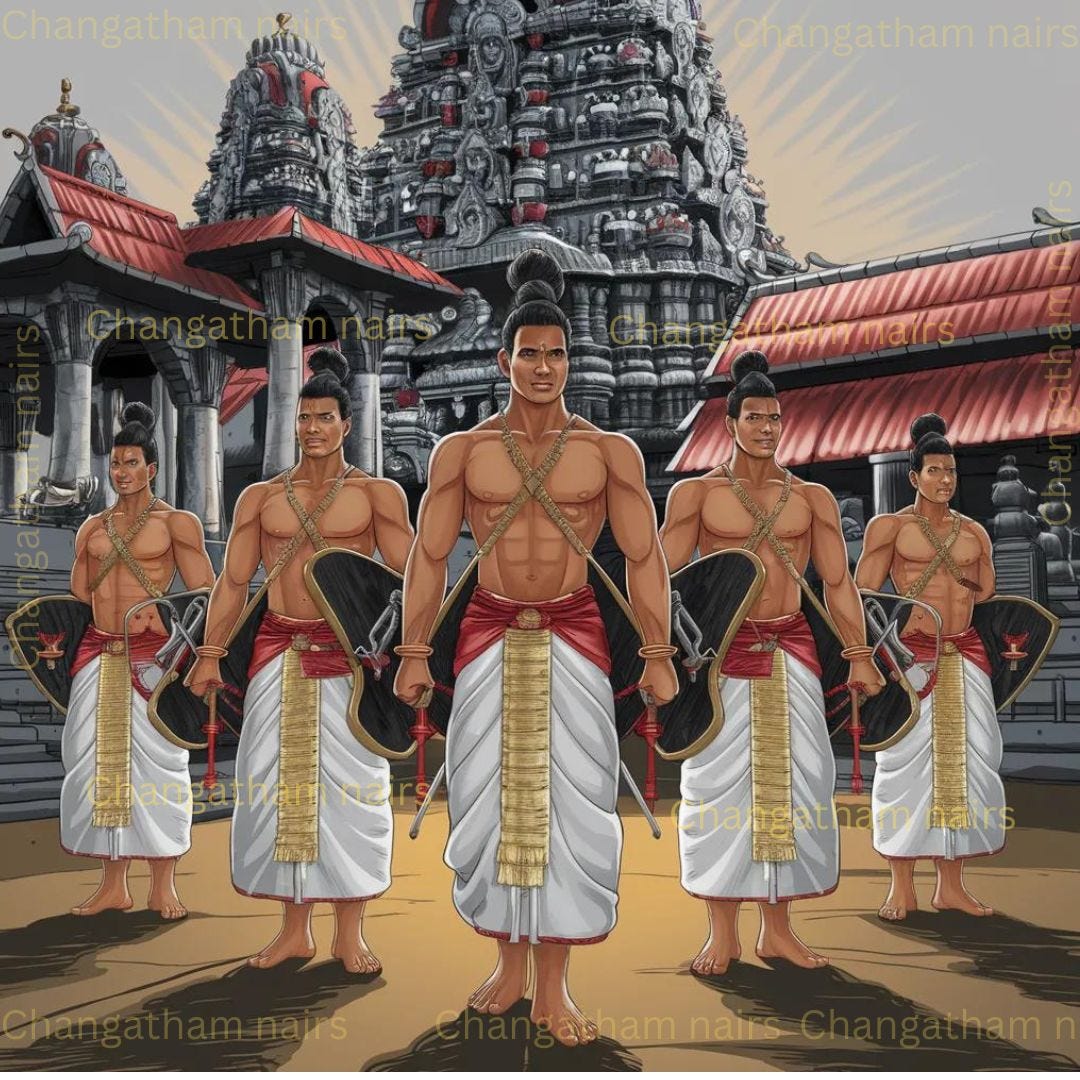
Illustration of Nair Changatham soldiers guarding a temple
Yule a Portuguese traveler describes the Changatham as “They are responsible guides in the nayar country who accompany the travelers and provide security to their lives. The organization is also known as Malayalam Kaval Changatham offers companionship and confidence during travel. The travelers pay an amount to the kingdom for the escort by the changatham”.
Fa-hien a Chinese traveler who visited south India in 400 AD describes that those who need security during a travel have to pay a sum of money to the king of the country and these people will accompany the way.
Pyrard di Lavel (1610 A. D.) describes that ““ I travelled with another captain who had with him those Jengaiy who are the Nair guides, and who are found at the gates of towns to act as escort to those who require them. Every one takes them, the weak for safety and protection. Those who are strangers and travel in great companies and well-armed take them only as witnesses that they are not aggressors in cases of any dispute with the Nairs”
Vincenzo Maria (1672) has the same account to give. “The safest of ail journeyings in India, ” says Vincenzo, “are through the kingdom of the Nairs and the Zamorin, if you travel with Giancadas/Changatham, the most perilous if you go alone. These Giancadas are certain heathen men, who venture their own lives and the lives of their kinsfolk for small remuneration, to guarantee the safety of travellers.”
Barbosa says that such a one takes “some of these Nairs, as many as he pleases, into his pay, and they accompany and guard him and on their account, he goes securely, since no one dares molest him ; because if he were molested, they and all their lineage would take vengeance on him who should cause this molestation. These guards are called Jangada and there are some people who sometimes take so many of these Nairs, and of such quality, that on their account they no longer fear the king, who would not venture to command the execution of a man who was guarded by these, in order not to expose many Nairs to danger for it. And even if the Nairs were not in his company, when the man they guard was killed, they would not the less revenge his death”
Reference
- Malabar and Portugese by K.M Panikkar
- History of Kerala : a history of Kerala written in the form of notes on Visscher’s letters from Malabar. Volume: 4 By: Padmanabha Menon, K. P. (Krishnat P.), 1857–1919
메타데이터
- post_id
- bca41b9ce8a4
- slug
- changatham-the-saviours-of-temple-travellers-and-country-bca41b9ce8a4
- url
- https://medium.com/@nairsofkerala/changatham-the-saviours-of-temple-travellers-and-country-bca41b9ce8a4
- canonical_url
- https://medium.com/@nairsofkerala/changatham-the-saviours-of-temple-travellers-and-country-bca41b9ce8a4
- author_url
- https://medium.com/@nairsofkerala
- status
- ok
- fetched_at
- 2026-07-23 16:21:46