The Real Shift in the AI Era Is Not “Coding,” but “How We Work”
I recently listened to a Naval podcast conversation with Guillermo Rauch of Vercel, Blake Scholl of Boom Supersonic, and Max Hodak of…
The Real Shift in the AI Era Is Not “Coding,” but “How We Work”
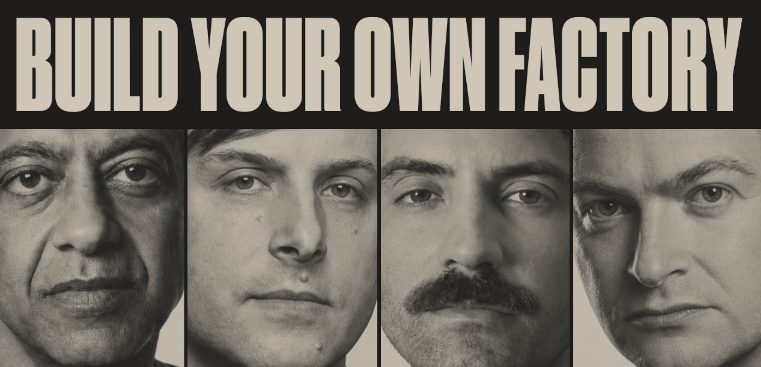
I recently listened to a Naval podcast conversation with Guillermo Rauch of Vercel, Blake Scholl of Boom Supersonic, and Max Hodak of Science. On the surface, it was a discussion about AI, software, hardware, regulation, and creativity. But the core takeaway I got from it was much simpler.
AI is not just a tool that helps us “write code faster.”
AI is changing the way we define work, execute it, verify it, and run organizations.
In the past, an engineer was someone who directly produced the output. They implemented features, fixed bugs, reviewed code, and deployed software. But now, a great engineer is becoming less like someone who produces a single artifact and more like someone who designs a “factory” that continuously produces artifacts.
In other words, future productivity will depend less on how much code I personally write and more on how well I can design agent systems, set the right direction, and verify the results.
From 10x Engineers to 100x and 1000x Engineers
In the past, even the phrase “10x engineer” was controversial. The idea was that some people could create ten times more impact than the average engineer. But with AI, that gap is widening even further.
What matters now is not simply typing speed or implementation ability.
The ability to choose which problems are worth solving, to know what direction to give AI, and to verify whether the output is correct has become far more important.
AI models reflect the level of the user to some extent. When an experienced developer uses AI, it can behave like a powerful senior engineer. But when someone without enough domain understanding uses it, the output tends to remain shallow.
So the more important question is not, “Will AI replace junior engineers?”
The better question is this:
Why does the same AI make some people 2x better, while making others 10x or even 100x better?
The answer ultimately comes down to taste and judgment.
It is the ability to know what architecture is good, whether to use PostgreSQL or ClickHouse, which queue system fits the problem, and whether a piece of code is ready for production.
Even if AI can generate code, the value of the person who sets the direction and takes responsibility for the result has not disappeared. In fact, it has become even greater.
Don’t Save Tokens. Save Time.
One of the most interesting points in the conversation was the attitude toward “token cost.”
Many people think about AI usage in terms of tokens. But this mindset is similar to the old way of measuring productivity by lines of code. What matters is not how many tokens you used, but how much time you saved and how much better the final result became.
AI models may look expensive, but in most cases they are still far cheaper than human time. So it can be entirely rational to use better models, ask multiple models the same question, have them revise the answer, and make them refactor the result.
The future of development will not be about writing “one perfect prompt.”
It will be closer to fast iteration and verification.
We will write code, revise it, review it again, test it, and push it toward production quality through repeated collaboration with AI.
The Moat Around Pure Software Is Weakening
The most provocative question in the conversation was this:
Are pure software companies still investable?
As AI becomes increasingly good at writing code, simple CRUD apps, internal tools, and generic SaaS products will become much easier to build. In the past, companies relied on Excel and complex spreadsheets as their de facto software because they could not build custom software themselves. But now, each team can start building the tools they need on their own.
This shift could have a major impact on enterprise software.
In the past, companies bought external SaaS products to solve specific workflows. In the future, someone inside the company may be able to build a tool tailored exactly to their organization in just a few days, working with AI agents.
That does not mean all software will die. In fact, some types of software will become even more important: infrastructure, reusable building blocks, APIs and CLIs that agents can call, and reliable execution environments.
AI agents also do not want to recreate the universe from scratch every time. Like humans, they reuse good libraries, frameworks, and standardized infrastructure.
So the software moat in the agent era may shift away from “apps” and toward “building blocks.”
AI Is a Huge Opportunity for Hardware Companies
For pure software companies, AI may look like a threat. But for hardware companies, it is almost like a cheat code.
Hardware companies have always needed software, but they often struggled to secure enough strong software talent. In industries such as aviation, manufacturing, biotech, and robotics, many engineering workflows are still tied to Excel, email, and manual documentation.
The Boom Supersonic example was especially striking. In traditional aviation engineering, an engineer might spend an entire day analyzing and transforming a single turbine blade. But when software-enabled workflows are combined with AI, hardware engineers can start building the calculation and simulation tools they need by themselves.
In this context, the role of the software engineer is not to write every line of code directly.
Their role is to design the system structure and architecture, and to enable hardware engineers to turn their domain knowledge into software through AI.
This is not just a productivity improvement.
When the cost of iteration falls, the design process itself changes. Teams can experiment more, fail faster, and change direction more often.
AI Will Also Transform Regulation and Documentation
Surprisingly, some of AI’s biggest impact may appear in regulatory work before it appears in coding.
In highly regulated industries such as aircraft, medical devices, and biotech products, documentation and certification can become bigger bottlenecks than the actual development work. For example, proving that an aircraft can withstand a lightning strike may require hundreds of pages of test plans and regulatory documentation.
In the past, this kind of work could take months. If the product specifications changed, the documents had to change as well. As a result, people became afraid of change itself.
But with AI and RAG, teams can track relevant regulations, ISO standards, testing requirements, and the impact of changes much faster.
The first-order effect is time savings.
But the more important second-order effect is that the cost of change goes down.
When the cost of change decreases, organizations can design more boldly. Regulation may no longer function only as a wall that slows everything down. It may start to look more like a test suite that agents need to pass.
Of course, the deeper problem of regulation remains. There is an asymmetric incentive structure: people are held responsible for approving something that goes wrong, but no one is held responsible for blocking something good. So even if AI makes regulatory response faster, it will not automatically solve the fundamental institutional design problem.
Humans Are Moving from Authors to Verifiers
As AI-generated code and documents increase, the human role will shift from “reading every line directly” to “verifying the safety and meaning of the result.”
In the past, the ideal PR review involved reading all the code. But in an era where AI generates large amounts of code, that approach will hit its limits.
The more important questions going forward will be:
- Are the tests sufficient?
- Is the simulation correct?
- Are there type checks and validation mechanisms?
- What happens if this fails in production?
- Do I understand and take responsibility for the consequences of this change?
In other words, humans are increasingly becoming verifiers.
They are no longer the people who directly create everything. They are the people who evaluate, approve, and take responsibility for what the system produces.
Law, regulation, software, security, and operations are all likely to move in a similar direction. AI will create the draft, and humans will provide judgment and accountability.
The Autonomous Company
The most interesting part of the conversation was the idea of an “autonomous organization.”
Some companies are already using agents to detect system anomalies, analyze logs, infer root causes, and suggest fixes. In security, there are cases where thousands of agents are run in parallel to find vulnerabilities, compressing months of security research into just a few days.
A similar trend is emerging in individual software development. When a user reports a bug inside an app, logs and screenshots can be uploaded automatically. An agent can analyze the issue, propose a fix, and generate a test build.
If this trend continues, every type of work inside a company could change in this direction.
People will no longer perform repetitive work themselves. Instead, they will create agents that perform repetitive work.
Then people will improve those agents, redirect them, and look for more important problems to solve.
One experiment mentioned in the conversation was especially memorable. A company stopped all projects and told every employee: “Use AI to build whatever you think is most important.”
Contrary to what some might expect, most of the resulting projects were not useless toys. They were tools that were genuinely useful to the company.
This is an important signal.
People know where their own work gets stuck. They simply could not build the software to solve those problems before. AI is narrowing that gap.
The Skills That Matter Next: Creativity, Taste, Judgment, and the Ability to Start
When AI provides basic knowledge and implementation ability, the human skills that remain become clearer.
Creativity.
Taste.
Judgment.
And the ability to start.
The value of expertise will not disappear. But the value of simply knowing terminology, memorizing the conventions of a field, or relying on credentials and degrees for authority may decline. AI lowers those barriers quickly.
On the other hand, the value of people who can connect different fields, choose which problems matter, judge the quality of outcomes, and actually move will increase.
In the future, the gap between “experts and non-experts” may matter less than the gap between “people who use AI well” and “people who do not use AI.”
The Conclusion of the AI Era Is Not the End of Humans, but Human Leverage
What I felt most strongly after listening to this conversation is that the story of AI simply replacing humans is too simplistic.
AI will eliminate some jobs. Especially repetitive and standardized work will be automated quickly. But at the same time, AI will allow far more people to build things. People who could not code will build apps. Hardware engineers will build their own tools. Small teams will attempt work that previously only large companies could do.
So the future may not belong to one or two massive teams.
It may belong to many more small teams.
Two or three people designing an aircraft engine. One person building an internal SaaS product. A small research team handling complex regulatory documents. An individual continuously creating and using their own custom software.
To me, the strategy that matters right now is clear.
Do not use AI merely as a search box or chatbot. Turn it into the production system for your work.
Find repetitive tasks, assign them to agents, verify the results, and improve the system again.
Future competitiveness will be less about “how much I know” and more about “how quickly I can learn, build, fix, and deploy with AI.”
AI is not the end of humans.
It is simply a tool that leaves humans with fewer excuses.
The excuse that “I had an idea but could not build it” is becoming less convincing.
What matters now is whether you have an idea, whether you are willing to start, and whether you have the judgment to take responsibility for the result.
메타데이터
- post_id
- bca7c4bb80ca
- slug
- the-real-shift-in-the-ai-era-is-not-coding-but-how-we-work-bca7c4bb80ca
- url
- https://medium.com/@EthanCooperwrtier/the-real-shift-in-the-ai-era-is-not-coding-but-how-we-work-bca7c4bb80ca
- canonical_url
- https://medium.com/@EthanCooperwrtier/the-real-shift-in-the-ai-era-is-not-coding-but-how-we-work-bca7c4bb80ca
- author_url
- https://medium.com/@EthanCooperwrtier
- status
- ok
- fetched_at
- 2026-06-22 12:55:45