When Texts Read Us Back: Play and Truth in Philosophical Hermeneutics
From Gadamer's concept of play to Heidegger's notion of disclosure, hermeneutics challenges the traditional opposition between subject and…
We continue with the basic assumptions of hermeneutics. One important point we have already seen is that the framework for approaching reality is no longer simply a matter of subject versus object. That distinction begins to blur. The last concept we discussed was play (Spiel), which in Gadamer’s language becomes a central framework.
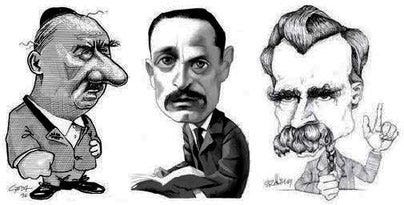
https://www.ludozofi.com/home/library/a-non-subjectivist-concept-of-play/
One important feature of play is that there is no clear subject and object. Think about a football game. Who is playing whom? Is the player controlling the ball, or is the ball in some sense controlling the player? The distinction is not entirely clear. In hermeneutics, something similar happens. We appear to be reading a text, but at the same time the text is reading us. The text forces us to examine our own assumptions. So interpretation is not merely us reading the text; the text also compels us to reconsider our own ways of thinking.
Within this framework of play, the distinction between subject and object loses its central importance. What finally appears in interpretation is not simply the meaning of the text, nor merely our own thoughts. What emerges is a new insight into reality itself.
The same thing happens when we watch a football match. What ultimately appears is not only the skill of the players, nor merely our enjoyment as spectators. What emerges is an understanding of the very nature of the game itself. We suddenly realize what football actually is. Likewise, when we watch a film, we may be fascinated by the characters, but what finally remains is a new insight into some aspect of reality. We may realize how deceptive human beings can be, or discover something new about love. What emerges is the subject matter itself, the central theme.
In religious ritual, the same principle applies. A ritual can be deeply moving, or it can feel completely dry. Yet what ultimately matters is whether it opens up a deeper awareness of our relationship with God, the transcendent, or whatever ultimate reality one wishes to name. The insight that emerges depends heavily on the intensity of our involvement.

The depth of understanding is directly related to the depth of participation. If you read a text while simultaneously chatting, checking messages, and doing other things, the insight that emerges will be limited. The same is true when watching football or participating in class discussions.
This becomes obvious in student presentations. Many lecturers are often disappointed because it becomes apparent that the presenter does not truly understand the material being presented. This is especially evident when the text under discussion is written in a foreign language. Students often focus on details that are not important while missing the central argument altogether. Sometimes they merely translate the text without understanding the translation itself. By contrast, students who have truly engaged with the material usually present only the essential points. They grasp the core ideas. That is what makes a presentation impressive.
Thus intensity of engagement profoundly influences interpretation. At this point, the distinction between subjective and objective begins to feel inadequate. In complexity theory, one might say that something emerges from the interaction itself. Many elements interact—teacher, student, text, context—and out of that interaction a new understanding emerges.
Consider this example. Students may attend the same classes, read the same materials, and receive the same instruction, yet their lives unfold in completely different ways. One may become a salesperson, another a parking attendant, another perhaps even a gangster. The outcome cannot be reduced to any single factor. What emerges is something new.
This brings us to another fundamental issue: truth.
Traditionally, truth was understood as something already existing independently of us. Truth was viewed as an objective structure, a law of nature waiting to be discovered. The word discover is revealing: it literally means to remove a cover. Truth was thought to be hidden beneath appearances, and science's task was to uncover it.
In this view, truth is fixed. If proposition A is true, then proposition B must be false. If one scientist discovers A and another discovers B, one of them must be mistaken. This was the framework of objectivism and positivism.
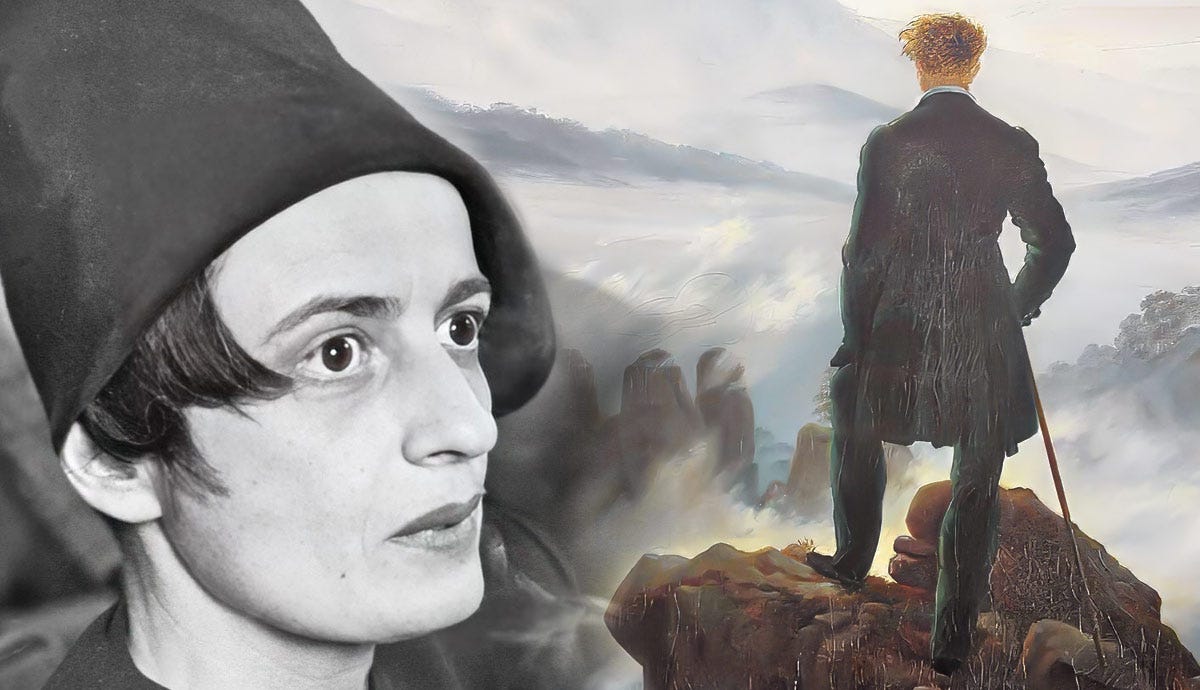
https://www.thecollector.com/objectivism-ayn-rand-philosophy/
Religion often operated similarly, though in a different way. In science, truth had to be discovered. In religion, truth was often assumed to have already been given through scripture, doctrine, or tradition. Consequently, the tendency toward absolutism could become even stronger.
I once had a discussion about philosophy with someone, and I received a question from him. He asked why philosophy always insists on questioning everything. He felt philosophy was arrogant because religion had already provided all the answers. But this raises an interesting question: who is actually more arrogant—the person who continues searching because they do not claim to possess the truth, or the person who believes they already have it?
The conventional framework assumes that truth is already in hand. Hermeneutics challenges this assumption.
From a hermeneutic perspective, truth is relational. Truth depends not only on the object but also on the perspective through which it is encountered. It emerges within relationships.
For example, I know that I am short only in relation to someone taller than me. Yet when standing beside someone shorter, I become tall. Both descriptions are true depending on the relationship involved.

https://jushify.com/tools/real-image-height-comparison-tool/
The same applies to personal characteristics. My friends may see me as a serious person. Yet people who know me well may describe me as ridiculous, funny, and completely unserious. Both descriptions can be true.
A thing can be beautiful and ugly at the same time, depending on perspective. It can be profound from one angle and shallow from another. This challenges minds trained by science and religion to think in rigid binaries.
A work of art or a text may appear superficial to one person yet profound to another. This initially sounds relativistic or even anarchic, as if there are no standards. But standards still exist; they simply function differently.
Truth is no longer something fixed and final. The way we approach reality helps shape what truth becomes for us. The same book can reveal vastly different depths to different readers. Someone with broader experience and understanding may discover dimensions invisible to another reader.
Because of this, hermeneutics prefers not to speak in terms of true versus false. A more useful distinction is shallow versus deep interpretation.
Even this distinction is not fixed. Interpretation remains an ongoing process. One moves from shallower understandings toward deeper ones. Growth never stops.
This is why Heidegger understands truth as a process of disclosure. Truth is not a possession but a continuous unveiling. Every new encounter—with texts, people, cultures, and experiences—expands our horizon.

https://www.dreamstime.com/illustration/truth-revealed.html
Life itself is interpretation. Life itself is relationship. As long as we continue to live and relate, our horizon continues to expand.
Truth therefore becomes a matter of seeing more and more. We see more of the world, but also more of ourselves. We gain deeper insight into our assumptions, our beliefs, our religion, our science, and our identity.
In ordinary language, this is what we call enlightenment or illumination. We often say, “That was enlightening.” Hermeneutics takes this everyday experience seriously. Truth is not a final answer. It is an ongoing process of becoming more aware.

https://www.dreamstime.com/illustration/enlightenment-concept.html
At this point someone may ask: if the distinction between subject and object becomes less important, does the subject disappear?
No. The subject remains as an agent. People still act, think, and interpret. What changes is the emphasis. Traditional thought focused on who acts. Hermeneutics focuses on what emerges through the interaction.
The crucial question is not merely who is interpreting, but what new understanding appears through the encounter between interpreter and text.
Who decides which interpretation is better? Ultimately, interpretive communities do. Several criteria remain important: complexity, coherence of reasoning, explanatory power, and correspondence with the text or with reality.
Interpretations are assessed collectively through dialogue. No single individual functions as an absolute judge. Rather, understanding develops through ongoing conversation among interpreters.
In this sense, dialogue itself becomes the court in which interpretations are tested and refined.
메타데이터
- post_id
- bcb29d84ccee
- slug
- when-texts-read-us-back-play-and-truth-in-philosophical-hermeneutics-bcb29d84ccee
- url
- https://medium.com/@shrimpmindparadox/when-texts-read-us-back-play-and-truth-in-philosophical-hermeneutics-bcb29d84ccee
- canonical_url
- https://medium.com/@shrimpmindparadox/when-texts-read-us-back-play-and-truth-in-philosophical-hermeneutics-bcb29d84ccee
- author_url
- https://medium.com/@shrimpmindparadox
- status
- ok
- fetched_at
- 2026-06-12 18:14:10