Aikido by Another Name
I recently watched an NHK documentary called Jujutsu: The Art of Flexibility. A judoka travels to a Tenjin Shinyo-ryū dojo, one of Japan’s…
Aikido by Another Name
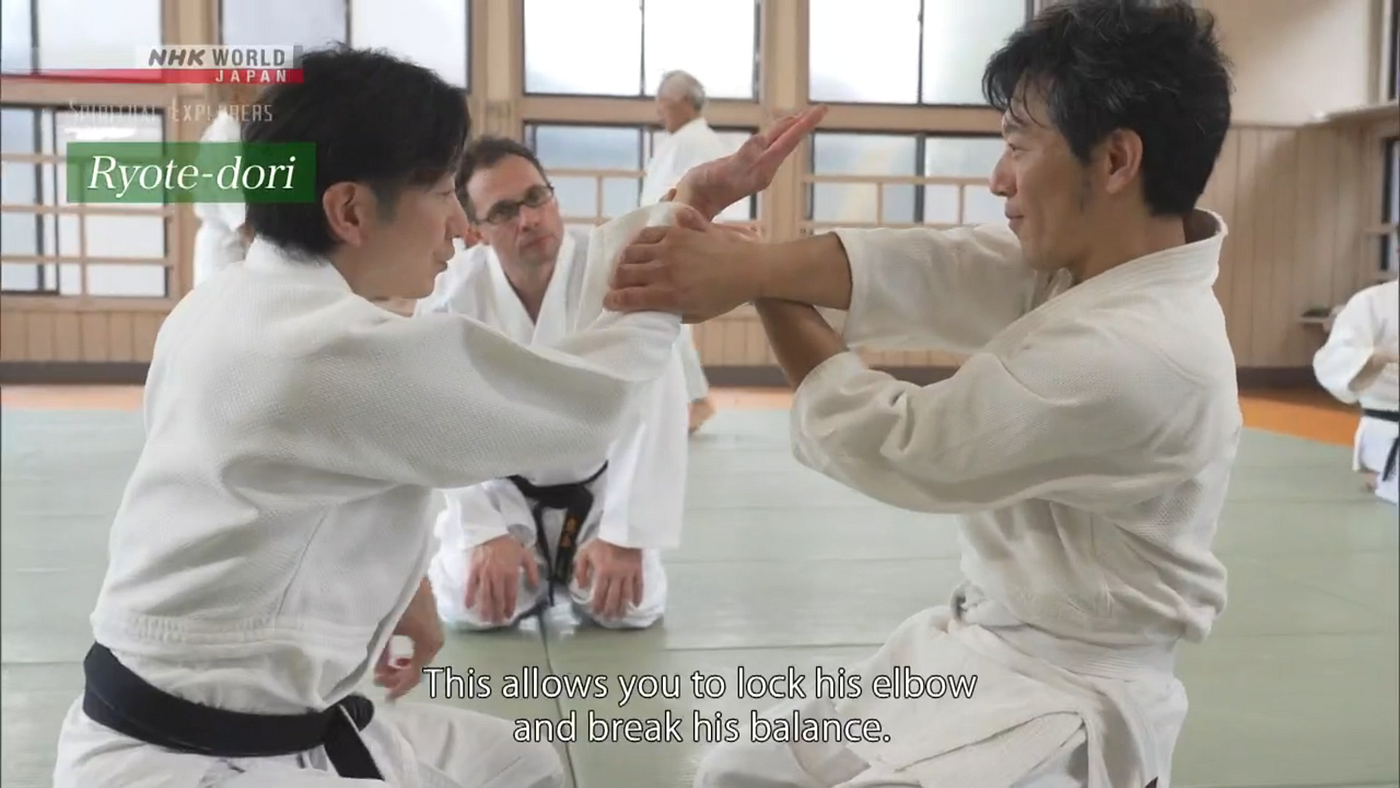
I recently watched an NHK documentary called Jujutsu: The Art of Flexibility. A judoka travels to a Tenjin Shinyo-ryū dojo, one of Japan’s classical jūjutsu schools, to explore the meaning of jū (柔) — often translated as “flexibility” or “gentleness,” but in reality is much deeper.
As I watched, the atmosphere felt strikingly familiar. The instructors demonstrated how to relax and escape a grip, how to redirect force instead of resisting, how to move with the opponent’s weight without clashing. It could easily have been an aikidō dōjō.
It reminded me of something I have come to believe: one can “do aikidō” without learning the art of aikidō.
What is jū?
The documentary uses nice metaphors. A willow tree swaying in the wind — yielding, but not breaking. Techniques that work only when you relax. Control achieved not through muscular effort, but by directing gravity and finding natural openings.
The also spoke of jū as the “softness of the heart,” and of choosing “neither fight nor flight, but harmony.” These images reach beyond mechanics: they describe a way of meeting conflict without resistance, yet also without collapse.
This is exactly what aikidō strives for with aiki — harmony, not clash; connection, not resistance.
Aikidō in the wider jūjutsu stream
It’s tempting to think of aikidō as unique, but in fact it is one modern expression of principles found throughout the classical jūjutsu stream (yawara).
- Takenouchi-ryū is often called the fountainhead of jūjutsu. Its methods often emphasize subduing and capturing rather than killing — avoiding blood feuds and maintaining order.
- Asayama Ichiden-ryū highlights execution of technique at the very instant of contact, before the opponent can mount resistance.
- Tenjin Shinyo-ryū emphasizes relaxed movement and lack of force
- Daitō-ryū aiki-jūjutsu transmitted the technical basis of aikidō and the principles of aiki.
Seen in this light, aikidō is not an outlier but part of a centuries-long continuum of arts seeking to embody jū.
Peace and practice
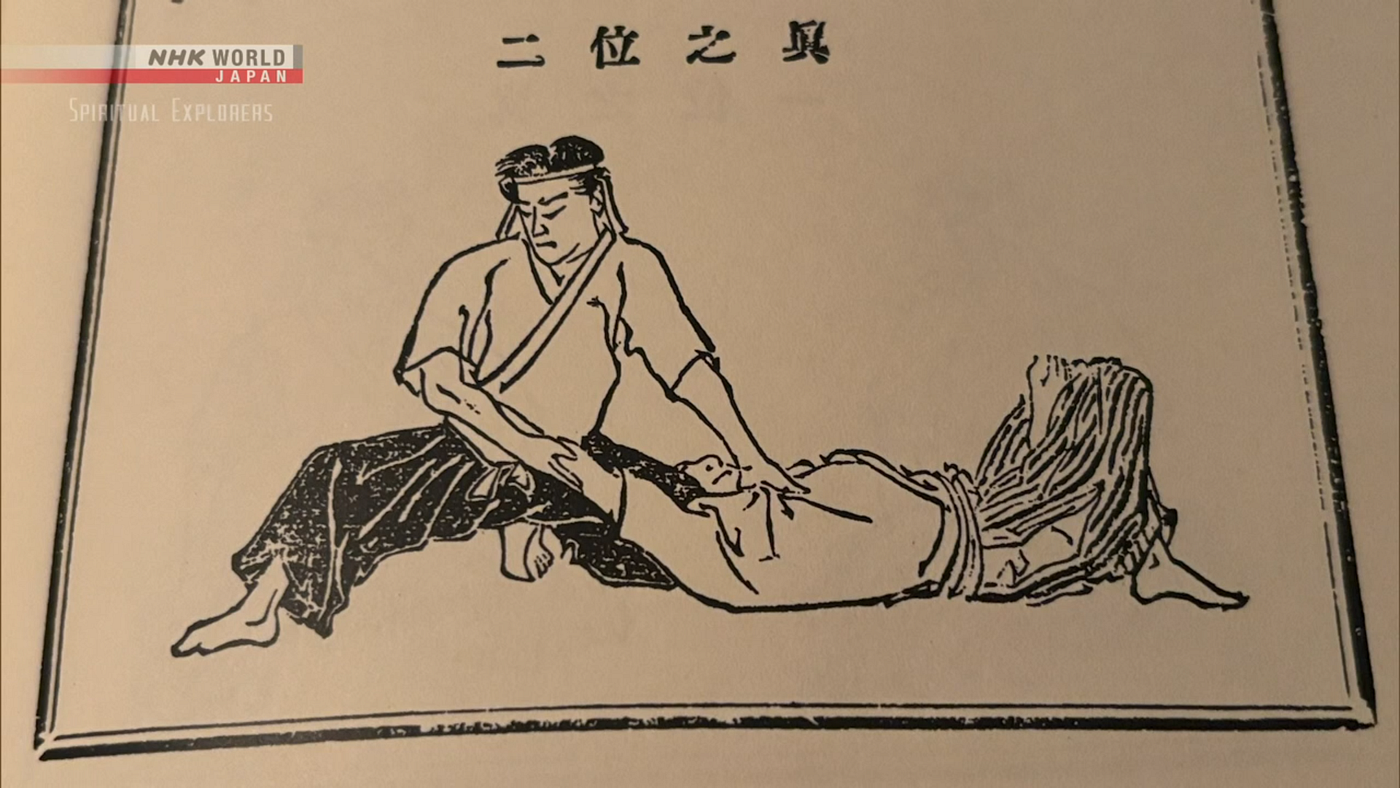
The documentary also highlighted a crucial choice. One technique was shown in two forms: a relatively safe throw onto the back, and a dangerous variant where uke was driven head-first into the ground. The principle was the same, but the philosophy behind it determined the outcome.
This is common across many jūjutsu lineages. Daitō-ryū and other koryū often preserve lethal or crippling applications. Yet in practice, these are taught safely — transmitting the mechanics without harming training partners.
This balance is essential. Aikidō, in particular, embodies the idea that technique must be framed by a philosophy of peace. To transform what could be deadly into a path of safety and mutual growth — that is what makes the art aikidō.
Conclusion
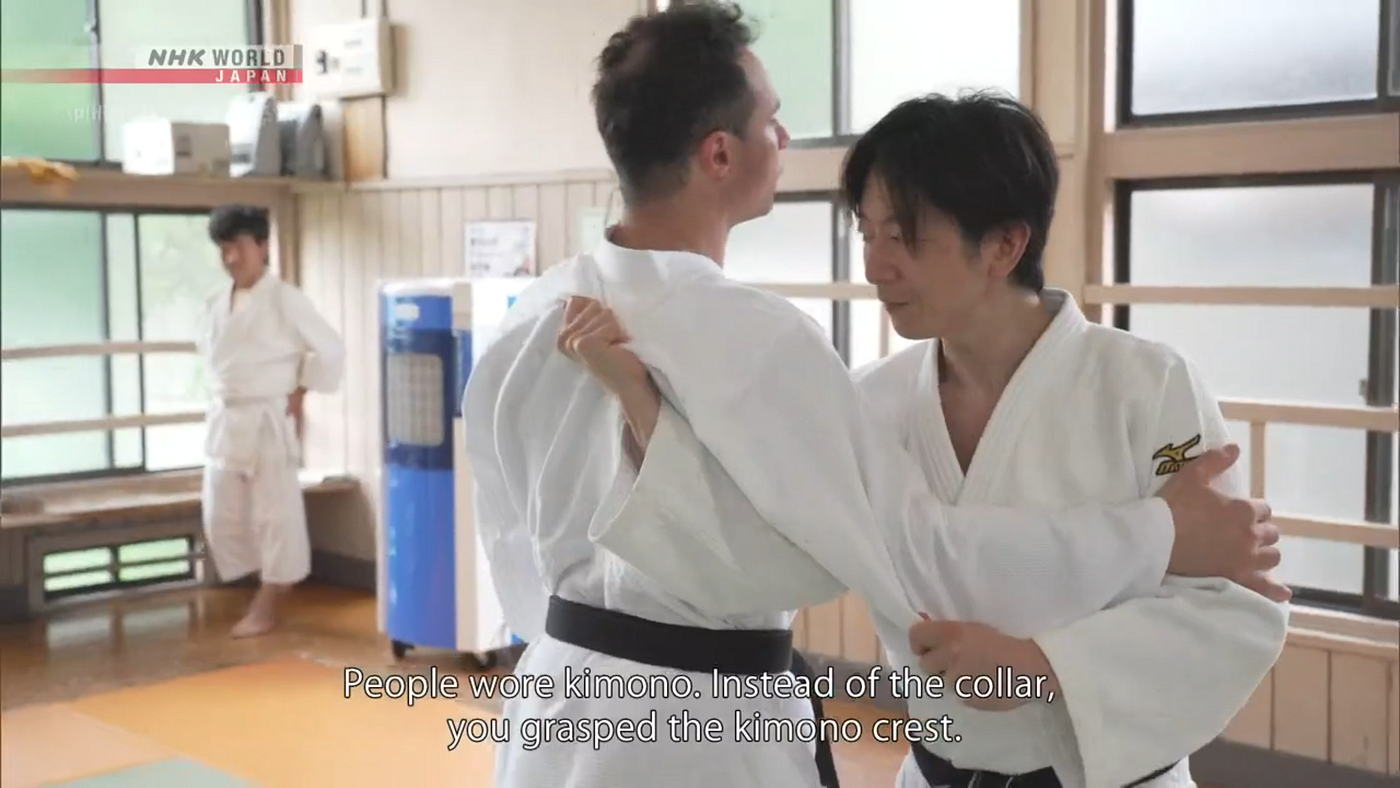
Jūjutsu has always held two faces. It can subdue, restrain, or protect — but it can also maim or kill. Classical ryū like Takenouchi-ryū, Asayama Ichiden-ryū, and Tenjin Shinyo-ryū preserved both options, and the choice rested in the hands of the practitioner.
What makes aikidō distinct is not the mechanics of throws or locks. It is the decision to frame those same mechanics in a philosophy of peace. To redirect rather than clash, to protect even the attacker, to transform techniques of destruction into methods of safety and reconciliation.
Daitō-ryū, Tenjin Shinyo-ryū, or even aikidō itself, practiced with a mind of violence, are not aikidō. Aikidō begins only when the heart of jū — flexibility, softness, neither fight nor flight but harmonization — is joined with the intent to preserve life.
That is what makes aikidō aikidō by another name.
Watching this documentary reinforced for me that aikidō lives wherever ju is practiced with sincerity. Here’s the link if you’d like to see it for yourself: Jujutsu: The Art of Flexibility (NHK)
About the Author Josh MacDonald has over 35 years of martial arts experience and is the chief instructor of Calgary Rakushinkan, a dojo dedicated to aikidō and classical Japanese kobudō. He writes about martial arts history, practice, and philosophy, connecting traditional principles to modern training.
메타데이터
- post_id
- bcb42efb10c5
- slug
- aikido-by-another-name-bcb42efb10c5
- url
- https://medium.com/@CalgaryRakushinkan/aikido-by-another-name-bcb42efb10c5
- canonical_url
- https://medium.com/@CalgaryRakushinkan/aikido-by-another-name-bcb42efb10c5
- author_url
- https://medium.com/@CalgaryRakushinkan
- status
- ok
- fetched_at
- 2026-06-24 23:31:39