THE BOOK OF ENOCH: The Suppressed Cosmology That Explained Everything Genesis Was Afraid to Say
Quoted directly in the New Testament, cited as scripture by early church fathers, preserved for a thousand years by Ethiopian monks while…
THE BOOK OF ENOCH: The Suppressed Cosmology That Explained Everything Genesis Was Afraid to Say
Quoted directly in the New Testament, cited as scripture by early church fathers, preserved for a thousand years by Ethiopian monks while Rome tried to erase it, and still the most explosive text in the history of Western religion.

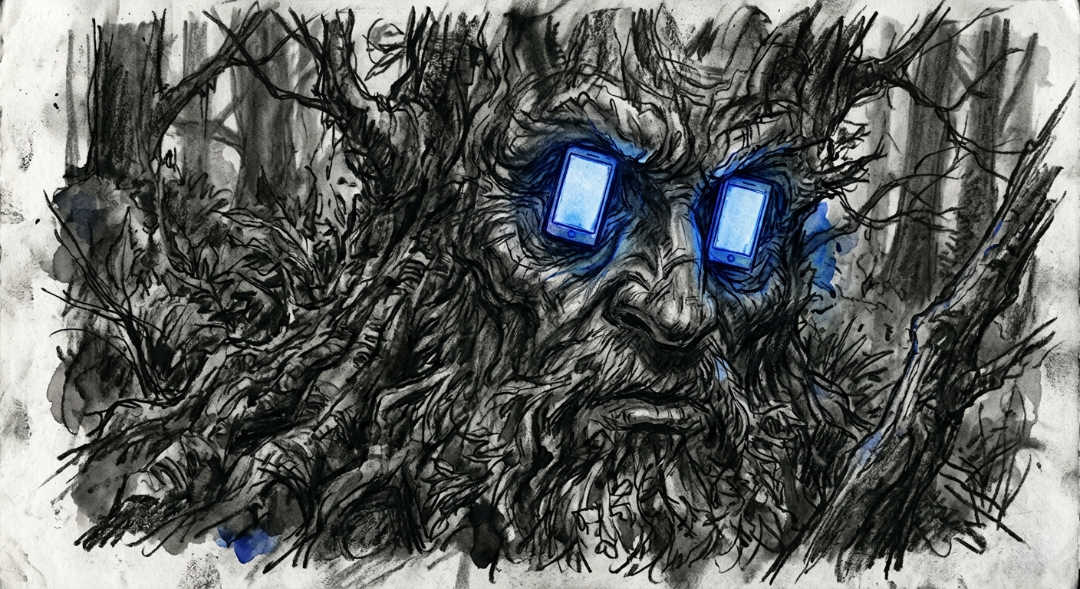
Image created by Author via ChatGPT / Prompted by Abel Arroyo
A scrap of leather measuring exactly five centimeters wide sat under a magnifying lens in the Palestine Archaeological Museum in 1952. Priest and scholar Jozef Milik peered through the glass at faint Aramaic characters pressed into dry goat hide. The fragment was labeled 4Q201. It had been pulled from the dust of Cave 4 near Qumran the previous decade by Bedouin shepherds who had stumbled into one of the most significant archaeological discoveries in history without knowing what they had found. The fragment was not a sectarian document. It was not a product of the Essene community that had hidden it. It was a copy of the Book of Enoch, and its ink was two thousand years old. For centuries, Western theologians had called this book a medieval fabrication written by Christian heretics. The dirt of the Judean desert proved them wrong. The manuscript was written in the second century before the common era. It was real. It was ancient. And it had been systematically erased from the Western biblical canon in one of the most consequential acts of institutional censorship in human history. This is the forensic audit of what it actually says, why it was buried, and why its survival in the hands of Ethiopian monks for over a thousand years changes everything we think we know about the origins of Christianity.
THE ORIGIN STORY
The figure at the center of this text is given exactly six lines in the canonical Book of Genesis. Enoch is the seventh patriarch from Adam, the father of Methuselah, and the great-grandfather of Noah. Genesis 5:24 says only this: and Enoch walked with God, and he was not, for God took him. He did not die. He was taken. In the entire Hebrew Bible, only two human beings are translated directly to the divine realm without dying: Enoch and, centuries later, the prophet Elijah. Genesis does not explain what Enoch saw, what he was told, or what he brought back. The Book of Enoch is the answer to that silence.
The Enochic scribes were not writing mythology. They were writing in response to a specific political and theological crisis. The Hellenistic empire was fracturing. Seleucid rulers were imposing Greek culture on Judea. The temple priesthood in Jerusalem had become corrupt, accommodating Greek practices for political survival. A group of priestly scribes who refused these compromises withdrew from the temple cult and looked for a revelation older than Moses, a cosmological framework that predated the political compromises of the Jerusalem establishment. They found their figure in Enoch. They wrote in Aramaic, the lingua franca of the Near East, not in the Hebrew of official temple documents. Over a span of two centuries, from the third century before the common era to the first, they compiled not a single book but a library. This library is known today as First Enoch. It consists of five distinct works, each addressing a different dimension of the cosmic crisis they believed humanity was facing.
THE BODY OF WORK
Section One: The Book of the Watchers
The Book of the Watchers comprises chapters one through thirty-six of First Enoch and is the oldest and most theologically explosive section of the entire corpus. It begins with a direct warning addressed to those who will live in the distant future, the generation of the final days, telling them that the Holy and Great One is coming to render judgment on all. Behold, he cometh with ten thousands of his holy ones to execute judgment upon all, and to destroy all the ungodly, Enoch declares in chapter one, verse nine. The author of the New Testament Epistle of Jude quotes this line verbatim as prophetic scripture. He does not quote it as literary curiosity. He quotes it as the word of God.
The text then reinterprets the most cryptic passage in the entire Book of Genesis. Genesis 6:1 through 4 says, with almost no elaboration, that the sons of God saw the daughters of men and that they took wives from among them, and that the Nephilim were on the earth in those days. Genesis offers no explanation of who the sons of God were, what exactly happened, or what the Nephilim did. The Book of the Watchers provides the missing file.
Two hundred angelic beings, called the Grigori or the Watchers, are stationed in the highest reaches of the heavenly hierarchy to observe and guide the newly created human race. They are not minor servants. They are the most senior angels in the divine assembly. Their leader is Shemihazah. Together, they look down from their celestial observation post and see that the daughters of men are beautiful. They make a collective decision that will alter the course of human history. Shemihazah gathers them and says: I fear that you will not agree to do this deed, and I alone shall be guilty of a great sin. They all answer him and say: Let us all swear an oath and bind one another with mutual curses so that we shall not change our minds. They swear the oath on the summit of Mount Hermon.
The text is precise about the geography. Mount Hermon is a limestone massif on the border of modern Lebanon and Syria, the highest point in the northern Levant, and a center of Canaanite cultic activity. The Watchers do not descend to a mythological location. They descend to a specific mountain that the text's original readers could locate on a map.
The Watchers take wives. Their wives conceive children. Those children are the Nephilim. The text describes the Nephilim as giants who grew exceedingly tall, whose consumption outpaced the earth's capacity to feed them, who first devoured everything humanity could produce, then turned on humanity itself, drinking blood and sinning against birds, beasts, reptiles, and fish. The earth itself began to cry out. The mountains groaned. The rivers ran with blood. The Book of Enoch then says something that Genesis does not say: the Great Flood was not a punishment for generalized human wickedness. It was a targeted planetary sterilization protocol designed to eliminate a hybrid genetic lineage that was consuming the biosphere.
But the physical violence of the Nephilim is only half the crime. The other half is the knowledge transfer. The Watchers do not merely take wives. They teach. Azazel, the second in command, teaches men to make swords, knives, shields, and breastplates, and reveals to them the metals of the earth and the art of working them. He teaches the use of antimony, the beautifying of the eyelids, the cutting of roots, and astrology. He teaches humanity to make weapons of war, to use cosmetics to manipulate sexual attraction, and to manipulate the natural world through pharmacological and astronomical knowledge. He births the military-industrial complex, the beauty industry, and ceremonial magic simultaneously. The text states directly: the whole earth has been corrupted through the works that were taught by Azazel. To him ascribe all sin.
Other named Watchers teach their own forbidden disciplines. Shemihazah teaches spells and the cutting of roots. Hermani teaches sorcery. Baraqel teaches the signs of lightning flashes. Kokabel teaches the signs of the stars. Ziqel teaches the signs of shooting stars. Arteqoph teaches the signs of the earth. Shamsiel teaches the signs of the sun. Sahriel teaches the signs of the moon. In the Enochic cosmology, every field of human knowledge that operates outside the original divine order, from metallurgy to astrology to pharmaceutical practice, traces its origin to this single event on Mount Hermon. Civilization did not evolve organically. It was infected.
Four archangels hear the earth crying. Michael, Uriel, Raphael, and Gabriel descend to assess the damage and receive their instructions. To Raphael comes the command: bind Azazel hand and foot, and cast him into the darkness. He is to be buried under jagged rocks in the desert wilderness of Dudael, with his face covered, where he will remain until the Day of Judgment. To Gabriel comes the command to incite civil war among the Nephilim so that they destroy one another in battle. The text specifies that their spirits do not disappear when they die. The spirits of the giants, as 1 Enoch 15:9 states directly, shall be called evil spirits upon the earth, and shall cause trouble, and on the earth they shall dwell. This single sentence is the origin of the entire concept of demonic possession in Western religious thought. The demons plaguing humanity in the New Testament are, in the Enochic framework, the disembodied spirits of the Nephilim.
Enoch himself is sent by the Watchers to intercede with God on their behalf. They are terrified. They know their punishment is coming, and they want mercy. Enoch ascends. He approaches the throne. He enters the Crystal House, the innermost chamber of the divine palace, where the floor is fire, and the ceiling is stars, where no flesh can stand. He falls on his face before the throne. God speaks to him directly. Tell the Watchers of heaven who have left the high heaven and the holy eternal place, and have defiled themselves with women, as the children of earth do, and have taken unto themselves wives, that their petition will not be granted. God refuses. Their punishment is absolute. They are bound and thrown into the prison of darkness beneath the earth, where seven stars burn in chains, to await the final judgment.
Section Two: The Book of Parables
The Book of Parables comprises chapters thirty-seven through seventy-one and is the section of First Enoch that proved most threatening to the emerging Christian establishment, for the opposite reason from the Book of the Watchers. If the Watchers section provided inconvenient competition with Genesis, the Book of Parables provided inconvenient precedent for the New Testament.
In a series of three visions, Enoch is transported to the heavenly throne room and shown a figure he has never encountered before. And there I saw one who had a head of days, and his head was white like wool. And with him was another, whose face had the appearance of a man, and his face was full of grace, like one of the holy angels. This second figure, identified throughout as the Son of Man, is seated beside the Ancient of Days on the throne of glory. He exists before the creation of the sun and stars. He is the hidden one whose name was named before the creation of the sun and moon, before the creation of the stars, and who will remain in the presence of the Lord of Spirits forever.
The Son of Man does not merely exist. He acts. He judges. The kings and the mighty who possess the earth shall fall on their faces before him, and worship and set their hope on this Son of Man. He will execute judgment on all flesh. He will cast down the powerful from their thrones. He will fill the hungry with good things. He will lose the bonds of the wicked. All hidden things will be revealed before him. When Jesus of Nazareth stood before the High Priest Caiaphas and was asked whether he was the Messiah, he replied: you will see the Son of Man sitting at the right hand of the Power and coming on the clouds of heaven. He was not quoting the Book of Daniel. Daniel's Son of Man is a symbolic figure representing the Jewish people. In the Book of Enoch, the Son of Man is a specific, pre-existent, divine individual who sits on the throne of God and judges all humanity. Jesus was quoting Enoch. His audience understood exactly what he was claiming.
This is the single most explosive textual fact in the Book of Enoch. If the Book of Parables predates the ministry of Jesus, which the scholarly consensus has now established, then the title Son of Man as used by Jesus was not a new claim. It was a claim to fulfill a specific, widely known, pre-existing Jewish expectation. Jesus was not inventing a theology. He was stepping into a chair that Enoch had built two centuries earlier and declaring that he was the one it had been waiting for.
Section Three: The Astronomical Book
The Astronomical Book comprises chapters seventy-two through eighty-two and is the oldest section of the entire corpus, written in the early third century before the common era. It describes a tour of the cosmos given to Enoch by the archangel Uriel, guardian of light and thunder. Uriel shows him the portals of heaven through which the sun rises and sets at different times of year, the paths of the moon through its phases, the routes of the stars, the storehouses of the winds, the treasuries of the waters, and the cornerstone of the earth.
The central revelation of the Astronomical Book is a solar calendar of three hundred and sixty-four days, perfectly divisible by seven, producing exactly fifty-two weeks with no days left over. This was not a theological preference. It was a political weapon. The Seleucid empire used the Babylonian lunar calendar. The Jerusalem temple priesthood had accommodated itself to this calendar, which meant the holy days of Israel were being calculated according to the calendar of the foreign oppressor. The Enochic scribes were arguing, through the mouth of the archangel Uriel, that God's own calendar was solar, not lunar, that the stars and the sun move in fixed divine order, and that any community using a different calendar was out of alignment with the cosmic design. The Qumran community used this solar calendar. The solar calendar was one of the primary reasons they broke from the Jerusalem temple establishment.
The Astronomical Book also describes Enoch's journey to the edges of the cosmos, where he sees the storehouses of the winds, chambers where specific winds are kept for specific purposes, the mouth of all the rivers of the earth, the treasuries of the stars, and a terrible and chaotic place at the margins of creation where seven stars of heaven are bound together like great mountains, burning in fire. He asks Uriel what their crime was. Uriel tells him: these are the stars which have transgressed the commandment of the Lord, and are bound here till ten thousand years, the time entailed by their sins, are consummated. The stars themselves can disobey. The cosmos is not merely mechanical. It is moral. Everything that moves has obligations. Only humanity and the Watchers have chosen chaos over order.
Section Four: The Book of Dream Visions
The Book of Dream Visions comprises chapters eighty-three through ninety and contains two dreams that Enoch receives before the flood. The first is a vision of cosmic destruction, the earth being swallowed by an abyss of darkness and fire. The second is one of the most extraordinary passages in the entire Enochic corpus: a complete symbolic history of the world from creation to the Messianic age, rendered as an animal allegory.
Adam is a white bull. Eve is a heifer. Cain and Abel are black and red bulls. The children of Adam become various animals according to their moral character. When the Watchers descend to take wives, they appear as stars falling from heaven. Their Nephilim offspring are described as elephants, camels, and asses, enormous hybrid creatures that consume everything around them. The flood arrives. Noah, still a white bull because he has retained the original purity of Adam, enters the ark. After the flood, Abraham, Isaac, and Jacob appear as white bulls of increasing brightness. The twelve tribes are twelve sheep.
Then the allegory enters its darkest phase. Seventy shepherds are appointed by God to tend the sheep of Israel during the periods of foreign domination. But the shepherds are corrupt. They allow more sheep to be destroyed than they were authorized to destroy. God records their crimes in a heavenly book. The empires are represented by successive predators: the Assyrians are lions, the Babylonians are tigers, the Persians are birds, the Greeks are eagles. Rome appears later as a great beast. The sheep are scattered, devoured, and blinded by the false shepherds. The allegory is a comprehensive indictment of every foreign oppressor and every corrupt native leader who has allowed Israel to be destroyed from within.
The climax arrives when a great white bull with enormous black horns appears. All the animals and birds and reptiles kneel before this bull. He pleads before the Lord of Spirits. Then a great transformation occurs: all the other animals become white bulls like him. The original purity of Adam is restored to all creation. Every species becomes one species. Every lineage becomes one lineage. The division introduced by the Watchers is reversed.
Section Five: The Epistle of Enoch
The Epistle of Enoch comprises chapters ninety-one through one hundred and eight and is the section of First Enoch most concerned with practical ethics and eschatological instruction. Enoch addresses his son Methuselah directly. He exhorts him to live righteously, to shun the company of sinners, to remember that judgment is coming and that it will be total.
The most structurally significant section of the Epistle is the Apocalypse of Weeks, which compresses all of human history from creation to the final judgment into ten symbolic weeks. In the first week, Enoch himself is born. In the second week, wickedness begins to grow. In the third week, Abraham receives his revelation. In the seventh week, an apostate generation arises, the wicked multiply, and apostasy increases. But at the close of the seventh week, the elect are chosen and given seven-fold instruction concerning his entire creation. In the eighth week, a sword is given to the righteous, and they execute judgment on the oppressors. In the ninth week, the world is written down for destruction. In the tenth week, the great eternal judgment is executed, and the first heaven passes away. After the tenth week, there are many weeks without number forever, in which there will be goodness and righteousness.
The Epistle closes with a series of woes addressed to the sinners who have accumulated wealth through injustice, who have oppressed the righteous, who have built their houses through the labor of others, who will find on the day of judgment that every stone they laid was laid in iniquity. Woe to you who devour the finest of the wheat and drink wine in large bowls and tread upon the lowly with your might. And woe to you who drink water from every fountain, for suddenly you shall be consumed and wither away, because you have forsaken the fountain of life. These passages were written in the century before Jesus. They contain the same vocabulary, the same imagery, and the same forensic indictment of wealth and power that appears in the Sermon on the Mount.
THE TURNING POINT
The suppression of the Book of Enoch was one of the most consequential institutional decisions in the history of Western religion, and it was not accidental. The Council of Laodicea met in 363 of the common era and issued Canon sixty, which listed the books of the Old and New Testaments and designated everything else as apocryphal and banned from public reading. Four years later, Athanasius of Alexandria, the most powerful bishop in the eastern Roman Empire, wrote his thirty-ninth Festal Letter listing the twenty-seven books of the New Testament and explicitly warning against the secret writings he called apocrypha, a word that had not previously carried its current meaning of rejected or false but simply meant hidden. He weaponized the word. He called the writers of these hidden texts heretics who wished to deceive the simple.
The suppression required three separate institutional actors working independently. The Roman church banned it as apocryphal. The rabbinic movement in Judaism rejected it as dangerous; Rabbi Akiva, a key figure in the compilation of the Mishnah, declared that those who read outside books would have no share in the world to come. And the scholarly community in Alexandria, which held the Greek translations, was subject to the same imperial decrees that governed the broader church. By the fifth century, the Book of Enoch was virtually extinct in the Roman world. George Syncellus, a Byzantine monk writing in the eighth century, preserved long passages in his Chronographia using a Greek translation, not knowing he was preserving a banned text. He was simply interested in its historical chronology. For a thousand years, his fragments and a few citations in early church fathers were the only evidence that the book had ever existed in the West.
THE TRAGEDY
The physical survival of the Book of Enoch depended entirely on the geographic isolation of the Ethiopian highland church. The kingdom of Aksum converted to Christianity in the fourth century through the missionary work of Frumentius of Alexandria. Its physical distance from Rome and Constantinople protected it from the imperial censorship that swept the Mediterranean world after the Council of Laodicea. The Ethiopian church received Greek texts from Alexandria before the purges, translated them into Ge'ez, the liturgical language of the church, and integrated them into their Old Testament without Roman supervision. They called the text Metsahafe Henok, the Book of Enoch, and they placed it in their canon not as an appendix but as scripture, positioned alongside Genesis and Isaiah. For over a thousand years, nameless scribes in remote monastery scriptoriums in the highlands of Tigray and Amhara copied the text by hand, protecting it from Islamic invasions that swept through the lowlands, from Portuguese missionaries who arrived in the sixteenth century and attempted to bring the Ethiopian church into conformity with Rome, and from the natural destruction of time and moisture in a tropical climate.
James Bruce was a Scottish explorer, arrogant, wealthy, and obsessed with finding the source of the Nile, who arrived in Gondar, the capital of Ethiopia, in 1769. He spent several years in the country, learned Ge'ez, gained the favor of the royal court, and when he departed in 1773, he carried three complete manuscripts of the Book of Enoch, the first complete copies to reach Europe in more than a thousand years. One went to the Royal Library of France, now the Bibliothèque Nationale in Paris. One went to the Bodleian Library at Oxford, cataloged as MS. Bodl. Or. 531. The third remained in Bruce's private collection. The first English translation was published in 1821 by Richard Laurence, the Regius Professor of Hebrew at Oxford, working from the Bodleian manuscript. It was flawed, a translation of a translation of a translation, but it proved the text existed.
The Greek fragments discovered at Akhmim in 1886 by French archaeologists excavating a Christian cemetery allowed scholars to compare the Ge'ez text with a Byzantine-era Greek manuscript from the sixth century. The results were unambiguous. The Ethiopians had not invented the text. They had preserved it with forensic precision through a thousand years of isolation. And when Jozef Milik published his analysis of the Qumran Aramaic fragments in 1976, identifying eleven distinct manuscripts of Enoch labeled 4Q201 through 4Q212, dating to the second and first centuries before the common era, the historical case was closed. The Book of Enoch is authentic, ancient, and was systematically suppressed by the institutional church because it was too cosmologically radical, too politically dangerous, and too theologically independent to be contained within the boundaries of imperial Christianity.
THE LEGACY AND THE VAULT
Today, on July 14, 2026, the Book of Enoch has returned from the margins of history with the full force of the physical evidence behind it. The Hill Museum and Manuscript Library in Minnesota has digitized thousands of Ge'ez manuscripts from Ethiopian monasteries and made them available to scholars worldwide. The digital analysis of these manuscripts has confirmed the meticulous nature of the Ethiopian scribal tradition: the variations between manuscripts spanning four centuries are minimal. The scribes did not alter the text to suit changing theological fashions. They copied what they saw.
The Enochic corpus is now taught in universities. It is analyzed in peer-reviewed journals. The Enoch Seminar, organized by Gabriele Boccaccini beginning in 2001 in Florence, has produced a generation of scholars whose consensus on the text is clear: the Book of Parables is a Jewish document, not a Christian forgery. The Son of Man of First Enoch predates the ministry of Jesus. The terminology that defines the entire New Testament Christology, the divine judge who sits on the throne of glory, who was chosen before the creation of the stars, who will reverse the order of earthly power and vindicate the righteous, was not invented by the early church. It was inherited from a tradition that the early church tried to erase.
The author of the Epistle of Jude treated Enoch as a prophet. Tertullian treated him as a church father. Augustine of Hippo rejected him as untrustworthy. Augustine won the institutional argument. He did not win the historical argument. The physical evidence that the dirt of the Judean desert was preserved in fragments of goat hide while the libraries of Rome were being purged is not ambiguous. The Book of Enoch shaped the New Testament. It provided the theological vocabulary for the most significant claims Jesus made about his own identity. And it was buried precisely because an imperial church building a unified theology for a unified empire could not afford the cosmological complexity, the ecological morality, the cosmic democratic spirit of a text that promised the powerful would be cast down from their thrones and the hungry would be filled with good things.
The Ethiopian Orthodox Tewahedo Church, with over fifty million members as of 2026, has never stopped reading this text as scripture. They never received the memo from Rome. They never agreed that the sons of God who descended to Mount Hermon and bound themselves with a mutual oath were too embarrassing for the New Testament. They kept the text in its place beside Genesis and Isaiah for seventeen centuries while the Western church was busy building the institution that the Book of Enoch prophesied would be judged.
What does it mean that the text which provided the theological framework for the most important claims in the New Testament was banned by the church that built itself on those claims, that it survived only because an African church was too far from Rome to receive the order to destroy it, and that the physical evidence confirming its antiquity was sitting in the dust of the Judean desert for two thousand years waiting for a Bedouin shepherd to find it?
About the Author
Abel Arroyo is a cultural critic and forensic biographer dedicated to the Intellectual Resistance, the creators, whistleblowers, and truth tellers who broke the machine to save their souls. His work interrogates the intersection of power, suppressed knowledge, and human cost, providing a rigorous examination of the systems and texts that define how we understand existence. If you find value in these deep dives into the architects of modern dissent and ancient wisdom, consider supporting independent journalism. buymeacoffee.com/dathaze20j
메타데이터
- post_id
- bcb6352f28c9
- slug
- the-book-of-enoch-the-suppressed-cosmology-that-explained-everything-genesis-was-afraid-to-say-bcb6352f28c9
- url
- https://medium.com/illumination-philosophy-and-metaphysics/the-book-of-enoch-the-suppressed-cosmology-that-explained-everything-genesis-was-afraid-to-say-bcb6352f28c9
- canonical_url
- https://medium.com/illumination-philosophy-and-metaphysics/the-book-of-enoch-the-suppressed-cosmology-that-explained-everything-genesis-was-afraid-to-say-bcb6352f28c9
- author_url
- https://medium.com/@dathaze20
- status
- ok
- fetched_at
- 2026-07-17 10:01:05