What Makes the South China Sea’s Resources Strategic?
✍️ Apolítik0 → ← PGT
What Makes the South China Sea’s Resources Strategic?
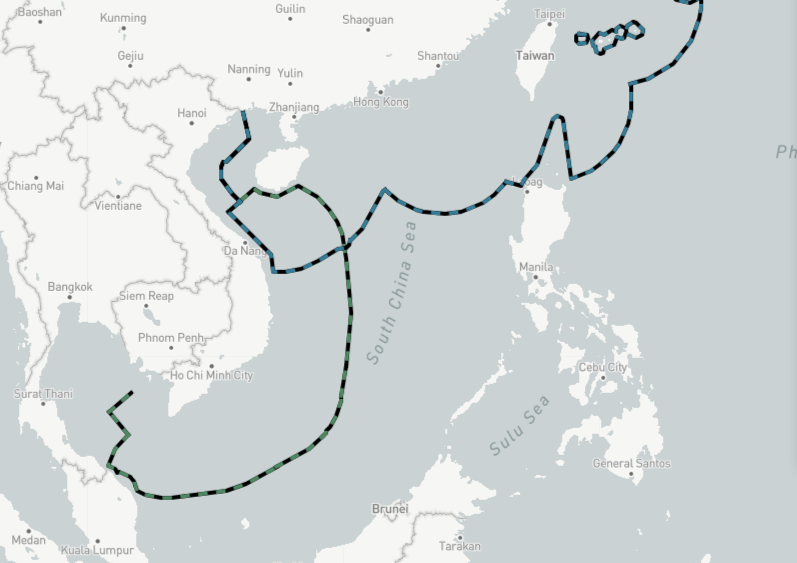
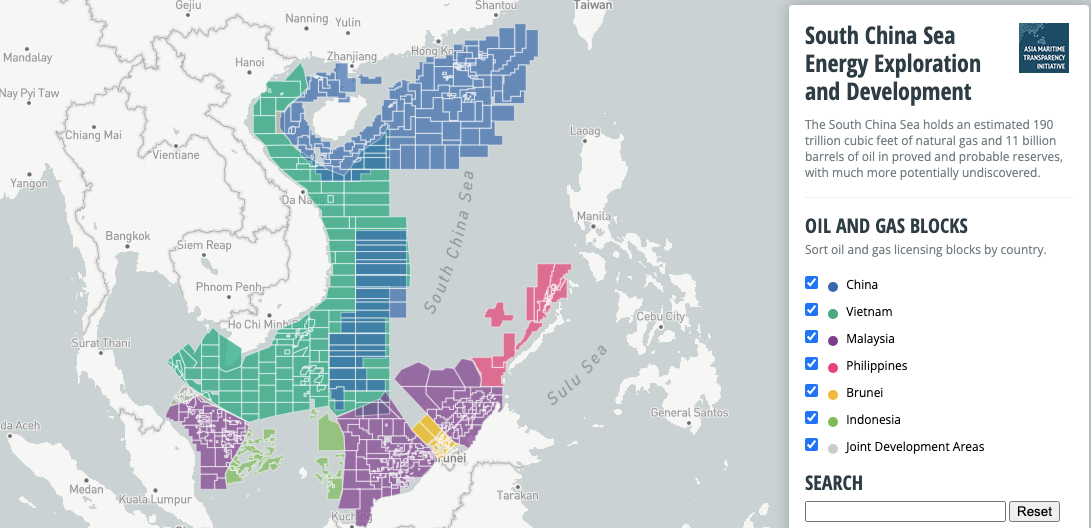
Explore the Asia Maritime Transparency Initiative (AMTI–CSIS) interactive map to examine the principal maritime claims, disputed features, and the spatial distribution of strategic interests across the South China Sea. This interactive resource complements the analysis of the Resources axis by providing a visual perspective on the competition for access to and control of the strategic node’s natural resources.
✍️ Apolítik0 → ← PGT
∞ → ← ∞
Strategic Node: South China Sea
ERE Axis: Resources
Natural resources become strategic not simply because they exist, but because they influence the decisions of those seeking to access, protect, or develop them. In the South China Sea, the strategic significance of hydrocarbons, fisheries, and other marine resources lies not only in their economic potential but in their ability to shape political priorities, technological investment, institutional development, and long-term strategic planning.
Rather than reflecting competition over resources already being exploited, the South China Sea illustrates competition over future capabilities. The prospect of exploring, securing, and developing these resources encourages investment, strengthens infrastructure, advances technological capacity, and influences diplomatic and security decisions well before their full economic value is realized. In this context, strategic value emerges long before effective exploitation begins.
Understanding this dynamic reveals that resources influence strategic behavior not only when they generate wealth, but when their potential reshapes expectations, priorities, and capabilities. The South China Sea therefore represents more than a concentration of valuable resources; it is a strategic node where the anticipation of future opportunities continuously influences present-day decisions.
Strategic Event
The continued development of exploration activities, protective measures, and capacity-building initiatives related to the South China Sea’s energy and fisheries resources.
Observable Indicator
Growing energy exploration, infrastructure development, fisheries protection measures, technological investment, and initiatives designed to secure future access to the strategic node’s natural resources.
Observable Variable
Strategic Anticipation
Definition
The process through which a system component acquires strategic value before fully realizing its capabilities or functions, influencing planning, capability development, resource allocation, and strategic decision-making.
Operational Status
Consolidating.
Systemic Observation
The strategic value of a resource begins not with its exploitation but when its future potential starts to influence the behavior of relevant actors. Anticipating that value progressively reshapes decisions and contributes to the evolution of the strategic node.
∞ → El equilibrio decide ← ∞
∞ ⟷ ∞
메타데이터
- post_id
- bcbb0cb3782c
- slug
- what-makes-the-south-china-seas-resources-strategic-bcbb0cb3782c
- url
- https://medium.com/tgp-strategic-notes/what-makes-the-south-china-seas-resources-strategic-bcbb0cb3782c
- canonical_url
- https://medium.com/tgp-strategic-notes/what-makes-the-south-china-seas-resources-strategic-bcbb0cb3782c
- author_url
- https://medium.com/@apolitik0
- status
- ok
- fetched_at
- 2026-07-16 20:04:03