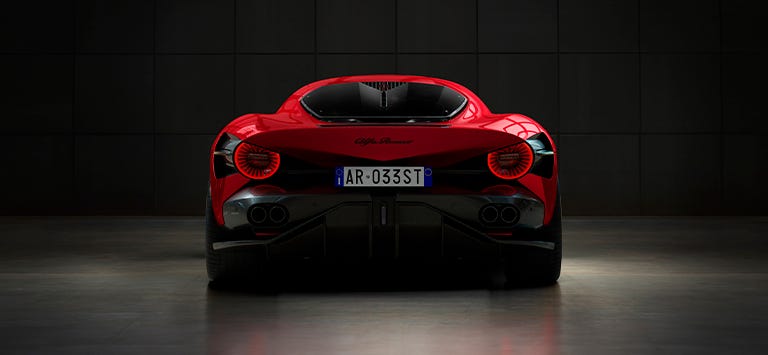
FCA — How It Should Have Been Managed in Hindsight
What FCA could have been but wasn’t.
FCA — How It Should Have Been Managed in Hindsight
Long gone are the days where FCA (now Stellantis) was a successful and standalone company.
Born in October 2014, FCA (Fiat-Chrysler Automobiles) was the result of a merger between two groups: Chrysler LLC, owner of the Chrysler, Dodge, Jeep and Ram brands, and Fiat Group Automobiles, owner of Fiat, Alfa Romeo, Lancia, Abarth, Maserati and Ferrari. The outcome of this merger operation is a juggernaut of 11 brands (Ferrari was cleverly spun off in 2016).
Now, everyone is great at dwelling in hindsight. Nonetheless, I will now elaborate on what I would have expected from the former FCA tenure.
Exor is the largest shareholder of FCA (and now Ferrari, CNH, and Stellantis, among others) and belongs to the Agnelli family. Due to the breadth and heterogeneity of the brands, I would have not pursued a full-blown merger and I would have instead focused on “stronger” partnerships, similar to those between Nissan and Renault, which made the companies highly successful in the past (but don’t look at Nissan now).
The reason I believe strong partnerships are better than mergers lay in the fact that the automotive business is highly volatile and highly dependent on political, social and economical trends. Therefore, keeping companies separate allows each to more flexibly adapt to their customers’ needs and to their markets’ demands. As you might imagine, synergies between Fiat and Ram or between Jeep and Alfa Romeo make little to no sense, due to the very distinct brand identities, customer bases and core businesses of the brands.
Therefore, in my mind, five main groups should have coexisted and collaborated, without necessarily being part of the same entity.
Ferrari-Maserati
FCA’s most successful move was that of spinning off Ferrari from FCA in 2016. It was spun-off with an IPO priced at 43,44 euro per share. As of today, the stock is worth about 10 times as much. Moreover, Ferrari still maintains a solid identity and has kept its prestige intact.
The only problem is that FCA kept Maserati in instead of spinning it off too and, as I reported a while ago, Maserati is currently navigating very rough waters.
Indeed, I would have expected Maserati and Ferrari to be part of the same entity and to create vehicles respectively in the €100.000-€400.000 and in the above-€400.000 ranges. All Maserati vehicles would have featured a 90° flat-plane V8 (either naturally aspirated or turbo-charged), whereas all Ferrari cars would have kept the staple, naturally-aspirated, 60° V12.
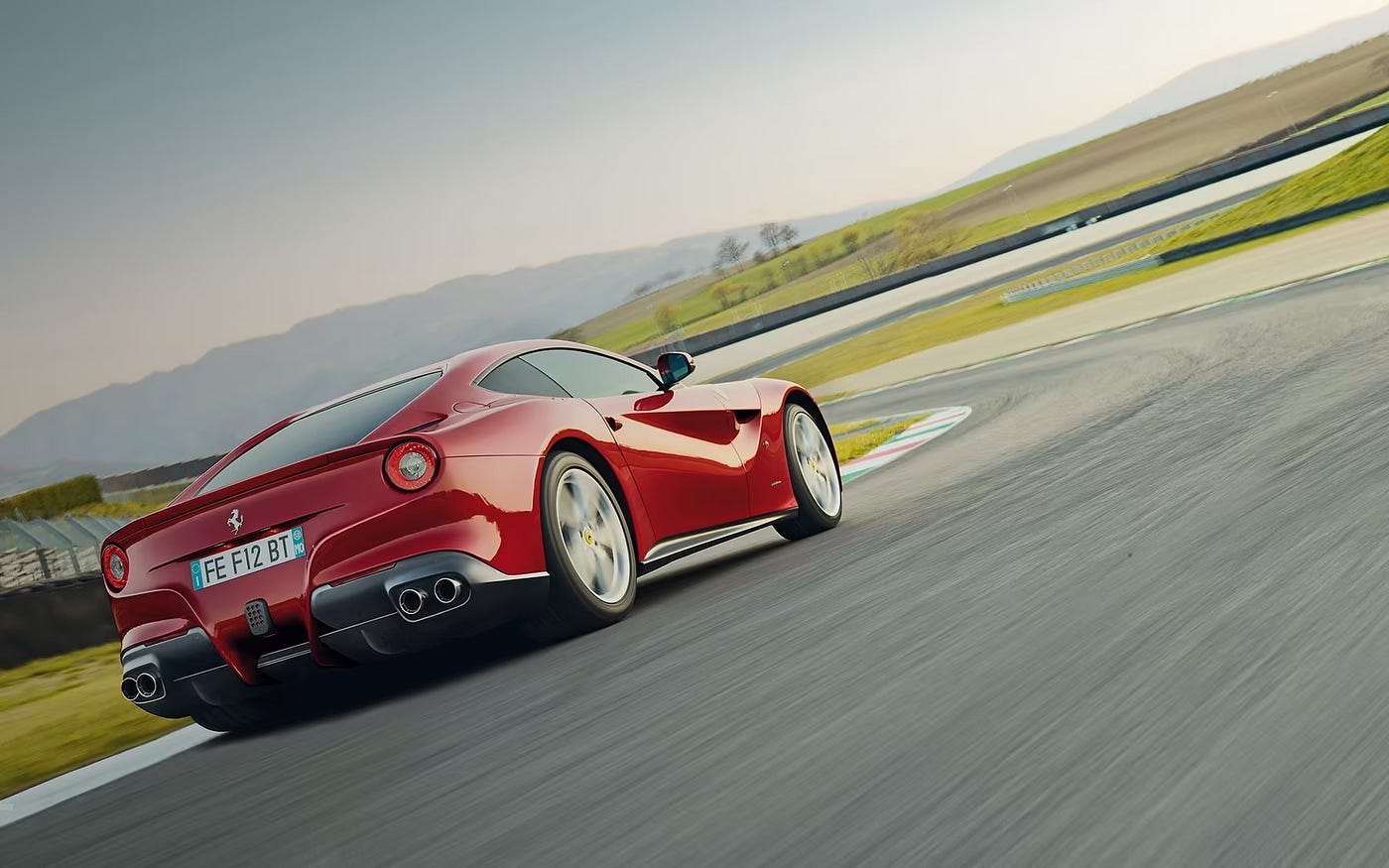
2012 Ferrari F12 Berlinetta.
Vehicles would have included super-high-end, 4.66-meter, mid-engined supercars and also front-engined, 5.00-meters-long grand-tourers, and finally 5.33-meter sedans and SUVs.
Ferrari would have ultimately been the group’s petrol-engine powerhouse, as all expertise in terms of petrol engines should have been routed into Ferrari.
IVECO (CNH)
IVECO produces commercial and special-usage vehicles. In a similar fashion to Ferrari, IVECO should have been converted into a Diesel-centric behemoth: all engineers specialized in developing Diesel engines should have been moved to IVECO-CNH.
Moreover, IVECO-CNH should have partnered with Chrysler to develop a state-of-the-art body-on-frame platform underpinning commercial vehicles, SUVs, vans and pickup-trucks. This AWD platform with a transversely-mounted engine should have been available in three trims with lengths of 5.00, 5.66 and 6.33 meters (with wheelbases of 3.00, 3.60 and 4.20 meters respectively). This partnership could have also paved the way for RAM to enter the higher-class truck business, competing with the likes of the Ford F-750.
2024 IVECO Daily 4x4.
IVECO should have also partnered with brands such as Lancia and Alfa Romeo and should have supplied them lower-displacement Diesel engines.
Lancia, Abarth, and Alfa Romeo
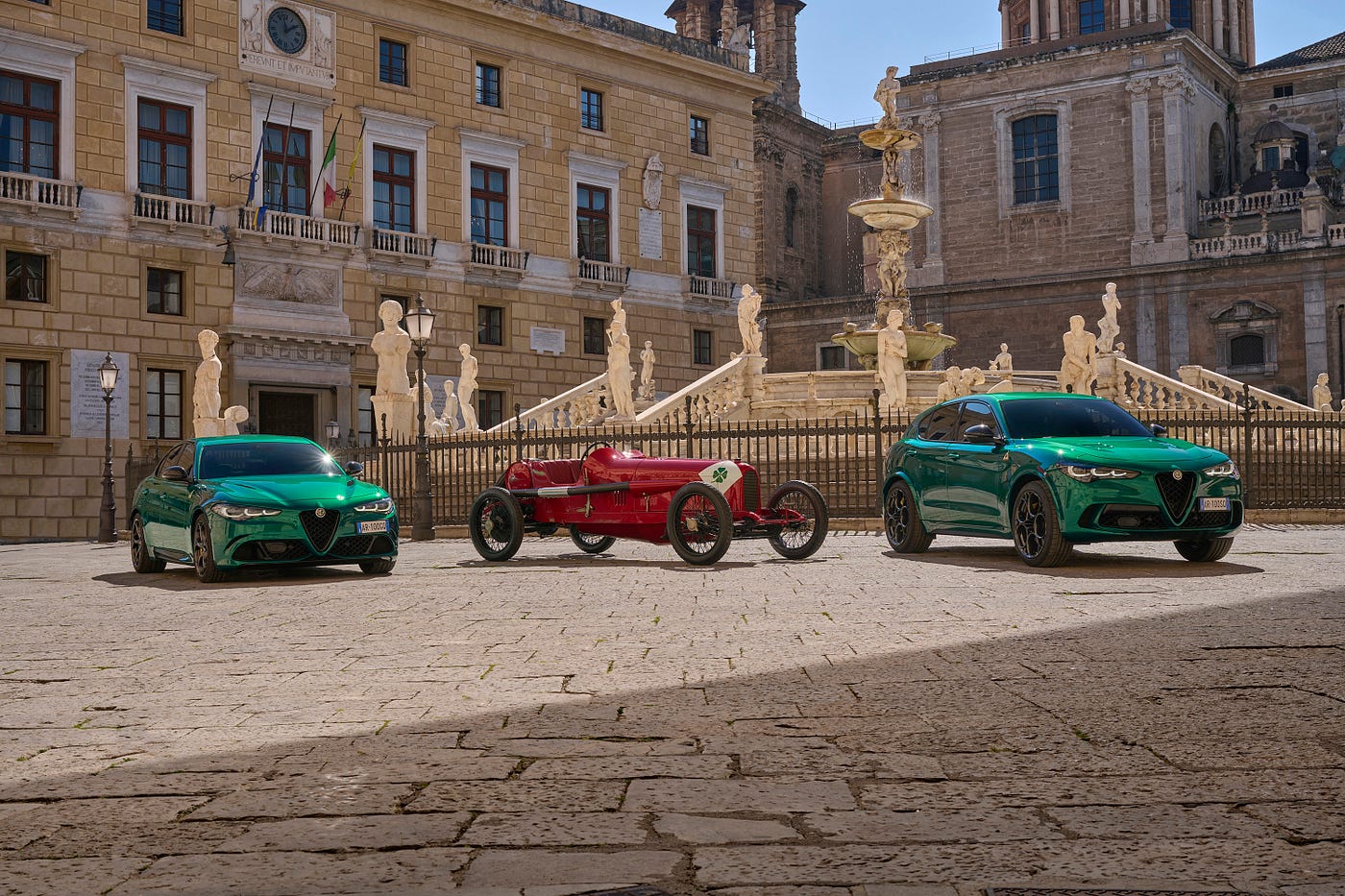
Brands such as Lancia, Abarth, and Alfa Romeo need to desperately retain their brand identity and panache. For this reason, the exquisite Giorgio platform (available in RWD or AWD trims) should have underpinned all vehicles sold under these brands (at prices below €100.000).
I would have expected:
- 4.35-m long hatchbacks and two-seater sports cars (2.725-m wheelbase);
- 4.40-m long crossovers (2.725-m wheelbase);
- 4.75-m long sedans, grand-tourers and station wagons (2.925-m wheelbase);
- 4.80-m long full-size crossovers (2.925-m wheelbase).
Vehicles would have used a naturally-aspirated or supercharged, cross-plane, 90°, Ferrari-derived V8 respectively outputting 250 or 350 kW. Alternatively, IVECO-sourced I4-Diesel options would have been made available as well.

2024 Alfa Romeo Giulia and Stelvio Quadrifoglio.
Moreover, I would have expected a partnership with Dodge to develop a Charger sedan, a Challenger two-door muscle car and a Viper. Furthermore, there could have been room for a couple Jeep crossovers.
The Chrysler Group (i.e. “Mopar”)
Chrysler’s success outside of the North-American soil has always been precarious. After the devastating experience of the Daimler acquisition and the tragedy of the ’08 financial crisis, Chrysler declared bankruptcy and needed an influx of cash and technologies to survive. This is where Fiat and their big guy Sergio Marchionne entered the picture and acquired the entirety of the Chrysler group.
The North-American market, in this period, was heavily leaning on larger SUVs and pickup-trucks and Chrysler’s aging platforms did not help move units. This is why I postulate a collaboration and a platform-sharing agreement with IVECO-CNH. I would have expected (sub-$100.000) AWD hybrid SUVs, off-roaders and pickup trucks based on IVECO’s Body-On-Frame platform with lengths of 5.00, 5.66 and 6.33 meters (with wheelbases of 3.00, 3.60 and 4.20 meters respectively). This IVECO partnership would also comprehend an agreement for sourcing Diesel engines for the larger heavy-duty pickup trucks.

2024 Jeep Wrangler 392 Rubicon.
A second partnership would have involved Ferrari. Specifically, Chrysler could have sourced and revamped (read “hemified”) the cross-plane, 90° 3.8L V8 found in the Ghibli. Indeed, I would have imagined a naturally-aspirated trim developing 250 kW (~340 hp) and a supercharged trim outputting 350 kW (~470 hp). These engines would be used to propel the aforementioned SUVs, pickup trucks and off-roaders.
A third partnership with Alfa Romeo would have enabled a Giorgio-based 4.35-m Viper, a 4.75-m Charger sedan and a 4.75-m Challenger muscle-car, all RWD, all optionally available with a manual transmission and all powered by the Ferrari-derived (and “hemified”) naturally-aspirated or supercharged 3.8L V8.

2023 Dodge Charger SRT Hellcat Redeye.
Fiat
Fiat should have focused on selling mass-market small vehicles and should have strongly pushed on electrification. Indeed, a hiring spree should have been performed to attract talent necessary for developing top-notch EVs. Alongside the “conventional” A, B and C-segment ICE/hybrid vehicles, I would have imagined a very compact electric quadricycle for the masses, for instance.
Fiat should have also pursued a strong degree of badge-engineering by simply rebranding lower-quality ICE vehicles for markets such as Africa, Asia or Latin America.
Additionally, Fiat should have kickstarted a side project for investing in mobility startups with a long-term outlook, thereby acting as the group’s investing arm in the future of transportation.

2019 Fiat Centoventi Concept.
In conclusion, I believe this scenario would have enabled all brands to grow and prosper, whilst retaining their identities and catering to their target and core demographics.
Sources: Wikipedia (FCA), Wikipedia (Ferrari N.V.), Stellantis Media (Fiat 120), Stellantis Media (2024 Jeep Wrangler), Stellantis Media (2023 Dodge Charger), Stellantis Media (2024 Giulia and Stelvio Quadrifoglio), Ferrari, IVECO.
메타데이터
- post_id
- bcbd2f369e68
- slug
- fca-how-it-should-have-been-managed-in-hindsight-bcbd2f369e68
- url
- https://medium.com/@carterai/fca-how-it-should-have-been-managed-in-hindsight-bcbd2f369e68
- canonical_url
- https://medium.com/@carterai/fca-how-it-should-have-been-managed-in-hindsight-bcbd2f369e68
- author_url
- https://medium.com/@carterai
- status
- ok
- fetched_at
- 2026-07-19 22:53:17