When the Thar Desert encroaches.
I will start with some personal history.
When the Thar Desert encroaches.
I will start with some personal history.
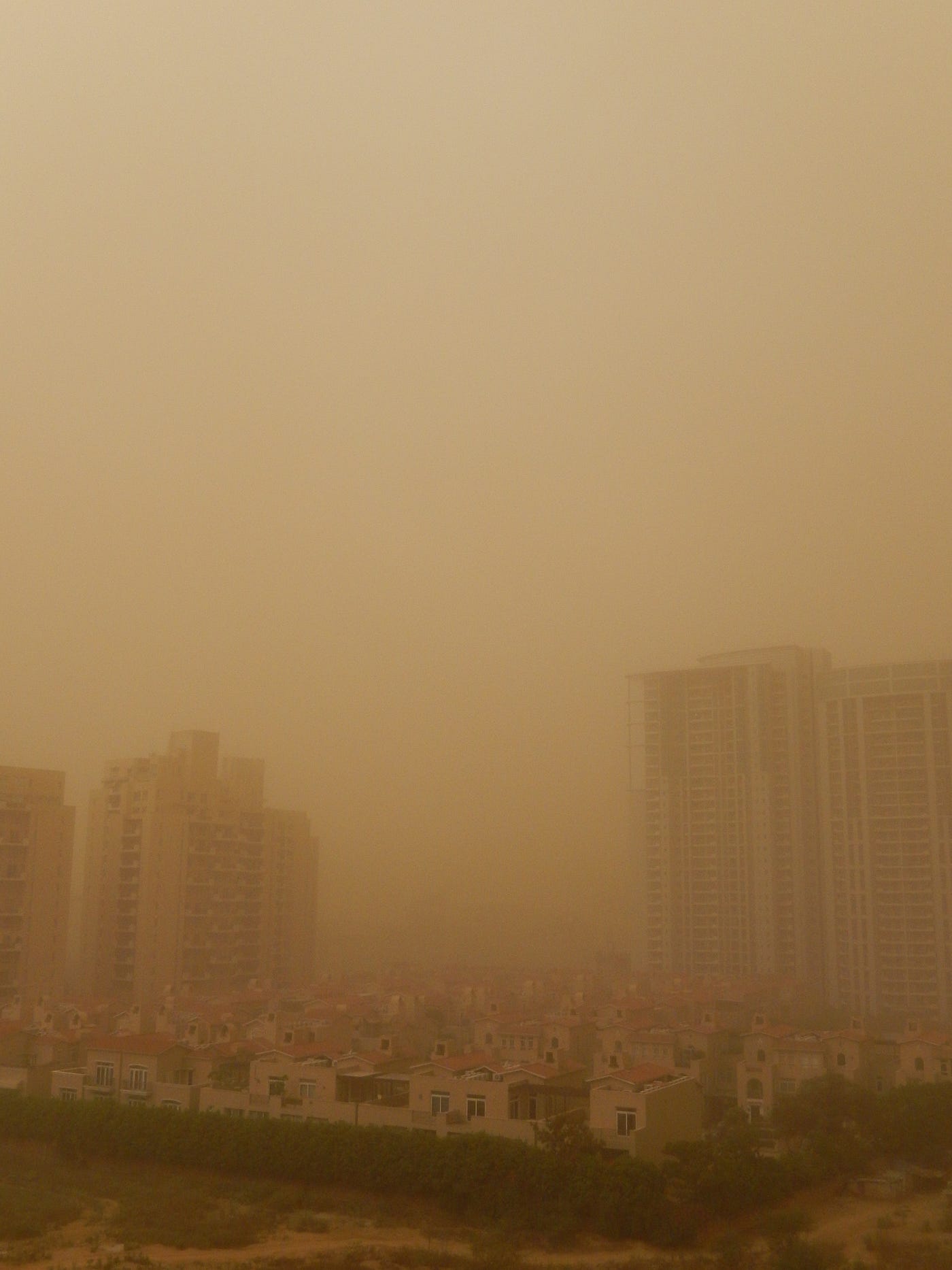
I lived in Gurgaon in 1993 and then left North India for two decades. The Aravalli Forest surrounded me those days, and Gurgaon was about 2 ° Celsius cooler than Delhi. We also got more rain, but we could not find a maid because they refused to ‘walk through the jungle’ to reach our home. When I returned just over a decade ago, I could not figure out where I used to live, and it took me a year to understand the road network. Concrete had replaced the forest, and Gurgaon’s temperature had risen. Gurgaon is now hotter than Delhi and gets less rain.
I still live on the edge of the Aravalli forest, but the forest is in retreat. While discussing deforestation, a friend pointed out that the land I live on was forest three decades ago.
North India is dusty, and the desert is approaching.
North India is dusty and prone to dust storms in summer, but the Aravalli Forest has always served as a barrier between Delhi and the Thar Desert to the west. Doomsday experts predict the Thar Desert will engulf Delhi by 2050 CE. I am unsure about the exact predictions that doomsday experts make but, I often agree with the broad direction. Most experts, especially those who rely on AI-driven computer models, are often clueless about the complexity of the natural world and do not appreciate our dependence on the ecosystem that we are part of. They sit in planning departments, beholden to corporations and governments driven by ‘development goals’ and financial statements. The Aravalli forests are amongst the oldest ranges in the world and have withstood many natural forces; however, they are retreating in the face of man’s relentless greed.
The Aravalli forest is disappearing.
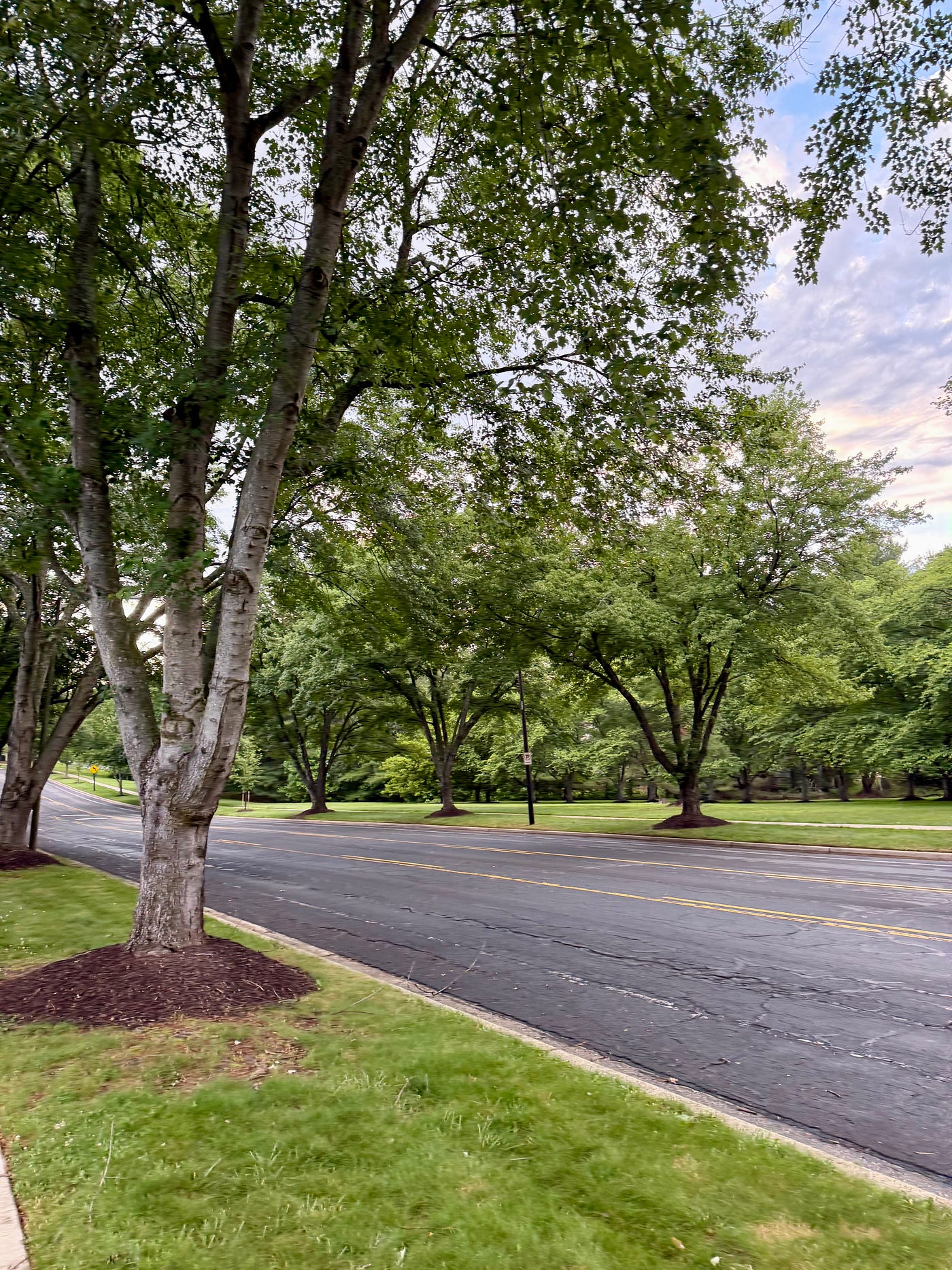
I’d like to quote a few statistics. Between 1975 and 2019, about 8% of the Aravalli range disappeared, with 5% converted into barren land and 1% into settlements. I am unsure how we classify this as development. The two forces driving this deforestation are illegal mining and other mining, as well as explosive urbanization. Since returning to Gurgaon in 2013, our quiet, leafy road has been converted into a hub of construction, creating dust and a mini heat island.
Delhi’s air is toxic,, and the government likes to find and blame easy targets: vehicular emissions and agricultural waste (stubble) burning. Even though the incidence of stubble burning has reduced by 75%, Delhi’s air remains stubbornly toxic. Many factors, including Delhi’s basic topography and cooler temperatures that lead to temperature inversion, cause pollutants to remain close to the surface. However, the Supreme Court’s recent ruling strips 90% of the forest land’s protection, much to the joy of mining companies. Mining activities increase the incidence of dust in the air, which will increase Delhi’s health burden and contribute to the toxic air we breathe.
Unbridled mining, illegal construction, and other activities will impact human and animal life. The closer we have gotten to gadgets, the further we have moved from the natural world, and we view leopards and other fauna as enemies rather than as fellow travelers on our planet, each trying to occupy a narrow ecological niche.
The Supreme Court blames the state for non-compliance, yet it also strips the forest of its natural protection. The point is simple: we are stripping the forest and will continue to do so until nothing remains.
Will the Thar Desert encroach upon Delhi in the next two decades? I don’t know when this fate will meet Delhi’s citizens but I foresee a dusty future for Delhi.
Our laws are good in some respects and ineffective in others. Implementing our laws is completely ineffective. But I don’t wish to discuss the health impact of dust and toxic air, but anyone working outside — workers, delivery people, photographers, joggers — must not assume they are immune to the effects of dusty, toxic air.
The myths we live by.
We Indians love to build myths, and I am not talking of religious myths. There is a myth we love to propagate: that our immune systems are stronger than those of Westerners because dust and pollution surround us. Our bodies have become immune to these toxic chemicals. We refuse to believe health statistics and wonder why we don’t have the stamina of people living in cleaner environments.
My point is that if even one person comments on this article, I will write one on the impact of dust and poisonous air on our lungs and overall health.
Will we build the Green Wall in time?
There seems to be some good news, but is it too little, too late? I’d like to quote a fascinating snippet I discovered while researching this article. Nature needs 500–1,000 years to develop one centimeter of healthy soil through the natural weathering of rock and the decomposition of organic matter. We have destroyed our land by 30% in one generation, a world record, no doubt.
I’d like to draw a contrast with China, and I know many people enjoy criticizing the Chinese. I visited the Huang Long pools many years ago, and the authorities had planted signs all over the place, warning people not to touch the pools, lest they destroy 500 million years of evolution. The Chinese complied. Indians would love to poke the pools and destroy the beauty of the place. Maybe this is the reason Huang Long is in China, not India.
Our government seems to draw inspiration from Africa’s Green Wall, launched 15 years ago: 7,600 kilometers long and 15 kilometers wide, an effort to prevent or control desertification. The Aravalli Green Wall project aims to restore 1.1 million hectares of degraded land by 2027. That is next year!!
I have seen articles announcing the project, but I could not track the progress. The article I link to here writes of the necessity of a multi-stakeholder approach and involvement: the government, corporations, NGOs, local communities, and citizens at large. We all have a stake in the success of this project.
The African Green Wall project stalled during COVID, and I don’t know the progress. We have a tradition in modern India: we announce schemes and make grand PR spectacles, but then do not follow up.
The Aravalli Green Wall project is too important to fail, and I am saddened by the fact that too few of us are aware of this initiative. I learned of it only while researching this article.
Dust and the photographer.
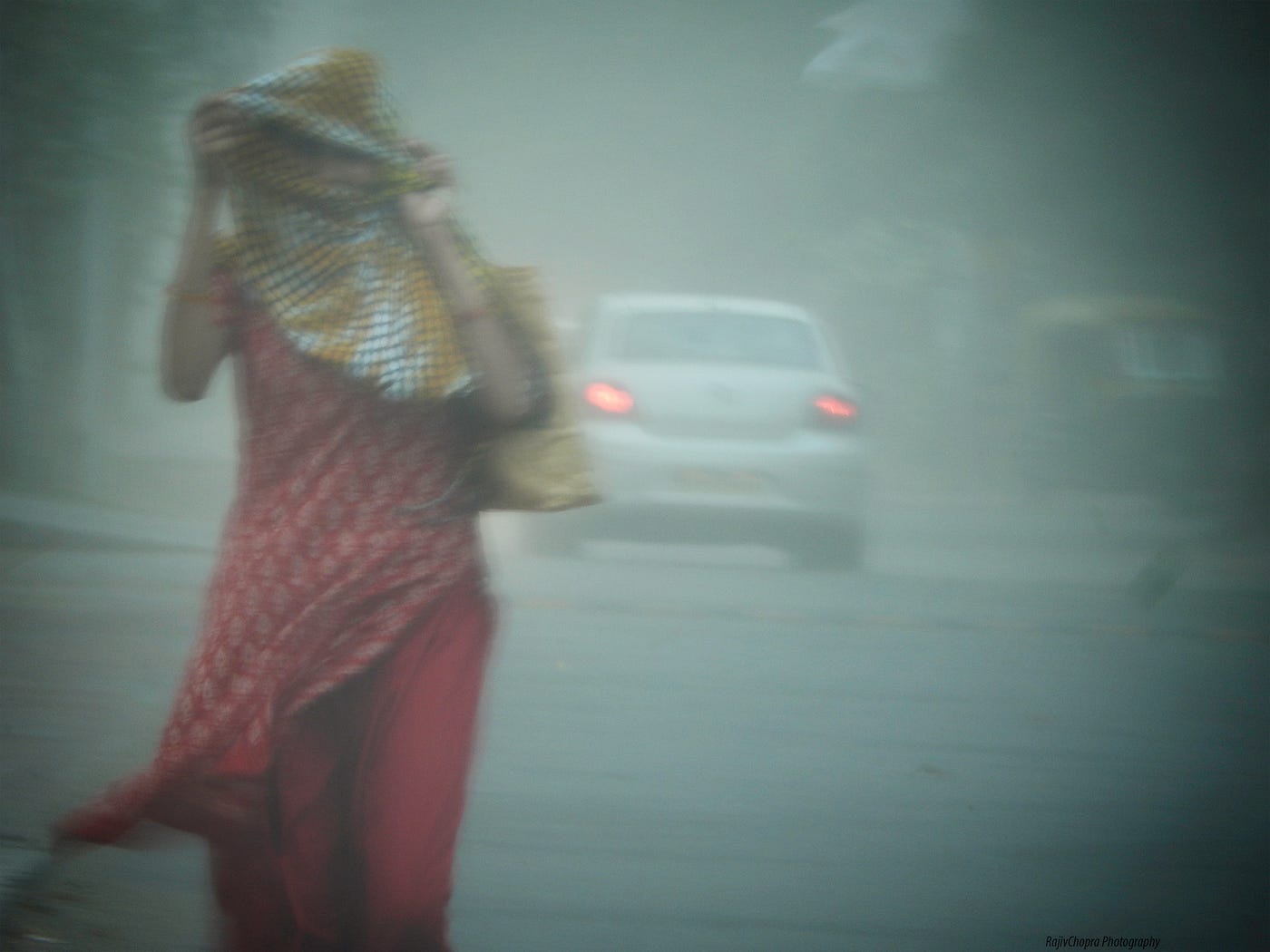
We’ve always had dust storms in Delhi, and every time I have been caught in them, the dust makes my eyes burn. My hair becomes thick — not nicely — and the dust sticks to the lingering sweat on my face.A brief rain shower invariably follows the dust storm, and these days, the spell of rain is too short to cause any real drop in the temperature. Instead, the air thickens and grows humid, deepening the prevailing sadness.
Yet people continue to work in such conditions. I’ve always found it difficult to predict the onset of these dust storms, but many bikers ride with their faces covered by a thin cloth. The thin cloth helps protect them from the sun’s blast, from the road dust, and vehicular fumes. Those who believe they are direct descendants of God ride without helmets and face coverings, smirking until they run into an accident.
The key lesson from the preceding paragraph is that many riders cover their faces with a thin cloth. If you are prepared in advance, you can protect yourself.
When you walk around with your camera, it is imperative that you protect yourself and your camera gear. Even the simple act of zooming the camera’s lenses can cause dust to get sucked into the camera’s ports, causing dust spots on the sensor. Dust on the sensor is inevitable, and you can minimize this by covering the ports. Read this article on Peta Pixel and watch the video. Dusty environments only increase the risk of dust getting into your camera. The article warns against believing that Weather Resistance (WR) means Weather Sealed (WS). I doubt any camera is truly weather sealed.
If the Thar Desert encroaches on Delhi, the best approach will be to adopt the precautions that desert dwellers and photographers take — there will be no other option! Remember: small apertures (f11 etc) will render the dust sharper and smaller apertures will render them as blobs.
For me, I believe that dust is a fact of life. We will only be able to manage the amount of dust that gets onto the sensor and ensure that we service our cameras regularly. Also, I suggest wrapping your camera in a thin cloth. We live in a hot, dusty zone: a thick cloth can cause your camera to overheat.
Vacuum your bag regularly; dust settles in it.
Will the Thar Desert encroach upon Delhi? I don’t know when this will happen. I hope not, for our sake.
Stories we photograph.
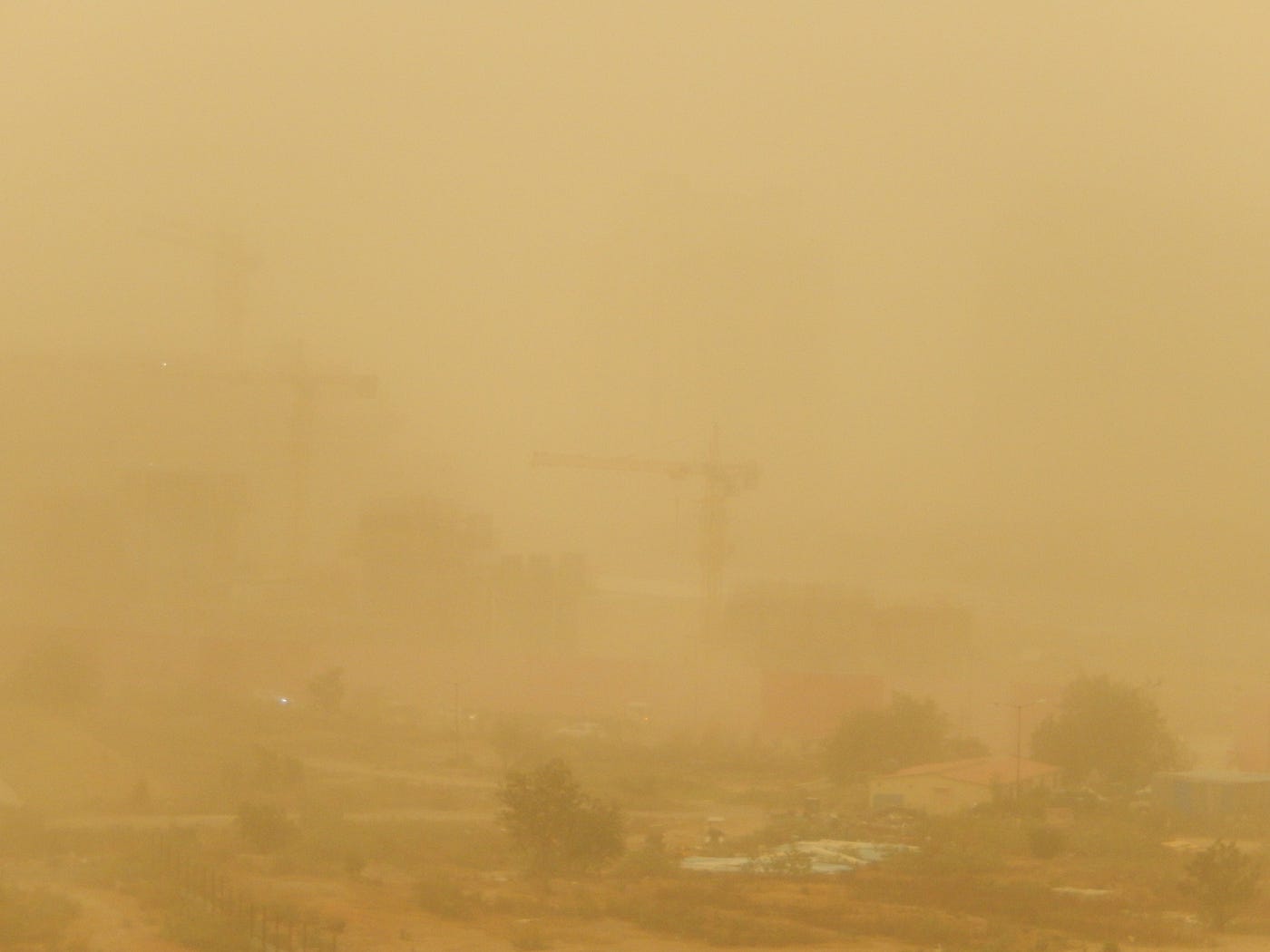
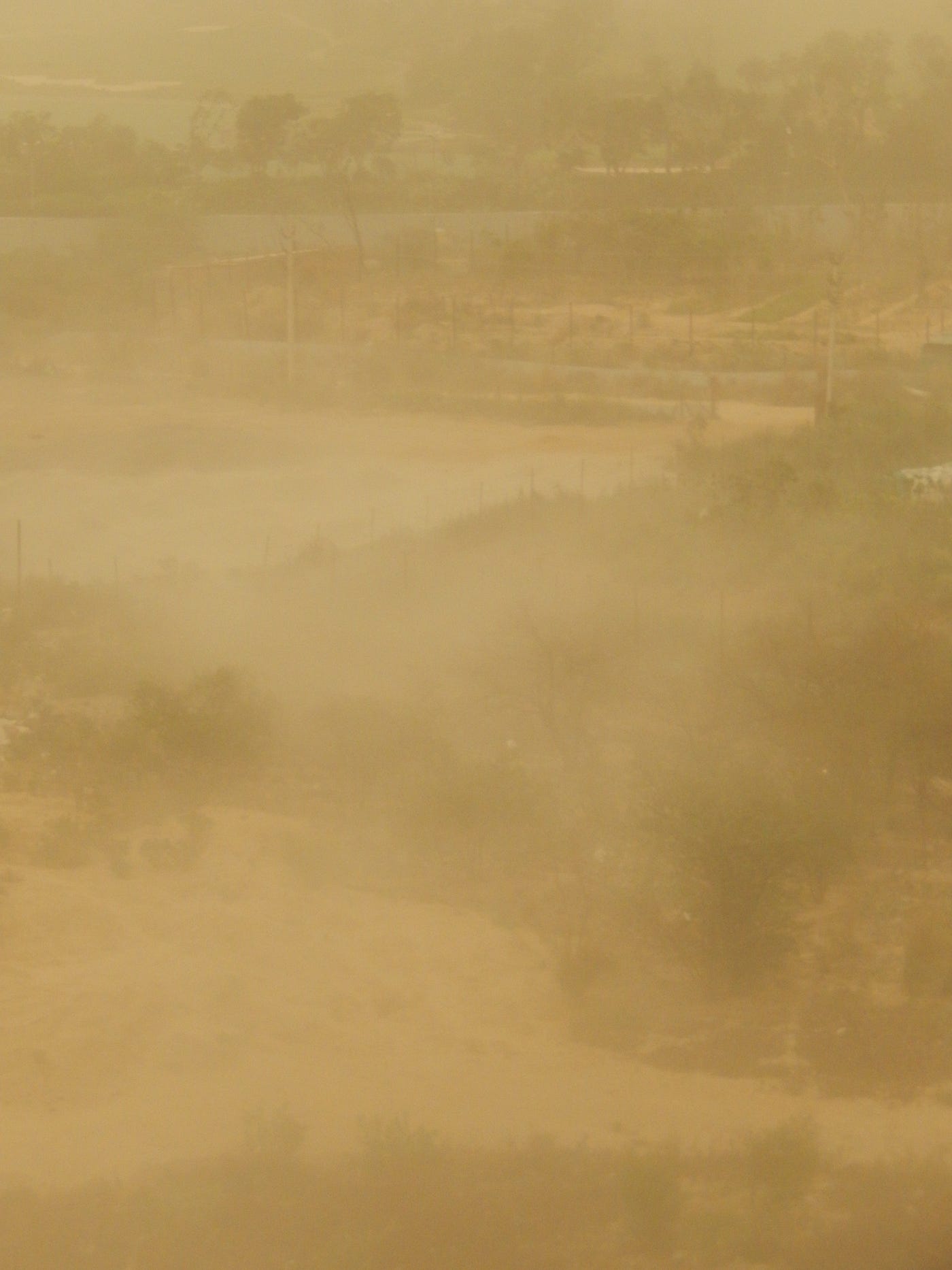
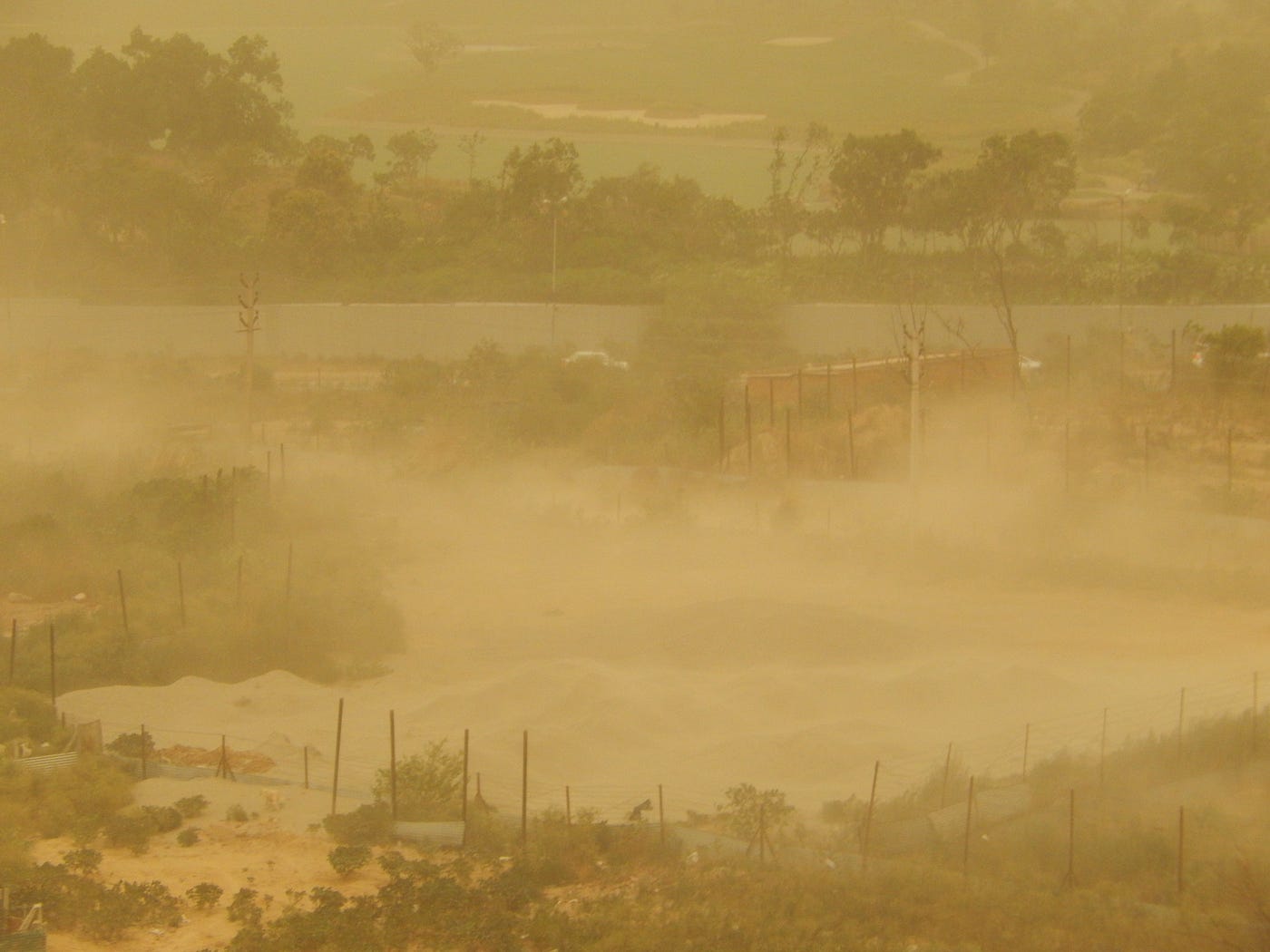
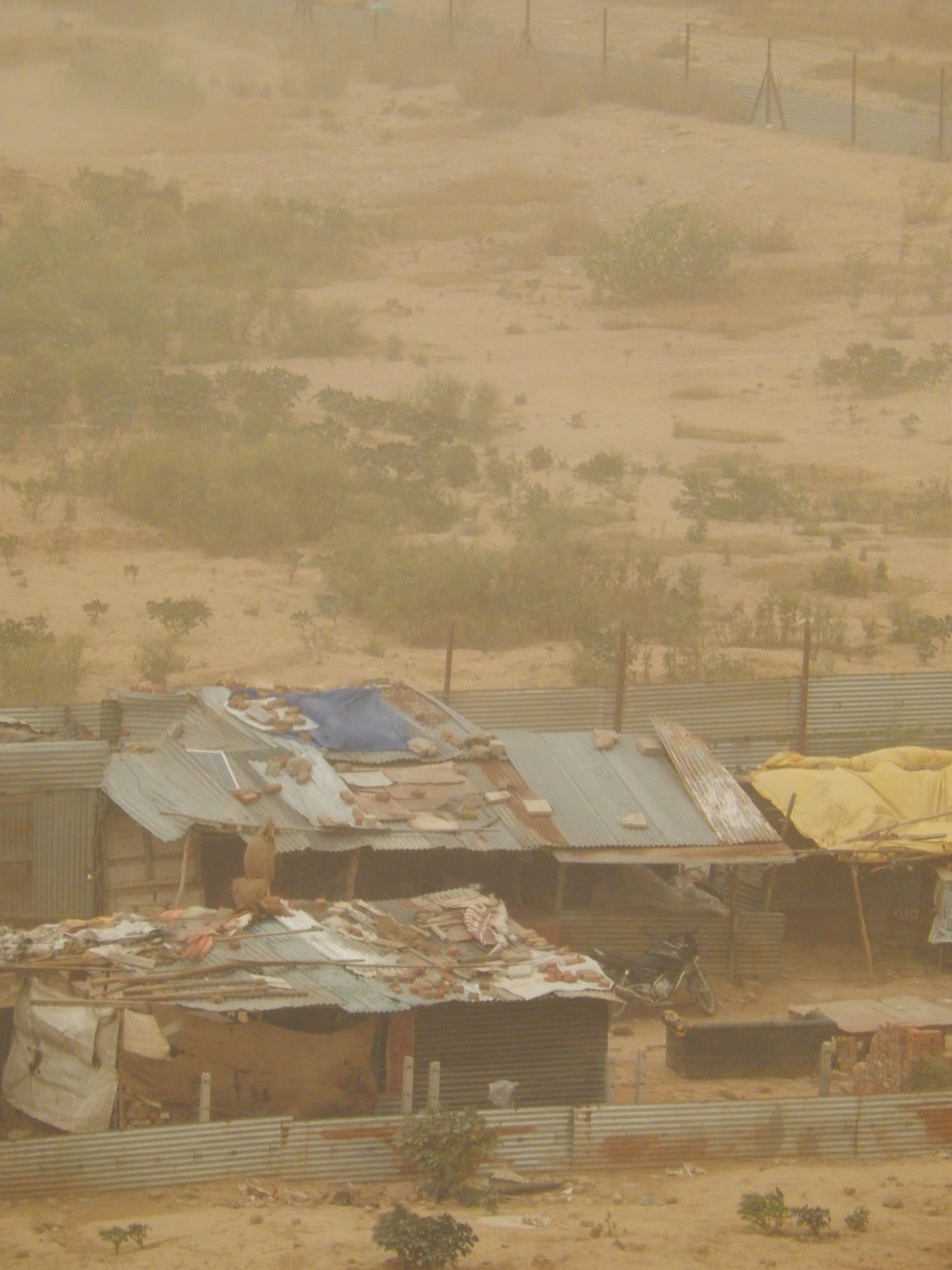
However, no matter how unpleasant dust may be — dust hanging in the air or a dust storm — it can create some fascinating, surreal, and mystical images. We fear dust, and we must fear dust, but if you are in such an environment, remember: magic lives in these conditions as well.
I shot the images you see in this post with a point-and-shoot camera, and I am dejected that many camera manufacturers have withdrawn them from the market. When I was at a Fujifilm event a week ago, I urged them to develop such a camera for the Indian market. Otherwise, I will buy an Olympus camera, like the Tough TG-7, one designed for tough conditions. I assume that, since it works well underwater, it may work well in dusty environments.
Camera manufacturers may have to revisit their camera development programs and design cameras specifically for dusty conditions, whether mid-level or high-end.
Dust will come to town, eventually, and we will need to be prepared.
Photography when the taps run dry (my podcast)
[embed]Photography when the taps run dry. The Photograph at Delhi’s Red Fortmedium.com
Living on the edge of thirst. Podcast
We live in unusual times. We have an unusually humid summer, and we are all living on the edge of thirst. Water shortages and polluted water compound the problem. How will you photograph this misery?
메타데이터
- post_id
- bccc5262dcb7
- slug
- when-the-thar-desert-encroaches-bccc5262dcb7
- url
- https://medium.com/essays-on-photography/when-the-thar-desert-encroaches-bccc5262dcb7
- canonical_url
- https://medium.com/essays-on-photography/when-the-thar-desert-encroaches-bccc5262dcb7
- author_url
- https://medium.com/@rajiv-chopra
- status
- ok
- fetched_at
- 2026-07-09 17:36:58