On the Primacy of Saint Peter — P. Charles René Billuart, O.P.
ARTICLE I On the Primacy of Saint Peter
On the Primacy of Saint Peter — P. Charles René Billuart, O.P.
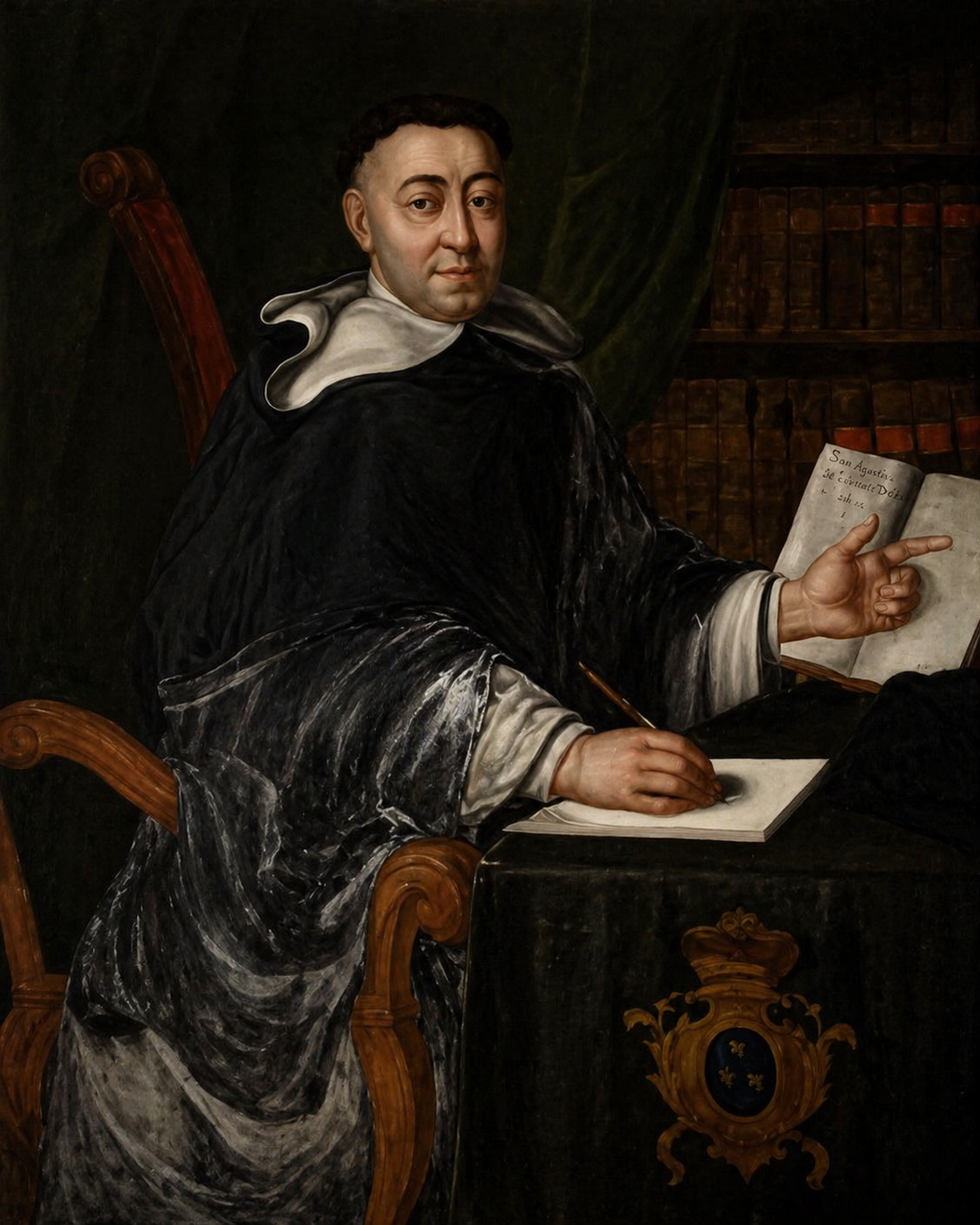
P. Charles René Billuart, O.P.
ARTICLE I On the Primacy of Saint Peter
I presuppose, first, that Christ, ascending into heaven, did not abdicate all the power which was given to him in heaven and on earth, and thus remains the principal head of the Church; for he is a priest forever, always living to intercede for us, pouring into us the charisms of graces and able by himself to save those who come to God. Hence, he has no successor on earth; for a successor is one who so succeeds into the place of another that the latter no longer possesses the authority which he previously had.
I presuppose, secondly, that Christ, in withdrawing from the faithful his bodily presence, did not so retain his power for himself that he failed to leave a visible vicar of himself on earth for the governance of the Church. For since the Church is a visible body, it requires a ruler who, in arising cases, can be seen, approached, and heard.
We therefore ask whom Christ established as his vicar and the head of the whole Church with the power of governing it: was it Peter alone? Or all the Apostles equally? The latter is claimed by the innovators out of hostility toward the Roman Church. For since the Roman Pontiff has no other jurisdiction than that which Peter had, whose successor he is, if Peter had none over the Apostles and was on equal footing with them as head of the Church, then the Roman Pontiff likewise does not have primacy of jurisdiction over the whole Church, but is with the bishops, among whom he is as first among equals.
About the middle of the past century, two little books appeared which placed Paul on an equal footing with Peter in the governance of the Church and established two heads that would unite into one. These were condemned by Innocent X on January 24, 1647.
Therefore, against all these, I state: Peter — and he alone — was established by Christ as the visible head of the whole Church; that is, to Peter alone was granted by Christ the primacy not only of honor and dignity, but of power and jurisdiction over the Apostles and the universal Church.
Proof 1. From a twofold passage of Scripture. The first is Matthew 16, where Christ, to Peter — who, before the other Apostles, confessed that he was the Son of God — repaying, as it were, the office and reward of that confession, says to him: “Blessed are you, Simon Bar-Jona, because flesh and blood has not revealed this to you, but my Father who is in heaven; and I say to you that you are Peter, and upon this rock I will build my Church, and the gates of hell shall not prevail against it. And I will give to you the keys of the kingdom of heaven; and whatever you bind upon earth shall be bound also in heaven, and whatever you loose upon earth shall be loosed also in heaven.” By these words, taken in their obvious sense, the primacy of jurisdiction over the Church is signified as conferred upon Peter under a double metaphor, namely that of the foundation and of the keys. For what the foundation is in a building, that the head is in a body, the ruler in a city, the king in a kingdom, the father of a household in a home; and he to whom the keys are entrusted is thereby established as king or governor of the city. I add: these words cannot apply to any other of the Apostles except Peter. Therefore.
Proof of the minor: No one besides Peter had confessed the divinity of Christ; no one besides him could be called Simon Bar-Jona, that is, son of Jonah; no one besides him was called Cephas, which is interpreted as Rock or Stone. For Christ did not say, as the Latin version has it, “You are Peter,” but, speaking in Syriac, “You are Cephas,” that is, “you are a rock or stone; and upon this rock,” where the pronoun “this” clearly indicates the rock previously mentioned — as if he were saying, “You are the rock upon which I will build my Church.” The Latin translator, however, rendered it “You are Peter” and not “You are Rock,” because he followed the Greek text, which has Petros; and in Greek both Petros and Petra signify a stone. It seemed more fitting to the Latin translator to assign to a man the masculine name Petrus rather than the feminine Petra. Therefore, by these words, the primacy of jurisdiction over the whole Church was granted to Peter alone.
Thus almost all the Fathers interpret this passage in the same way: Origen (Homily 5 on Exodus), Tertullian (On Prescription, ch. 21), Basil (on Isaiah, ch. 2), Gregory Nazianzen (Oration 21), Chrysostom (Homily 2 on Penitence, on Psalm 50), Cyril of Alexandria (Book 2 on John, ch. 12), Epiphanius (Heresy 59), Cyprian (Letters 40, 57, and 71), Jerome (Against the Pelagians, ch. 4), Hilary (on Matthew, ch. 26). Finally, Augustine — whom the sectarians oppose — says on Psalm 69: “Peter, who a little before had confessed him to be the Son of God, and in that confession was called the Rock upon which the Church would be built, etc.” And in Sermon 29 on the Saints: “He alone among the Apostles deserved to hear: ‘Amen I say to you, you are Peter, and upon this rock I will build my Church.’ Surely worthy to be a stone for the foundation in building the peoples in the house of God, a column for support, a key for the kingdom.” Compare what I shall say in the solution of the first argument.
The other passage of the Gospel is John 21, where Christ, what he had promised to Peter in the cited Matthew 16 on account of his outstanding confession of divinity, actually confers after a threefold confession of singular love: “Simon, son of John, do you love me more than these? Feed my lambs; feed my sheep.”
It is established, first, that these words, as above, cannot apply to anyone other than Peter; for he is designated by his proper name and that of his father, Simon son of John. Christ questions him three times, so that a threefold confession might correspond to the threefold denial. By questioning him, he excludes the others, saying: “Do you love me more than these?” and therefore Peter himself answered in his own name and not in that of others: “Lord, you know that I love you,” since otherwise he could not know whether the others loved him.
It is established, secondly, that the universal Church to be governed was entrusted to him; for he does not entrust to him these or those sheep or lambs, but indefinitely “my sheep,” “my lambs.” Now all the faithful are the sheep or lambs of Christ; by lambs the people are signified, by sheep the pastors. Hence Bernard (Book 2, On Consideration, ch. 8): “To whom,” he says, “I do not say of bishops but even of the Apostles, were all the sheep so absolutely and without distinction entrusted? ‘If you love me, Peter, feed my sheep.’ Which sheep? The peoples of this or that city or kingdom? ‘My sheep,’ he says. To whom is it not clear that he designated not some, but assigned all? Nothing is excepted where nothing is distinguished.” And Eucherius of Lyons, or another ancient Gallican bishop, in a sermon on the Feast of the Apostles Peter and Paul: “First,” he says, “he entrusted to him the lambs, then the sheep; because he established him not only as a shepherd, but as the shepherd of shepherds. Therefore Peter feeds the lambs, he feeds the sheep, he feeds the children, he feeds also the mothers; he rules both subjects and prelates; therefore he is the shepherd of all, because besides lambs and sheep there is nothing in the Church.”
Thirdly, it is established that by these words the highest power over the whole Church was conferred upon Peter, because it belongs to the office of a shepherd not only to provide food to the flock, but to lead it, bring it back, protect it, govern it, correct it, etc. “To feed the sheep,” says the author in the Catena, “is to strengthen those who believe in Christ lest they fail from the faith; to provide earthly support to subjects if necessary; to offer examples of virtues together with the word of preaching; to resist adversaries; to correct those subject who err.”
And thus this passage is commonly explained by the holy Fathers; besides those already cited: Origen (on chapter 6 of the Epistle to the Romans), Ambrose (Book 10 on Luke, on chapter 24), Gregory the Great (Book 4, Epistle 32), etc.
Proof 2. From Tradition, which is attested by the aforementioned Fathers and by the Council of Chalcedon, Act 3, where it is said of Saint Peter: “He is the rock and the foundation of the Catholic Church and of the true faith.” This will become even clearer from what will be said in the following article.
Proof 3. From the prerogatives granted to Peter. 1°. From the change of name: for whereas he was previously called Simon, Christ commanded that he be called Cephas, that is, rock, stone, or cliff, upon which he would found the Church. 2°. From the fact that in Scripture (Matthew 10, Mark 3, Luke 6, Acts 1) he is regularly listed first among the Apostles — not by reason of calling or age; for Andrew, his brother, was called earlier, and according to Epiphanius (Heresy 51), was older by birth. Therefore, it is by reason of authority and primacy. 3°. From the fact that Scripture speaks of Peter as of a head: thus in Mark 1, “Simon and those who were with him”; in Luke 8 and 9, “Peter and those who were with him”; in Acts 2, “Peter and the eleven”; likewise in Acts 5, “Peter and the Apostles.” 4°. He convened the first council for the election of Saint Matthias (Acts 1). In another council concerning the observance of the legal precepts, he was the first to give his judgment.
Proof 4. From theological reasoning: Christ established in the Church a monarchical form of government, in which there exists one supreme ruler who administers all things with full authority. Therefore, he did not establish all the Apostles equally as princes and rulers of the whole Church, but only one among them. And who is this one, if not Peter, as is clear from what has been said? Nor do heretics assign any other.
The antecedent is proved in multiple ways: 1°. The Church is compared (Daniel 2) to a kingdom, (Song of Songs 6) to an ordered army, (1 Peter 3) to a ship, (John 10) to a sheepfold. But all these are governed by one supreme ruler. Therefore.
2°. No one should doubt that the government of the Church is most perfectly ordered, since it was established by Him “through whom kings reign and lawgivers decree just things” (Proverbs 8). But the best government of a multitude is that it be ruled by one. Therefore.
Proof of the minor: from the end of government, which is the peace and unity of subjects. But one is a more fitting cause of unity and concord than many; for one is, of itself, the cause of unity, whereas many are only so accidentally, insofar as they are in some way united. For it is evident that many cannot be united and agree unless they themselves are in some way brought together and made one. Therefore.
3°. Although peoples are divided into different dioceses and cities, nevertheless, just as the Church is one, so there ought to be one Christian people. Therefore, just as in one particular people of a single Church there is required one bishop who is the head of the whole people, so in the whole Christian people it is required that there be one who is the head of the whole Church.
4°. For the unity of the Church, it is required that all the faithful agree in faith. But difficulties arise concerning matters of faith; and through the diversity of opinions that may arise from different persons, the Church would be divided unless it were preserved in unity by the judgment of one. Therefore, for preserving the unity of the Church, it is required that there be one who presides over the whole Church.
5°. The Church militant is derived, by likeness, from the Church triumphant. Hence John (Revelation 21) saw Jerusalem descending from heaven. But in the Church triumphant one presides over all, who also presides over the entire universe — namely God. Therefore.
If someone says that in the Church there is one head, namely Christ, I respond that this is not sufficient; because although Christ always administers and perfects the sacraments — according to that saying of John 1, “This is he who baptizes” — yet, since he was about to withdraw his bodily visible presence, he established ministers who would visibly administer the sacraments. Therefore, in like manner, it was necessary that he establish someone who, in his place, would have care of the universal Church.
If one objects: For the perfection of political government it is not necessary that there be only one monarch in the whole world; therefore neither in the spiritual government of the whole Church. Likewise, God did not appoint a king over his people Israel from the beginning; therefore —
I respond to the first: there is a difference, because it is not necessary that there be only one kingdom in the whole world; but the Church, spread throughout the world, is one kingdom, and therefore ought to be ruled by one. Secondly, it is not necessary that the whole world be governed by the same laws; but the whole Church must believe the same things, use the same sacraments, and observe the same precepts of Christ — all of which cannot be done unless there is one head of the Church.
To the second: although a kingdom is the best form of government for a people, if it is not corrupted, yet because, on account of the great power granted to a king, it easily degenerates into tyranny unless the virtue of the one to whom such power is given is perfect — and since the Jews were cruel and inclined to avarice, by which vices men most easily fall into tyranny — therefore God, from the beginning, did not establish a king with full power over the Israelites, but rather a judge and governor for their custody.
However, since it contributes to the goodness of government that the people love it — for in this way peace is more easily preserved — and they love it when they have some share in it, as in aristocracy and democracy, it can therefore be said that the monarchical government of the Church is, in a certain sense, tempered by aristocracy and democracy: by aristocracy, insofar as under the supreme head several leading men govern, such as patriarchs, archbishops, and bishops; by democracy, insofar as such leaders can be chosen from among all. And thus all have some share in the governance of the Church.
Objections are resolved.
Objection 1. From Matthew 16, cited above, nothing can be drawn in favor of the primacy of Saint Peter. Therefore —
Proof of the antecedent:
1°. Because by the words “and upon this rock” there is not understood Saint Peter, but Christ himself, according to 1 Corinthians 10: “And the rock was Christ,” and also in chapter 3: “No one can lay another foundation except that which has been laid, which is Christ Jesus.” And according to Augustine, who in his final tractate on John says: “Upon this rock which you have confessed I will build my Church”; and in Sermon 13 on the words of the Lord: “You are therefore Peter, and upon this rock I will build my Church; I will build you upon me, not myself upon you.” Therefore.
2°. The same antecedent is proved thus: even if these words are in some way referred to Peter, they are not referred to his person, but to his faith or confession, so that the sense is: “and upon this confession of Peter I will build my Church.” Thus Hilary (Book 6 on the Trinity): “Upon this rock of confession, therefore, is the building of the Church.” Similarly Cyril of Alexandria (Book 4 on the Trinity) and Chrysostom (Homily 55 on Matthew). Therefore.
3°. The same antecedent: those words, “I will give to you the keys of the kingdom of heaven,” are not referred to the person of Peter individually, but to the Church, so that the keys were given to Peter in the name of the Church, according to Augustine (Tractate 50 on John): “When Peter received the keys, he signified the Church.” Therefore.
Response: I deny the antecedent. To the first proof, I deny the antecedent. For: 1°. As we have observed, the relative pronoun “this” in the words “and upon this rock” indicates the rock of which mention had previously been made. But no mention had been made of Christ under the name of rock, rather under the name “Son of the living God”; whereas mention had indeed been made of Peter under the name of rock: “You are Cephas,” that is, rock.
2°. If it is understood of Christ, the sense becomes forced and convoluted, namely: “You are Peter, and upon this rock — that is, upon me — I will build my Church, and to you, Peter, I will give the keys of the kingdom of heaven,” than which nothing is more tangled and more foreign to the natural sense.
3°. After Peter’s confession and the words “Blessed are you, Simon Bar-Jona,” Christ added: “And I say to you that you are Peter, and upon this rock I will build my Church,” as a conclusion of the preceding words and as a reward for Peter’s confession, as is clear. Therefore, they are referred to him and not to Christ.
4°. If they were referred to Christ, he would not have said “I will build,” but “I build,” since already at that time he had built many Apostles and disciples upon himself. From all this it is clear that such an interpretation is utterly strained, foreign to the obvious sense, and therefore in no way to be admitted. Add that it is contrary to the common interpretation of the holy Fathers, as we have seen.
To the first authority: From the fact that in the cited passage of the Apostle the rock is understood as Christ, it does not follow that wherever “rock” is used, Christ is meant; for it is proper to metaphorical names that, according to different circumstances, they are taken in different senses. Thus sometimes in Scripture Christ is understood under the name of lion, yet not wherever “lion” appears is Christ signified. But here that Christ is not signified by “rock” has been sufficiently proven.
To the second authority: The Apostle there speaks of the primary and principal foundation, not of the secondary and ministerial one; otherwise he would contradict himself, since in Ephesians 2 he says: “Built upon the foundation of the Apostles and prophets.”
You will infer: therefore at least the other Apostles are, together with Peter, secondary foundations of the Church, and thus we have nothing special for Peter from Matthew 16.
Response: I distinguish the inference: the other Apostles are, together with Peter, secondary foundations of the Church — but by a different right, I concede; by the same right, I deny.
Thus, the other Apostles are and are called foundations of the Church insofar as they spread everywhere the evangelical doctrine revealed to them, performed miracles, conferred the Holy Spirit, founded churches, governed them, and established bishops; but they accomplished these things as Apostles and delegates by an extraordinary right. Peter, however, did so by ordinary right, as the ordinary shepherd and supreme head, to whom the other Apostles were subordinated, while he himself was not subordinated to them. And this is what is promised to him alone in Matthew 16, when to him alone, above the others and in their presence, it is said: “And upon this rock I will build my Church,” as the holy Fathers commonly interpret, as we have seen and shall see below.
Hence Jerome (Book 1 against Jovinian, ch. 14): “Although the strength of the Church is founded equally upon all the Apostles, yet for this reason one is chosen among the twelve, so that, a head being established, the occasion of schism might be removed.” (Compare the solution of the fourth objection concerning Saint Cyprian.)
To Augustine: indeed, the holy Doctor proposed both interpretations, and he himself acknowledges this in Retractations (Book 1, ch. 21), where he prefers neither to the other but leaves the judgment to the reader: “Of these two opinions, which is more probable, let the reader choose.” He also says that our interpretation is sung by many in the verses of Ambrose; and since it is far more in conformity with the text, as has been shown, and is commonly taught by the Fathers, it is altogether to be preferred.
If you ask why Augustine so often proposed the other interpretation in many places: Some respond that this happened from ignorance of the Hebrew or Syriac language. For the reason which the holy Doctor gives in the cited place of the Retractations for referring the words “and upon this rock” to Christ and not to Peter is that, he says, it was not said to Peter, “you are rock,” but “you are Peter”; and “the rock was Christ.” He thought that Cephas did not signify “rock,” but something derived from rock, as “stony” from “stone”; and for this reason the Latin translator rendered it “You are Peter,” and not “You are Rock.” And since the Church was to be built upon rock and not upon something stony, Augustine thought that by that rock Peter was not meant, but Christ, of whom it is said, “the rock was Christ.” Therefore, if the holy Doctor had realized that Cephas signifies nothing other than rock or stone, and that Christ said, “You are the rock, and upon this rock I will build my Church,” without doubt he would everywhere have followed our interpretation.
Our author Natalis Alexander (Dissertation on the first century, §3, Objection 1) responds that Augustine referred these words to Christ because he was arguing against the Donatists, who placed the efficacy of the sacraments in the holiness of the ministers. Hence, fearing that if the Church were said to be founded upon Peter, men might presume upon the holiness of the Church’s ministers and build their spiritual edifice upon them, he referred the whole notion of foundation to Christ. That Augustine was led by this concern to adopt that interpretation is clear from the passage cited in the objection (Sermon 13 on the words of the Lord), where after the words already mentioned he adds: “For men, wishing to be built upon men, said: ‘I am of Paul, I of Apollos, I of Cephas (that is, Peter).’ But others, who did not wish to be built upon Peter but upon the Rock, said: ‘I am of Christ.’” For this reason, the aforementioned Alexander adds that Augustine’s interpretation aims only at preventing us from thinking that Peter built the Church by his own power and apart from Christ. Augustine therefore acknowledges Christ as the principal and primary foundation in the building of the Church, but he does not deny that Peter is a foundation established by Christ in a secondary sense, by reason of his principal ministry. Hence, in this very place, he calls Peter the first and chief of the Apostles and praises the primacy of his apostleship in strong terms. So far the cited author (with some omissions), whose explanation is also supported by the final words in the objection: “I will build you upon me, not myself upon you,” which indicate that Augustine denies only that Peter is the primary foundation of the Church.
To the second proof of the antecedent (objection): I deny the antecedent. The objection says: “These words, ‘upon this rock,’ etc., are referred to the confession of Peter as the meritorious cause of the promise.” I concede this if it is taken as the cause of the promise; I deny it if it is taken as the subject to whom the promise is made.
Therefore, when the holy Fathers say that these words are referred to the confession of Peter, or that the Church is built upon the confession of Peter, they do not take “confession” in the abstract and separated from Peter, but in the concrete sense, for Peter as the one confessing — so that the confession is the reason on account of which this prerogative is granted, while Peter is the person to whom it is granted. Thus, when Jerome (Epistle 61) speaking of the same Peter says that the body of Peter did not walk upon the waters but his faith, he does not deny that Peter’s body truly walked upon the waters, but he means that this miracle is to be attributed not to Peter’s bodily agility but to his faith; and likewise in our case. Hence Hilary himself, whose words are cited in the Catena of Saint Thomas, says: “The confession of Peter has clearly received its reward.” And afterward: “O happy foundation of the Church in the naming of a new name!”
To the third proof of the antecedent: Augustine says that the keys were given to Peter in the name of the Church, because he did not receive them as a private person, but as head of the Church and for its benefit; and what is granted to the head for the body is considered to be granted to the body. Hence Augustine himself (Tractate 124 on John) says: “Peter the Apostle, because of the primacy of his apostleship, represented in a certain figurative universality the person of the Church.” But a figurative exposition does not destroy the truth of the history. Thus, according to the same Augustine (on Psalm 108), Judas was a figure of evil men, just as Peter, by reason of his primacy, was a figure of the Church. Therefore, just as Judas truly and personally betrayed Christ, so Peter truly and personally received the keys.
Instance: At least the words of Christ to Peter must be referred to all the Apostles. Therefore —
Proof of the antecedent: Christ was asking all: “But you, whom do you say that I am?” and Peter answers in the name of all: “You are Christ, the Son of the living God.” Therefore Christ also replies to Peter and in him to all the others whom he had questioned: “Blessed are you, Simon Bar-Jona,” etc.
Response: I deny the consequence. For: 1°. Christ, in replying to Peter’s confession, clearly shows that he is speaking to Peter in a special way. He calls him by all the proper names by which he is distinguished from others: his birth name Simon, his father’s name Bar-Jona, and the name imposed on him, Cephas. He says to him in a special way, “I will give to you,” and assigns the reason for the promise, namely his eminent confession inspired by God, which he alone made. Could he more clearly distinguish and designate him from the others? Could a scribe or notary more precisely designate a man intended in a testament or public act?
2°. Although Christ questioned all, and although Peter answered in the name of all, nevertheless he had not received from the others the office of answering in this way; nor did the others contribute anything to his answer, since it was not flesh and blood but the heavenly Father who revealed it to him. Rather, he answered from his own depth, his own merit, and his own granted privilege, supplying the deficiency of the others. Therefore the privilege of Christ’s reply is to be attributed to him alone and not to the others. Indeed, if a king were to ask gathered generals about warfare, and one of them, answering well in the name of the others, were to be made a marshal by the king, would all be made marshals, or only the one who answered?
You will object: Christ elsewhere, namely in Matthew 18, granted equal power to the other Apostles with Peter, when he said to them: “Whatever you bind upon earth shall be bound in heaven,” etc. Therefore —
Response: Reply 1. I deny the antecedent. For the power of the keys given to Peter in Matthew 16 is something greater and more elevated than the mere power of binding and loosing, since the latter is only an inadequate act of the keys, as Cajetan extensively proves (On the Primacy of the Supreme Pontiff, ch. 5 and 7). Therefore, the conferral of the keys of the kingdom of heaven grants the power to do everything that pertains to the governance of the heavens (i.e., the Church) and to remove all obstacles that prevent entry into it. For this purpose it is necessary at times to determine truths of faith, condemn heresies, restrain schisms, convoke councils, restrain princes harmful to religion, admonish one, command or forbid another, etc. But these things are not contained under the previously mentioned notion of binding and loosing, which are only judicial acts, either in the internal forum of conscience.
Reply 2. I concede that by those words in Matthew 18, “Whatever you shall loose,” etc., a power equal to Peter’s is promised to the Apostles (though it was not then conferred, since at that time they were not yet bishops; it was conferred in John 20 when Christ said to them: “As the Father has sent me, I also send you,” and “Receive the Holy Spirit; whose sins you shall forgive,” etc.). However, this power was promised and conferred in a different way to the Apostles and to Peter: to the Apostles as delegates, to Peter as ordinary pastor; to them dependently and subordinately to Peter, to him independently and supremely. For why, as I already observed, is it said only to Peter, and in the presence of the others, “To you I will give the keys,” and “Feed my sheep” (John 21), if he received nothing above the others — especially given his singular faith and love?
Objection 2. From these words in John 21, “Feed my lambs, feed my sheep,” nothing can be proved in favor of Peter’s primacy. Therefore. Proof of the antecedent: What Christ said to Peter, “Feed my sheep,” he said to all. Proof: 1°. Because Peter himself (1 Peter 5) says to bishops: “Feed the flock of God which is among you.” And Acts 20: Paul says: “Take heed to yourselves and to the whole flock, in which the Holy Spirit has placed you as bishops to govern the Church of God.”
2°. Because Augustine (Book 6, On the Christian Contest, ch. 30) says: “When it is said to Peter, it is said to all: Do you love me? Feed my sheep.” Therefore.
Response: I deny the antecedent. To the proof: I distinguish the antecedent. That Christ said to Peter, “Feed my sheep,” is said to all — with respect to a determinate flock, I grant; with respect to all universally, as it was said to Peter, I deny. Hence Peter himself in his epistle does not simply say “feed the flock,” but “feed the flock which is among you,” that is, the particular flock entrusted to you. And in this sense Augustine must also be understood, unless one interprets him with others as meaning: “it is said to all,” that is, to all successors of Peter, not to all Apostles. Moreover, Augustine himself (Book On Pastors, ch. 13) says: “There were many Apostles, and to one it is said, ‘Feed my sheep.’”
Objection 3. From several passages of Scripture: 1°. Christ (Matthew 28 and John 20) sends all the Apostles equally and says to all: “As the Father has sent me, so I send you… going therefore, teach all nations,” etc.
2°. In Luke 22, the Apostles are reproved when contending about primacy; but if primacy had been given to Peter, there would have been no dispute, and Christ would not have rebuked them in such a way, indicating that none was greater than another, but rather Peter should have been indicated.
3°. In Acts 8, Peter was sent by the Apostles; but a superior is not sent by inferiors.
4°. We do not read that Peter exercised any act of jurisdiction over the Apostles.
5°. When the Apostles are named, Peter is not always placed first; thus Galatians 2: “James and Cephas and John.” 1 Corinthians 9: “Do we not have power to take along a sister wife, as also the other Apostles and the brothers of the Lord and Cephas?” John 1: “Philip was from Bethsaida, the city of Andrew and Peter.” Therefore.
Response: To the first: from the sending of the Apostles it follows that they were equal to Peter in regard to the apostolic office, not in regard to pastoral authority, as is clear from what has been said.
To the second: Christ rebukes the Apostles contending about a primacy of temporal domination, sought out of ambition, as is clear from the following words: “The kings of the Gentiles lord it over them,” that is, with worldly pride, aiming at their own glory and advantage rather than the common good; “but you not so.” But Peter was not seeking primacy out of ambition, and the primacy in question was spiritual, which the Apostles did not yet sufficiently understand, especially since it had not yet been conferred but only promised.
To the third: the Apostles sent Peter not by command but by counsel — not as commanding, but as advising and persuading; just as cathedral chapters sometimes send their prelates, or even counselors of a king act with respect to matters of governance according to necessity and prudence.
To the fourth: 1°. I deny the antecedent. For Saint Peter convened the Apostles for the election of Saint Matthias, and he was the first to give his opinion in the council concerning the observance of the Law. Moreover, not all that Peter did has been written down in Scripture.
2°. Even if the antecedent were granted, I deny the consequence. First, because since the Apostles, being led by the Holy Spirit, conducted themselves well, there was no need for Peter to exercise jurisdiction over them in every act. Secondly, because a negative argument does not hold from act to power; that is, from the absence of recorded exercise of authority, one cannot conclude the absence of authority itself.
To the fifth: 1°. I deny the consequence, because although Peter is not always placed in the first position, nevertheless he is more frequently so placed, as is clear from the proofs of the conclusion.
2°. Nor do the texts adduced harm our position. In the first text, James is placed first; but this is because the matters there narrated were performed in Jerusalem, where James was bishop. The situation is different in other passages. Thus the same Apostle in the same epistle to the Galatians (1) reports that after three years he went up to Jerusalem to see Peter; he does not mention James, although at that time he was bishop of Jerusalem. And therefore Ambrose says on this passage: “It was fitting that he should see Peter, because he was the first among the Apostles, to whom the Savior had entrusted care of the churches.” Jerome likewise says there: “Paul went to see Peter, not out of a desire to learn, but to show honor to the first Apostle.” Likewise Chrysostom (Homily 37 on John): “Because Peter was the mouth of the Apostles, the prince and summit of the whole group, therefore Paul went up to see him before the others.”
The second text does not harm us, but rather favors us; for Paul there argues from the greater to the lesser, saying: if the Apostles, and what is more, Cephas, take along a sister as wife for the care of temporal things, why should I not be allowed?
The third text concerns a minor historical detail that in no way pertains to the apostolate, namely from which city Philip was. In historical narration, dignity is not scrupulously observed.
Objection 4. From the Fathers: 1°. Saint Clement (Book 1 of the Constitutions according to Eusebius, Book 2, History, ch. 1) says: “Peter, James, and John, after the Ascension of the Savior, although they had been preferred by Him to almost all others, nevertheless did not claim for themselves the glory of primacy, but appointed James, who was called the Just, as bishop of the Apostles of Jerusalem.”
2°. Hesychius of Jerusalem, a presbyter, in a sermon on James the brother of the Lord, calls James the head of the Apostles and the summit among the heads, and attributes to him the first place in the Council of Jerusalem.
3°. Saint Cyprian (Book 2, On the Unity of the Church) says: “The other Apostles were indeed what Peter was, endowed with equal fellowship of honor and power; but the beginning proceeds from unity, and primacy is given to Peter, so that the Church may be shown to be one.”
4°. Saint Ambrose (On the Incarnation, ch. 4) says: “This Peter, when he heard, ‘But you, whom do you say that I am?’ not forgetting his place, exercised primacy — primacy of confession, not of honor; primacy of faith, not of order.” Therefore.
Response: To Saint Clement, according to the common opinion of the learned, his text as found in Eusebius is interpolated. For although it is so read in the Basel manuscript, nevertheless in the Cologne manuscript and others examined and collated by Valesius, the word “primacy” is not found, nor “of the Apostles,” but rather “bishop of Jerusalem.” Similarly, in Nicephorus (Book 2, ch. 3), it reads: “Peter, James, and John, whom the Lord had honored with special dignity after His Ascension, did not seek glory, but chose James the Just as bishop of Jerusalem.”
To Hesychius: he is speaking as an orator, not as an interpreter of Sacred Scripture; therefore his words must be taken as hyperbole. For in his sermon on Saint Andrew, as reported by Photius in the Bibliotheca (cod. 260), he says of Peter: “If you are called Cephas, you received your reward before confession; before you preached, you received your crown.” Nor was it hidden from this author, who lived in the 5th or 6th century, that the bishop of Jerusalem held the last place among the patriarchs.
To Saint Cyprian: I distinguish. He says that the other Apostles were equal to Peter in fellowship of honor and power in regard to the apostolic office, I concede; in regard to episcopal or pastoral office, I deny. Or with others: they were equal in breadth of mission, I concede; in mode of governance, I deny. Thus, as to apostolic authority, the other Apostles were equal to Peter, because they could preach everywhere, administer the sacraments, confer the Holy Spirit, perform miracles, write sacred books, found churches, establish laws, and ordain bishops — but as delegates and by extraordinary right, and subordinated to Saint Peter. Peter, however, exercised these things as ordinary pastor, by ordinary right, not subordinated to the others, so that he himself was not bound by their laws, whereas they were bound by his, if he enacted anything for restraining schism, suppressing heresy, or otherwise for the common good of the Church. In this way, as if the Pope were to send a legate to the East Indies with full power to do all things necessary or useful for those missions: such a one could do what the Pope can, but by a different right — he as delegate and by extraordinary jurisdiction, the Pope as ordinary pastor and by ordinary jurisdiction. This is shown by Cyprian’s own words: “the primacy is given to Peter, so that the Church may be shown to be one.” Therefore Peter has primacy for the preservation of unity, which could not be preserved unless there were a primacy of authority and power to settle disputes, remove schisms, and eliminate other evils that could harm the unity of the Church. Likewise, in the same Book 2 On the Unity of the Church, he clearly states that Christ’s words, “Upon this rock I will build my Church,” are referred personally to Peter, and that the Church is built upon one Peter.
Thus in three ways Peter’s power surpasses that of the other Apostles: 1°. Because in Peter it is as in an ordinary pastor, to be transmitted to successors; in the Apostles it is as in delegates, needed for exercising the apostolate throughout the world. 2°. Because Peter’s power extends over the other Apostles, but not the Apostles’ over Peter. 3°. Because Peter could make universal laws for the whole Church, whereas the Apostles made only particular ones for the churches they founded.
To Saint Ambrose: in the cited words, the holy Doctor is referring only to that famous confession by which Peter confessed the divinity of Christ above the others, as is clear from the very words of the passage. He does not mention primacy of honor and order there, but it does not follow that he did not possess it or did not exercise it elsewhere.
Objection 5. At least there seems to have been complete equality of primacy between Peter and Paul. Therefore. Proof of the antecedent: The Apostle (Galatians 2) says that he did not yield in subjection even for an hour (v. 5); that the Gospel of the uncircumcision was entrusted to him as that of the circumcision was to Peter (v. 7); that James, Cephas, and John gave him and Barnabas the right hand of fellowship (v. 9); and that he resisted Peter to his face (v. 11), which he would not have dared to do unless he considered himself not inferior, as is said in the text Paulus 2, q. 7. Therefore.
Response: I deny the antecedent. For apart from the proofs of the conclusion, which apply to Paul just as to the other Apostles, Innocent X (January 24, 1647) condemned as heretical the proposition: “Saint Peter and Saint Paul are the two princes of the Church who form one, or are two leaders of the Catholic Church joined in the highest unity, or are a twin summit of the Church who have most divinely coalesced into one, or are two supreme pastors and rulers of the Church who constitute one head,” when it is so explained as to imply complete equality between Peter and Paul, without subordination of Paul to Peter in supreme power and governance of the universal Church.
To the first proof: Paul is not speaking there about Peter, but about false brethren, mentioned in the preceding verse, who were attempting to compel him and those he taught to observe the Mosaic Law.
To the second: That division between Peter and Paul concerned preaching and apostolic mission only, so that at the beginning Peter took care of the Jews and Paul of the Gentiles, because different methods were needed for Jews, who observed the Law, and Gentiles, who did not. It did not concern pastoral office or authority. Jerome says this in his commentary on Galatians 2. Nor was this division fixed, since Peter also preached to the Gentiles and Paul to the Jews.
To the third: Its meaning is not that James, Cephas, and John gave Paul precedence of honor or acknowledged him as superior; otherwise the same would have to be said of Barnabas. Rather, the sense is that they joined hands as a sign of fellowship and unity, agreeing that Peter would preach to the Jews and Paul and Barnabas to the Gentiles.
To the fourth: Nothing follows from this. For although it is lawful for an inferior to resist a superior who is in error when scandal is given, Peter’s fault there was not in doctrine but in conduct, as has been explained elsewhere.
As for the juridical text, Sylvius says that in some copies it is attributed to Jerome, in others to Augustine, and in neither is it found authentically. In any case, it can be understood as referring to equality in the apostolic office, not in jurisdiction.
Instance 1. From the Fathers: 1°. Epiphanius says (Heresy 27): “At Rome, Peter and Paul were the first of all the Apostles and were bishops together.” Cyril of Jerusalem calls Peter and Paul “heads of the Church.” Leo calls them “fathers and pastors of the Roman city.” Gregory the Great calls Paul “brother of Peter, the first of the Apostles.” Blessed Peter Damian says Paul presides over all churches like Christ. Therefore —
Response: In all these passages nothing else is signified except that Paul, together with Peter, founded the Roman Church and was his coadjutor in governing it, and that he exercised an extraordinary episcopal function there with Peter’s consent.
To Epiphanius: he calls Paul bishop of Rome because he was Peter’s coadjutor in founding and governing that Church and exercised episcopal ministry there with Peter’s consent. In law, the chair of a bishop and that of a coadjutor is in a certain sense the same, insofar as authority is shared in execution.
To Cyril: Natalis Alexander notes that Cyril indeed calls Peter and Paul leaders and rulers, but nowhere does he name them “heads of the Church.” When he speaks of Peter alone, he calls him not only leader but “first ruler and chief of the apostolic college,” indicating his primacy.
To Leo: Peter and Paul are truly fathers and founders of the Roman Church because they generated it in faith and nourished it with sound doctrine — not because they had equal authority. For Leo says that Rome was made head of the world through the See of blessed Peter, not through the See of Paul, which he would not have omitted if he had considered equal authority in both.
To Gregory: nothing follows from calling Paul “brother of Peter in the apostolic principate,” since even the Supreme Pontiff calls bishops “brothers,” though he does not grant them equal authority. Likewise there are brothers of kings who do not reign with them. Therefore Paul is brother of Peter in dignity or in the apostolic state, but inferior in authority.
To Peter Damian: Paul is said to preside over all churches either because he has no fixed episcopal chair and thus his doctrine extends everywhere, or because he sowed the seed of faith in all churches through preaching — not because he held ordinary jurisdictional authority.
Instance 2. From the usage of the Church: 1°. The Supreme Pontiffs call themselves successors of Peter and Paul.
2°. In the convocation of Councils and similar acts they use the words: “By the authority of the Apostles Peter and Paul, which we also exercise on earth.”
3°. On papal seals the images of Saints Peter and Paul are usually represented.
4°. And in them sometimes Peter, sometimes Paul holds the right hand, in order to signify a perfect equality between the two. Therefore.
Response: I deny the consequence. To the first: The Pontiffs call themselves successors of Peter and Paul because Paul, together with Peter, founded and governed the Roman Church as his coadjutor; and since, as I said, there is one and the same Chair and the same authority of pastor and coadjutor, the Roman Pontiffs call themselves successors of both.
To the second: For the same reason, in the convocation of Councils and similar acts, they invoke the authority of Peter and Paul together, and also by reason of their patronage. Hence some have added “and of the Blessed Virgin,” others “and of all the Saints.”
To the third: For the same reasons, the images of Peter and Paul are represented on papal seals. However, briefs are sealed under the Fisherman’s Ring, that is, under the authority of Peter alone, and are received in no other way in France.
To the fourth: Saint Thomas replies: present life is signified by the left, future life by the right; because the latter is heavenly and the former temporal. Therefore Peter, who was called by Christ while still in mortal flesh, is placed on the left side of the seal, while Paul, who was called by Christ already glorified, is placed on the right.
Blessed Peter Damian also replies that Paul’s image is placed at the right because he was from the tribe of Benjamin; for “Benjamin” in Hebrew means “son of the right hand.”
Others reply that the right hand is not always the place of greater honor in the Church. For in the Council of Chalcedon, Dioscorus, who was about to be deposed, was seated at the right, while the papal legates were on the left. Likewise, in the left side of the altar the Gospel is read. Also formerly, when women prayed separately from men in church, women were placed on the right and men on the left. Hence it seems that ecclesiastical usage in sacred rites sometimes preferred the left to the right, perhaps to signify the conversion of the Gentiles, who were preferred over the Jews who occupied the right side.
Moreover, in painted and sculpted images, what is left and what is right depends on perspective: what is left in relation to the image is right in relation to the observer, and vice versa. Therefore nothing can be concluded from this usage.
메타데이터
- post_id
- bcfb6b16ddbf
- slug
- on-the-primacy-of-saint-peter-p-charles-rené-billuart-o-p-bcfb6b16ddbf
- url
- https://medium.com/@lucia_91316/on-the-primacy-of-saint-peter-p-charles-ren%C3%A9-billuart-o-p-bcfb6b16ddbf
- canonical_url
- https://medium.com/@lucia_91316/on-the-primacy-of-saint-peter-p-charles-ren%C3%A9-billuart-o-p-bcfb6b16ddbf
- author_url
- https://medium.com/@lucia_91316
- status
- ok
- fetched_at
- 2026-06-27 23:56:40