Keep Yourself Motivated at Work: A Guide to Staying Focused and Productive
Introduction
Keep Yourself Motivated at Work: A Guide to Staying Focused and Productive
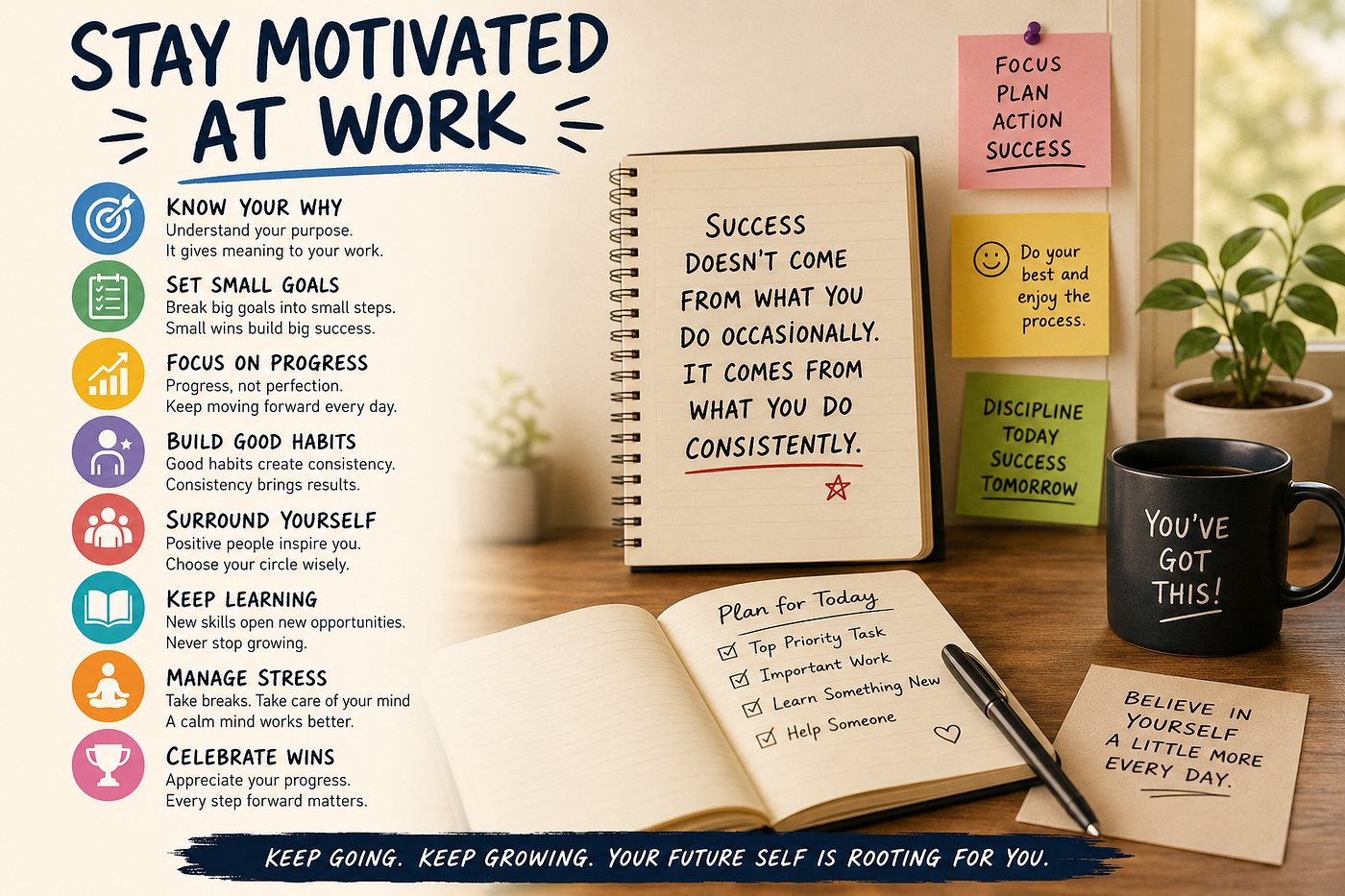
Introduction
Every person starts a new job, project, or goal with excitement. We feel energetic, focused, and ready to achieve great things. However, after some time, challenges appear. Work becomes repetitive, deadlines create pressure, and motivation starts to fade.
The truth is that motivation does not stay with us automatically. We must build it every day through our habits, mindset, and actions. Successful people are not motivated all the time. They simply learn how to keep moving forward even when they do not feel motivated.
In this article, you will learn practical ways to stay motivated at work and continue progressing toward your goals.
Why Motivation Matters
Motivation gives purpose to our daily efforts. It helps us complete tasks, overcome challenges, and improve our performance. Without motivation, even simple work feels difficult.
Many people wait for motivation to appear before taking action. In reality, action often creates motivation. When you start working, you build momentum. That momentum helps you stay motivated.
As author James Clear writes in his book Atomic Habits:
“You do not rise to the level of your goals. You fall to the level of your systems.”
This quote reminds us that success comes from consistent actions, not occasional bursts of motivation.
Connect Your Work to a Bigger Purpose
People stay motivated when they understand why their work matters.
Ask yourself:
- What am I trying to achieve?
- How does my work help my family or future?
- What skills am I developing?
When your work has meaning, you find more energy to continue.
In The 7 Habits of Highly Effective People, Stephen Covey wrote:
“Begin with the end in mind.”
When you know your destination, daily tasks become more meaningful.
Set Small and Clear Goals
Large goals can feel overwhelming. Instead of focusing only on the final result, break your goal into smaller steps.
For example:
- Complete one report today.
- Learn one new skill this week.
- Improve one process this month.
Every small achievement creates confidence and motivation.
Small wins remind you that progress is happening, even when success seems far away.
Focus on Progress, Not Perfection
Many people lose motivation because they want everything to be perfect.
Perfection often creates stress and delays action. Progress creates growth.
If you make a mistake, learn from it and move forward. Every successful person has failed many times before reaching success.
In Rich Dad Poor Dad, Robert Kiyosaki writes:
“Winners are not afraid of losing. But losers are.”
This quote teaches us that mistakes are part of learning. Do not fear them. Use them as lessons.
Build Positive Daily Habits
Motivation comes and goes, but habits stay.
Create routines that support your productivity:
- Wake up on time.
- Plan your day.
- Take short breaks.
- Exercise regularly.
- Get enough sleep.
Good habits reduce the need for constant motivation because they make productive actions automatic.
Successful people depend more on discipline than motivation.
Celebrate Small Victories
Many people work hard but never appreciate their progress.
When you complete a task, acknowledge it. When you reach a milestone, celebrate it.
You do not need a huge reward. Even a small moment of appreciation can increase motivation.
Recognizing your progress reminds your brain that your efforts matter.
Surround Yourself with Positive People
The people around you influence your mindset.
Spend time with individuals who encourage growth, learning, and positivity. Their energy can inspire you during difficult times.
Avoid constant negativity and complaints. Negative environments drain motivation and reduce productivity.
As motivational speaker Jim Rohn famously said:
“You are the average of the five people you spend the most time with.”
Choose your circle wisely.
Keep Learning New Skills
Learning keeps work interesting.
When you develop new skills, you gain confidence and create new opportunities. Continuous learning prevents boredom and helps you stay engaged.
Read books, attend workshops, watch educational videos, or take online courses.
The more you grow, the more motivated you become.
Manage Stress Effectively
Stress can destroy motivation if you ignore it.
To manage stress:
- Take regular breaks.
- Practice deep breathing.
- Exercise regularly.
- Spend time with family and friends.
- Maintain a healthy work-life balance.
Your mind performs better when it gets proper rest.
Remember that productivity is not about working endlessly. It is about working effectively.
Remember Your Long-Term Vision
Difficult days will come. Some days you will feel tired, frustrated, or discouraged.
During those moments, remind yourself why you started.
Think about:
- Your dreams.
- Your family’s future.
- Your financial goals.
- The life you want to create.
A strong vision helps you continue even when motivation feels low.
In Think and Grow Rich, Napoleon Hill wrote:
“Whatever the mind can conceive and believe, it can achieve.”
Believe in your goals and keep moving toward them.
Conclusion
Motivation at work is not something you find once and keep forever. It is something you build every day through your actions, habits, and mindset.
Connect your work to a meaningful purpose. Set small goals. Focus on progress instead of perfection. Build strong habits, learn continuously, and surround yourself with positive people.
Most importantly, keep going even when motivation is low. Consistent effort creates success.
Remember, successful people are not always motivated. They simply refuse to quit.
Keep working. Keep learning. Keep growing. Your future self will thank you for the effort you make today.
Frequently Asked Questions (FAQs)
1. How can I stay motivated when work becomes boring?
Break large tasks into smaller goals, learn new skills, and remind yourself why your work matters.
2. Is motivation more important than discipline?
Discipline is more reliable because motivation changes from day to day. Strong habits help you continue even when motivation is low.
3. How do I recover after losing motivation?
Start with one small task. Taking action often creates momentum and helps motivation return.
4. Can reading books increase motivation?
Yes. Books provide new ideas, inspiration, and practical strategies that can improve your mindset and productivity.
5. What is the best way to maintain long-term motivation?
Maintain clear goals, track your progress, continue learning, and stay connected to your bigger purpose.
메타데이터
- post_id
- bcff2de836c1
- slug
- keep-yourself-motivated-at-work-a-guide-to-staying-focused-and-productive-bcff2de836c1
- url
- https://medium.com/@muneebrammay252/keep-yourself-motivated-at-work-a-guide-to-staying-focused-and-productive-bcff2de836c1
- canonical_url
- https://medium.com/@muneebrammay252/keep-yourself-motivated-at-work-a-guide-to-staying-focused-and-productive-bcff2de836c1
- author_url
- https://medium.com/@muneebrammay252
- status
- ok
- fetched_at
- 2026-06-09 15:37:30