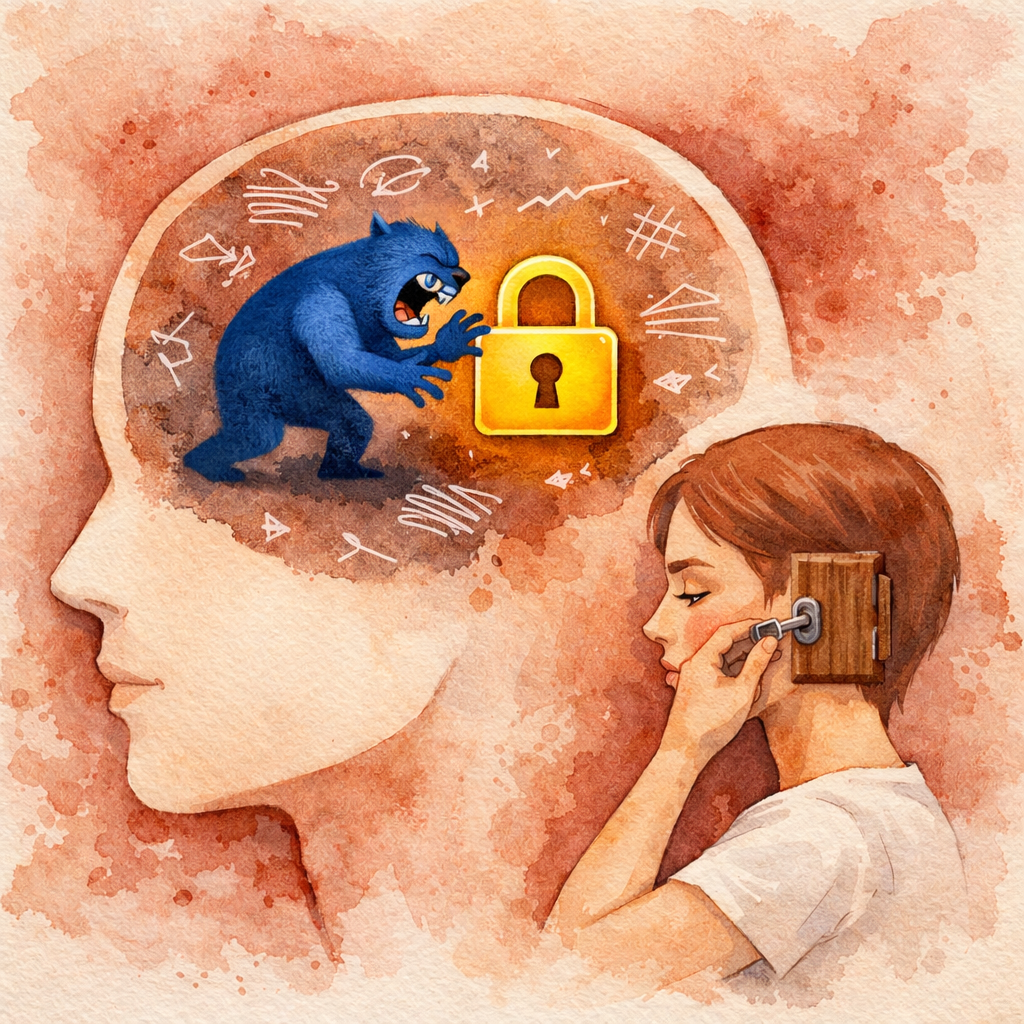
I Made Every Emotional‑Trigger Mistake
Here’s What I Learned About What Actually Moves Buyers
I Made Every Emotional‑Trigger Mistake
How To Become an Emotional Trigger Badass
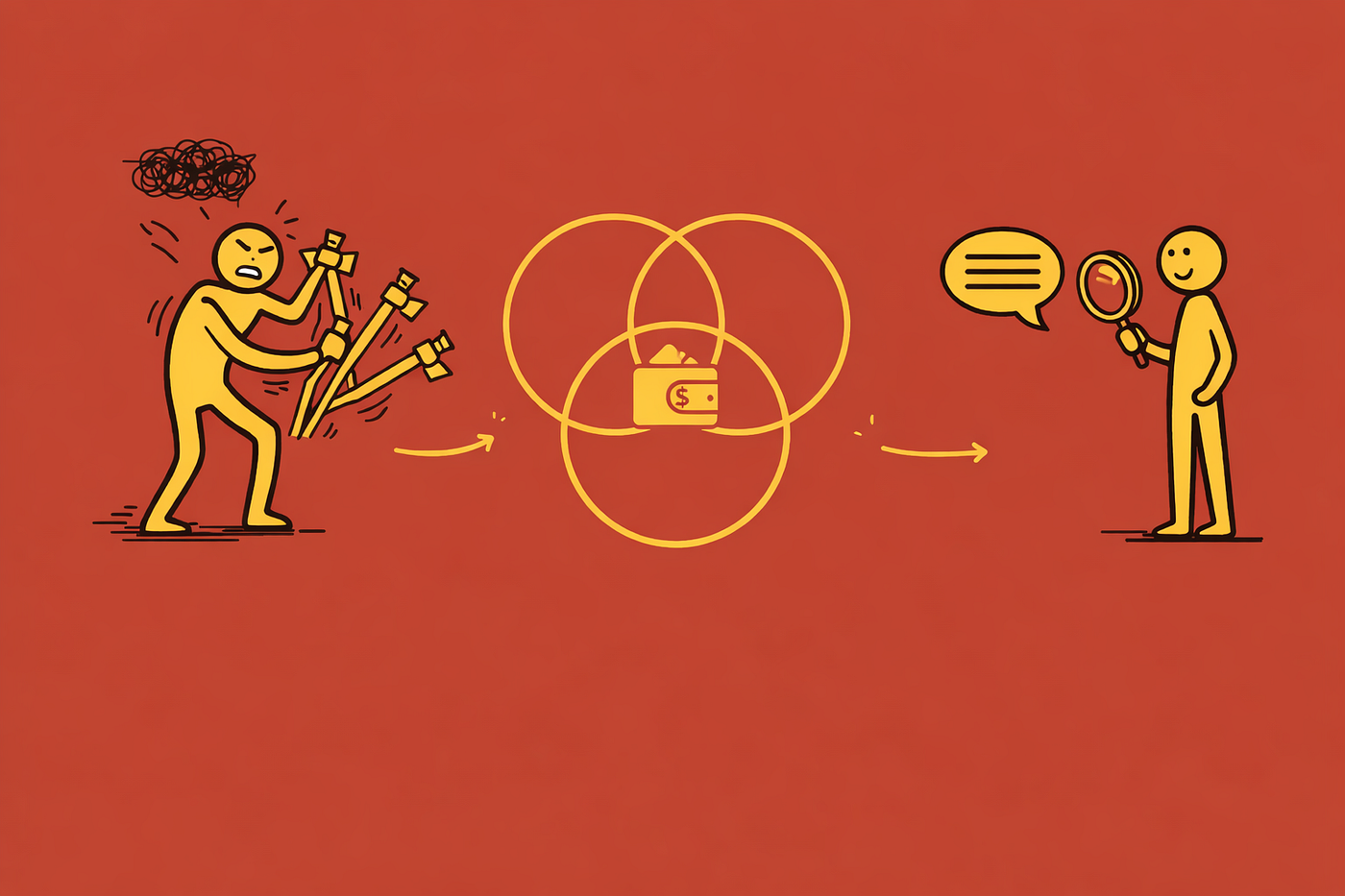
Created by Author
If you want to move buyers, you need to stop chasing emotional triggers.
There are more hooks. There are more gimmicks. There are more “hack this, hack that.” And when everyone tries to manipulate the same emotions, it only means your buyers stop believing you.
Everyone’s messaging feels the same way. Everyone feels like they are screaming the same overused tactic over and over again.
That’s why real persuasion is more than a trigger.
It’s an opportunity to respect the buyer, to show you understand their actual problem and the outcome they truly want.
This is how you earn the right to get paid.
The mistake that keeps people stuck
Surface-level writing is a slow suicide for your conversion rates.
Most writers I work with resist going deep on audience psychology. They see it like building a vocabulary list. A simple matter of collecting enough words to deploy at the right moment. But that’s not how it works. Effective emotional triggers aren’t universal levers.
They emerge from an intersection of three things:
- What your audience fears (their pain)
- What your audience desires (their aspiration)
- How your audience sees themselves (their identity)
If you focus too much on just one of these, you’ll struggle.
If you only focus:
- fear — you’ll train people to scroll past you.
- aspiration — you’ll sound like every other brand.
- identity — you’ll miss the urgency that converts.
The magic happens when you overlap all three.
The only question that matters
Why are you recycling guru tactics when your customers are already handing you the keys to their wallets?
Forget complex frameworks. Forget guru tactics. Instead, ask yourself…
…one simple question:
What phrase have my own customers used, in their own words, that reveals how they see themselves?
That’s it. That’s the shortcut.
This single question uncovers more profitable emotional triggers than any guru tactic promising to 10x your conversions ever will. Why? Because it beautifully combines the three key ingredients for long-term conversions:
When I started writing copy, I thought following the right gurus meant better campaigns. I bought every course, every masterclass, every framework they sold. But after watching campaign after campaign fall flat, I finally figured out the truth. And now my Substack email consistently hits 30 to 40% opens.
But now, my answer to the above question keeps changing.
In 12 months, I’ve learned that “exclusive” makes one audience open their wallet while another audience runs the other way. So now, I teach others how to find the triggers that actually work for their market. In two years’ time, I expect my answer will shift again as I learn and grow.
This approach solves three major problems:
- Not knowing which trigger to use — It simplifies your emotional strategy.
- Struggling to convert — You focus on what your audience actually feels.
- Fear of getting it wrong — You build from real language, not guesswork.
If you’re struggling, get clarity quickly with this question.
Why most people overthink this
Your marketing strategy only breathes when it hits the cold air of the market.
A lot of people believe their emotional triggers need to be “perfect” before they launch. They think they need to find the one emotion, use the best power word list, or know exactly how to structure the arc before testing anything.
That’s a lie.
Your emotional strategy isn’t something you decide in theory.
It’s something you refine in practice. Every successful copywriter I know started somewhere, got feedback and tweaked over time.
You change. Your audience changes. But each pivot will teach you something new. And this will power your growth. You won’t figure it all out upfront. But you will figure it out faster if you listen instead of endlessly chasing guru tactics.
The big mistake holding people back
Conversion happens at the intersection of a reader’s fear, aspiration, and identity.
A lot of people get obsessed with the urgency thing. I often get asked do I have to use fear to sell? Of course not. You can write warm, trust-building copy. Write for the long game. In fact, if you’re building a brand, ignore advice like this. But don’t complain if nobody buys.
The truth is. Fear alone isn’t enough.
You need to make sure the emotion actually fits who you’re talking to.
I love using the word “limited.” I’m excellent at creating urgency. It’s one of my great copywriting skills. But if I’m selling to an audience that values transparency over scarcity, that word repels them. Probably not what I want.
The real question is: What language are people already using that overlaps with their identity?
- If you’re selling to engineers, does “proven” land better than “magical”? (Yes. People trust that.)
- If you’re selling to creatives, does “structured” bore them while “unfiltered” hooks them? (Yes. People pay for that.)
- If you’re selling to busy parents, does “official” feel elitist while “just works” feel like relief? (They definitely respond to that.)
Find the overlap between your offer and their identity. That’s where the money is.
How to test your answer quickly
Does your subject line feel like a firm handshake or a desperate grab for attention? Here’s a dead-simple test:
- Pull three verbatim phrases from your customer reviews or emails.
- Write an email subject line using one of those exact phrases.
- Run it against your “best guess” subject line.
If people open, it means the language resonates. If nobody cares, tweak the phrase and try again. No engagement? No problem. Adjust. Pivot. Try again.
The key is this.
You refine your emotional triggers through listening, not hoarding.
The truth no one tells you
Your reader is a detective hunting for proof that you actually understand them.
- You don’t need the perfect power word list upfront.
- Your emotional strategy will evolve as you learn your audience.
- The best way to find triggers that convert is to listen — not to follow trend hacks.
So stop waiting for the perfect word. Get out there, talk to your audience, and let your triggers find you.
If you want to see how to actually apply this… this breakdown walks through it step by step:
메타데이터
- post_id
- bd076801e95d
- slug
- i-made-every-emotional-trigger-mistake-bd076801e95d
- url
- https://medium.com/write-a-catalyst/i-made-every-emotional-trigger-mistake-bd076801e95d
- canonical_url
- https://medium.com/write-a-catalyst/i-made-every-emotional-trigger-mistake-bd076801e95d
- author_url
- https://medium.com/@JimTeague
- status
- ok
- fetched_at
- 2026-07-13 06:23:13