Stellar Wallets in 2026: Why the Ecosystem Needs More Than One “Best Wallet”
The Stellar ecosystem has reached a point where the word “wallet” no longer means only one thing.
Stellar Wallets in 2026: Why the Ecosystem Needs More Than One “Best Wallet”

Stellar Wallets in 2026
The Stellar ecosystem has reached a point where the word “wallet” no longer means only one thing.
For some users, a Stellar wallet is a simple mobile app to hold XLM and USDC. For others, it is a gateway to the Stellar DEX, AMMs, anchors, cash-in/cash-out, cross-chain swaps, Soroban dApps, multisig security, hardware wallets, and real-world payments. For developers, a wallet is also an identity layer, a transaction signer, and a bridge between users and applications.
That is why comparing Stellar wallets by asking “which one is the best?” is no longer enough. The more important question is:
Which wallet is best for which type of Stellar user?
This article compares the most visible and relevant Stellar wallets and wallet-like applications across four dimensions: features, usability, security, and accessibility.
The wallets reviewed include:
- LOBSTR
- Freighter
- Scopuly
- xBull
- Rabet
- Albedo
- Solar
- StellarTerm
- Beans
- Decaf
- Hana Wallet
- Vesseo / consumer USDC wallets
- Hardware wallet options such as Ledger and Trezor through supported interfaces
The goal is not to declare one winner. The goal is to understand how each wallet contributes to Stellar’s adoption layer.
1. Stellar Wallets Are No Longer One Category
Stellar has always been different from many blockchains because it was designed around payments, tokenized assets, low-cost transfers, trustlines, anchors, the Stellar DEX, and real-world financial access.
As the network evolved, wallets split into several categories.
1. Everyday consumer wallets
These wallets focus on simplicity: send, receive, hold, buy, sell, swap, and sometimes cash out.
Examples: LOBSTR, Beans, Decaf, Vesseo, Hana.
2. Stellar-native DeFi wallets
These wallets expose more of Stellar’s native power: assets, trustlines, DEX trading, swaps, pools, account tools, claimable balances, and advanced transaction flows.
Examples: Scopuly, LOBSTR, xBull, StellarTerm, Solar.
3. Developer and dApp wallets
These wallets are especially important for Soroban, web apps, signing flows, identity, WalletConnect, and application integrations.
Examples: Freighter, xBull, Rabet, Albedo, Hana.
4. Security-focused wallets
These wallets focus on multisig, local signing, hardware wallet compatibility, open-source transparency, or isolated transaction signing.
Examples: Solar, StellarTerm, xBull, Albedo, Freighter, Ledger/Trezor integrations.
The ecosystem needs all of these. A payment user, a liquidity provider, a Soroban developer, a remittance customer, and a treasury manager do not need the same wallet.
2. High-Level Wallet Comparison

The Stellar wallet ecosystem is diverse. Some wallets are designed for beginners, some for developers, some for trading, some for remittances, and some for advanced security. Instead of looking for one universal “best” wallet, it is more useful to understand what each product is optimized for.
LOBSTR
Main role: Mainstream Stellar / XRPL wallet Best for: Beginners, everyday users, asset holders Strength: Strong user experience, broad adoption, asset management, buy and swap flows Limitation: Less specialized for advanced Stellar DeFi than power-user tools
Freighter
Main role: Stellar self-custody wallet and dApp connector Best for: Developers, Soroban users, Web3 users Strength: Strong presence in Stellar developer workflows, simple signing, mobile and extension direction Limitation: More focused on ecosystem access than on being a full DeFi portfolio wallet
Scopuly
Main role: Stellar DeFi wallet Best for: Users who want payments, SDEX, swaps, pools, asset tools, QR flows, and cross-platform access Strength: Deep Stellar-native feature coverage, non-custodial DeFi orientation, mobile-first interface Limitation: Advanced feature depth can require stronger onboarding for beginners
xBull
Main role: Open-source Stellar power wallet Best for: Developers, traders, hardware-wallet users Strength: Open source, SDEX tools, swaps, multi-account support, hardware-wallet support Limitation: More technical feel than mainstream consumer wallets
Rabet
Main role: Stellar browser extension and app connector Best for: Users connecting to Stellar apps Strength: Open-source extension model, local encrypted data, app interaction Limitation: Less dominant today than newer developer wallet flows
Albedo
Main role: Web-based delegated signer Best for: Web apps, identity, transaction signing Strength: No extension required, secure transaction signing, SSO-style Stellar login Limitation: Not a full everyday mobile wallet
Solar
Main role: Open-source multisig Stellar wallet Best for: Businesses, multisig users, advanced security setups Strength: Multisig, open source, local key storage, Stellar-native account management Limitation: Less visible as a modern consumer wallet
StellarTerm
Main role: Stellar DEX trading client Best for: Traders, SDEX users, advanced users Strength: Open-source trading interface, local signing, DEX focus Limitation: Not designed as a simple everyday mobile wallet
Beans
Main role: Consumer remittance and money app Best for: Non-crypto-native users, global transfers Strength: MoneyGram access, multicurrency experience, simple UX, remittance focus Limitation: Less focused on advanced Stellar DeFi tools
Decaf
Main role: Digital-dollar wallet with cash access Best for: USDC users, remittances, emerging markets Strength: Non-custodial wallet, MoneyGram cash-out, global digital-dollar experience Limitation: More consumer finance than full Stellar-native asset management
Hana
Main role: Multi-chain wallet with Stellar support Best for: Multi-chain users, mobile dApp users Strength: Non-custodial, cross-chain app, browser, swaps, Ledger compatibility Limitation: Stellar is one chain among many, not the entire product focus
Vesseo / Similar USDC Wallets
Main role: Digital-dollar wallet Best for: Stablecoin users, payments, spending Strength: Simple USDC experience, local utility Limitation: Less open-ended for advanced Stellar operations
Ledger / Trezor via Stellar Interfaces
Main role: Hardware security Best for: Long-term holders, institutions Strength: Strong private-key isolation Limitation: Requires pairing with compatible software and is less convenient for daily use
Quick Takeaway
There is no single “best” Stellar wallet for every user. LOBSTR is strong for mainstream adoption and everyday use. Freighter, xBull, Rabet, and Albedo serve developers, dApps, and power users. Solar and hardware-wallet setups are better suited for advanced security and multisig. Beans, Decaf, and similar digital-dollar wallets focus more on remittances and consumer finance.
Scopuly sits in the Stellar-native DeFi category: it is designed for users who want more than basic asset holding — payments, swaps, SDEX access, liquidity pools, QR flows, asset tools, and cross-platform wallet access in one non-custodial interface.
3. The Mainstream Stellar Gateway
LOBSTR remains one of the most recognizable Stellar wallets. Its biggest strength is accessibility. It is easy to understand, easy to install, and familiar to users who are not deeply technical.
LOBSTR’s role in the ecosystem is important because Stellar needs mainstream entry points. A new user who wants to hold XLM, receive USDC, discover assets, buy crypto, or make simple transfers usually does not want to start with advanced SDEX order books or transaction XDRs.
LOBSTR has also expanded beyond Stellar by adding XRP Ledger support, which makes it more of a broader payment-network wallet than a purely Stellar-only interface. This can be a strength for user acquisition, although for Stellar purists it also means the wallet is no longer focused exclusively on Stellar.
Strengths
- Beginner-friendly user experience
- Strong brand recognition in the Stellar ecosystem
- Mobile and web access
- Asset management
- Buy and swap flows
- Security options such as PIN, 2FA, and multisig-related protection through the broader LOBSTR/Vault ecosystem
- Good fit for everyday Stellar users
Weaknesses
- Less specialized for deep Stellar DeFi workflows than Scopuly, xBull, StellarTerm, or Solar
- Not the most developer-oriented wallet for Soroban and dApp signing
- Some advanced Stellar operations may be less transparent to power users
Best user
LOBSTR is best for users who want a trusted, simple, established wallet to hold, send, receive, buy, and swap Stellar assets without needing to understand every technical layer of the network.
4. Freighter: The Stellar dApp Wallet Layer
Freighter has become one of the most important wallets for Stellar developers and dApp users. It is positioned as a self-custody Stellar wallet that lets users send, receive, store tokens, and connect to Stellar applications.
Its biggest value is not only asset storage. Its value is ecosystem connectivity.
For Stellar to grow into a more application-rich network, users need a safe, understandable way to connect to dApps, sign transactions, manage accounts, and interact with Soroban. Freighter plays that role.
Freighter also highlights security messaging such as non-custodial key control and scam/malicious transaction protection through Blockaid-style protection.
Strengths
- Strong alignment with Stellar developer workflows
- Self-custody
- Good for dApps and Soroban-era interactions
- Multiple addresses
- Import and account switching
- Clean signing experience
- Useful bridge between users and Stellar applications
Weaknesses
- Not the deepest consumer finance wallet
- Not primarily a full SDEX/AMM portfolio management product
- Some mainstream users may still prefer a more “banking-style” wallet like LOBSTR, Beans, Decaf, or Scopuly
Best user
Freighter is best for users who interact with Stellar apps, developers testing products, Soroban users, and people who want a simple but ecosystem-connected Stellar wallet.

5. Scopuly: A Stellar-Native DeFi Wallet for Power Users and Everyday Payments
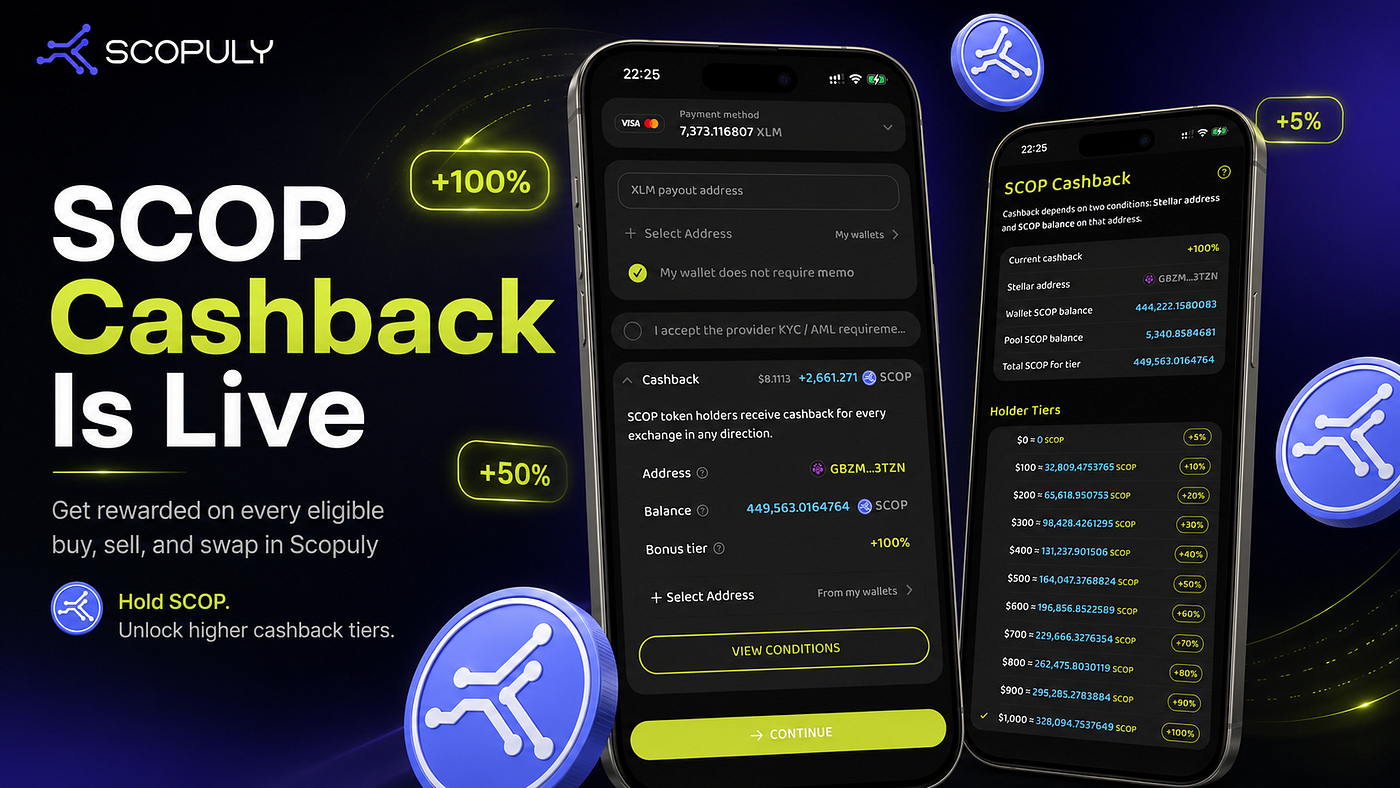
Scopuly is one of the most feature-rich Stellar-native wallets. Its positioning is clear: it is not only a place to hold XLM. It is a non-custodial Stellar DeFi wallet built around asset management, payments, SDEX trading, swaps, liquidity pools, QR payment requests, market tools, and cross-platform access.
Where some wallets simplify Stellar by hiding many network features, Scopuly tries to expose more of Stellar’s real power in one interface.
That makes Scopuly especially relevant for users who want to do more than hold assets. A Scopuly user can manage Stellar assets, send and receive payments, request payments with QR codes, trade on the Stellar DEX, explore liquidity pools, view token data, follow market activity, and use exchange flows where available.
This is important for the ecosystem because Stellar needs wallets that make native network functionality visible. If users never see trustlines, SDEX, AMMs, assets, liquidity, offers, claimable balances, or payment tools, Stellar risks being perceived only as a cheap transfer chain. Scopuly helps present Stellar as a full financial network.
Strengths
- Strong Stellar-native feature coverage
- Non-custodial model
- Payments, QR requests, SDEX, swaps, pools, assets, market tools
- Good fit for DeFi users and active Stellar users
- Cross-platform product direction
- Useful for showing the depth of Stellar beyond simple transfers
- Especially relevant for users who want one wallet for payments, trading, and liquidity tools
Weaknesses
- Rich feature coverage can make onboarding more complex
- Needs clear education for new users because Stellar concepts like trustlines, reserves, DEX orders, AMMs, and liquidity pools are not always intuitive
- For purely beginner users, simpler wallets may feel easier at first
Best user
Scopuly is best for Stellar users who want a complete Stellar DeFi wallet: payments, assets, SDEX, swaps, liquidity pools, QR requests, and broader Web3 finance tools in one place.
6. xBull: Open-Source Power Wallet for Stellar Users and Developers
xBull is one of the strongest wallets for users who want openness, control, and developer-friendly access. It is open source, non-custodial, and designed around Stellar assets, multi-account usage, SDEX trading, swaps, and hardware wallet support.
Its strongest advantage is transparency. In crypto, open source is not a magic shield, but it matters. It allows developers and security-minded users to inspect the code, build locally, and verify wallet behavior.
xBull also has a strong role as a bridge between advanced users and Stellar applications.
Strengths
- Open-source wallet
- Non-custodial
- Multi-account support
- SDEX tools, swaps, and asset management
- Hardware wallet support
- Developer-friendly ecosystem integration
- Good for power users
Weaknesses
- Less mainstream brand recognition than LOBSTR
- May feel technical for casual users
- UX is more suitable for users who already understand Stellar concepts
Best user
xBull is best for advanced Stellar users, developers, traders, and people who value open-source tooling and hardware wallet compatibility.
7. Rabet: The Browser Extension Bridge for Stellar Apps
Rabet is an open-source Stellar wallet that helped define the “browser extension for Stellar apps” category. It allows users to manage assets and interact with Stellar apps through a browser extension, with encrypted local storage.
Rabet’s importance is historical and architectural. It helped bring the MetaMask-style interaction model to Stellar: users can connect to apps without exposing secret keys directly.
Strengths
- Open-source
- Browser extension model
- Local encrypted storage
- Built for interacting with Stellar apps
- Available across browsers and platforms
Weaknesses
- Less visible today compared with Freighter and other newer wallet-connect flows
- Not as strong as a mainstream consumer mobile wallet
- Ecosystem momentum appears more developer-specific than mass-market
Best user
Rabet is best for users who want a browser extension to connect with Stellar apps and who value open-source Stellar-specific tooling.
8. Albedo: A Security-Centric Delegated Signer
Albedo is different from most wallets in this list. It is not primarily an everyday mobile wallet. It is a web-based Stellar signer and identity layer.
Its core idea is simple and powerful: applications can request transaction signing or identity verification without exposing the user’s secret key.
That makes Albedo useful for web apps, Stellar login flows, transaction signing, and developer integrations.
Strengths
- No browser extension required
- Secure transaction signing model
- Useful for Stellar web apps
- Identity and message signing tools
- Multi-account support
- Good developer utility
Weaknesses
- Not a full everyday wallet
- Less suitable for users who want one mobile app for payments, assets, swaps, and portfolio management
- More of a signing layer than a complete financial interface
Best user
Albedo is best for developers, web apps, and users who need a secure, lightweight signing and identity tool for Stellar.
9. Solar: Multisig and Open-Source Security
Solar is an open-source Stellar wallet known for multisignature support, account management, and local key storage.
Its most important contribution is security-oriented account control. Stellar’s multisig capabilities are powerful, but many users never use them because they are difficult to understand. Solar makes multisig more accessible.
This matters for businesses, teams, and users managing larger balances.
Strengths
- Open source
- Non-custodial
- Multisig support
- Local key storage
- Good for security-conscious users
- Stellar-native account management
Weaknesses
- Less prominent in the modern consumer wallet conversation
- Less focused on new DeFi, cash, and dApp onboarding flows
- Better for advanced users than beginners
Best user
Solar is best for users and organizations that need multisig, account-level security, and open-source Stellar wallet infrastructure.
10. StellarTerm: The Classic Stellar DEX Interface
StellarTerm is one of the classic tools of the Stellar ecosystem. It is an open-source client for sending, receiving, and trading assets on the Stellar network, with a strong focus on the Stellar Decentralized Exchange.
Its role is important because Stellar’s DEX is one of the network’s native strengths. Before AMMs became more visible, order-book trading and path payments were already part of Stellar’s identity.
StellarTerm is not trying to be a consumer super-app. It is a trading client.
Strengths
- Open source
- Strong SDEX focus
- Useful for traders
- Local signing model
- Good visibility into markets and trading pairs
Weaknesses
- Not beginner-first
- Not a modern mobile consumer wallet
- Less useful for payments, remittances, or fiat access
Best user
StellarTerm is best for users who specifically want to trade on the Stellar DEX and understand order-book style markets.
11. Beans: Remittance and Real-World Money Movement
Beans represents a different side of Stellar: simple money movement for real people.
It focuses on instant transfers, multicurrency balances, MoneyGram cash access, and a non-crypto-native user experience. This is extremely important for Stellar because one of the network’s strongest real-world use cases is global payment access.
A user who needs to send money internationally does not necessarily care about DEX order books or liquidity pools. They care about speed, cost, cash access, local currency, and whether the recipient can actually use the money.
Strengths
- Simple consumer experience
- MoneyGram cash access
- Multicurrency support
- Good for remittances and everyday transfers
- Suitable for non-crypto-native users
- Strong alignment with Stellar’s financial inclusion narrative
Weaknesses
- Not designed as a deep Stellar DeFi wallet
- Less focused on advanced asset management, SDEX trading, or AMMs
- More consumer finance than open-ended blockchain interface
Best user
Beans is best for users who want simple international transfers, multicurrency money management, and cash access without needing to understand blockchain complexity.
12. Decaf: Digital Dollars, Cash Access, and Emerging Markets
Decaf is one of the strongest examples of Stellar as a real-world digital dollar rail. It focuses on USDC, remittances, MoneyGram cash-out, bank withdrawals, global payments, and a non-custodial user model.
Decaf is important because it shows what Stellar can look like when the blockchain disappears into the background. Users do not need to think about ledgers and trustlines first. They think about dollars, cash, payments, withdrawals, and access.
Strengths
- Non-custodial
- Strong USDC and digital-dollar focus
- MoneyGram cash-out and global access
- User-friendly remittance experience
- Strong fit for emerging markets
- Practical financial use cases beyond speculation
Weaknesses
- Less focused on full Stellar asset exploration
- Not primarily a Stellar DEX or AMM power-user wallet
- Some features may depend heavily on jurisdiction and partner availability
Best user
Decaf is best for users who want digital dollars, cash access, remittances, and practical crypto-powered financial tools.
13. Hana Wallet: Multi-Chain Access With Stellar Support
Hana is not only a Stellar wallet. It is a multi-chain crypto money app that supports Stellar along with other chains. It includes non-custodial control, swaps, mobile dApp access, and hardware wallet compatibility through Ledger.
Its value for Stellar is different from Scopuly or LOBSTR. Hana can bring multi-chain users into Stellar without requiring them to install a Stellar-only wallet.
That matters because modern crypto users often hold assets across many networks.
Strengths
- Multi-chain wallet
- Non-custodial model
- Built-in browser and dApp access
- Swaps and asset management
- Ledger compatibility
- Good bridge from broader crypto into Stellar
Weaknesses
- Stellar is only one part of the product
- Less focused on Stellar-native DEX, AMM, trustline, and anchor depth
- May not expose the full power of Stellar as clearly as Stellar-native wallets
Best user
Hana is best for multi-chain users who want Stellar support inside a broader crypto wallet.
14. Vesseo and Digital-Dollar Wallets: The Stablecoin UX Layer
Wallets like Vesseo and similar USDC-focused applications represent another important category: simple digital-dollar wallets.
These apps may not be the first choice for advanced Stellar users, but they are important for adoption because stablecoins are often easier to understand than crypto assets. A user may not know what Stellar is, but they understand dollars, payments, bills, spending, and yield.
This category matters because Stellar is one of the strongest networks for stablecoin movement.
Strengths
- Simple digital-dollar experience
- Useful for payments and spending
- Can onboard users who do not care about blockchain details
- Strong fit for stablecoin adoption
Weaknesses
- Less open-ended than full Stellar wallets
- Often limited by country availability and compliance rules
- Not focused on advanced Stellar-native operations
Best user
Digital-dollar wallets are best for users who want USDc utility, payments, and spending without needing full blockchain complexity.
15. Hardware Wallets: Ledger and Trezor Through Stellar Interfaces
For long-term storage, hardware wallets remain one of the strongest security options. They keep private keys isolated from internet-connected devices and reduce the risk of malware stealing secrets.
In Stellar, hardware wallets are usually used through compatible software interfaces rather than as standalone Stellar consumer apps.
Strengths
- Strong private-key isolation
- Good for long-term storage
- Useful for larger balances and treasury management
- Can be paired with Stellar tools depending on support
Weaknesses
- Less convenient for daily payments
- Requires more technical understanding
- Depends on compatible Stellar software interfaces
- Not a full mobile wallet experience
Best user
Hardware wallets are best for long-term holders, institutions, treasuries, and users managing significant balances.
16. Feature Comparison by Category

Payments
Strongest wallets:
- LOBSTR
- Scopuly
- Beans
- Decaf
- Hana
- Vesseo
For simple transfers, almost every Stellar wallet works. But payment UX differs greatly. Beans and Decaf are stronger for real-world money movement. Scopuly is stronger when payments are part of a broader Stellar DeFi wallet. LOBSTR is strong for mainstream Stellar transfers.
Stellar DEX and Trading
Strongest wallets:
- StellarTerm
- Scopuly
- xBull
- LOBSTR
StellarTerm is a classic DEX-focused client. Scopuly and xBull provide broader wallet functionality with trading tools. LOBSTR gives users simpler access to buying, trading, and swapping assets.
AMMs and Liquidity Pools
Strongest wallets:
- Scopuly
- xBull
- Some advanced Stellar interfaces
AMM visibility is important for Stellar’s DeFi narrative. Wallets that expose pools and liquidity tools help users understand Stellar as more than a payment network.
dApps and Soroban
Strongest wallets:
- Freighter
- xBull
- Rabet
- Albedo
- Hana
Freighter is especially important here because it is becoming a central access layer for Stellar apps. Albedo remains valuable as a web signer. xBull and Rabet are important open-source and extension-based options.
Fiat, Cash, and Real-World Access
Strongest wallets:
- Beans
- Decaf
- LOBSTR
- Scopuly, where exchange integrations are available
- Vesseo
- MoneyGram-connected wallets
This category is one of Stellar’s strongest competitive advantages. Wallets that integrate MoneyGram, bank transfers, card flows, or fiat partners make Stellar useful beyond crypto-native circles.
Security

Strongest wallets by security model:
- Hardware wallets for cold storage
- Solar for multisig
- xBull for open-source and hardware support
- Albedo for isolated signing
- Freighter for self-custody and transaction protection
- Scopuly and other non-custodial wallets for user-controlled keys
- LOBSTR for mainstream security tools such as PIN, 2FA, and multisig-related protection
Security is not one feature. It is a design philosophy. A wallet can be easy to use but weak for treasury security, or secure for advanced users but too complex for beginners. The best security model depends on the user.
17. Usability: The Hardest Problem in Stellar
Stellar is powerful, but that power creates UX challenges.
A good Stellar wallet must explain or hide concepts such as:
- Trustlines
- Minimum reserves
- Claimable balances
- Path payments
- Asset issuers
- Liquidity pools
- DEX offers
- Multisig thresholds
- Memo requirements
- Anchor compliance
- Cash-in/cash-out availability
- Soroban transaction signing
This is why wallet UX matters so much.
Beginner-friendly wallets
- LOBSTR
- Beans
- Decaf
- Vesseo
- Hana
These wallets reduce complexity and focus on clear user outcomes.
Power-user wallets
- Scopuly
- xBull
- StellarTerm
- Solar
These wallets expose more of Stellar’s native functionality.
Developer-friendly wallets
- Freighter
- Albedo
- xBull
- Rabet
- Hana
These wallets help applications connect to users.
The ecosystem should not force one UX philosophy on everyone. Stellar needs simple wallets, power wallets, developer wallets, and payment wallets at the same time.
18. Accessibility: The Real Adoption Layer
Accessibility is not only about app stores. It includes language, platform support, cash access, fiat availability, fees, local banking, compliance, and whether users understand what they are doing.
A wallet with perfect DeFi tools may be useless to a person who needs to cash out in local currency. A remittance app may be useless to a trader who needs limit orders. A browser extension may be perfect for a developer but invisible to a mobile-first user in an emerging market.
Stellar’s wallet ecosystem is strongest when it covers all of these realities.
Mobile-first accessibility
Important wallets:
- LOBSTR
- Scopuly
- Beans
- Decaf
- Hana
- Vesseo
Web and browser accessibility
Important wallets:
- Freighter
- xBull
- Rabet
- Albedo
- StellarTerm
- LOBSTR web
Cash and fiat accessibility
Important wallets:
- Beans
- Decaf
- MoneyGram-connected wallets
- LOBSTR
- Scopuly where partner integrations are available
Developer accessibility
Important wallets:
- Freighter
- Albedo
- xBull
- Rabet
- Hana
19. The Most Important Insight: Stellar Wallets Should Not All Become the Same

A common mistake in ecosystem thinking is to expect every wallet to support every feature.
That is unrealistic and probably unhealthy.
Stellar needs specialization.
- LOBSTR can remain a mainstream wallet.
- Freighter can become the core dApp and Soroban access layer.
- Scopuly can become a full Stellar DeFi wallet for payments, assets, swaps, DEX, and liquidity.
- xBull can serve power users and developers with open-source control.
- Rabet and Albedo can continue serving web signing and app connectivity.
- Solar can remain valuable for multisig and account security.
- StellarTerm can preserve deep SDEX trading access.
- Beans and Decaf can push real-world payments, cash access, and digital-dollar adoption.
- Hana can bring multi-chain users into Stellar.
- Hardware wallets can secure long-term funds.
This diversity is not fragmentation. It is infrastructure maturity.
20. Where Scopuly Fits in the Ecosystem
Scopuly’s strongest positioning is as a Stellar-native DeFi wallet that tries to bring many layers of the network into one interface.
That makes it different from simple consumer wallets and different from pure developer signers.
Scopuly’s ecosystem role can be summarized as:
A complete Stellar wallet for users who want to actively use the network, not only hold assets.
This includes:
- Payments
- QR payment requests
- Stellar assets
- SDEX trading
- Swaps
- AMM liquidity pools
- Market and asset data
- Account tools
- Non-custodial control
- Cross-platform access
- Integrated exchange flows where supported
For Stellar, wallets like Scopuly are important because they make the network’s native financial infrastructure visible. Without wallets that expose DEX, pools, assets, and advanced payment tools, many users never discover what Stellar can actually do.
The challenge for Scopuly is education. A powerful wallet must guide users carefully. The more functionality a wallet exposes, the more responsibility it has to make risks, fees, trustlines, issuers, liquidity, and transaction details understandable.
If Scopuly continues improving onboarding, safety warnings, fiat integrations, and mobile-first UX, it can become one of the key wallets for Stellar users who want a complete DeFi experience.
21. Final Recommendations by User Type
New Stellar user
Best fit:
- LOBSTR
- Beans
- Decaf
- Vesseo
- Hana
Why: simple UX, payments, stablecoins, and fewer advanced concepts.
Active Stellar user
Best fit:
- Scopuly
- LOBSTR
- xBull
Why: asset management, swaps, trading, payments, and broader Stellar functionality.
Stellar DeFi user
Best fit:
- Scopuly
- xBull
- StellarTerm
Why: SDEX, swaps, liquidity, market tools, and more control.
Soroban or dApp user
Best fit:
- Freighter
- xBull
- Albedo
- Rabet
- Hana
Why: app connections, signing, web interactions, and developer workflows.
Business or treasury user
Best fit:
- Solar
- Hardware wallet setup
- xBull with hardware wallet
- Multisig-enabled Stellar tools
Why: multisig, private-key isolation, and stronger account controls.
Remittance or cash-access user
Best fit:
- Beans
- Decaf
- MoneyGram-connected wallets
- LOBSTR where supported
- Scopuly as fiat partner integrations expand
Why: real-world access matters more than advanced DeFi tools.
22. Conclusion: Wallets Are Stellar’s User Interface to the World
The Stellar protocol is fast, inexpensive, and built for real financial utility. But users do not experience protocols directly. They experience wallets.
Wallets decide whether Stellar feels like:
- a payment network,
- a DeFi platform,
- a remittance tool,
- a digital dollar app,
- a developer ecosystem,
- a trading venue,
- or a secure treasury layer.
The good news is that Stellar already has wallets for each of these roles.
The next step for the ecosystem is not to choose one winner. The next step is to make these wallets more interoperable, safer, clearer, and easier to integrate.
A strong Stellar ecosystem needs:
- beginner wallets,
- DeFi wallets,
- dApp wallets,
- cash-access wallets,
- multisig wallets,
- hardware wallet support,
- and developer signing tools.
In that sense, the diversity of Stellar wallets is not a weakness. It is one of the ecosystem’s strongest assets.
The real competition is not between Stellar wallets.
The real competition is between blockchain complexity and real user adoption.
The wallets that win will be the ones that make Stellar useful, safe, and understandable for the next million users.
🔹 X: x.com/scopuly 🔹 Telegram: t.me/scopuly 🔹 YouTube: youtube.com/scopuly
메타데이터
- post_id
- bd20eeb57b9b
- slug
- stellar-wallets-in-2026-why-the-ecosystem-needs-more-than-one-best-wallet-bd20eeb57b9b
- url
- https://medium.com/@scopuly/stellar-wallets-in-2026-why-the-ecosystem-needs-more-than-one-best-wallet-bd20eeb57b9b
- canonical_url
- https://medium.com/@scopuly/stellar-wallets-in-2026-why-the-ecosystem-needs-more-than-one-best-wallet-bd20eeb57b9b
- author_url
- https://medium.com/@scopuly
- status
- ok
- fetched_at
- 2026-06-15 20:49:13