How MRI Helps Detect Brain & Spine Problems
If you or a loved one has been experiencing unexplained headaches, dizziness, back pain, or nerve-related issues, your doctor may recommend…
How MRI Helps Detect Brain & Spine Problems
If you or a loved one has been experiencing unexplained headaches, dizziness, back pain, or nerve-related issues, your doctor may recommend an MRI scan. But what exactly does an MRI of the brain and spine reveal, and how does it help in diagnosing health conditions? Let’s break it down in simple terms.
How MRI Helps Detect Brain & Spine Problems
What is an MRI Scan?
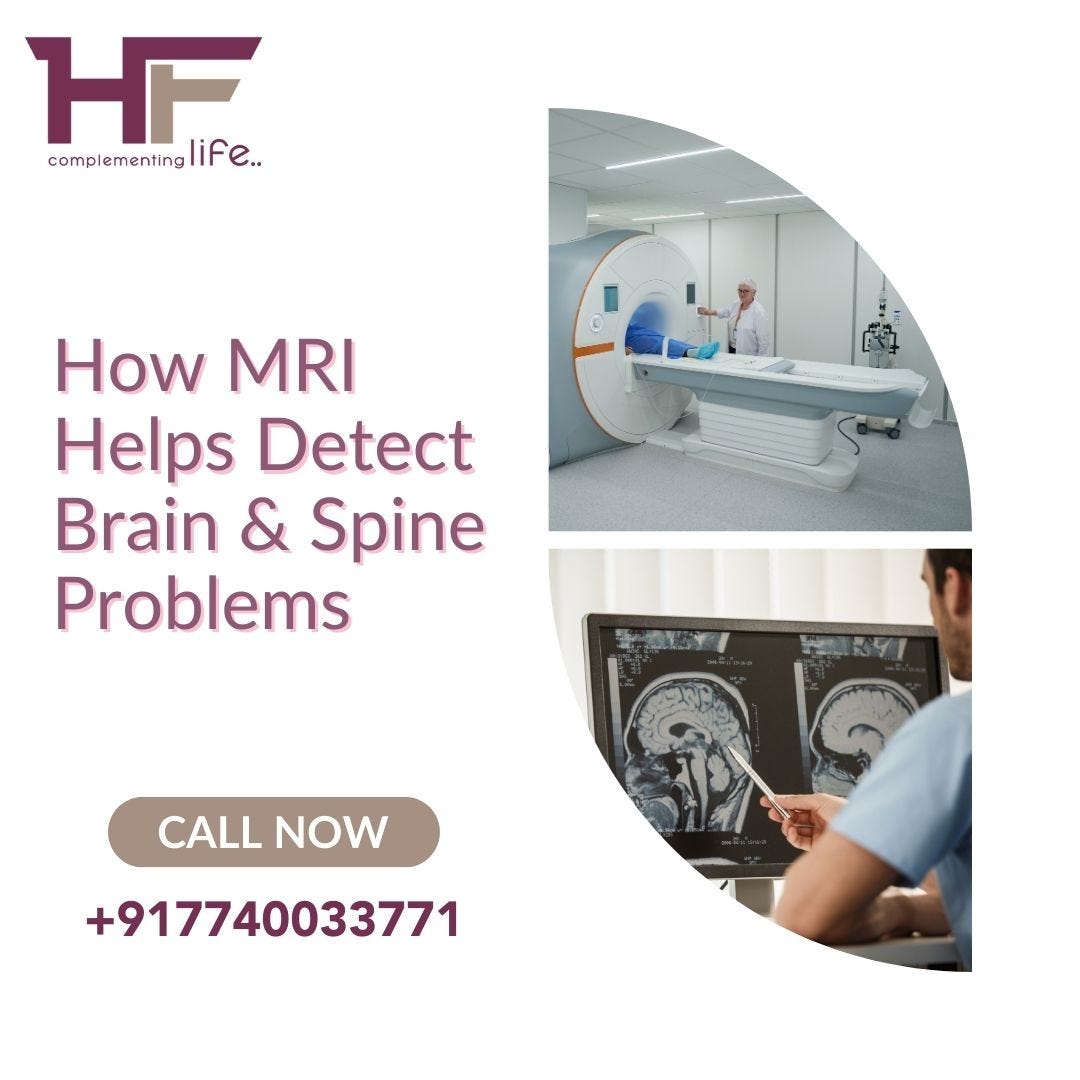
MRI (Magnetic Resonance Imaging) is a safe, radiation-free imaging technique that provides clear and detailed pictures of your brain and spine. Unlike X-rays or CT scans, an MRI uses strong magnets and radio waves to create high-resolution images of your organs, tissues, and nerves.
This non-invasive test is commonly used to detect issues related to brain function, spine alignment, nerve compression, tumors, stroke, and other neurological disorders.
When Do You Need an MRI for Brain & Spine?
Your doctor may suggest an MRI scan if you are experiencing:
- Frequent headaches or migraines
- Dizziness or balance issues
- Seizures or memory problems
- Unexplained numbness or tingling in arms/legs
- Chronic neck or back pain
- Suspected spinal cord injuries
- Herniated discs or nerve compression
Early diagnosis through an MRI can help in timely treatment and prevent serious complications.

When Do You Need an MRI for Brain & Spine?
What Brain & Spine Conditions Can MRI Detect?
MRI scans play a crucial role in diagnosing various neurological and spinal disorders, such as:
Brain Disorders:
Brain Tumors — Detects abnormal growths early Stroke & Aneurysm — Identifies blockages or bleeding in the brain Multiple Sclerosis (MS) — Shows nerve damage and inflammation Epilepsy & Seizure Disorders — Helps in locating the cause of seizures Dementia & Alzheimer’s Disease — Monitors brain structure changes
Spine Disorders:
Slipped Disc (Herniated Disc) — Pinpoints the exact location of nerve compression
- Spinal Stenosis** — Detects narrowing of the spinal canal Scoliosis & Spine Deformities — Checks for curvature and misalignment Spinal Cord Tumors — Helps in early diagnosis of growths affecting mobility Injuries & Fractures*** — Assesses trauma-related damage

What Brain & Spine Conditions Can MRI Detect?
How is an MRI Done?
The MRI scan process is simple and painless:
You lie down on a comfortable table that slides into the MRI machine.
The machine takes images while making loud knocking sounds (you’ll be given earplugs or headphones).
The scan usually lasts 30–60 minutes, depending on the area being examined.
You can resume your normal activities immediately after the scan.

How is an MRI Done?
Do MRI Scans Have Side Effects?
MRIs are completely safe for most people since they don’t use radiation, making them a preferred imaging choice for brain and spine disorders. However, because an MRI machine uses powerful magnets, certain individuals should take precautions.
- Pacemakers & Metal Implants: If you have a pacemaker, metal plates, screws, or implants (such as artificial joints or cochlear implants), inform your doctor before the scan. Some older implants may not be MRI-compatible and could interfere with the imaging process.
- Claustrophobia & Anxiety: Since MRI machines are enclosed, some people with claustrophobia (fear of small spaces) may feel uncomfortable. If this concerns you, ask about open MRI options or mild sedation to help you relax.
- Pregnancy: MRIs are generally safe during pregnancy, but it’s best to inform your doctor, especially in the first trimester. In some cases, alternative imaging methods might be recommended.
- Tattoo Ink & Piercings: Some tattoo inks contain metal particles that can cause mild skin irritation during an MRI. Remove piercings before the scan to avoid interference.

Do MRI Scans Have Side Effects?
Where to Get an MRI for Brain & Spine in Chandigarh?
If you’re looking for an affordable and reliable MRI scan center in Chandigarh, we are here to help! At Healthfinder, we provide:
High-quality MRI scans with advanced 3T technology Accurate reports reviewed by expert radiologists Comfortable & quick scanning experience Affordable prices
Don’t wait for symptoms to worsen — early diagnosis is key! **Book your MRI for Brain & Spine today at [Healthfinder](https://healthfinder.in/) and get accurate results from expert radiologists. Contact us at 7740033771**.
Facebook: Healthfinder
Instagram: Healthfinder
Linked In: Healthfinder
메타데이터
- post_id
- bd2e932f1676
- slug
- how-mri-helps-detect-brain-spine-problems-bd2e932f1676
- url
- https://medium.com/@itsalkatiwari/how-mri-helps-detect-brain-spine-problems-bd2e932f1676
- canonical_url
- https://medium.com/@itsalkatiwari/how-mri-helps-detect-brain-spine-problems-bd2e932f1676
- author_url
- https://medium.com/@itsalkatiwari
- status
- ok
- fetched_at
- 2026-08-08 03:53:51