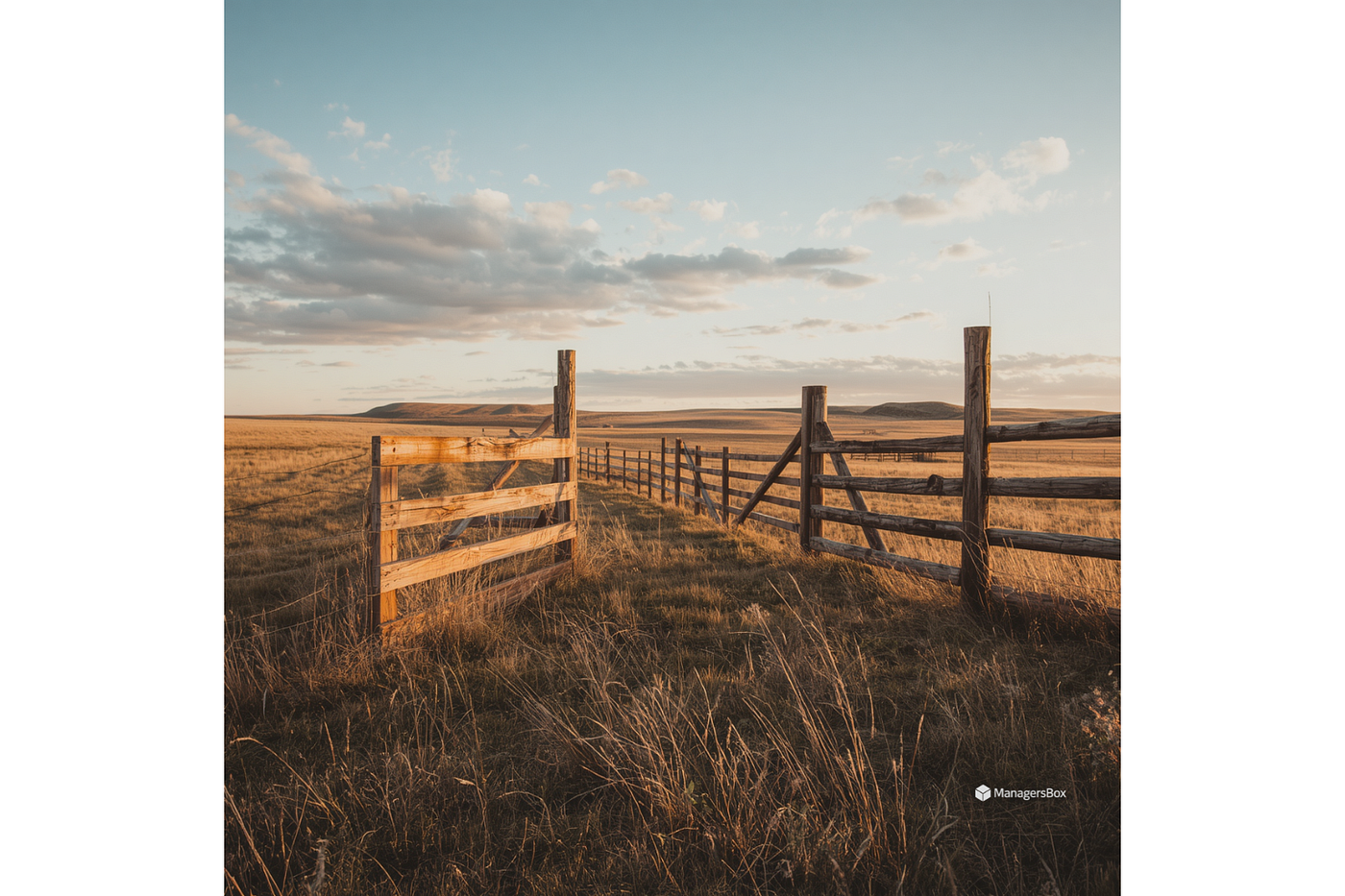
What Hanna Taught Me About Canada
Part IV — What We Learned
What Hanna Taught Me About Canada
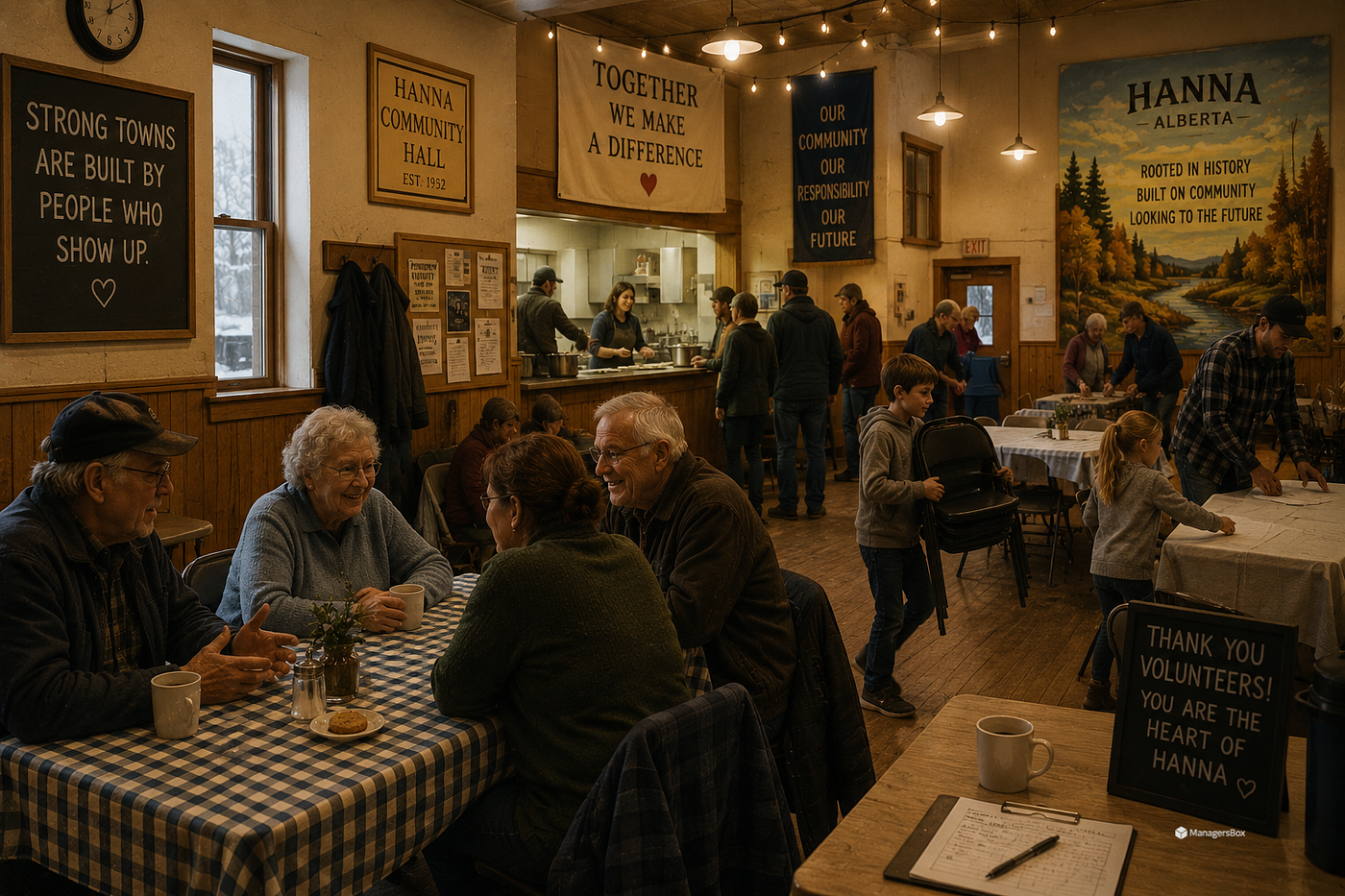
Image created with ChatGPT
Part IV — What We Learned
When I look back on my childhood in Hanna, it would be easy to catalogue the losses — the stores that quietly shuttered, the buildings that once anchored our routines and then simply weren’t there anymore, the friends who packed up and moved on, the services that slowly drifted farther from reach. Those changes are real, and anyone who grew up in a small prairie town knows that particular ache.
But that isn’t the lesson that stayed with me.
The older I get, the more I understand that a community is never defined by its storefronts or its infrastructure. Those things matter, of course, but they are not the soul of a place. The real identity of a town — especially a town like Hanna — lives in the people who choose to stay, to show up, to care, and in the values they quietly hand down from one generation to the next.
As kids, we don’t see any of that. We assume the world simply exists in a ready‑made state. We take for granted that the school will always have teachers, the church will always have volunteers, the arena will always have coaches, the hospital will always have doctors, and the neighbourhood will always have someone willing to help when help is needed. We grow up believing these things are automatic, as dependable as the sunrise.
Only later do we realize that none of it happens by accident.
Someone volunteers. Someone stays late. Someone serves on a committee. Someone organizes the fundraiser. Someone coaches the team. Someone gives more than they receive.
Communities survive because enough people choose to make them survive.
When I think back on the people I admired most — teachers, farmers, business owners, nurses, railroad workers, the folks who always seemed to be at every event, every meeting, every rink cleanup — I see now that they all shared a quiet, almost instinctive understanding of stewardship. They didn’t see themselves as owners of the town. They saw themselves as caretakers. Hanna wasn’t theirs to possess; it was theirs to look after, just as previous generations had looked after it for them, and just as future generations would inherit whatever they left behind.
That way of thinking feels rarer today.
We talk a lot about what we deserve. What government should do. What corporations should do. What our rights entitle us to.
Those conversations matter. They always will.
But a community is held together not only by what we receive, but by what we contribute. The people who built Hanna understood that without needing to say it out loud.
The church suppers weren’t organized because someone was paid to organize them. The arena wasn’t maintained because it turned a profit. The Legion didn’t host events because it was good business.
People did those things because they believed the community mattered. They invested their time because they believed their neighbours mattered. They contributed because belonging carries responsibilities as well as benefits.
And that lesson stretches far beyond the boundaries of a small Alberta town.
It is one of the quiet reasons Canada has worked as well as it has. We come from different cultures, different histories, different faiths, different corners of the world — and yet, time and again, we have found ways to build together, to compromise, to support one another. Not perfectly. But consistently enough that the country holds.
The Canada my father believed in wasn’t perfect. The Alberta I grew up in wasn’t perfect. Hanna certainly wasn’t perfect.
But perfection was never the point.
The point was to leave things a little better than we found them. To contribute more than we consumed. To create opportunities for the people who would come after us.
Perhaps that also means thinking differently about what success looks like.
For decades, we often measured progress by growth alone. Bigger cities. Larger developments. More people concentrated in fewer places. Some of that growth brought tremendous opportunities, and Alberta has benefited from many of them.
Yet I sometimes wonder if we should also measure success by the strength and completeness of our communities.
Can young families build a life there?
Can seniors access the services they need without spending a day on the highway?
Can a small business survive and serve its neighbours?
Can children grow up believing there is a future for them close to home if that is the life they choose?
The towns that shaped Alberta were never intended to compete with Calgary or Edmonton. They served a different purpose. They provided places where people could build lives, raise families, and contribute to something larger than themselves.
Perhaps one of the lessons we should carry forward is that progress and community do not have to be competing ideas. The future does not require us to abandon the places that helped build us. It challenges us to find new ways to strengthen them.
Maybe that is what stewardship really means.
When I think about the people who shaped my life, that is the legacy they left me. Not wealth. Not status. Not power. But responsibility.
A responsibility to family. A responsibility to community. A responsibility to country. And a responsibility to the generations who will inherit whatever we choose to build.
Those lessons won’t solve every challenge we face today. But they remain a good place to begin.
And that may be the most enduring thing Hanna ever taught me about Canada.
Part V — What Hanna Taught Me About Canada https://medium.com/@rbuchfink/what-hanna-taught-me-about-canada-555bb21b5ad1
메타데이터
- post_id
- bd2fa1675b8f
- slug
- what-hanna-taught-me-about-canada-bd2fa1675b8f
- url
- https://medium.com/@rbuchfink/what-hanna-taught-me-about-canada-bd2fa1675b8f
- canonical_url
- https://medium.com/@rbuchfink/what-hanna-taught-me-about-canada-bd2fa1675b8f
- author_url
- https://medium.com/@rbuchfink
- status
- ok
- fetched_at
- 2026-07-10 05:19:05