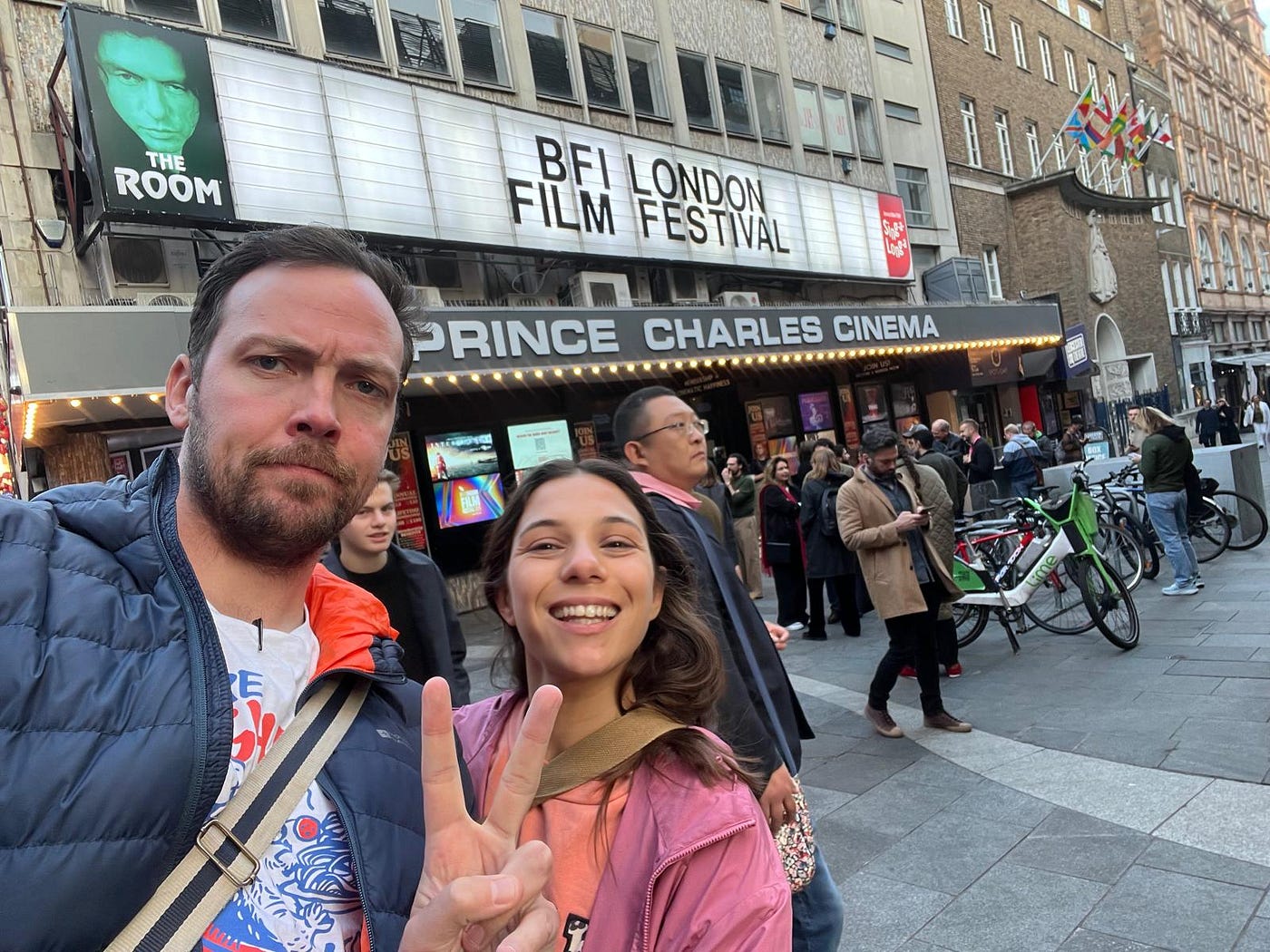
Did Christopher Nolan IMAX himself into a corner with The Odyssey?
Christopher Nolan has wanted to make an ‘all IMAX’ movie his whole career. Did The Odyssey suffer for it?
Did Christopher Nolan IMAX himself into a corner with The Odyssey?
“If it doesn’t serve the story, it has to go.”
Christopher Nolan says this is what he told his Oscar-winning editor Jennifer Lame when it came time to trim down The Odyssey for its theatrical release.
But why such strictness? Sometimes scenes that don’t ‘serve the story’ can nonetheless serve pacing, atmosphere or emotional resonance.
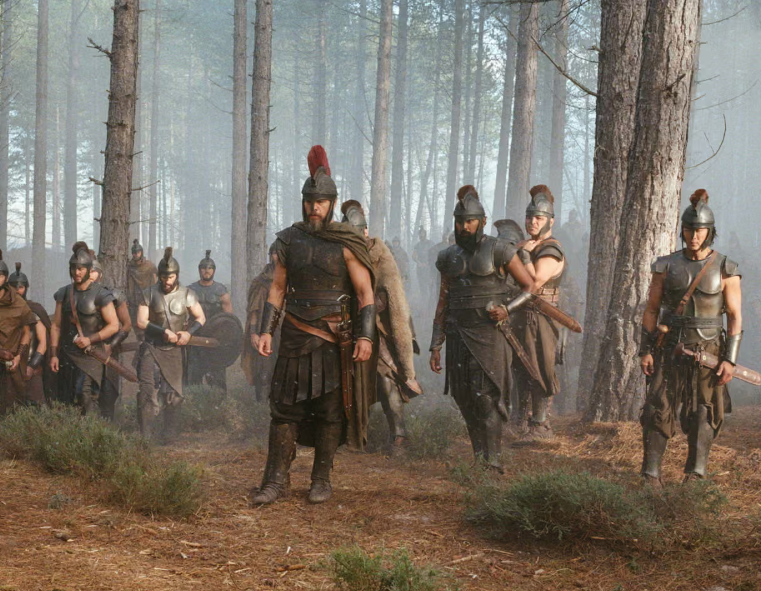
An IMAX image is ‘taller’ than normal 35mm film
And Nolan, the preeminent filmmaker of his generation, had carte blanche to deliver a film of whatever length he desired given the enormous success of Oppenheimer in 2023 (and a reported budget of some $250m).
Except he can’t make a movie longer than three hours.
Nolan has spent two decades pushing IMAX further than anyone else. Interstellar exposed the format’s runtime limitations at 170 minutes and Oppenheimer required IMAX to literally modify its projection equipment to accommodate its three-hour running time. His ambition for The Odyssey, however, was different: he wanted a feature film entirely on IMAX.
Every additional minute adds physical weight to the print and pushes projection technology beyond its design. A film intended to exist entirely within IMAX therefore has practical constraints that do not exist for conventional productions.
Richard Morrison, general manager of IMAX Melbourne, speaking about the Oppenheimer film print, told ABC News Australia:
“It (the film print) costs around $80,000 and weighs 260 kilograms; without the upgrade, the print would have fallen off the edges of the film platter.
“Previously, Nolan’s Interstellar was the longest you could run at 170 minutes … Nolan didn’t want to compromise his vision of Oppenheimer and edit it down, so he said to IMAX ‘you need to extend the equipment’.

The Odyssey film print at the BFI Imax
Speaking to The New York Times, Nolan said:
“I’d originally seen IMAX films in museums and theme parks as a kid and immediately thought, why aren’t they making movies like that? That was when I was 16 or 17. Now I’m about to be 56, and I’ve finally gotten to do it.”
The Odyssey ended up at 173 minutes, trim considering the breadth of Homer’s 600-page epic about Odysseus’s journey home after the Trojan War.
The result, while at times spectacular and even jaw-dropping, feels rushed.
Throughout The Odyssey, Nolan dispatches Homer’s iconic encounters — the Sirens, Scylla and Charybdis — with impressive technical precision but little dramatic weight.
Nolan is entitled to reshape Homer’s poem however he wishes. To quote Variety: “To disallow artistic license when it comes to The Odyssey is to deny its very essence.”
Nonetheless, there is a gnawing curiosity to discover what sort of cuts were made to squeeze it under that IMAX limit.
Because it’s not the missing story beats or characters that bother me.
It is that Nolan’s Odyssey rarely permits silence after spectacle. Scenes conclude almost as soon as their narrative purpose has been fulfilled, with little dead air in which Odysseus — or the audience — can process what has happened.
The result is an unusually functional rhythm for a film about memory and trauma. Jennifer Lame’s editing is efficient, but efficiency is not always a virtue.
The first 45 minutes, flashbacks to the siege of Troy aside, are bogged down in some textbook Nolan exposition (given one of the themes of the Odyssey is storytelling, he can be forgiven).
Nolan establishes a forgetful Odysseus (Matt Damon) on Calypso’s island while Telemachus (Tom Holland) searches for news of his father, but the extended exposition delays the dramatic momentum before the episodic journey even begins.
Nolan reinterprets Homer’s poem through the idea that Odysseus has violated Zeus’s law of hospitality. It’s an intriguing framework, but one that leaves little room for the psychological aftermath of each ordeal.
A journey to Hades is especially brief. Odysseus’s crew quickly land on the blackened sands and communicate with Elliot Page’s Cinon and Benny Safdie’s Agamemnon. This is supposed to feel like a doomed trip, one Odysseus believes it will be near-impossible to return from; instead it’s given the weight of just another stop along the way. Almost perfunctory if not for Page’s remarkable performance (there’s also an almost-unrecognisable James Remar).
Nolan appears to hold a vain hope that the overwhelming size of the image will make up for the brevity of the actual journey. The editing often feels hamstrung by the constraints of the IMAX camera.
Lame has won Oscars and, structurally, The Odssey works. But at times the cuts are frenetic or clumsy, especially when compared to the sense of wonder the film is trying to achieve; do not expect any slow-developing languorous shots of vistas or handheld drama (the ‘blimp’ used to alleviate the noise of the IMAX camera also made it large and cumbersome).

IMAX cameras are heavy and cumbersome
Counter-intuitively for such an ‘epic’ film, it is in fact the claustrophobic sequences inside the Cyclops’ cave and the Trojan horse that are among the strongest.
A trip past the sirens is frustratingly brief. Odysseus, lashed to his mast, is traumatised by their song but has little time to digest it before he must rally the crew past the whirlpool Scylla. In the film’s second act Nolan cuts almost immediately from one ordeal to the next, denying each encounter its own emotional aftermath.
In theory this whirlpool sequence could have been compared to the famous docking scene in Interstellar, a treacherous but necessary final step toward home. Instead it comes off as undercooked, grounded in realism (as is much of the film) but not in wonder or awe. A few broken oars and they’ve made it through. Likewise with Charybdis, some crew members are killed, but the narrative presses relentlessly on. Soon it’s the isle of Thrinacia, where the crew eats the forbidden cattle, sets sail once more, and then is shipwrecked.
Any sense of a psychological recovery or torpor is lost because the plot moves in such rapid succession that each step functions simply as another box to tick on the itinerary home.
Nolan devotes more screen time to manoeuvring the wooden horse into Troy than to many of Odysseus’s mythic detours home. The imbalance is revealing: logistics receive more dramatic weight than emotions.
That said, the film excels upon Odysseus’s return to Ithaca, where he slays the dozens of loutish suitors, and in the flashbacks to the brutal sacking of Troy, which begin Odysseus’s journey of shame. It’s only when he speaks with Penelope that he has the time to have a real emotional reckoning with himself, and even that is focused on Troy and not on the travails home.
Nolan appears to have prioritised the demands of a fully IMAX production over allowing several dramatic sequences sufficient room to breathe.
Is IMAX a better filmgoing experience? Yes. Is it worth sacrificing story and character for? No.
Nolan told his editor that anything which did not serve the story had to go. The Odyssey suggests that, for the first time in his career, the format itself may have begun dictating what the story could become.
메타데이터
- post_id
- bd3176fe402d
- slug
- did-christopher-nolan-imax-himself-into-a-corner-with-the-odyssey-bd3176fe402d
- url
- https://medium.com/@tomdavidson92/did-christopher-nolan-imax-himself-into-a-corner-with-the-odyssey-bd3176fe402d
- canonical_url
- https://medium.com/@tomdavidson92/did-christopher-nolan-imax-himself-into-a-corner-with-the-odyssey-bd3176fe402d
- author_url
- https://medium.com/@tomdavidson92
- status
- ok
- fetched_at
- 2026-08-05 16:04:58