Agarwood, Sandalwood, and Cedar: The Three Woods Behind Most Incense
Walk through any temple in Asia and the scent in the air will be one of three woods. A Zen monastery in Kyoto. A Taoist shrine in the…
Agarwood, Sandalwood, and Cedar: The Three Woods Behind Most Incense
Walk through any temple in Asia and the scent in the air will be one of three woods. A Zen monastery in Kyoto. A Taoist shrine in the mountains of Sichuan. A Hindu mandir in Varanasi. Same three materials, burned for the same purpose across thousands of years.
But agarwood, sandalwood, and cedar are not interchangeable. Understanding the difference changes what you burn and when.
— -
Agarwood (Oudh)
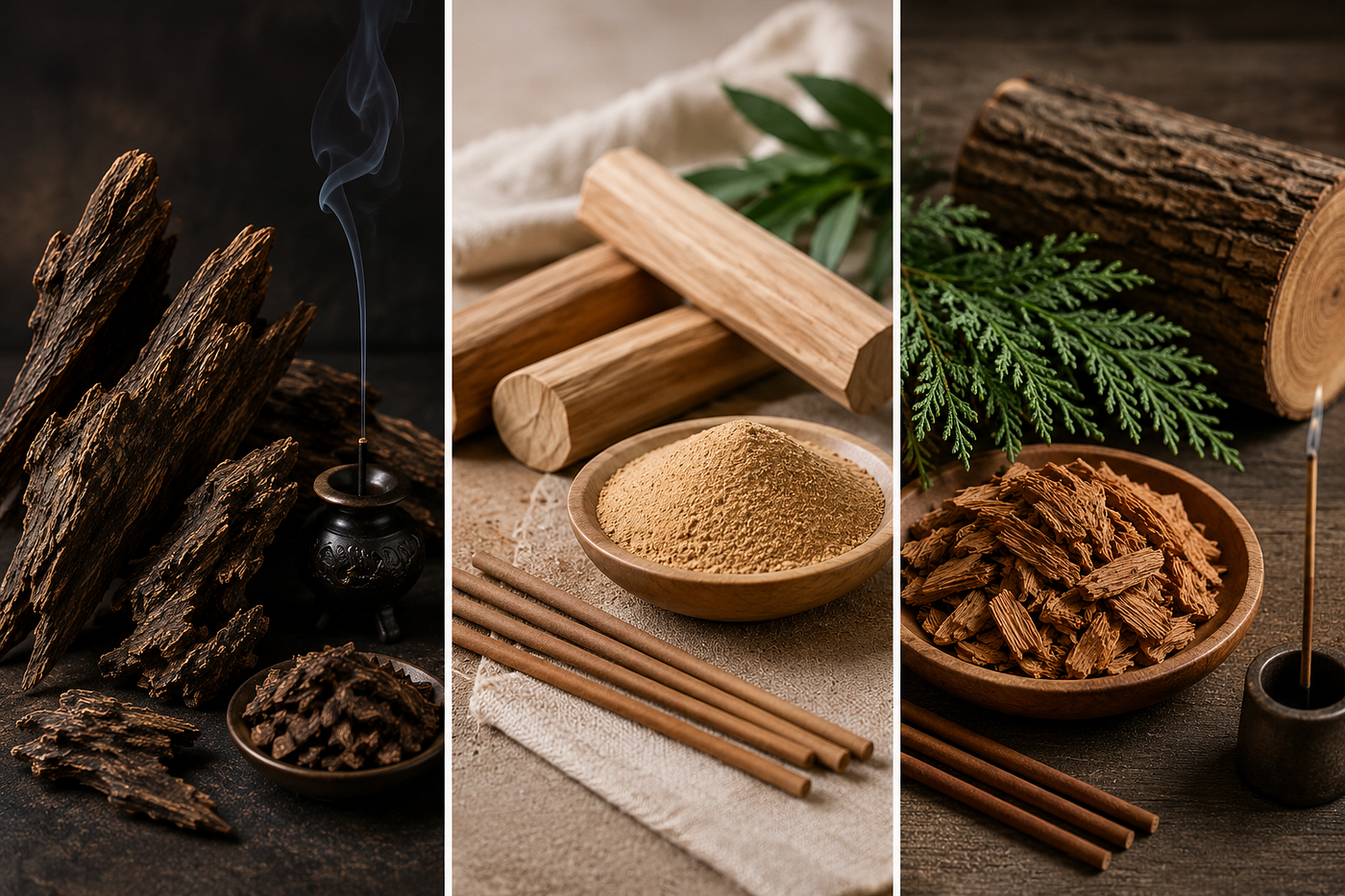
Agarwood is not a species. It is a condition. When an Aquilaria tree is wounded — by lightning, insects, or deliberate inoculation — it produces a dark, aromatic resin as a defense mechanism. That resin-saturated heartwood is agarwood.
A single tree might yield a few kilos after years of infection. The finest grades sink in water — the Chinese name chenxiang translates to “sinking fragrance.” Wild agarwood is CITES Appendix II listed. All quality incense today comes from cultivated trees on managed plantations.
The scent is deep and complex: leather, honey, dark fruit. It shifts as it burns — sharp for the first ten minutes, then warm and enveloping. Evening incense. Meditative, contemplative, heavy.
Sandalwood
Sandalwood is a parasitic tree. It attaches its roots to host plants to survive. The heartwood takes 15 to 20 years to develop its characteristic fragrance — there is no way to rush a tree that grows this slowly.
Indian sandalwood (Santalum album) is tightly regulated and endangered in the wild. Australian sandalwood (Santalum spicatum) is widely available from managed plantations and has become the industry standard.
The smell is creamy, buttery, with no sharp edges. It calms without sedating. If agarwood is a deep conversation, sandalwood is a comfortable silence. Meditation incense, yoga incense, any-time incense. Sandalwood also acts as a scent fixative — it makes other fragrances last longer.
Cedarwood
True cedar incense comes from Himalayan cedar (Cedrus deodara) or Atlas cedar (Cedrus atlantica), not the North American junipers sold as “cedar” in hardware stores. The distinction matters — true cedar has a higher concentration of himachalenes, the compounds behind its sharp, pine-like top note.
Dry, clean, smells like opening an old cedar chest. It clears the air instead of filling it. Daytime incense — desks, study sessions, rooms that need a reset. Also the cheapest of the three, which makes it the practical entry point.
— -
Side by side
| Wood | Price | Best Time | Character | | — — — | — — — -| — — — — — -| — — — — — -| | Agarwood | Most expensive | Evening | Deep, complex, meditative | | Sandalwood | Mid-range | Any time | Smooth, creamy, calming | | Cedarwood | Most affordable | Daytime | Clean, dry, clarifying |
— -
Read the full comparison with burn times, authenticity checks, and scent profiles for each wood →
메타데이터
- post_id
- bd31a88355ef
- slug
- agarwood-sandalwood-and-cedar-the-three-woods-behind-most-incense-bd31a88355ef
- url
- https://medium.com/@orientalscentofficial/agarwood-sandalwood-and-cedar-the-three-woods-behind-most-incense-bd31a88355ef
- canonical_url
- https://medium.com/@orientalscentofficial/agarwood-sandalwood-and-cedar-the-three-woods-behind-most-incense-bd31a88355ef
- author_url
- https://medium.com/@orientalscentofficial
- status
- ok
- fetched_at
- 2026-06-09 14:34:10