5 Lost Technologies of the Ancient World That Were Not Revived.
#1. The Tyrian Purple
5 Lost Technologies of the Ancient World That Were Not Revived.
#1. The Tyrian Purple
Photo by Aron Visuals on Unsplash
We think that we are more intelligent than our predecessors.
We have the internet and smartphones, and can literally see the pictures of Mars anyway.
Yet here is one of the humbling things: the ancient people were able to do things that we cannot figure out at all today. I do not speak of erecting pyramids and pushing huge stones (which are also impressive).
I mean real technologies, recipes, techniques, and materials that people had to use daily and then forgot about.
The secrets were buried along with the last one to know them.
What is wild about them is that these are not legends or myths. The evidence has been discovered by archaeologists. These things were recorded by ancient writers.
We know they existed. We simply do not know how to make them anymore.
These are five of the ancient technologies that humanity lost somewhere along the way.
#1. The Tyrian Purple
Think of the color that was so precious that emperors and kings could not afford to wear it.
It was Tyrian purple, a color created by the antique Phoenicians that controlled the luxury market for more than a millennium.

Photograph: U.Name.Me Derivative work: TeKaBe, CC BY-SA 4.0, via Wikimedia Commons
It was a very disgusting and intricate process.
The laborers were forced to extract thousands of sea snails from the Mediterranean, i.e., murex snails. They would open these snails when they were still alive and remove a tiny gland that makes mucus. This mucus was initially yellowish or greenish, but when subjected to the sunlight and air, it would become a deep, rich purple.
That was what made it super costly?
It took about 12,000 snails to give one gram of dye.
In ancient Rome, Tyrian purple cost one-half the yearly pay of a Roman soldier to purchase one pound of dye. This is the value of a diamond engagement ring today.
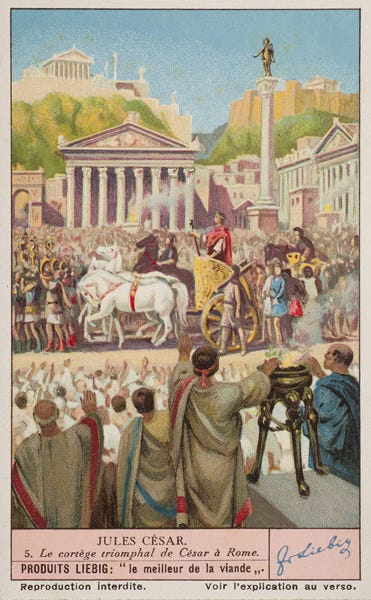
The Roman people were so fond of such color that their emperors made it their official color, and they also considered that they could produce it exclusively.
PMRMaeyaert, CC BY-SA 4.0, via Wikimedia Commons
Archaeological records at Tel Shiqmona, Israel, reveal that the Phoenicians operated large-scale industrial dye factories between 1100 and 600 BCE.
Scholars discovered huge clay vessels with purple remains, the first indication of the actual production of purple dye in large quantities anywhere in the Mediterranean.
With the fall of the Byzantine Empire, the technology disappeared. And by the 14th century, the secrets of the fabrication of Tyrian purple had been entirely forgotten.
#2. Silphium

Sir Arthur J. Evans, Public domain, via Wikimedia Commons
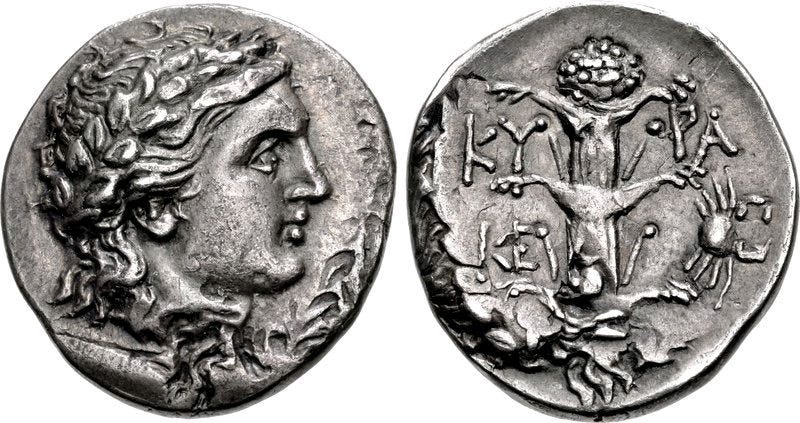
Silphium was a miracle plant available to ancient Romans and Greeks. They had it so precious that it was stamped on their coins.
Classical Numismatic Group, Inc. http://www.cngcoins.com, CC BY-SA 3.0, via Wikimedia Commons
It was so popular that almost every recipe within the oldest extant Roman cookbook required it. And it was so convenient that when it was lost, there was nothing to take its place.
Silphium was only cultivated in a strip of coast in modern-day Libya. It was yellow-flowered, stubby-leaved, and had a heart-shaped seed. Some historians believe that the heart-shaped seed may have inspired our symbol of the heart today, as silphium was a plant of love and romance.
But what made it valuable? The ancient sources stated that silphium was able to cure almost everything: fevers, warts, indigestion, and sore throats.
But it was best known as an efficient birth control. Silphium juice could be consumed by women every month to stop pregnancy, and it did not seem to have any significant side effects. This was a groundbreaking innovation in the ancient world.
The thing was that silphium was not cultivable. It merely became wild, and no matter how many people tried to figure out how to farm it, they were unable to do it. Due to the huge demand, individuals excessively harvested it. There are reports that sheep overgrazing has destroyed the habitat. No matter what the reason, silphium was rare and costly.
It is said that Nero was the emperor who consumed the last stalk of silphium around 50 CE. Then it was forever lost.
Nowadays, scientists believe that a plant known as asafoetida is the nearest relative of silphium, but we will never be sure. In case silphium was indeed a good natural contraceptive with minimal side effects, its loss was a true tragedy for the health of women.
Current birth control is effective, and nearly all of it includes synthetic hormones that have diverse side effects.
An alternative, such as silphium, which was natural, would have altered the history of women’s healthcare.
#3. Marshallese Wave Piloting
Cullen328, CC BY-SA 3.0, via Wikimedia Commons
The inhabitants of the Marshall Islands in the Pacific Ocean had, long before GPS or even compasses, developed one of the most advanced navigation systems ever invented. They were able to sail between small islands that were hundreds of miles apart with just a feeling of how the waves were touching their canoes.
The Marshall Islands are composed of more than 1,100 islands on 29 coral atolls. The majority of these islands are so small and low that you cannot see them beyond a radius of ten miles. To sail between them was to go through what seemed like a vast, featureless sea. A single misstep and you would be heading in the wrong direction.
Thus, the Marshallese invented wave piloting. They also got to know the movements of ocean swells.
There were four major swell patterns that they monitored. More to the point, they were able to sense the minor alterations that occurred when swells collided with land.
The presence of islands interferes with wave formations in certain ways: waves are reflected off cliffs, wind around islands, and are altered when they cross over underwater slopes.
These changes would be experienced by master navigators, known as ri-meto, lying or crouching in their canoes to experience the motion of the boat. They were able to notice such delicate patterns that it required a specialized instrument for modern scientists to measure them.
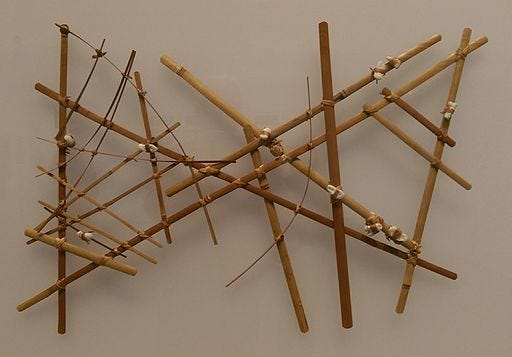
Marshallese built stick charts of coconut palm fronds to learn navigation. These were not maps as we understand that term. They were memory aids depicting abstract wave patterns and positions of islands.
Every chart was individual; a navigator who created it could understand it only to the best of his ability.
More importantly, these charts were not carried aboard real journeys. On land, navigators were required to memorize them, and on the sea, they had to solely depend on their senses.
#4. The Delhi Iron Pillar
This is a 24-foot-tall iron pillar in the city of Delhi, India, and is more than 1,600 years old. It weighs six tons. It has been lying outside in several monsoons. And it shows almost no rust.
The Iron Pillar was designed under the Gupta Empire rule of 375–415 CE under the rule of Chandragupta II. It was originally located elsewhere, perhaps 500 miles further away, and then it was transported to the present place in Delhi. The method by which they carried a six-ton column of iron that distance is unknown.
The resistance to rust of the pillar was a puzzle to scientists for decades. There are those who thought that it was constructed using alien metal. There were people who felt that ancient Indians possessed futuristic technology. The reality, which was found out by the contemporary analysis, is somehow even more amazing.
The ancient Indian metallurgists employed a method that we do not quite understand. The phosphorus contained in the iron is nearly 1% far more than modern iron, which contains less than 0.05. This phosphorus makes a protective coating known as misawite, a compound of iron, oxygen, and hydrogen that is just 1/20th of a millimeter in thickness, or even finer than the thickness of a human hair.
The pillar had been forged using the forge welding technique in which the lumps of iron of weights 40–50 pounds were heated and pounded together. The smiths actually left the phosphorus in the iron and pounded the pillar with the hammers to force the phosphorus to the surface, forming that protective coating.
Contemporary scientists have come to know chemistry. We know why it doesn’t rust. However, the point is that here, we are still unable to reproduce the very process. The ancient process depended upon certain sources of iron ore and processes of manufacture that have been lost. Though modern metallurgy may be able to create something similar under the modern techniques, we would never be able to repeat the same exact process that created this great object in ancient times.
Researchers define the pillar as a living reality of the art of metallurgists of ancient India. It is a reminder that the Gupta era was a golden age of technology and science that accomplished things that we are yet to comprehend.
#5. Roman Flexible Glass
This one may be more of a legend; nevertheless, several ancient Roman writers narrate some variations of the same story, so there may be some truth in it somewhere.
Pliny the Elder and other Roman authors mention that a glassmaker during the reign of Emperor Tiberius (14–37 CE) discovered a material that was known as vitrium flexile, flexible glass. This was not ordinary, stronger glass.
It was glass, which could be bent, dropped, or even beaten, and it would be in its original shape. Inherently, the old indestructible plastic, yet of glass.
It is said that the inventor received an audience with Emperor Tiberius to demonstrate his invention. He carried a bowl of this glass, which was flexible.
As Tiberius looked at it, the inventor himself restored it and threw it to the ground with all his might. The bowl didn’t shatter. It only dented, as though it were of bronze. Then the inventor drew a little hammer and whacked out the dent.
Tiberius was moved and anxious. He questioned whether anybody else knew how to make this material.
"No, no," said the inventor; only he knew. Bad answer.
They, instead of rewarding him, executed the glassmaker. Why? Pliny says that the emperor was afraid that the elastic glass would diminish the value of gold and silver, the precious metals of Rome.
This story was doubted now by Pliny himself. It was more spread than well authenticated, he said. The curious thing, however, is that it is referred to by more than one Roman author, and it has never been discovered that there was any physical evidence of flexible glass.
Reference:
https://www.history.com/articles/purple-ancient-phoenicians https://exhibitions.kelsey.lsa.umich.edu/ancient-color/purple.php https://www.smithsonianmag.com/smart-news/archaeologists-unearth-rare-traces-of-the-first-ancient-factory-dedicated-to-purple-dye-production-180986482/ https://en.wikipedia.org/wiki/Silphium https://www.kew.org/read-and-watch/silphium-mystery https://www.worldhistory.org/Silphium/ https://www.ancient-origins.net/history-ancient-traditions/silphium-002268 https://ocean.si.edu/human-connections/history-cultures/navigating-waters-micronesian-stick-charts https://en.wikipedia.org/wiki/Marshall_Islands_stick_chart https://farandawayadventures.com/understanding-the-marshallese-navigation-techniques/ https://en.wikipedia.org/wiki/Iron_pillar_of_Delhi https://www.britannica.com/topic/Iron-Pillar-of-Delhi https://en.wikipedia.org/wiki/Flexible_glass
I hope you enjoyed reading & learned something. This blog post comes from what I’ve learned and found during my research. Sign up for my Medium newsletter.
메타데이터
- post_id
- bd403c046e92
- slug
- 5-lost-technologies-of-the-ancient-world-that-were-not-revived-bd403c046e92
- url
- https://medium.com/predict/5-lost-technologies-of-the-ancient-world-that-were-not-revived-bd403c046e92
- canonical_url
- https://medium.com/predict/5-lost-technologies-of-the-ancient-world-that-were-not-revived-bd403c046e92
- author_url
- https://medium.com/@drsachinpandit
- status
- ok
- fetched_at
- 2026-06-09 15:37:30