FreeCAD 1.1 Arrives with Major UX, Core, and Engineering Workflow Enhancements
The open-source parametric CAD platform FreeCAD has reached a significant milestone with the release of version 1.1 on 24 March 2026. This…
FreeCAD 1.1 Arrives with Major UX, Core, and Engineering Workflow Enhancements
The open-source parametric CAD platform FreeCAD has reached a significant milestone with the release of version 1.1 on 24 March 2026. This update represents one of the most substantial refinements in recent cycles, combining deep architectural improvements with a strong focus on usability, interoperability, and professional engineering workflows.
FreeCAD, which has evolved over more than two decades from a niche modeling tool into a viable alternative to proprietary systems such as SolidWorks, Autodesk Fusion 360, and Siemens NX, continues to close gaps in both UI polish and advanced functionality. Version 1.1 underscores that trajectory.
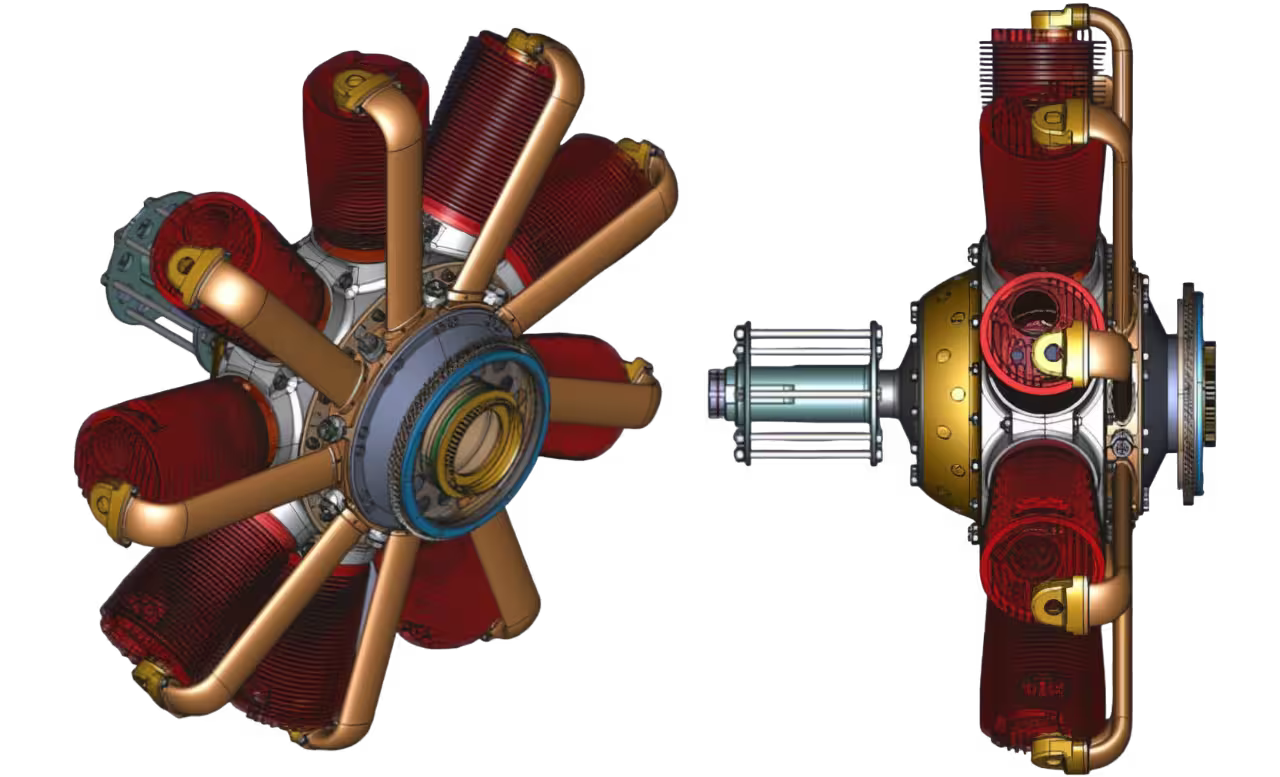
FreeCAD Drawing
Modernized User Experience and Wayland Maturity
A central theme of FreeCAD 1.1 is the systematic modernization of its user interface and interaction model.
Improved Wayland support marks a critical step for Linux desktop integration, especially relevant as distributions increasingly deprecate X11. Combined with numerous fixes and backend refinements, FreeCAD now behaves more predictably in composited environments, reducing long-standing rendering and input inconsistencies.
The introduction of three-point lighting significantly enhances 3D viewport clarity, aligning FreeCAD more closely with professional visualization standards. This is complemented by a redesigned navigation system, including new orbit styles such as Rounded Arcball (now the default), and additional presets modeled after industry tools like SolidWorks and Siemens NX. These changes reduce onboarding friction for engineers transitioning from proprietary CAD environments.
A new Theme Editor and token-based styling system signals a deeper UI architecture shift. Rather than ad-hoc stylesheet overrides, FreeCAD now exposes structured theming primitives, enabling consistent customization across deployments — an important capability for enterprise environments standardizing toolchains.
Other notable usability improvements include:
- A searchable Preferences Editor
- A redesigned Add Property dialog with full expression, enum, and unit support
- Enhanced Expression Editor with tab completion and improved ergonomics
- Fullscreen and detachable MDI windows for multi-monitor workflows
Collectively, these refinements demonstrate a clear prioritization of ergonomics and professional-grade interaction design.
Core System Evolution: Precision, Parametrics, and Assembly Foundations
At the core level, FreeCAD 1.1 introduces Datum tools — a long-anticipated feature enabling the creation of coordinate systems, planes, lines, and points as first-class parametric entities. These are foundational for robust assembly modeling and align FreeCAD more closely with the design paradigms of high-end CAD systems.
The Transform tool overhaul is another standout improvement. It now supports:
- Precise numerical input alongside interactive manipulation
- Local (UVW) and global coordinate transformations
- Alignment to arbitrary geometry, including center-of-mass references
- Axis-specific alignment constraints for fine-grained positioning
These enhancements significantly improve deterministic modeling workflows, especially in mechanical engineering contexts where precision alignment is critical.
A newly introduced Clarify Selection tool addresses a long-standing usability issue in complex assemblies: selecting occluded or interior geometry. By temporarily enabling transparency and presenting a structured selection list, it enables reliable interaction with dense models.
Additionally, Quick Measure has been extended to provide contextual geometric data — such as diameter and axis distances — directly in the status bar, improving inspection workflows without requiring dedicated measurement tools.
Versioned Configuration and API Maturity
FreeCAD 1.1 introduces a versioned configuration and data directory structure, a change with significant operational implications. By isolating configuration per version, the project eliminates a common source of upgrade-related regressions and enables parallel installations — a necessity in enterprise validation pipelines.
On the API side, the addition of FreeCAD.ApplicationDirectories formalizes access to these new paths, improving scripting reliability and deployment automation. The broader Python API continues to evolve, though with some removals and changes that may require adjustments for existing macros and extensions.
Workbench Advancements: From Assembly to BIM and CAM
Assembly Workbench
The Assembly workbench gains essential capabilities, including:
- Simplified part insertion
- Motion simulation for joints
- Expanded BOM generation with property extraction
Combined with the new datum system, these features push FreeCAD closer to a fully integrated mechanical design environment.
BIM Workbench
The BIM module sees extensive enhancements, reinforcing FreeCAD’s position in open BIM workflows traditionally dominated by proprietary tools.
Key improvements include:
- Native IFC support extended to 2D elements
- Interactive solar analysis with ray visualization
- Improved schedule handling and spatial decomposition controls
These additions strengthen interoperability with industry standards and external BIM ecosystems.
CAM Workbench
Manufacturing workflows benefit from a revamped tool library system and significant improvements in adaptive machining strategies. Highlights include:
- Enhanced adaptive roughing with overhang detection
- Multi-pass operations and improved toolpath control
- Expanded postprocessor support (e.g., Snapmaker, Masso)
These updates reflect a growing maturity in FreeCAD’s CAM capabilities, increasingly suitable for production-grade workflows.
FEM Workbench
The FEM module receives one of the most technically substantial updates in this release cycle. Enhancements include:
- Support for additional solvers, including Elmer FEM
- Electrostatic, thermal, and multi-physics simulation improvements
- Result pipeline extensibility with custom filters and data extraction tools
- Expanded CalculiX capabilities, including contact, radiation, and amplitude-based loading
The addition of animation support for results and improved meshing options further enhances FreeCAD’s utility in simulation-driven design.
Sketcher and Part Design: Toward Fully Parametric Master Modeling
The Sketcher workbench continues its evolution toward a master sketch paradigm. New projection and intersection tools allow direct reuse of external geometry without duplication, while the experimental Make Internals feature enables face-based workflows within sketches.
In Part Design, improvements to the Hole tool — now supporting additional thread standards and taper modeling — bring FreeCAD closer to mechanical engineering requirements found in proprietary systems. Interactive draggers for feature manipulation further bridge the gap between parametric precision and intuitive modeling.
Interoperability and Data Exchange
The DXF importer has been substantially redesigned for predictability and consistency, addressing a long-standing pain point in CAD interoperability. Improvements to SVG export alignment and broader preview support for formats like STEP and STL enhance FreeCAD’s role as a central tool in heterogeneous design pipelines.
Competitive Positioning
With version 1.1, FreeCAD continues to differentiate itself through openness, extensibility, and increasingly competitive feature parity. While it still trails established systems like SolidWorks or Siemens NX in certain high-end workflows and polish, the gap is narrowing — particularly in areas such as parametric modeling, simulation, and BIM integration.
Compared to cloud-centric platforms like Autodesk Fusion 360, FreeCAD retains a strong advantage in offline capability, transparency, and customization, making it particularly attractive for organizations prioritizing data sovereignty and long-term reproducibility.
Conclusion
FreeCAD 1.1 systematically addresses long-standing usability issues, strengthens core modeling paradigms, and expands domain-specific capabilities across engineering disciplines.
For professional users evaluating open-source CAD solutions, this release marks a clear signal: FreeCAD is no longer just an alternative — it is becoming a credible primary platform in a growing number of workflows.
메타데이터
- post_id
- bd5f3bfec0e1
- slug
- freecad-1-1-arrives-with-major-ux-core-and-engineering-workflow-enhancements-bd5f3bfec0e1
- url
- https://medium.com/@Re-News/freecad-1-1-arrives-with-major-ux-core-and-engineering-workflow-enhancements-bd5f3bfec0e1
- canonical_url
- https://medium.com/@Re-News/freecad-1-1-arrives-with-major-ux-core-and-engineering-workflow-enhancements-bd5f3bfec0e1
- author_url
- https://medium.com/@Re-News
- status
- ok
- fetched_at
- 2026-06-15 20:49:13