Into Thin Air — Reader Response Theory
Into Thin Air by Into Thin Air is a memoir of the 1996 disaster on Mount Everest, where eight climbers died in a single day while trying to…
Into Thin Air — Reader Response Theory
Into Thin Air by Into Thin Air is a memoir of the 1996 disaster on Mount Everest, where eight climbers died in a single day while trying to reach the summit. Reading the first third of the book through a reader-response lens made me realize that Krakauer is deliberately trying to make the reader uncomfortable. Instead of framing the climb as inspiring or heroic, he constantly reminds us that the expedition is irrational from the very beginning.
In the Introduction, he admits, “On May 10 I arrived on top of the mountain, but the summit came at a terrible cost” (Krakauer 13). By revealing the ending before the story properly starts, Krakauer removes the possibility of reading the memoir as a victory narrative. He wants us, as the readers, to carry the knowledge of death through every scene that follows. Krakauer’s self-criticism is what makes the memoir feel more honest than inspirational for me. He writes, “There were many, many fine reasons not to go, but attempting to climb Everest is an intrinsically irrational act — a triumph of desire over sensibility” (17). The phrase “triumph of desire over sensibility” seems specifically important because “triumph” usually describes something admirable, yet here it refers to people ignoring logic and self-preservation. Krakauer chooses that word to show how climbers glorify their own recklessness. Desire doesn’t simply overpower reason accidentally; it “triumphs” over it, making obsession feel almost heroic even when it is dangerous.
Another moment that stood out to me was Krakauer’s discussion of Everest’s reputation among elite climbers. He explains that “By then it had become fashionable among alpine cognoscenti to denigrate Everest as a ‘slag heap’ — a peak lacking sufficient technical challenges or aesthetic appeal to be a worthy objective for a ‘serious’ climber” (44). The metaphor “slag heap” reduces the mountain to industrial waste, something dirty and stripped of beauty. Krakauer includes that description to show how commercialized Everest had become by the 1990s. Elite climbers rejected it because too many paying clients were attempting it. Krakauer admits he accepts the assignment even though he wanted to be seen as a serious climber (87). This contradiction reveals that his motivation is emotional rather than logical. Later, he explains that climbing gave him “a seriousness of purpose that was sorely missing from the rest of my life” (42). The phrase “sorely missing” suggests emptiness in ordinary life, so Everest becomes meaningful because danger makes life feel sharper and more intense.
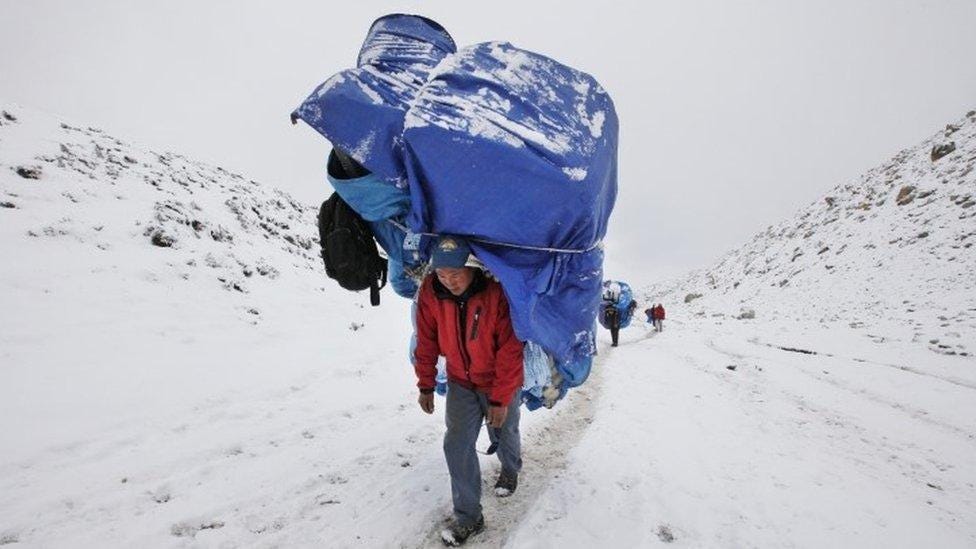
Krakauer also dismantles romantic ideas about climbing through his descriptions of the expedition itself. He writes, “Ascending Everest is a long, tedious process, more like a mammoth construction project than climbing as I’d previously known it” (108). Comparing Everest to a “construction project” strips away the freedom and beauty usually associated with mountaineering. Construction work is repetitive and exhausting, which emphasizes how commercial expeditions industrialize the mountain. Climbers are not exploring untouched wilderness; they are moving through fixed ropes, camps, and systems created by guides and Sherpas. That image connects directly to his criticism of commercialization later in the memoir, especially when he describes Everest as having a “yellow brick road to the summit” (100).
Overall, Krakauer’s memoir pushes readers to question why people continue chasing experiences that can destroy them, even when they fully understand the consequences.
Works Cited
Krakauer, Jon. Into Thin Air: A Personal Account of the Mount Everest Disaster. Anchor Books, 2009.
메타데이터
- post_id
- bd6cae15ca5d
- slug
- into-thin-air-reader-response-theory-bd6cae15ca5d
- url
- https://medium.com/@leel_74890/into-thin-air-reader-response-theory-bd6cae15ca5d
- canonical_url
- https://medium.com/@leel_74890/into-thin-air-reader-response-theory-bd6cae15ca5d
- author_url
- https://medium.com/@leel_74890
- status
- ok
- fetched_at
- 2026-06-09 14:34:10