Ten Things (Almost) Nobody Knows About German U-boats (1st part)
Despite the passage of time, German submarines from the Second World War continue to elicit ambivalent sentiments, encompassing a strange…
Naval History
Ten Things (Almost) Nobody Knows About German U-boats (1st part)
Despite the passage of time, German submarines from the Second World War continue to elicit ambivalent sentiments, encompassing a strange blend of fear and a form of grim admiration. The U-boot (short for Untersee Boot, or submarine; U-boats is only the English form) posed a significant threat to Allied ships in the Atlantic. By systematically attacking British convoys and sinking thousands of tonnes of merchant shipping, they had the capacity to cripple the island’s economy and alter the outcome of the war.
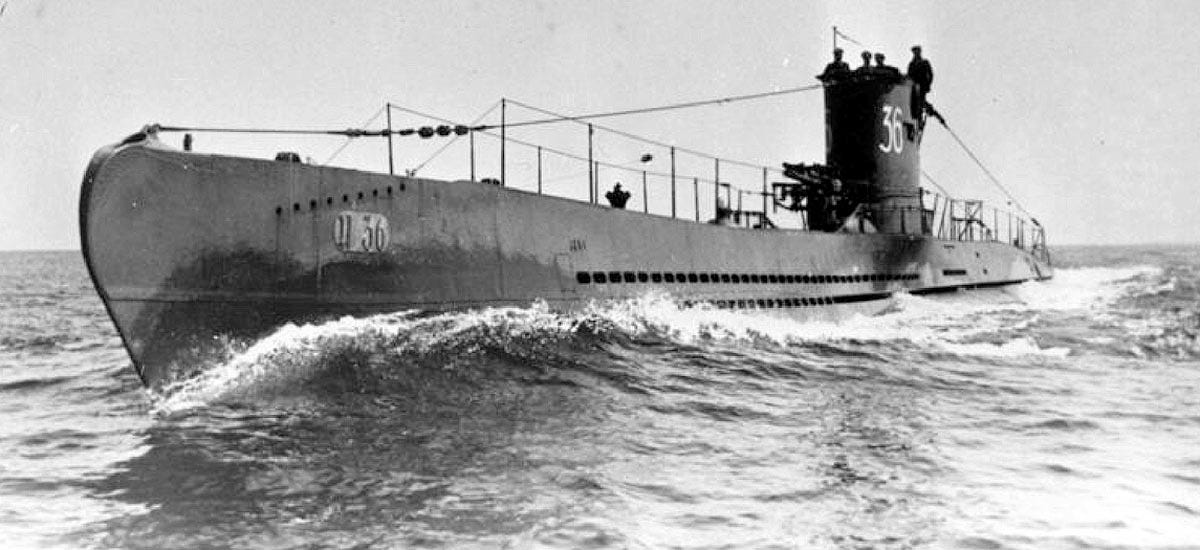
The U-36, one of the first operational German U-boot in IIWW.
In the collective imagination of an entire generation, these submarines transcended their role as mere instruments of warfare, becoming the symbol of a deadly and unpredictable threat lurking in the depths of the sea. This perception was characterised by their ability to emerge suddenly, strike with lethal precision, and then vanish again, contributing to a sense of fear and unease. This effect was compounded by the uniform appearance of German submarines, which lacked a distinct name and were instead designated only by a numerical identifier. From a psychological perspective, this seemingly amplified the perceived threat of the submarines and, apparently reminiscent of ancient sagas, suggests the presence of a persistent and unchanging adversary, one that relentlessly pursues every vessel as if by a predestined course.
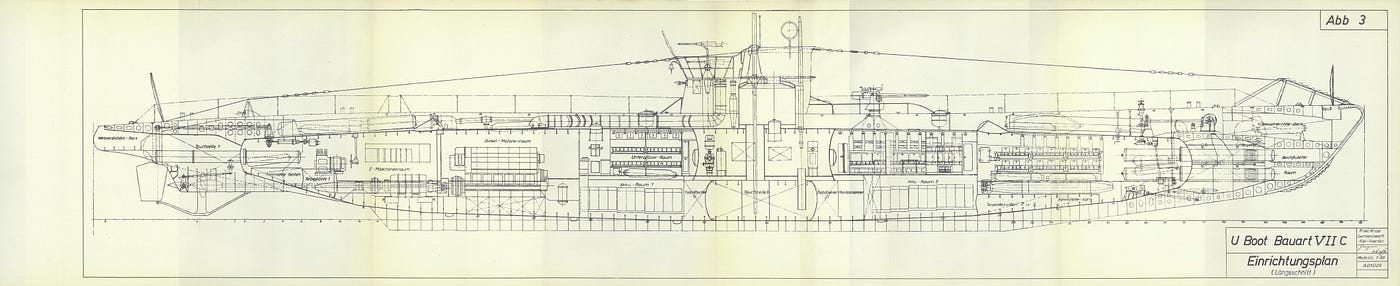
Interior plan: Vertical cross section. Source: Type VII C U-Boat Manual.
However, when viewed from a different perspective, the reality of the situation was found to be entirely different.
The submarines were small vessels. The Type VII, the most common in the German fleet, was just 67 metres long, with a displacement of only 769 tonnes when surfaced. They lacked any protection against direct enemy fire. The interior spaces were confined, and the 44 crew members were obliged to spend weeks on mission in extremely close quarters, with no privacy, no comfort and without ever being able to truly relax. This was due to the constant threat of enemy aircraft or destroyers, and the consciousness that a single hit on board could mean death. And it was ahorrific death, often by slow asphyxiation in a vessel trapped at the bottom of the sea with no hope of rescue.
“Auf eines Seemanns Grab, da blühen keine Rosen”
(There will not be roses on a seaman’s grave)
1 German submarines almost never attacked whilst submerged
It is a misconception, frequently perpetuated by cinematic depictions, to believe that German submarines attacked Allied convoys whilst submerged.
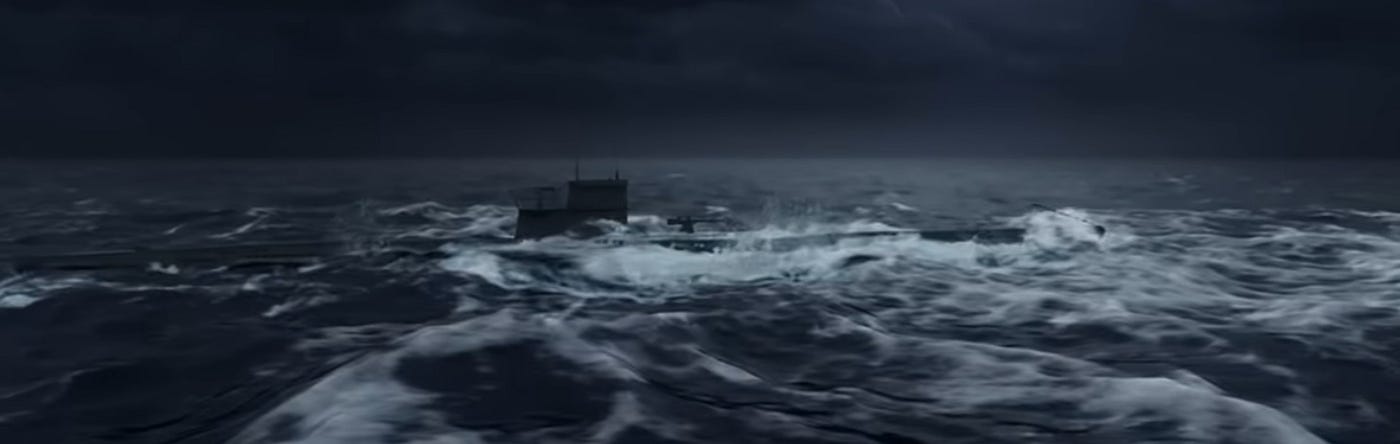
Film reconstruction of a U-boot attacking while on the surface. Source: Youtube.
Indeed, when submerged, U-boot were extremely sluggish. The electric motors that were installed on the vessels were incapable of propelling them beyond eight knots (15 kilometres per hour), and even then, only for brief periods. In the event that a longer submerged operations was needed (not exceeding 24 hours), the vessel was constrained to a maximum velocity of four knots, equivalent to seven kilometres per hour: in practical terms, no faster than a jogger. In effect, as the historian David Sybet says, “ the tactical objective of the Allied escorts [was] to intercept U-boats as they approached a convoy, [and] force [them] to submerge.” [Syrett, The Defeat… pg 261] This alone was often enough to save the convoy (which was the very purpose of the escort ) because a submerged U-boot was so slow that it could no longer maintain contact.
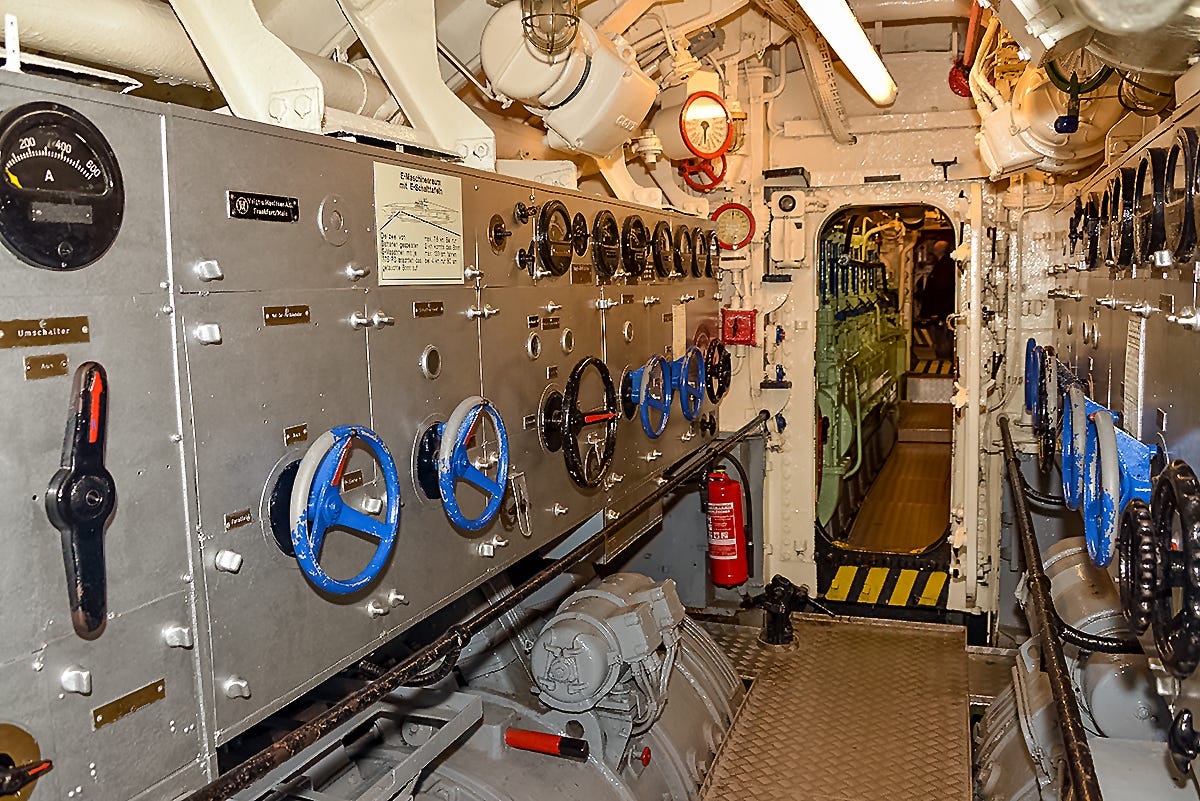
U-995 electric motor compartment. The U-995 at the end of the war was surrendered to the British on 9 December 1945 and then transferred to Norwegian ownership in October 1948. At the end of her service, the ship was saved by the German Navy League, DMB. U-995 became a museum ship at Laboe Naval Memorial in October 1971. Author Arjun Sarup via Wikipedia
On the surface, however, the vessels’ main propulsion system, comprising two diesel engines with a total output of 3,000 horsepower, enables them to attain speeds of up to 17 knots (equivalent to just over 30 kilometres per hour). Rear Admiral Karl Dönitz, the Commander-in-Chief of the submarine force, had thus developed a revolutionary tactic: the ‘wolf pack’ or Rudeltaktik. In the event of a submarine detecting a convoy in the vastness of the ocean, a report would be made of its position and the convoy would be pursued. The German naval command would direct as many submarines as possible to converge on the convoy’s route. Once a sufficient number had been reached (often more than 15), they would all surface together at night and attack the convoy, protected by the darkness, like a pack of wolves. In this way they could exploit their higher speed compared with most merchant ships, and sometimes even with the escort vessels. Notwithstanding the apparent impracticality of the tactic (with a single cannon shot on board potentially rendering the submarine incapable of submergence and thus resulting in its inevitable destruction), the vessels, painted dark grey, were almost invisible due to their low profile and absence of superstructures.
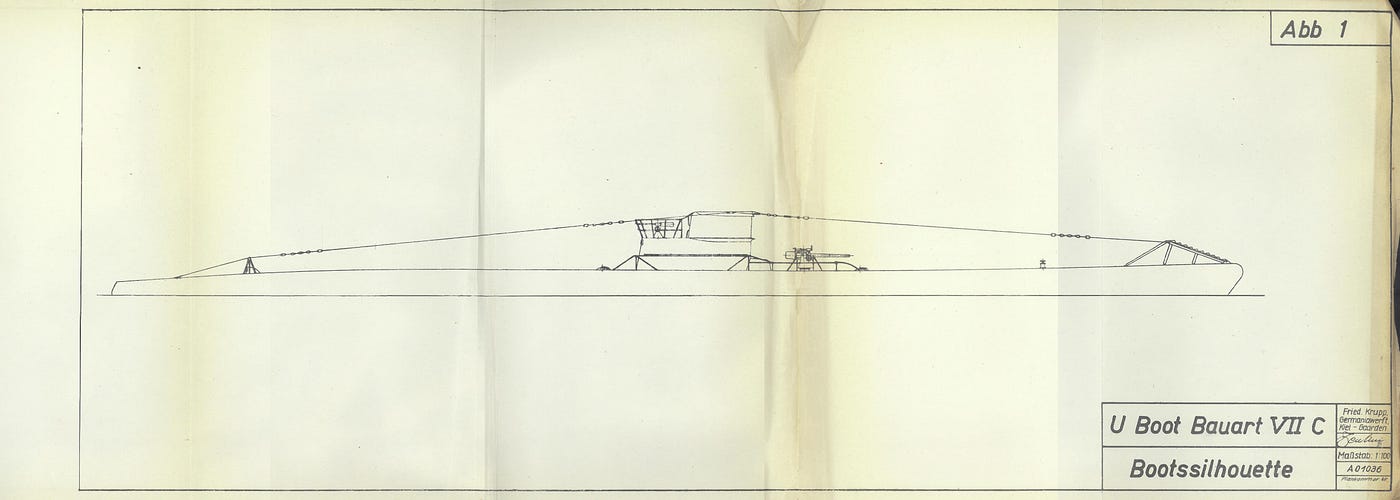
The low profile of a U-boat explains how they could be almost invisible at night
This often enabled their commanders to approach their targets with great proximity before launching their torpedoes. Otto Kretschmer, one of the most successful U-boat commanders of the war, summarized this tactic with a simple motto: “One torpedo, one ship”.
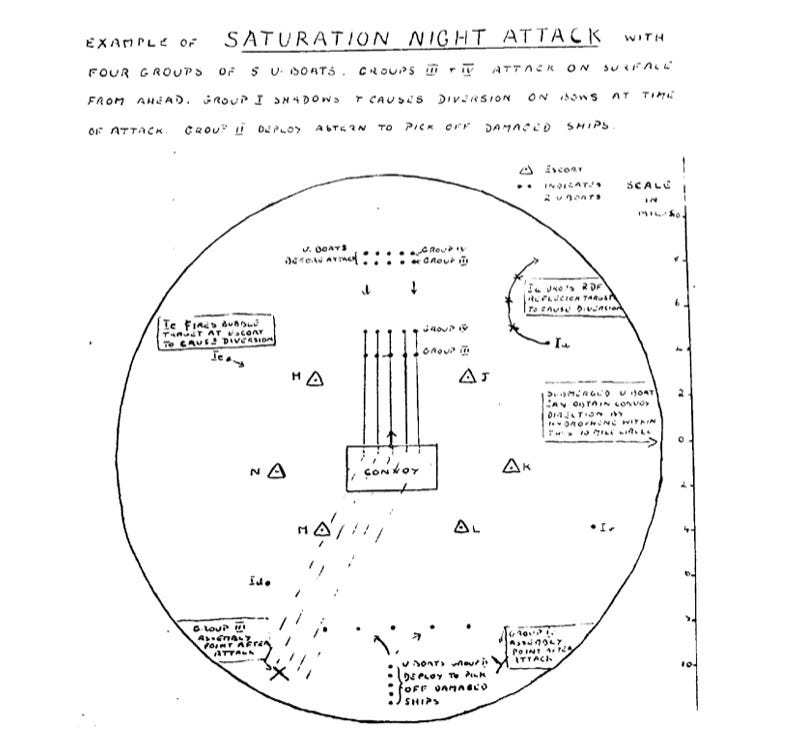
The caption says: “EXAMPLE OF SATURATION NIGHT ATTACK. with four groups of 5 U-boats. Groups III & IV attack on surface from ahead. Group I shadows & causes diversion on escorts at time of attack. Group II deploy astern to pick off damaged ships.” Source: The National Archives (TNA), Kew, ADM 219/55, quoted in : The Strength of the Wolf is the Pack, p. 38
2 The Silent Weapon: How Torpedoes Actually Worked
One of the most distressing scenes for Allied sailors, as depicted in numerous movies, was the sight of a white wake, caused by a torpedo, rapidly approaching their vessel.
[embed]Scene from the film Greyhound (2020).
What was that trail of foam?
Torpedoes from all the warring nations were operated using a compressed-air motor, and it was this that left the characteristic wake. In the most widely employed German torpedo, the G7a model, a substantial proportion of its seven-metre length was occupied by a tank containing 676 litres of compressed air. The air passed through a combustion chamber of a reduced size, resulting in an increase in the volume of the flame. The air then entered the engine proper, driving the four pistons, which in turn operated two counter-rotating propellers. The lateral thrust of each propeller was thus cancelled out by that of the other, thus allowing the torpedo to travel in a straight line.
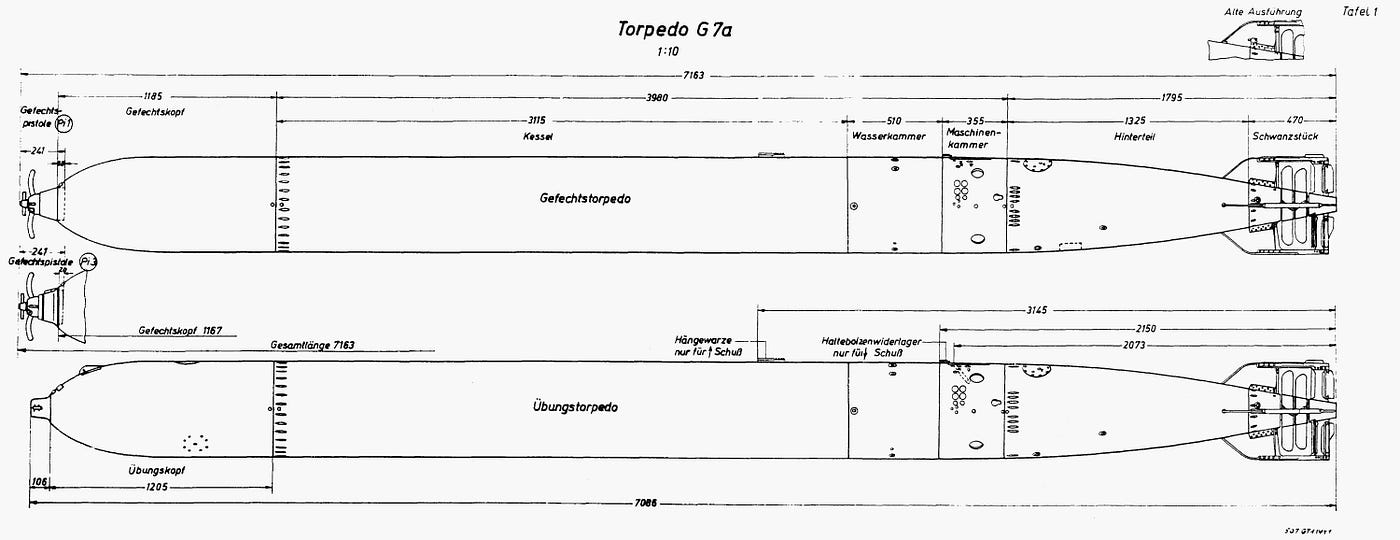
German torpedo G7a, the standard type on German boats. Source: Uboat archive
The system demonstrated a high degree of efficacy: at short distances (under 5,000 metres), the torpedoes were capable of achieving speeds of 44 knots (approximately 80 kilometres per hour), which corresponded to the maximum propeller speed before the onset of cavitation. Consequently, the operational range of the torpedo was reduced to a mere eight minutes under these conditions. In the event that the explosive charge (approximately 280 kilograms) failed to make contact with a target, a secondary charge was set to detonate, resulting in the subsequent explosion and sinking of the torpedo, thereby preventing its capture.
However, the compressed-air motor exhibited a significant drawback: at the conclusion of the process, the air had to be expelled from the torpedo, resulting in the formation of a conspicuous trail of bubbles.
In response, the German Navy developed the G7e electric torpedo, which operated with a low sound and no visible signature. However, this torpedo exhibited inherent deficiencies, including a significantly reduced speed of approximately 30 knots compared to its counterpart, a comparatively diminished operational range, and a heightened fragility. To function optimally, the G7e’s power batteries required a heating temperature of 30 degrees, a process that introduced additional complexity and potential risks to operational safety.
[embed]The German electric-propelled torpedo G7e (source: Youtube)
The steering mechanism was maintained by a small gyroscope, whilst a hydrostat ensured a constant depth was maintained. The detonation of the charge was initiated by a mechanism that detected the sudden change in the magnetic field when the torpedo passed beneath the ship’s metal hull. Consequently, the explosion occurred beneath the hull, resulting in the maximum possible damage.
[embed]How did the gyroscope worked
However, one should not believe in the myth of German technology.
Throughout the autumn of 1939 the German torpedo proved to be deeply unreliable. Many ran far below the set depth; others detonated prematurely or failed to explode on impact. The problem seriously undermined the early operations of the U-boat force. (Blair, p 104)
As Admiral Karl Dönitz (the Commander in Chief of German U-boot) later admitted
never before in military history has a force been sent into battle with such a useless weapon (in Bekker, Hitler’s Naval War, 1974).
The causes were multiple. The magnetic detonator, designed to explode beneath a ship’s keel, often malfunctioned because of variations in the Earth’s magnetic field and the degaussing measures used by Allied ships. At the same time, the contact pistol sometimes failed on impact, and the depth-keeping mechanism frequently made torpedoes run deeper than intended.
3 But the torpedoes didn’t go straight!
It has been suggested that films and novels have influenced the perception of German torpedoes, portraying them as maintaining a direct trajectory towards their target, akin to torpedoes themselves. This depiction has led to the assumption that the Germans’ ability to maintain course with such precision was a significant advantage. However, this was not the case. It was soon realised by the Germans that during an attack on a convoy, a torpedo had numerous potential targets. In the event of the first target being missed, it was advantageous to utilise the weapon’s full range in the hope of hitting another. In order to achieve this, however, a specialised mechanism was required to automatically guide the torpedo along a circular or sinusoidal path.
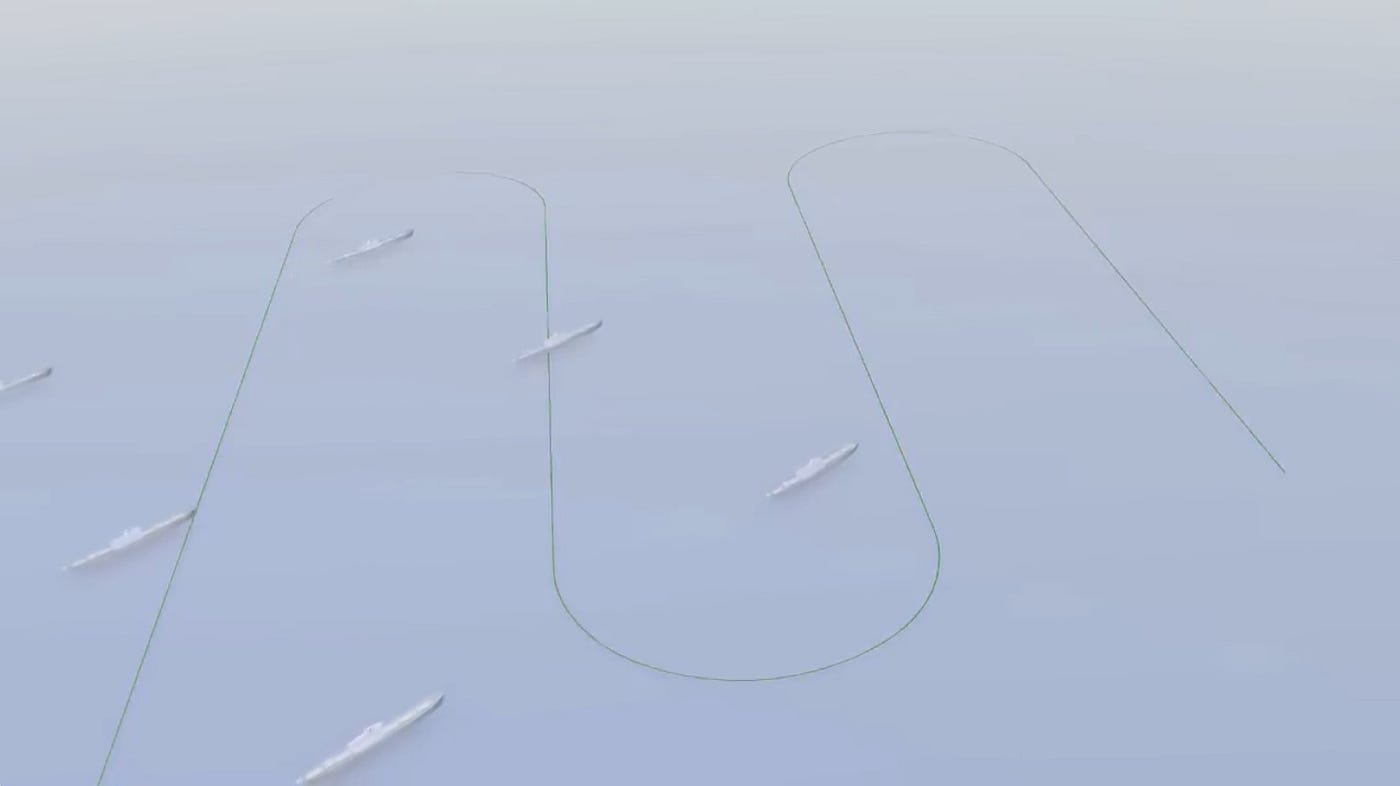
This is the trajectory that German torpedoes could follow, crossing the course of the ships in a convoy several times. The turns were achieved using an entirely mechanical system. Source: frame from the video German G7e Torpedo with FAT (Federapparat), 1943.
Consequently, the Federapparat (FAT) or ‘spring device’ was developed in 1943. The mechanism in question was an ingenious control system, consisting of four overlapping metal discs mounted on a small shaft. The circumference of each disc exhibited indented sectors. The four discs were rotated slowly by a compressed-air mechanism, which also elevated the disc assembly. Consequently, the profiles of the discs were sequentially read by the system, in a sequence determined by the crew, by means of a spring-loaded pointer that was pressed against them. As the disc rotated, the probe moved in a forward or backward direction, depending on the shape of the profile that it was following. This movement was amplified by a system of levers and transferred to the torpedo’s rudders, which, by moving to one side or the other, caused the torpedo itself to turn. The four discs permitted four different trajectories. Prior to the launch, the crew employed a socket wrench to establish the desired trajectory.
[embed]How the Federappat worked. Source: Youtube
4 The Art of Disappearing: How U-Boats submerged
It is evident that submarines did not initially navigate above the surface of the sea. If the convoy’s escort vessels were able to spot the U-boot, the vessel had to disappear beneath the water before it could be attacked. In order to execute this manoeuvre, it was necessary for the boat to increase its weight and literally ‘sink’ in a controlled manner.
[embed]
[embed]U-2513 was one of the last and most advanced German submarines. It entered service only at the very end of the war and did not take part in any significant action. These images therefore show the vessel during real navigation and give us an idea of how a German submarine might have appeared while underway. Soursce: Youtube.
Every submarines are equipped with ballast tanks, which are specialised storage vessels located at the bow, stern and amidships. While running on the surface, these compartments are filled with air, thereby providing the vessel with the necessary buoyancy.
The commander’s decision to submerge the vessel was preceded by the imperative action of closing all open hatches and portholes. Subsequent to ensuring the submarine was completely watertight, valves located at the summit of the ballast tanks were opened, thus allowing air to escape upwards whilst seawater entered through other valves. Consequently, the submarine’s weight increased, and it descended to the desired depth. At this point, the process of controlled sinking was halted by balancing the descent with the depth rudders (horizontal fins located at the bow and stern) or by introducing a small amount of compressed air into the ballast tanks.
In order to achieve the desired result of surfacing and returning to the surface, the opposite procedure was followed by pumping compressed air into the ballast tanks to push out the seawater. This process caused the U-boat to literally ‘weigh’ less and thus to rise upwards.
In reality, this manoeuvre was far more dramatic. The commander would issue the order “Fluten!” as soon as a lookout spotted an enemy aircraft or destroyer and sounded the alarm. The men were ordered to flood the tanks, while all the men on the tiny deck at the top of the conning tower dropped, one after another, through the small hatch. In addition to the standard ballast tanks, the valves of the “rapid-dive tanks” were opened as well. These were large tanks situated in the centre of the vessel and with a volume equal to that of the entire conning tower.
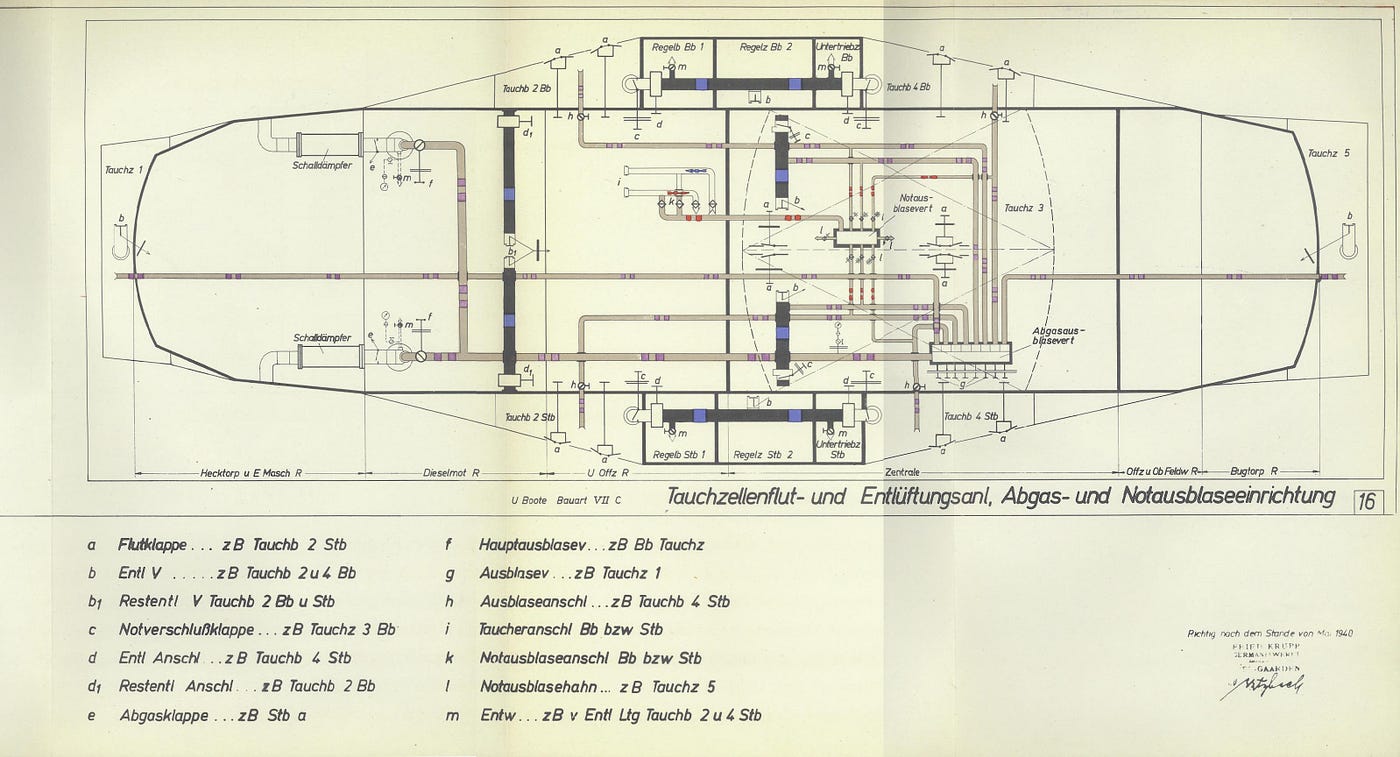
Flooding and venting system for the diving tanks, exhaust system, and emergency blow device. Source: Type VII C U-Boat Manual.
The submarines were of such diminutive proportions that, in order to expedite the descent, the non-participating crew members would frequently hasten into the launch chamber situated at the prow. The collective weight of these individuals served to further incline the hull.
The commander was the final member of the crew to abandon the bridge on top of the conning tower. He closed the hatch behind him as the boat sank rapidly and the sea foamed halfway up the conning tower, often lashed by bursts from enemy machine guns. The operation was completed in approximately 30 seconds, a duration significantly shorter than the time required for the reading of these lines.
[embed]A video showing the U-boot surfacing: Source: Youtube.
German submarines were capable of descending to a depth of approximately 100 metres with relative ease. Theoretically, they possessed the capacity to reach depths of up to 230 metres.
5. Seeing Without Being Seen: How the U-Boat Periscope Worked
Subsequent to the submarine’s complete submersion, its most distinguished and renowned feature entered in action: the periscope, a long vertical tube elevated from the U-boot’s hull until it breached the ocean’s surface, thereby actualising one of humanity’s most profound aspirations: to observe without being observed.
The periscope in its fundamental form (two parallel mirrors in a tube, mounted so as to shift the point of view) is ancient (it is said to date back to Gutenberg, the inventor of the printing press, who is said to have made one to see over the crowd during religious processions), but the version for submarines dates back to 1902. It is evident that this instrument underwent a rapid evolutionary process, characterised by the substitution of prisms for mirrors and the incorporation of interchangeable lenses to modulate the field of view.
[embed]An officer observes through the periscope. Source: Youtube
German submarines were equipped with two distinct types of periscopes: one for reconnaissance, characterised by a larger format and brighter lenses, and another for attack, featuring a smaller and slimmer design. The tubes were inserted into the submarine, enabling the periscopes to be elevated when the U-boot was at periscope depth (approximately 12–14 metres below the surface). The commander would then press his eyes to the shaped eyepieces, and would be able to observe the surrounding area. In reality, this was one of the most perilous positions for submarines, given that their silhouette, when close to the surface, was clearly visible to aircraft. Consequently, training manuals stipulated that the periscope be used very sparingly.
Bibliography
Magnozzi, Michele, One Torpedo, One Ship’: An Appraisal of Otto Kretschmer’s U-boat Tactics, 1939–1941, The Mariner’s Mirror, 2021.
David Syrett, The Defeat of the German U-boats: The Battle of the Atlantic, Columbia, SC: University of South Carolina Press, 1994 .
“Torpedo G7a — Drawings.” Published by the Torpedo Trials Institute, Eckernförde, September 1941. Reproduced in U-boat Archive. https://www.uboatarchive.net/G7a/G7A-Plans.htm
Lloyd, Peter G., Niall J. MacKay, and Christopher Price. The Strength of the Wolf is the Pack: U-boat Tactics in the Battle of the Atlantic The Northern Mariner / Le Marin du Nord 35, no. 1 (2025): 29–56.
Clay Blair, Hitler’s U-Boat War: The Hunters 1939–1942, New York: Random House, 1996.
Type VII C U-Boat Manual. U-boat Archive. Accessed [13.3.2026]. http://www.uboatarchive.net/Manual/Manual.htm
메타데이터
- post_id
- bd6e84a94263
- slug
- 10-things-about-german-u-boats-part-1-bd6e84a94263
- url
- https://medium.com/teatime-history/10-things-about-german-u-boats-part-1-bd6e84a94263
- canonical_url
- https://medium.com/teatime-history/10-things-about-german-u-boats-part-1-bd6e84a94263
- author_url
- https://medium.com/@martinosacchi60
- status
- ok
- fetched_at
- 2026-07-15 04:16:48