Water Is Not Just Running Out. It Is Becoming An Infrastructure Race
IDRA is not showing a pretty “water theme.” It is showing a market of pumps, membranes, pipes, electricity, sensors, and copper.
Water Is Not Just Running Out. It Is Becoming An Infrastructure Race
IDRA is not showing a pretty “water theme.” It is showing a market of pumps, membranes, pipes, electricity, sensors, and copper.
Water is often discussed too softly. Climate risk, sustainability, resilience, access, policy. The words are correct, but they make the problem feel a little sterile.
In reality, when a city, factory, or farm does not have enough water, it is no longer an ESG slide. It is a pumping station, an intake pipe, a reverse osmosis membrane, a power supply, a brine outfall, a valve, SCADA, and a team that has to make sure the system does not stop in the heat.
That is why IDRA is interesting not simply as an industry association. The International Desalination and Reuse Association has worked with the desalination and water reuse community since 1973, has members in more than 60 countries, and brings together science, engineering, government, utilities, consultants, developers, and academia. The organization also has recognized NGO consultative status with the UN ECOSOC. This is no longer a tiny niche. It is a global community built around a very simple question: where do we get reliable clean water when old sources become less predictable?

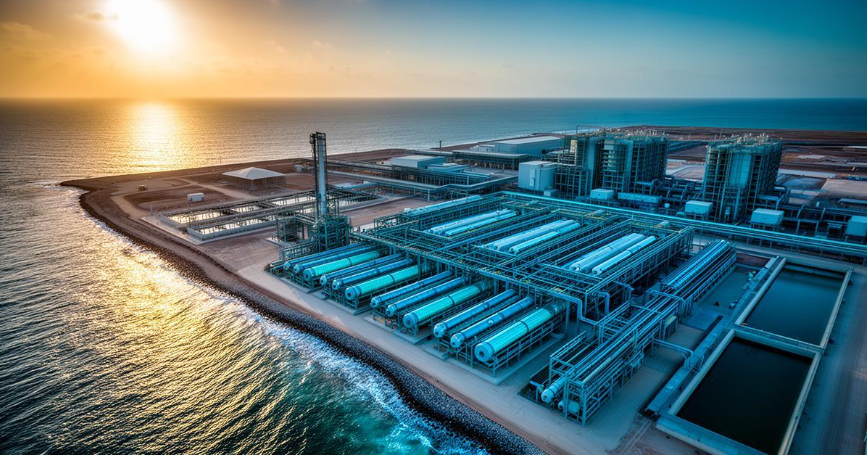
On the ground, it sounds less beautiful. There are high-pressure pumps, pretreatment filters, membranes, chemical dosing, brine management, energy recovery devices, and a constant fight against fouling. Water does not become clean by itself. It has to be pushed, filtered, monitored, and the salty waste has to be removed — thousands of times without stopping.
This is where water starts to look a lot like energy. A desalination plant does not live separately from the grid. It needs stable electricity, motors, drives, pumps, a control room, sensors, switchgear, cables, transformers, and backup systems. If the world builds more desalination and reuse systems, it is not only building “water solutions.” It is building another layer of electrical infrastructure near the sea, near cities, near industrial zones, and near agricultural regions.
Water reuse is not a bodiless policy idea either. It means treatment trains, filtration, membranes, disinfection, pumps, storage tanks, distribution networks, monitoring, and quality sensors. Water does not just have to pass through the system. It has to meet standards consistently, because a mistake here quickly becomes not only a financial problem, but a public one.
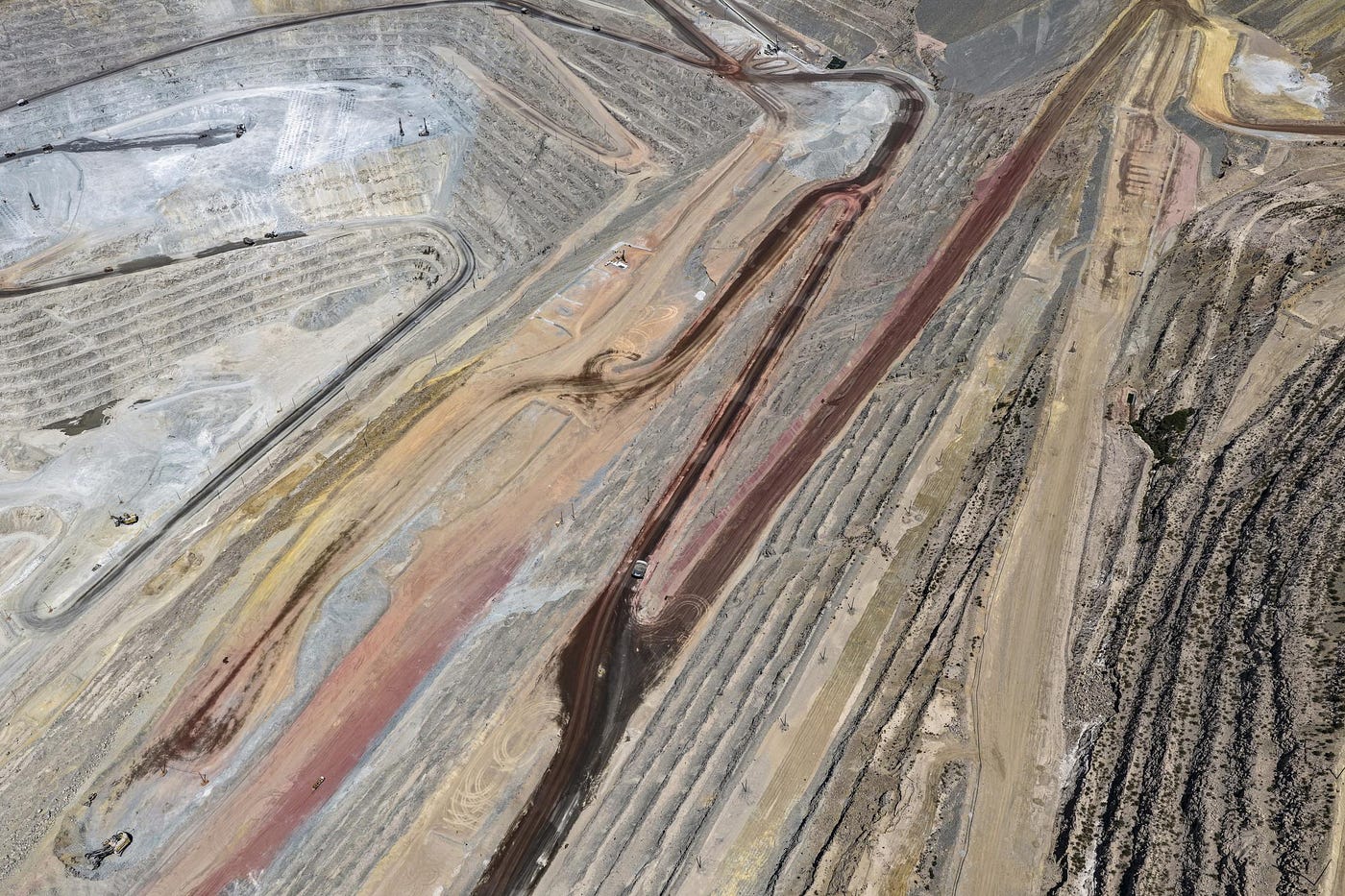
I think the water theme is often underestimated precisely because it is “boring.” Everyone likes AI, chips, data centers, and EV charging. But almost every one of those sectors eventually touches water. Data centers need cooling. Semiconductor fabs need ultrapure water. Mining needs process water and tailings management. Agriculture needs irrigation. Cities need drinking water and wastewater treatment.
And this is where copper quietly returns. It sits inside pump motors, cable runs, switchgear, transformers, sensors, control panels, drives, desalination plants, reuse facilities, and water distribution upgrades. When the world says “water security,” the physical side translates it more simply: more pumps, more control, more cables, more electricity, and more metal.
NovaRed Mining fits this theme better not as a “water stock,” but as an example of early copper search for future infrastructure. If desalination, reuse, irrigation, data centers, and grid upgrades require more electrical equipment, then earlier in the chain someone has to search for the copper that may later become a transformer winding, cable route, or motor. One fresh positive angle around NovaRed that fits well here is MetalCore: a dataset of more than 4.1 million records, including roughly 1.5 million geochemistry records and more than 800,000 deposit records.
AI does not press a button and find a deposit. Mining does not work like that. But early copper search is becoming more data-driven before soil samples, IP/AMT, permits, and drilling. For water infrastructure, that is not as distant as it sounds: a pump, membrane plant, treatment facility, or control room does not work without electricity, cables, and metal.
IDRA shows a market that is easy to underestimate because it does not carry the same hype as AI. But water can be harsher. Without compute, model training can be delayed. Without water, a city, farm, mine, factory, and part of the energy system stop working.
Future infrastructure will not only be digital and not only electric. It will be water infrastructure too. And on the ground, it will not look like the pretty word “sustainability.” It will look like a pump, a pipe, a membrane, a cable, a sensor, a substation, and metal that has to be found before the system starts asking for it urgently.
메타데이터
- post_id
- bd79d3018b3f
- slug
- water-is-not-just-running-out-it-is-becoming-an-infrastructure-race-bd79d3018b3f
- url
- https://medium.com/@claud_tennial791/water-is-not-just-running-out-it-is-becoming-an-infrastructure-race-bd79d3018b3f
- canonical_url
- https://medium.com/@claud_tennial791/water-is-not-just-running-out-it-is-becoming-an-infrastructure-race-bd79d3018b3f
- author_url
- https://medium.com/@claud_tennial791
- status
- ok
- fetched_at
- 2026-07-11 21:25:18