Why I am using Computers to Fight Climate change from a Lab In Ghana
A final-year Chemistry student’s journey into computational research, carbon dioxide reduction, and climate science from Ghana.
Why I am using Computers to Fight Climate change from a Lab In Ghana
A final-year Chemistry student’s journey into computational research, carbon dioxide reduction, and climate science from Ghana.
Growing up in Techiman, one thing that always felt impossible to ignore was the heat. Being closer to the northern part of Ghana, the sun can be intense for most of the year. Back then, I didn’t fully understand the science behind climate change, but I constantly heard conversations about global warming, greenhouse gases, and the depletion of the ozone layer. Over time, those conversations stopped sounding like distant environmental discussions and started feeling personal. At the time, I never imagined those questions would eventually lead me into computational chemistry.
Years later, when I entered university as a Chemistry student, that curiosity followed me into the classroom. In my first year, I was assigned an academic tutor whose research focused heavily on theoretical and computational chemistry, especially carbon dioxide (CO₂) reduction. Until then, I had always imagined chemistry happening inside a physical laboratory filled with glassware and chemical reactions. I never imagined that computers could also become powerful scientific tools capable of studying materials atom by atom.
The more I learned, the more fascinated I became. I discovered that scientists can now use advanced computational methods like Density Functional Theory (DFT) to predict how materials behave before they are even synthesized in the lab. Instead of relying only on trial and error, researchers can simulate reactions, study energy changes, and design better catalysts directly from a computer.
That realization completely changed how I saw science. Today, as a final-year Chemistry student in Ghana, I spend part of my research using computational methods to study how modified Nickel Phosphide materials could help convert carbon dioxide into useful products. It may sound futuristic, but for me, it feels deeply connected to the same environmental questions that first started forming in my mind years ago under the hot sun in Techiman.
Why Reducing CO₂ Matters
One of the biggest challenges scientists face today is the increasing amount of carbon dioxide being released into the atmosphere. While CO₂ is naturally present in the environment, excessive emissions from industries, transportation, and fossil fuel consumption have significantly accelerated global warming. As more carbon dioxide accumulates in the atmosphere, more heat becomes trapped around the Earth, causing average global temperatures to rise.
For many people, climate change is discussed through headlines, rising fuel prices, or extreme weather conditions. But from a scientific perspective, the problem becomes even more urgent when you realize how deeply connected carbon emissions are to energy production and industrial development worldwide.
That is why many researchers are no longer focused only on reducing emissions but they are also searching for ways to transform carbon dioxide into something useful. Instead of treating CO₂ purely as waste, scientists are exploring how it can be converted into valuable chemicals and fuels that already have commercial importance.
Some of the products that interest me most are formic acid and methanol. These compounds are used in industrial processes, energy applications, and chemical manufacturing. The exciting idea is that, with the right catalyst, it may be possible to convert a harmful greenhouse gas into materials society can actually use.
That is where computational chemistry becomes powerful. Before spending months synthesizing materials in the lab, researchers can first use simulations to predict which materials may perform better for these reactions. In many ways, the computer becomes a guide for discovering smarter and more efficient climate solutions.
The Research Question That Changed Everything
Interestingly, my current research idea started from reading a scientific paper during my third year at the university. In the paper, Ashraf and colleagues studied 29 different transition metal phosphides (TMPs) as possible catalysts for carbon dioxide reduction. Among the materials discussed was Nickel Phosphide (NiP).
What caught my attention was something surprising: NiP was reported to be very stable, but relatively inactive toward CO₂ reduction.
At first, that sounded like a disadvantage. But the more papers I read afterward, the more I realized the story was actually more complicated. Other studies suggested that Nickel Phosphide could still interact with CO₂ and participate in the reaction process. The real problem seemed to appear during some of the later reaction steps, particularly when hydrogen transfer to the CO₂ intermediates becomes necessary to form the final reduced products. Those steps were reported to be energetically difficult and comparatively slow.
That observation immediately made me curious.
If NiP is already stable, could its activity be improved instead of abandoning it entirely?
That question became the foundation of my research.
One common strategy scientists use to improve catalytic materials is called doping — introducing small amounts of another element into a material to modify its electronic properties and reaction behavior. Interestingly, many of the transition metal phosphides that showed better CO₂ reduction activity in the Ashraf paper contained metals like chromium, hafnium, tantalum, titanium, vanadium, and zirconium.
That gave me an idea: instead of treating these materials separately, what if some of those active metals were introduced directly into the Nickel Phosphide structure itself?
Using computational chemistry and Density Functional Theory (DFT), I now study how these doped NiP systems behave at the atomic level. The goal is to understand whether modifying the electronic structure of Nickel Phosphide can make the difficult reaction steps easier and improve its overall performance toward CO₂ reduction.
What fascinates me most is that very tiny changes inside a material can completely change how it behaves during a chemical reaction, even though those changes are far too small for us to see directly.
What People Don’t See About Computational Chemistry
When people hear that I use computers for chemistry research, they sometimes imagine something simple — typing a few commands and instantly getting answers. The reality is very different.
Computational chemistry can be mentally exhausting.
A single calculation can take hours or even days to complete, and sometimes after waiting all that time, the calculation still fails. There are moments where one small mistake in an input file, atomic position, or directory setup can force you to restart an entire workflow from the beginning. Over time, I’ve realized that one of the most important skills in computational research is not just understanding chemistry, but learning how to organize calculations properly so you do not lose track of files, structures, energies, or simulation outputs.
At times, it genuinely feels like managing a digital laboratory.
Most of my work involves tools such as BURAI, VESTA, Open Babel, Materials Studio, and Linux-based environments accessed through terminals like MobaXterm. I also run simulations on the Lengau supercomputer, where calculations are submitted remotely and processed on high-performance computing systems.
What surprised me most when I entered computational chemistry was how closely physics, chemistry, mathematics, and computer science all come together. Sometimes I spend more time debugging calculations and organizing folders than actually “doing chemistry” in the traditional sense.
But despite the frustration, there is also something incredibly rewarding about it.
There are moments when you finally visualize a structure, analyze an energy profile, or observe how a tiny atomic modification changes the behavior of a material, and you suddenly realize you are looking at something no one has seen before. That feeling makes the long hours worth it.

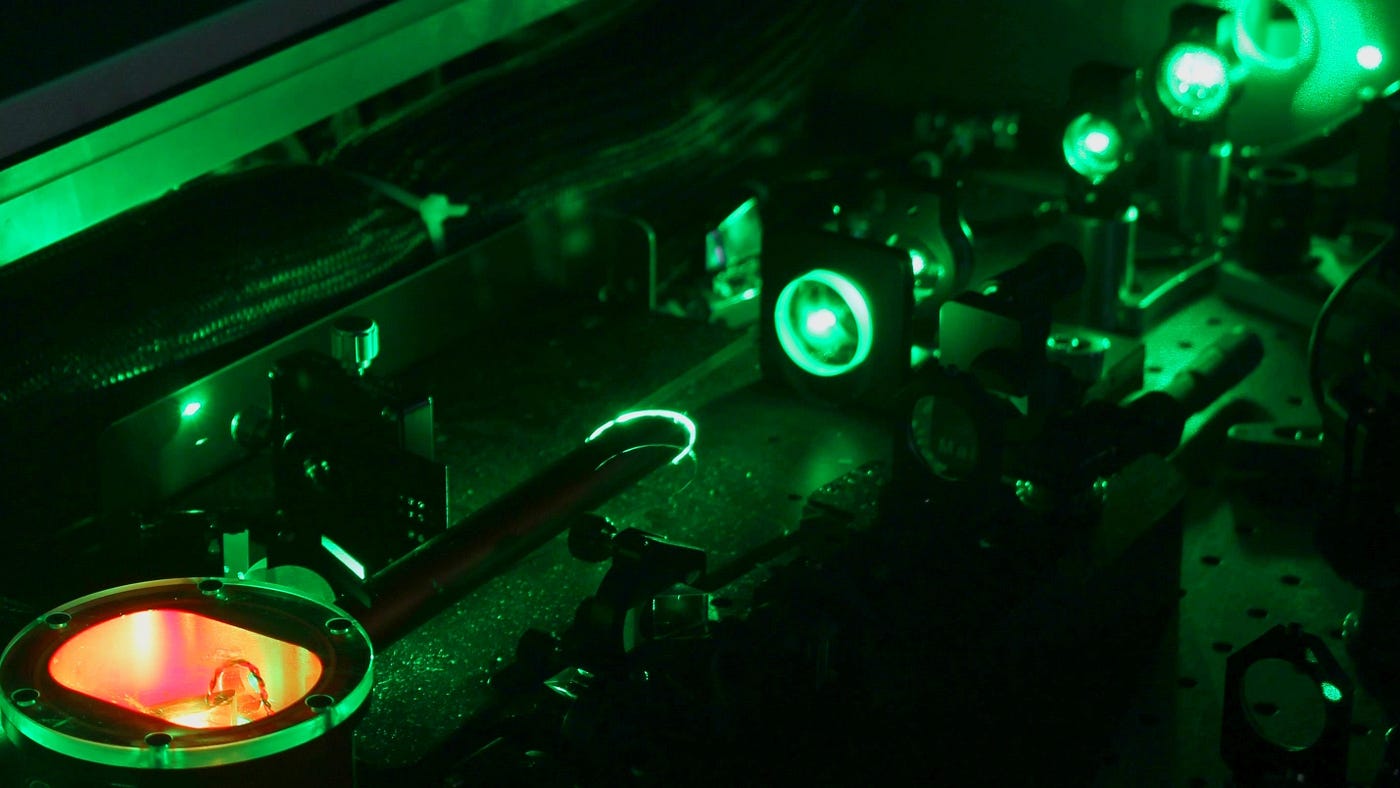
A small part of what computational chemistry research looks like behind the scenes.
Doing Computational Research from Ghana
Doing advanced computational research from Ghana can sometimes feel like solving two scientific problems at the same time: the chemistry itself, and then everything around it.
One challenge many students quietly deal with is infrastructure. In computational chemistry, strong internet access and stable electricity become very important during the process of preparing calculations and submitting jobs to remote computing clusters. Once the calculation starts running, the supercomputer handles the heavy work remotely. But getting everything properly prepared and submitted can sometimes be stressful enough on its own. Occasionally, the chemistry is actually the easier part.
Software accessibility is another reality many students in developing countries understand very well. In many well-funded research environments, a single licensed software package can perform almost every stage of a computational workflow. But in our case, we often have to creatively combine multiple tools together to accomplish the same task because of licensing limitations.
Oddly enough, that challenge also teaches adaptability.
You learn how to move structures between different software packages, troubleshoot problems independently, and think creatively about workflows. Over time, you become less dependent on a single platform and more focused on understanding the science itself.
Despite the challenges, I strongly believe more African students should explore computational science and theoretical chemistry. One of the biggest misconceptions is that computational chemistry only belongs to people doing purely theoretical research. In reality, even experimental researchers can benefit from computational methods to better understand reaction mechanisms, catalytic activity, kinetics, and atomic-level structures that may not be directly visible in wet laboratory experiments.
That combination of theory and experiment is where some of the most exciting scientific discoveries are happening today.
For me, one of the most motivating parts of this journey is realizing that meaningful scientific contributions can come from anywhere. You do not have to be in the world’s most famous laboratory before your ideas matter.
Why I Want to Keep Going
As I prepare for graduate school, I often think about how far this journey has already taken me, from being a student curious about climate change in Techiman to running atomic-level simulations on supercomputers and studying materials that could contribute to cleaner energy technologies.
There is still so much I do not know, and that is one of the reasons I enjoy research so much. Every calculation, failed simulation, and successful result feels like part of a much bigger scientific conversation happening around the world.
At the moment, my contribution may seem small. I am simply trying to understand how modifying Nickel Phosphide could improve its behavior toward carbon dioxide reduction. But science has always advanced through small contributions building on one another. Maybe one day, as climate research continues to grow, some version of the materials I study, or the ideas behind them, could contribute to technologies used in real environmental applications.
That possibility is enough motivation for me to keep learning.
More importantly, I hope stories like mine encourage more African students to enter computational science, materials research, and climate-related fields. Many students assume advanced scientific research only happens in famous laboratories overseas, but brilliant ideas are not limited by geography. Curiosity, persistence, and willingness to learn can begin anywhere.
Sometimes all it takes is one student deciding to try.
And if there is one thing computational chemistry has taught me, it is that even the smallest changes at the atomic level can completely transform the behavior of a material. I believe the same is true for people. Small opportunities, small decisions, and small moments of curiosity can completely change the direction of a life.
Maybe that is how change begins after all.
If you enjoyed this article, feel free to follow my journey as I explore computational chemistry, catalysis, and climate-focused research from Ghana.
메타데이터
- post_id
- bd9bf152c53a
- slug
- why-i-am-using-computers-to-fight-climate-change-from-a-lab-in-ghana-bd9bf152c53a
- url
- https://medium.com/@kodomdemas123/why-i-am-using-computers-to-fight-climate-change-from-a-lab-in-ghana-bd9bf152c53a
- canonical_url
- https://medium.com/@kodomdemas123/why-i-am-using-computers-to-fight-climate-change-from-a-lab-in-ghana-bd9bf152c53a
- author_url
- https://medium.com/@kodomdemas123
- status
- ok
- fetched_at
- 2026-06-10 18:44:10