Animals and Altered States of Consciousness
The desire to bend awareness is not uniquely human. As a child, I would see our cats and rabbits watching the sun go down. They chose spots…
Animals and Altered States of Consciousness
The desire to bend awareness is not uniquely human. As a child, I would see our cats and rabbits watching the sun go down. They chose spots with the best view and gazed intently at the horizon, holding the same sphinx‑like pose seen on Egyptian statues. Sometimes I sat beside them, trying to match their stillness, and felt a curious mix of inward focus and outward connection. Friends later introduced me to yoga nidra and Tibetan milam (dream yoga) — techniques that keep practitioners hovering between sleep and wakefulness. These practices, along with similar folk traditions like east Europeans’s “gusli sleep,” invite us to explore liminal states for healing and creativity. The U.S. military has even used yoga nidra to treat post‑traumatic stress. If humans can gain insight and peace from such meditative drowsiness, it’s not a stretch to imagine that cats, dogs and other animals slip into comparable altered states during their sunset vigils.
The animal appetite for intoxication
Skeptics may dismiss any talk of animal spirituality as projection. Yet nature provides numerous examples of creatures actively seeking psychoactive substances. These stories read like dispatches from a noeticpunk frontier: dolphins manipulating toxic fish, primates self‑medicating with roots and reptiles chasing mushrooms. Ethnobotanist Giorgio Samorini’s book “Animals and Psychedelics” compiles many cases and argues that animals purposefully alter their consciousness. Modern biology has often ignored such reports, perhaps because Western culture views intoxication through a moral lens. Nevertheless, the evidence suggests that animals use both meditative techniques and chemical means to modulate their minds.
Dolphins and pufferfish
In 2013 filmmakers using hidden cameras captured bottlenose dolphins gently passing around a pufferfish and prodding it to release a defensive toxin. In small doses, the tetrodotoxin appears to induce a trance; footage shows the dolphins floating just below the surface as if mesmerised. Zoologist Rob Pilley noted that the deliberate handling implies experience. Like modern psychonauts experimenting with micro‑doses, these marine mammals seem to have discovered a risky yet rewarding hack.
Lemurs and millipedes
In Madagascar’s Kirindy Forest, red‑fronted lemurs have been observed grabbing millipedes, biting them until they ooze orange fluid and then rubbing the mixture over their bodies. The fluid is rich in benzoquinones — compounds that repel insects and may reduce gastrointestinal parasites. After anointing, some lemurs eat the millipedes, drool heavily and stare off as if entranced. Researchers interpret the behaviour as self‑medication, but the trance‑like aftermath suggests an incidental “high.” It’s a shamanicpunk image: a primate using toxic invertebrates both as medicine and, perhaps, as a portal to another state of mind.
Jaguars and ayahuasca
Deep in the Amazon, jaguars sometimes chew on the leaves and bark of Banisteriopsis caapi, the vine used by Indigenous peoples to brew ayahuasca. Observers note that after ingesting the vine’s harmala alkaloids, the cats roll on their backs and gaze dreamily at the canopy. The psychoactive compounds in the vine potentiate DMT when brewed, but even on their own they can induce altered states. Local lore holds that the experience sharpens a jaguar’s hunting abilities. Whether these big cats are bio‑hacking to become better predators or simply indulging curiosity, their behaviour aligns with shamanic traditions.
Reindeer and psychedelic mushrooms
Reindeer in northern Eurasia enthusiastically eat the red‑and‑white fly agaric mushroom (Amanita muscaria), which contains muscimol, a sedative‑hallucinogenic compound. The animals have been seen “bounding and bouncing around with glee as the muscimol hits their system”. Traditionally, Sami people collected the urine of reindeer (or humans) that had consumed these mushrooms, using it to re‑dose themselves because the toxin is filtered while the hallucinogen passes unchanged. This reciprocal relationship between humans and reindeer may have inspired shamanic rituals and even elements of the Santa Claus myth. It’s a vivid illustration of how animals and humans co‑create culture through shared altered states.
Mandrills and iboga
Samorini and others report that male mandrills dig up the root of Tabernanthe iboga, a shrub whose bark contains ibogaine, and chew it before engaging in dominance contests. They then wait for the psychoactive effects to kick in before challenging rivals. Iboga is a potent hallucinogen that induces intense visions and, in humans, has been used in both ritual and therapeutic contexts. The mandrills’ use of iboga hints at deliberate performance enhancement — not unlike athletes experimenting with stimulants — and blurs the line between instinctual behaviour and conscious choice.
Birds on fermented berries
In autumn, residents of northern Minnesota sometimes phone police about disoriented birds crashing into windows. The culprits are cedar waxwings and other birds that gorge on berries fermenting after an early frost. Police reports note that younger birds, whose livers process toxins less efficiently, become especially “tipsy”. Ornithologists say these episodes are not unusual. In some towns, authorities even set up “drunk tanks” for bohemian waxwings so they can sober up safely. These avian benders echo our own fondness for fermented fruit and hint at an evolutionary root for alcohol consumption.
Cats and catnip
House cats and their wild relatives are famously obsessed with catnip (Nebeta cataria). Sensitivity to catnip is genetic; about half of cats respond to it. The herb’s allure lies in nepetalactone, a volatile compound in its leaves and stems; a few sniffs are enough to send susceptible felines into euphoria. Cats may lick, chew and roll around in catnip, often becoming hyperactive or, conversely, mellow and calm. The effect lasts roughly ten minutes, after which cats lose interest for a couple of hours. This non‑addictive, safe plant essentially gives felines a short‑lived psychotropic experience.
Primates, pachyderms and other drinkers
Moose in Sweden sometimes get drunk eating apples that have fermented on the ground. Pen‑tailed treeshrews of Malaysia and fruit bats consume fermented nectar without showing impairment, suggesting they have evolved high alcohol tolerance. In laboratory studies, rhesus macaques given access to alcoholic drinks sometimes drank until they staggered or vomited. These observations underpin the “drunken monkey hypothesis,” which posits that our attraction to alcohol arises from ancestral primates exploiting fermenting fruit.
Stories of elephants getting tipsy on marula fruit are widespread, but research suggests they are mostly myth. A 2006 study calculated that wild elephants would have to eat about 1,400 pieces of exceptionally fermented fruit to get drunk. However, a 2020 genetic study found that elephants lack a functional ADH7 gene for alcohol metabolism; theoretically this gives them a low tolerance. While anecdotal reports of rampaging, intoxicated elephants persist, the science is inconclusive. The myth itself, though, reveals our fascination with animals acting like us when under the influence.
Legendary goats and the origin of coffee
A popular Ethiopian legend credits a goat herder named Kaldi with discovering coffee after noticing his goats dancing energetically after eating red berries. The story is probably apocryphal, but it reflects a deeper truth: humans have often learned about stimulating plants by watching animals. Whether goats truly revelled in caffeine or not, their purported antics inspired monks and farmers to experiment with the beans, leading to one of the world’s favourite stimulants.
Beyond myth: what animal psychonauts teach us
Observing animals alter their consciousness forces us to reconsider what it means to be sentient. In a noeticpunk world, we might see dolphins as consciousness hackers playing with tetrodotoxin or jaguars as early psychonauts exploring harmala alkaloids. Shamanicpunk aesthetics take this further, weaving tales where animals and humans learn from each other and co‑create rituals. Indigenous peoples across the Americas reportedly first learned about peyote, ayahuasca and amanita mushrooms by watching deer, jaguars and reindeer consume them. The line between observer and participant blurs: animals become guides, and humans become apprentices in the ecology of altered states.
If animals deliberately seek out meditative and intoxicating experiences, the implication is profound. The impulse to explore consciousness may be a fundamental drive, akin to hunger or sex. It can lead to useful adaptations, such as self‑medication or enhanced perception, but also carries risks. Recognising this shared drive fosters empathy across species and reminds us that the noetic frontier is not solely a human playground. Perhaps we will in the future rediscover our kinship with the animal psychonauts who taught us to play with fire, ferment fruit and follow the sun into trance.
(please read also my article “Noeticpunk & Shamanicpunk — warning and disclaimer”)

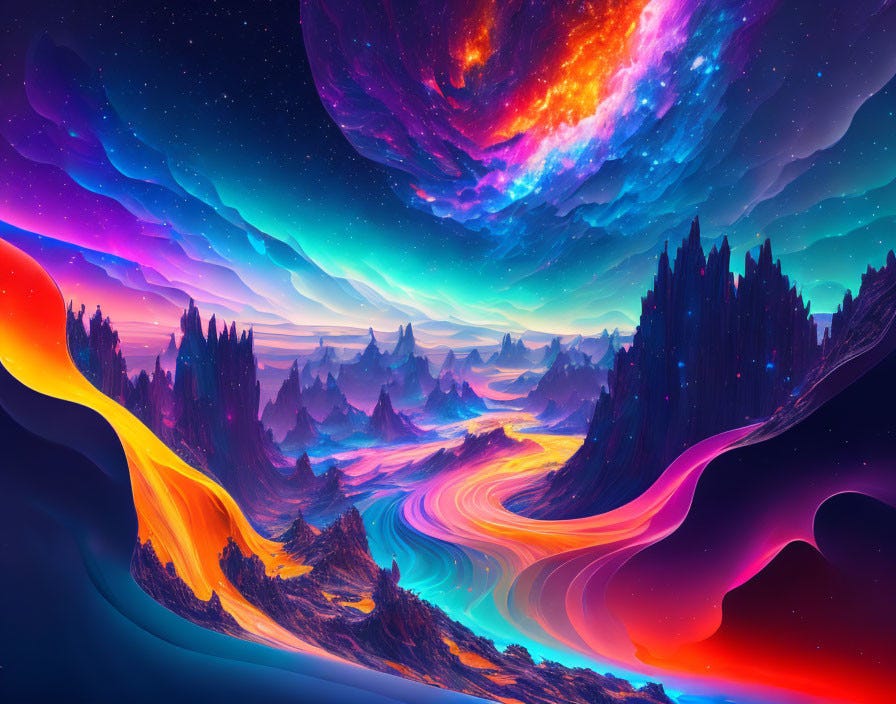
Image created by author using DeepDreamGenerator
메타데이터
- post_id
- bdaef040d453
- slug
- animals-and-altered-states-of-consciousness-bdaef040d453
- url
- https://medium.com/@stanislavcarlterence/animals-and-altered-states-of-consciousness-bdaef040d453
- canonical_url
- https://medium.com/@stanislavcarlterence/animals-and-altered-states-of-consciousness-bdaef040d453
- author_url
- https://medium.com/@stanislavcarlterence
- status
- ok
- fetched_at
- 2026-07-16 23:19:56