Stop Writing Client Emails From Scratch: The “Client Reply Architect” Protocol
Why Client Emails Consume So Much Mental Energy
Stop Writing Client Emails From Scratch: The “Client Reply Architect” Protocol
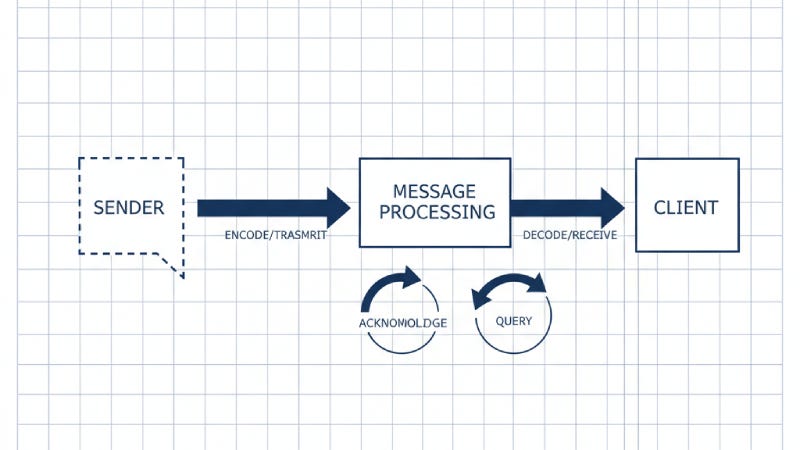
Clear communication is not talent. It is protocol design.
Why Client Emails Consume So Much Mental Energy
Most professionals underestimate how cognitively demanding client communication really is.
An incoming email from a client rarely contains a single request. Instead, it arrives as a compressed bundle of questions, concerns, expectations, and sometimes frustration. The recipient must decode the message, identify what actually requires a response, decide how transparent to be, and then construct a reply that moves the conversation forward without creating new confusion.
This process looks simple on the surface. In reality, it forces the brain to perform multiple roles simultaneously: analyst, negotiator, and writer. When the structure of the response is unclear, professionals tend to over-explain, under-explain, or delay replying altogether.
The problem is rarely language skill. The problem is the absence of a communication architecture.
Why Most Client Emails Fail
In my testing, the majority of workplace email replies fall into two inefficient patterns.
The first is the information dump. The sender tries to answer every possible question in a long paragraph, hoping the client will extract what they need. The result is cognitive overload. Important points become buried inside unnecessary explanations.
The second pattern is the vague reassurance. Professionals respond quickly but fail to provide actionable clarity. The client receives polite language but no concrete next step. The conversation continues for several additional email cycles that could have been avoided.
Both failures come from the same root cause: the reply was written as a paragraph, not designed as a protocol.
The Engineering Approach to Client Communication
Across multiple iterations of prompt experiments, one structural pattern consistently produces better results.
Every effective client reply performs three functions:
First, it acknowledges the context so the client knows their message was understood.
Second, it clarifies the information or solution being provided.
Third, it defines the next action required to move the process forward.
When these three components are explicitly structured, email communication becomes dramatically more efficient. The client no longer needs to guess what the message means or what they should do next.
This framework turns communication into a controlled data exchange rather than a vague conversation.
The Client Reply Architect Prompt
Instead of drafting emails from scratch, use the following prompt to convert client messages into structured responses.
You are a professional client communication assistant helping draft a clear and effective reply.

Your goal is not only to respond politely but to move the conversation forward.
Structure the reply using the following framework:

1. Acknowledgement
Briefly confirm the client's request or concern to show it has been understood.

2. Clarification / Response
Provide the relevant information, explanation, or update.

3. Next Action
Clearly state the next step, responsibility, or expected timeline.

Guidelines:
- Keep the tone professional and concise.
- Avoid unnecessary filler language.
- Make it easy for the client to understand what happens next.

Here is the client's message:

[PASTE CLIENT EMAIL HERE]
Example Use Case
Client Email
Hello,
We noticed the shipment scheduled for this week has not yet departed. Could you confirm the current status and advise whether there will be any delays?
Additionally, please confirm the estimated arrival date at the destination port.
Thank you.
AI Output
Subject: Shipment Status Update
Hello,
Thank you for your message. I understand you are requesting an update regarding the shipment scheduled for departure this week.
The cargo is currently pending final documentation verification from the origin terminal. As a result, the vessel departure has been moved to the next available sailing on March 18.
Based on the updated schedule, the estimated arrival at the destination port is now March 29.
We will continue monitoring the shipment and will provide another update once the vessel has officially departed. Please feel free to let us know if you need any additional documentation in the meantime.
Best regards,
Why This System Improves Client Communication
The real advantage of the Client Reply Architect prompt is not speed, although it certainly reduces drafting time.
The real advantage is predictability.
Clients feel more confident when communication follows a clear structure. They know their question has been understood, they receive the information they need, and they understand the next step without ambiguity.
In operational environments where dozens of client messages move through inboxes every day, this structure prevents communication breakdowns and reduces unnecessary follow-up emails.
Over time, the effect compounds. Clear replies shorten email threads, accelerate decisions, and strengthen professional credibility.
Communication stops being a daily improvisation and becomes a reliable system.
A Question for You
Every role deals with external communication differently.
For some people it is customer support tickets. For others it is project updates, vendor coordination, or client negotiations.
What type of client or external email do you spend the most time writing each week?
And more importantly:
Which part of replying to those emails is the most frustrating or repetitive?
Share it in the comments.
Those real-world examples will help shape the next set of high-performance prompts designed for specific professional workflows.
메타데이터
- post_id
- bdb6f108d01c
- slug
- stop-writing-client-emails-from-scratch-the-client-reply-architect-protocol-bdb6f108d01c
- url
- https://medium.com/@kc86kim/stop-writing-client-emails-from-scratch-the-client-reply-architect-protocol-bdb6f108d01c
- canonical_url
- https://medium.com/@kc86kim/stop-writing-client-emails-from-scratch-the-client-reply-architect-protocol-bdb6f108d01c
- author_url
- https://medium.com/@kc86kim
- status
- ok
- fetched_at
- 2026-06-14 11:28:49