Parisian Panache: A Century of Women’s Fashion in Modern Paris
In the realm of fashion, one city stands paramount: Paris, the venerable City of Light. For centuries, Paris has been the epicentre of…
Parisian Panache: A Century of Women’s Fashion in Modern Paris
In the realm of fashion, one city stands paramount: Paris, the venerable City of Light. For centuries, Paris has been the epicentre of style and sophistication, its influence on global fashion trends unparalleled. From the opulent courts of King Louis XIV to the present day, Paris has consistently set the standard for elegance and refinement, earning its reputation as the Fashion Capital of the World.
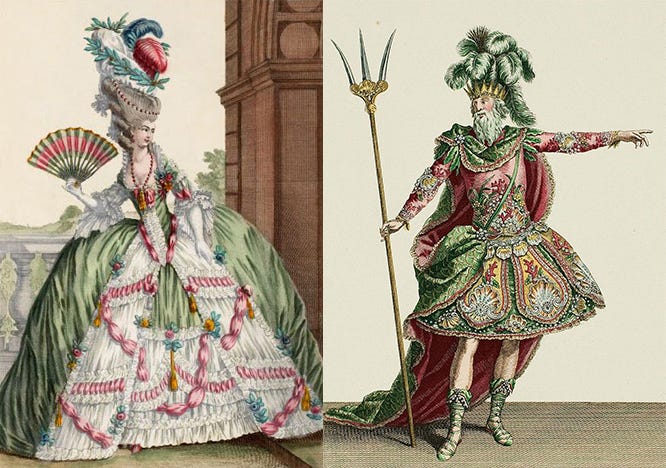
19th-century Paris underwent a transformative period of urbanization and industrialization, marked by the rise of the affluent bourgeoisie from aristocratic ranks. This modernizing wave permeated daily life, as the bourgeoisie sought to assert their status through fashion. In response, Haute Couture emerged in Paris, characterized by exclusive fashion houses creating custom-fitted attire. Women’s clothing became a pivotal focus of the fashion industry, as Paris solidified its position as the epicentre of style and sophistication. The bespoke creations of Haute Couture designers not only reflected the era’s newfound emphasis on material wealth but also elevated fashion to an art form, showcasing exquisite craftsmanship and attention to detail.
History of becoming Fashion Capital
Paris has been viewed as the style and design capital of the world since the seventeenth century, and it has been compelling in the style world from that point onward. For Paris, to be bestowed with the title, “Fashion Capital of the World”, significant role has been played by King Louis XIV, under his reign France ruled the fashion world as he understood the power of clothing as a symbol of status and power. By mandating the creation of new fashion lines and textiles each season, Louis XIV boosted the textile industry’s economy and solidified Paris’s position as a global fashion hub (Bishnoi, 2024).
Nevertheless Parisian fashion’s formalisation eventuate in the 19th century with the establishment of the Chambre de commerce de la couture, later evolved into the Fédération de la Haute Couture et de la Mode, a governing body that laid the foundation for haute couture, and played a pivotal role in promoting French fashion internationally and preserving its legacy of excellence ( Bishnoi, 2024).
Urban Paris and uprising Modern Fashion
‘Haussmannization’ took place in Paris during 19th century; this model of ‘urban modernism’ gave birth to an unique modernity, the city witnessed ascend in city centres, department stores, railway network and also behold the emergence of ‘cultural modernism’, which sublimated the city to the dimension of art.
The 19th century saw the textile industry undergo a significant transformation with the introduction of industrialization. New machines and manufacturing technologies enabled mass production of fabrics, making fashionable clothing accessible to a broader audience for the first time. The leadership in women’s fashion accelerated in, it was not simply that artistic expressions of fine sewing, cutting, and the myriad different strategies vital for the creation of fine pieces of clothing prospered in Paris. The design of the business likewise developed, as dressmaking moved from being a limited scale specialty to a major business. The advancement of the haute couture transformed women’s fashion from an artisanal craft into enormous business and high art.
Charles Frederick Worth is widely regarded as the father of Haute Couture and the first true couturier. He revolutionized the fashion industry by establishing the House of Worth in Paris, which became the pinnacle of high-end fashion. The garments were custom made with high quality materials and therefore had very high prices and could only be afforded by a small minority of society.(Anastasiya, 2023) The trend also evolved and made its way through the department stores in the form of confection, ready-made dresses and attractive display with fixed prices. In these stores, shopping became a form of recreation that made affordable versions of fashionable dress available to a broad segment of the city’s population ( Bishnoi, 2024).
Confection Couture
In late 19th century Paris, the City of Light’s grand boulevards became a resplendent stage for fashionable display. The convergence of confection and couture revolutionized the fashion landscape, catapulting Paris to the forefront of style (Romacora, 2009). Confection’s mass production of ready-to-wear clothing democratized fashion, making it accessible to a broader audience. Meanwhile, couture’s bespoke creations elevated fashion to an art form, showcasing exquisite craftsmanship and attention to detail. The garment industry, along with ancillary activities such as distribution, merchandising, journalism, and illustration, was one of Paris’s most important industries, employing tens of thousands of workers and making a major contribution to the French national economy.
The rapid dissemination of Parisian fashion globally was facilitated by new methods in the early 20th century. In contrast to the 19th century, where clients would privately view pattern garments and be fitted for custom clothing in couturiers’ showrooms, the modern fashion show emerged as the primary platform for designers to unveil their latest collections.
By the early 20th century, the fashion show had become the standard medium for showcasing the season’s newest styles, replacing the traditional private showings. This shift allowed designers to present their creations to a broader audience, accelerating the spread of Parisian fashion trends worldwide. The fashion show’s format, featuring a parade of models showcasing the latest designs, has since become an iconic and enduring aspect of the fashion industry.
Fashion in Print
Fashion plates were integral part of women’s magazine during late 18th and early 19th century Paris, those are basically engravings, etchings, or lithographs of fashion styles, printed separately and then bound into fashion magazines (Lyon, 2021),Although the tradition of fashion plates can be traced back in mid 17th century, but it gained footing during early 19th with some renowned magazines such as the Journal des Dames et des Modes (from 1797), Petit Courrier des Dames (from around 1821), and Le Follet (from 1829).
Fashion photography gradually took place of fashion illustrations by the end of 1930s, as the preferred means of representing fashion in editorial and advertisement copy, as it gave rapid growth globally while promoting new designs.() And the legacy is still being carried by the magazines like Vogue (from 1892), L’Officiel (from 1921) Marie Claire(from 1937) etc.
Modern Fashion and New Women
The first wave feminism and fashion movement in Paris emerged in the late 19th and early 20th centuries, revolutionizing the way women dressed and lived. Coco Chanel, Jean Patou, and Madeleine Vionnet led the charge, introducing more practical, comfortable clothing, looser silhouettes, and increased freedom from corsets and constraints. This movement coincided with the rise of feminism, as women fought for suffrage, equal rights, and independence. Paris, a hub of fashion and culture, played a significant role in shaping this movement, with designers and women like Coco Chanel, who introduced the little black dress and liberated women from corsets, Louise Chéruit, who popularized the “garçonne” look, and Jeanne Lanvin, who founded the first fashion house and introduced the “Robe de Style”.19th century, introduced Rational Dress Movement’, which consisted of creating more sensible and comfortable versions of popular fashion garments, for example, the liberty bodice, which aimed to ‘liberate’ women from the heavy boning and tight lacing of the corset These pioneers transformed fashion, reflecting the changing roles and aspirations of women during this era(Soroko,2021).
Conclusion:
Paris’s reign as the Fashion Capital of the World is a testament to its rich history, cultural significance, and unwavering dedication to excellence. From the lavish courts of King Louis XIV to the modern-day runways, Paris has consistently pushed the boundaries of fashion, elevating it from a mere commodity to a revered art form. The city’s evolution from an aristocratic hub to a bourgeois metropolis paved the way for Haute Couture, which not only reflected the era’s values but also redefined the fashion landscape, from the restrictive corsets and ornate dresses of the 19th century to the liberated, modernist styles of the 20th century. As we look to the future, it is clear that Paris’s influence on global fashion trends will continue to endure, inspiring generations of designers, artists, and fashion enthusiasts alike. The City of Light remains an eternal beacon of style and sophistication, illuminating the path for fashion’s future innovators and connoisseurs.
메타데이터
- post_id
- bdc596ec177e
- slug
- parisian-panache-a-century-of-womens-fashion-in-modern-paris-bdc596ec177e
- url
- https://medium.com/@rayesha2002/parisian-panache-a-century-of-womens-fashion-in-modern-paris-bdc596ec177e
- canonical_url
- https://medium.com/@rayesha2002/parisian-panache-a-century-of-womens-fashion-in-modern-paris-bdc596ec177e
- author_url
- https://medium.com/@rayesha2002
- status
- ok
- fetched_at
- 2026-06-27 18:20:27