When Trust in God Becomes Obedience to Men
VOLUME 2, ISSUE 9 | JULY 2026

When Trust in God Becomes Obedience to Men
VOLUME 2, ISSUE 9 | JULY 2026
The difference between blind faith and trust becomes especially important when religion asks people to listen to those taking the lead. Nearly every religious organization teaches some form of respect for spiritual authority, and there is a legitimate reason for that. A congregation cannot function peacefully if every person refuses direction, dismisses counsel, or treats personal preference as the highest authority. The Bible plainly recognizes responsible spiritual oversight and encourages Christians to cooperate with those who care for the congregation. The problem begins when cooperation with spiritual leaders is quietly redefined as unquestioning obedience to them.
This is where the issue becomes deeply personal for many sincere believers. They may be told, “You need to listen to the elders,” which can be sound counsel. But sometimes the statement grows into something much broader: “You cannot question the elders,” “You must accept their decision,” or “Disagreeing with them means that you are resisting Jehovah.” Those statements are not identical. Listening is not the same as surrendering one’s conscience, and respecting an arrangement is not the same as treating the men within that arrangement as incapable of error. When those distinctions are erased, trust in Jehovah can gradually be redirected into blind faith in human authority.
Hebrews 13:17 is often central to this discussion because it tells Christians: “Be obedient to those who are taking the lead among you and be submissive.” The verse deserves to be taken seriously, not explained away simply because human authority can make us uncomfortable. Those taking the lead are described as “keeping watch” over others and as men who “will render an account.” That final expression is important because it establishes responsibility in both directions. Christians are expected to cooperate, but the men taking the lead are accountable for how they use the responsibility entrusted to them.
The instruction to obey spiritual leaders, therefore, is not a declaration that those leaders are always correct. Nor does it transform their judgment into the voice of Jehovah. The same Bible that tells Christians to be submissive tells elders not to be “lording it over those who are God’s inheritance,” but to become examples to the flock. Their authority is shepherding authority, not ownership. The congregation belongs to God, and elders serve under Jesus Christ, “the chief shepherd”; they do not replace either Jehovah or Christ in the conscience of another Christian.
That distinction changes the nature of spiritual leadership. A shepherd leads primarily through truth, example, protection, patience, and persuasion. He does not prove that he is a shepherd merely by holding an appointment or expecting compliance. A person may possess organizational authority while using it in a manner inconsistent with the spirit of Christian oversight. The Bible does not tell elders that their appointment makes every conclusion correct; it tells them how they must conduct themselves while carrying that responsibility. An instruction to the congregation to cooperate does not cancel the instructions given to the shepherds.
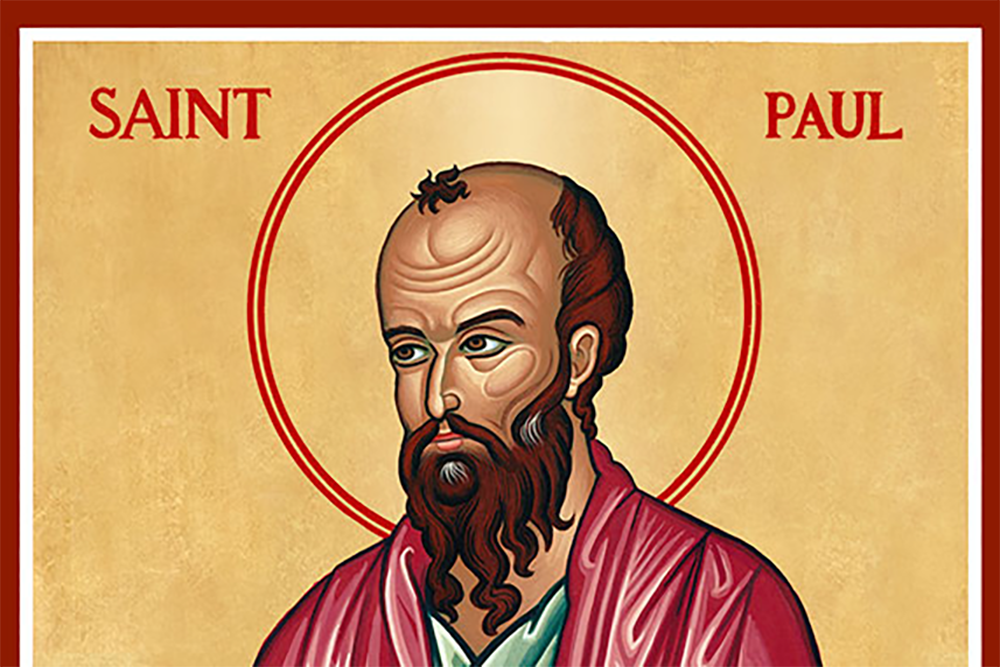
The apostle Paul understood this limitation clearly. Although he had apostolic authority, he told the Corinthian congregation: “Not that we are the masters over your faith, but we are fellow workers for your joy.” Paul did not view spiritual authority as ownership of another person’s faith. He recognized that Christians stood by their own faith in Jehovah, not by dependency upon his personality, position, or approval. The study note on this verse explains that the expression rendered “masters over” can carry the sense of domineering or being overbearing.
That principle should govern all religious leadership. Elders may teach, counsel, warn, investigate, correct, and make decisions within their assigned responsibilities. Yet they are still fellow workers, not masters of another Christian’s relationship with Jehovah. A shepherd may help educate a conscience through Scripture, but he cannot become the conscience. He may explain why he believes a course is wise, but his confidence does not convert a personal judgment into a divine command. The closer a matter comes to a person’s conscience, integrity, family, reputation, or relationship with Jehovah, the more important it becomes to distinguish what the Bible actually requires from what imperfect men have concluded.
Some may fear that allowing questions will weaken respect for spiritual authority. The Bible indicates the opposite. Genuine trust can withstand careful examination, whereas blind authority often treats examination as a threat. When Paul preached to the Beroeans, they did not accept his words merely because an apostle had spoken. They were praised as “noble-minded” because they were “carefully examining the Scriptures daily to see whether these things were so.” Their investigation was not labeled disloyalty; it was treated as evidence of spiritual seriousness.
Consider what that means. If first-century Christians were commended for checking the teaching of an inspired apostle against the Scriptures, it cannot be inherently wrong for a Christian today to ask how a conclusion reached by imperfect men is supported by those same Scriptures. The attitude behind the question certainly matters. A person can question arrogantly, combatively, or with no intention of listening. But a question can also arise from conscience, confusion, pain, a desire for accuracy, or a sincere effort to understand Jehovah’s thinking. It is unreasonable to classify all questions as rebellion merely because they make a person in authority uncomfortable.
The Bible repeatedly places responsibility on the individual Christian to examine what he is being told. First Thessalonians 5:21 says: “Make sure of all things; hold fast to what is fine.” The accompanying study note explains that Christians must make sure that the beliefs they accept harmonize with God’s will. First John 4:1 similarly warns Christians not to believe every claimed spiritual message but to test whether it originates with God. These commands would be unnecessary if the identity or position of the speaker automatically guaranteed the correctness of the message.
This does not create a congregation in which everyone appoints himself judge over every elder. It creates something healthier: a congregation in which both shepherds and sheep remain under the authority of Scripture. An elder should be able to say, in effect, “Do not follow this merely because I said it. Let us examine the principles involved.” Likewise, a Christian should be able to say, “I respect your responsibility, and I am willing to listen carefully, but I need to understand how this conclusion reflects Jehovah’s Word.” Neither statement is rebellious. Both acknowledge that the highest authority in the room is not the elder, the individual, or the organization — it is Jehovah.
The account involving Peter and Paul makes this balance impossible to ignore. Peter was not an insignificant brother. He was an apostle, had traveled with Jesus, had received major responsibilities, and had been used prominently in the early congregation. Yet when fear of men caused Peter to withdraw from non-Jewish Christians, Paul “resisted him face-to-face, because he was clearly in the wrong.” Paul did not reason that Peter’s position made correction improper. He recognized that Peter’s conduct was no longer “in step with the truth of the good news.”
That incident does not justify disrespectful confrontation whenever we disagree with an elder. It does, however, destroy the idea that faithfulness requires silence when a prominent spiritual man is clearly wrong. Peter’s appointment did not make his conduct correct, and Paul’s objection did not make Paul disloyal. The determining issue was truth. Remarkably, the correction of Peter was preserved in Scripture, not to humiliate him, but to teach future Christians that spiritual responsibility does not eliminate human fallibility.
There is also a necessary difference between a clear Scriptural command and a judgment call. When spiritual leaders direct Christians to follow something Jehovah plainly requires, cooperation demonstrates respect for God’s authority. But many decisions involve incomplete evidence, interpretation of motives, application of general principles, local procedure, or the judgment of particular men. Such conclusions may deserve serious consideration, but they should not automatically be spoken of as though Jehovah personally rendered them. Claiming divine authority for a human judgment can make honest disagreement appear to be rebellion against God when the actual disagreement concerns the reasoning of men.
This is why the expression “Jehovah will correct it in his own time” must be used carefully. Sometimes humility truly does require patience. Not every imperfection must become a battle, and not every disappointing decision justifies disruption. Christians often choose to cooperate with arrangements they would not personally have made because peace, modesty, and unity matter. However, patience must not be used as a spiritual muzzle, especially when truth, justice, safety, serious wrongdoing, or a person’s standing before Jehovah is involved. Waiting on Jehovah does not mean pretending that wrong is right, and preserving unity does not require calling silence obedience.
Acts 5:29 establishes the final boundary: “We must obey God as ruler rather than men.” In its original setting, the apostles were dealing with religious authorities who ordered them to stop doing what God required. The principle is broader than hostility from outside the congregation. No human authority possesses the right to require what Jehovah prohibits, prohibit what Jehovah requires, or demand that a Christian violate a Bible-trained conscience. Spiritual obedience is always relative to the higher sovereignty of Jehovah.
This boundary should not be invoked casually. A person cannot simply label every personal preference “conscience” and then disregard reasonable direction. Sometimes what feels like a matter of conscience is actually pride, wounded emotion, fear of correction, or resistance to an inconvenient responsibility. Honest self-examination is therefore essential. We must be willing to ask whether we are defending a Scriptural principle or merely defending ourselves. At the same time, leaders must be willing to ask whether they are defending Jehovah’s standards or defending their own decision and authority.
That is the difference between spiritual maturity and blind obedience. Spiritual maturity does not begin with the assumption that elders are wrong, but neither does it begin with the assumption that elders cannot be wrong. It listens respectfully, examines carefully, prays sincerely, checks the Scriptures, considers the evidence, and remains willing to adjust. It also recognizes that an elder’s sincerity does not guarantee accuracy and that a Christian’s emotional pain does not automatically prove injustice. Truth requires more discipline than taking sides.
A healthy relationship with spiritual leaders is therefore built on appropriate trust, not blind faith. We trust faithful elders because of their demonstrated love, Scriptural reasoning, humility, sound judgment, and willingness to be accountable. That trust may allow us to cooperate even when we do not fully understand every decision. But the foundation of our trust is never merely the title “elder.” Trust grows from conduct, character, truth, and the extent to which the leadership reflects the example of Christ.
Blind faith says, “They are elders, so they must be right.” Suspicion says, “They are elders, so they are probably protecting themselves.” Neither conclusion is sound. Trust says, “I will listen because I respect the responsibility they carry. I will examine their reasoning because Jehovah expects me to use discernment. I will cooperate where I conscientiously can, and I will never transfer to imperfect men the absolute trust that belongs only to Jehovah.”
The goal is not to weaken the role of elders. Properly understood, this view protects it. Elders are most respected when they do not demand respect as proof of loyalty but earn it by imitating the Chief Shepherd. They strengthen faith when they direct people toward Jehovah rather than making themselves the measure of faithfulness. They create spiritual safety when sincere questions are answered with Scripture, patience, and humility rather than suspicion or intimidation.
The central issue is not whether we will listen to those taking the lead. A mature Christian should listen. The real issue is what happens after we listen. Do we surrender our ability to reason, examine, and maintain a clean conscience, or do we use those God-given capacities to determine whether the guidance truly reflects Jehovah’s wisdom? Genuine Christian submission does not ask us to close our eyes. It asks us to open the Scriptures, open our minds, and remain humble enough to accept truth — whether that truth corrects the person being led or the person taking the lead.
Trusting Jehovah may sometimes lead us to accept counsel that is difficult. At other times, that same trust may compel us to ask a necessary question, present relevant facts, appeal a mistaken conclusion, or respectfully refuse to violate our conscience. The outward actions may differ, but the underlying loyalty remains the same. We are not trying to escape spiritual authority. We are making certain that our ultimate obedience still belongs to Jehovah.
What Healthy Spiritual Leadership Looks Like When It Is Questioned
Spiritual leadership is easiest when people agree, cooperate, and express appreciation. The deeper test comes when someone raises an uncomfortable question, challenges a conclusion, or presents facts that may require leaders to reconsider what they have already decided. At that moment, authority can become defensive, or it can become pastoral. The difference reveals whether leadership is primarily concerned with protecting its position or protecting the people entrusted to its care.
A healthy spiritual leader does not immediately interpret a question as a threat. He understands that sincere people may need clarification before they can cooperate with a clear conscience. Some questions arise from confusion, some from incomplete communication, and others from genuine evidence that something has gone wrong. Rather than concentrating first on the questioner’s tone, persistence, or emotional condition, a wise shepherd begins by asking whether the concern contains truth that needs to be heard.
James 1:19 gives a principle that applies as much to elders as it does to everyone else: “Everyone must be quick to listen, slow to speak, slow to anger.” Listening is more than remaining silent while another person talks. It requires a willingness to understand what the person is actually saying, including the facts, the underlying concern, and the spiritual effect the situation is having on him. A leader who has already decided that the questioner is difficult may hear words without truly considering them.
This is one reason spiritual authority requires humility. The appointment to serve does not remove the possibility of misunderstanding, incomplete information, personal bias, or mistaken judgment. In fact, greater responsibility makes self-examination more necessary, not less. Jesus stated the principle plainly: “The one who was given charge of much will have more than usual demanded of him.” — Luke 12:48.
Healthy leadership therefore recognizes that accountability is not disrespect. An elder may properly expect congregation members to conduct themselves respectfully, but he must also accept that his own actions can be evaluated against Scripture. His position does not place him above examination; it places him under a more serious obligation to reflect the qualities required of a shepherd. The standards found in First Timothy chapter 3, Titus chapter 1, and First Peter chapter 5 are not merely qualifications to obtain an appointment. They remain continuing standards by which the appointment must be carried out.
First Peter 5:2, 3 tells elders to “shepherd the flock of God” willingly and eagerly, “not lording it over those who are God’s inheritance, but becoming examples to the flock.” The language is significant. Elders do not own the congregation, control another person’s faith, or possess authority independent of Jehovah and Christ. They are caretakers of people who belong to God. Their influence should therefore come primarily from Scriptural example, sound reasoning, demonstrated love, and trustworthy conduct.
Jesus contrasted this kind of leadership with the power structures common in the world. He observed that secular rulers “lord it over” those under them and make their authority strongly felt. He then told his disciples: “This must not be the way among you.” Christian authority would be expressed through service, not domination, because even the Son of man came “not to be ministered to, but to minister.” — Mark 10:42–45.
That difference becomes particularly visible when a leader is questioned. Secular power may respond by emphasizing rank, demanding compliance, discrediting the critic, or warning others not to challenge authority. Christian leadership should respond by explaining, listening, investigating, and serving the spiritual welfare of the person involved. The elder’s objective should not be to win the exchange but to help the truth become clear.
A healthy shepherd also distinguishes between the manner of a complaint and its substance. A distressed person may not present his concern perfectly. He may speak with visible emotion, repeat himself, become frustrated, or use words that need to be corrected. Those weaknesses should not be ignored, but neither should they be used as an excuse to avoid examining the central issue.
This distinction requires patience. Second Timothy 2:24, 25 says that “a slave of the Lord does not need to fight, but needs to be gentle toward all, qualified to teach, showing restraint when wronged, instructing with mildness those not favorably disposed.” That standard applies even when the leader believes the other person is wrong. Mildness is not required only when the conversation is easy or when the questioner is calm. It becomes most meaningful when the leader feels challenged, misunderstood, or personally criticized.
A shepherd who focuses entirely on tone may miss legitimate evidence. Conversely, a questioner who focuses entirely on evidence may overlook the damage caused by an aggressive manner. Healthy leadership addresses both without using one to erase the other. It can say, “The way this was presented was not appropriate,” while also saying, “Nevertheless, the facts you raised deserve careful examination.”
The apostles demonstrated this balance when the Greek-speaking disciples complained that their widows were being overlooked in the daily distribution. The apostles did not demand silence or insist that questioning their arrangement showed lack of faith. They recognized a real administrative failure and implemented a solution. Their willingness to respond did not diminish their authority; it strengthened confidence that the congregation’s needs mattered more than protecting appearances. — Acts 6:1–7.
This account also shows that acknowledging a problem is not the same as admitting malicious intent. The widows may have been overlooked because of poor organization, rapid growth, cultural divisions, or simple human limitation. The apostles did not need to identify themselves as corrupt before making a correction. They simply recognized that an arrangement under their oversight was not functioning properly and took responsibility for improving it.
That is a critical lesson for modern spiritual leadership. Sometimes leaders resist correction because they believe acknowledging error will imply bad motives or undermine confidence in the congregation. Yet an honest admission of error often produces the opposite result. People generally understand that imperfect men can make mistakes; what damages trust is not necessarily the original mistake but the refusal to recognize, correct, or take responsibility for it.
An elder can preserve dignity while saying, “We did not have all the facts,” “We misunderstood what occurred,” “We should have listened more carefully,” or “Our decision needs to be reconsidered.” Such statements do not destroy spiritual authority. They demonstrate humility, honesty, and respect for truth. A leader who can never acknowledge error unintentionally communicates that protecting his credibility matters more than correcting harm.
The Bible presents several examples of responsible men accepting correction. Moses listened when Jethro observed that his method of personally handling every judicial matter was unsustainable. Moses did not dismiss the counsel because it came from someone outside the Israelite leadership arrangement. He listened, recognized the wisdom in the recommendation, and adjusted the way responsibilities were organized. — Exodus 18:13–24.
King David provides an even more serious example. When the prophet Nathan exposed David’s wrongdoing involving Bath-sheba and Uriah, David did not attack Nathan, question his loyalty, or hide behind his position as Jehovah’s anointed king. He admitted: “I have sinned against Jehovah.” David’s sin carried grave consequences, but his willingness to accept correction distinguished him from rulers who treated accountability as an assault on their authority. — 2 Samuel 12:1–13.
These examples show that receiving correction is not weakness. It is evidence that a person recognizes a higher authority than himself. A spiritual leader who accepts only counsel that confirms his existing judgment is not truly teachable. Proverbs 15:31, 32 says: “The one who listens to life-giving reproof is at home among the wise. Anyone refusing discipline despises his life, but whoever listens to reproof acquires understanding.”
Healthy leadership must also investigate facts impartially. This becomes difficult when the concern involves a fellow elder, a close friend, a respected family, or a decision in which the listener previously participated. Loyalty among elders can be a source of strength, but it can become dangerous if loyalty to one another begins to override loyalty to truth. First Timothy 5:21 commands responsible men to act “without any prejudice or partiality.”
Partiality is not always deliberate. It may appear as instinctive confidence in someone who has served faithfully for many years or as suspicion toward someone already considered emotionally difficult. Leaders may assume that a well-regarded elder is more credible than a distressed congregation member before the evidence is examined. Yet reputation is not proof, and emotional presentation does not determine factual accuracy.
This is why independent verification matters. Healthy leadership asks who witnessed the events, what was actually said, whether documents or messages exist, whether timelines are consistent, and whether each person had a fair opportunity to respond. It avoids reshaping evidence to preserve a previous conclusion. When facts contradict an earlier assumption, truth requires adjustment.
The process must also avoid institutional defensiveness. Religious leaders can be tempted to protect the reputation of the congregation, the body of elders, or the organization by minimizing internal problems. They may sincerely believe that public acknowledgment of mistakes could stumble others or bring reproach on Jehovah’s name. Yet concealing or refusing to correct wrongdoing does not protect Jehovah’s name; it associates his name with conduct he does not approve.
The Bible never presents unity as a substitute for truth. Genuine unity is produced by shared submission to Jehovah’s standards, not by requiring everyone to support a conclusion regardless of evidence. Ephesians 4:3 encourages Christians to maintain “the oneness of the spirit in the uniting bond of peace,” but that same chapter refers to “the unity of the faith,” accurate knowledge, truthfulness, and spiritual maturity. Unity cannot be separated from truth without becoming conformity.
A healthy elder body therefore does not pressure its members to present a united front before they have honestly considered the matter. Agreement has value only when it results from responsible examination. Silence within an elder body may sometimes reflect harmony, but it may also reflect fear of disagreement, loyalty to stronger personalities, or reluctance to revisit a difficult decision. Spiritual maturity permits respectful disagreement during deliberation so that the final conclusion is better informed.
Healthy leadership also explains its reasoning as fully as confidentiality allows. There will be situations in which private information cannot properly be disclosed, and those limitations must be respected. However, confidentiality should not become a blanket explanation that prevents a person from understanding anything about a decision affecting him. Even when every detail cannot be revealed, leaders can often explain the relevant Scriptural principles, the process followed, and what the individual is expected to do.
Vague statements such as “You need to trust the brothers” may avoid the real question. Trust cannot be demanded as a replacement for reasonable explanation. If a decision rests on Scripture, leaders should be able to identify the governing principles. If it rests on judgment, they should be honest that it is a judgment rather than presenting it as a direct command from Jehovah.
This honesty is especially important because spiritual language carries tremendous moral force. When an elder says that cooperating with his conclusion is equivalent to obeying Jehovah, the congregation member may feel that disagreement threatens his relationship with God. Such language should never be used casually. Imperfect human judgment must not be elevated into divine command merely to secure compliance.
A healthy shepherd directs conscience toward Jehovah rather than making himself the interpreter of every personal decision. He helps the individual understand Scriptural principles, consider consequences, and examine motives. He may give strong counsel when the evidence warrants it, but he avoids creating rules where the Bible leaves room for personal judgment. Romans 14 shows that Christians can reach different conscientious decisions in some matters while remaining accountable to God.
The willingness to apologize is another mark of healthy spiritual leadership. An apology does not require a leader to agree with every accusation made against him. It may simply acknowledge that communication was poor, that the person was not adequately heard, that an assumption was made, or that the process caused unnecessary harm. A sincere apology recognizes the effect of conduct without manipulating language to avoid all responsibility.
Statements such as “I am sorry you felt that way” usually place the entire problem on the wounded person’s reaction. A more responsible apology says, “I am sorry that I spoke without first hearing all the facts,” or “We should have explained the matter more clearly.” Specific acknowledgment helps restore trust because it demonstrates that the leader understands what needs to change.
Correction may also require repairing a person’s reputation. If inaccurate information was communicated to others, privately changing the decision may not be enough. Those who heard the original claim may need to receive an appropriate correction. Proverbs 12:18 says that thoughtless speech can be “like the stabs of a sword,” and wounds to reputation are not healed merely because the speaker later changes his private opinion.
This does not mean that every disagreement must be publicly announced or that confidential matters should be broadly discussed. Restoration should be proportional to the spread and effect of the original information. The objective is not humiliation of the person who made the mistake. It is the responsible correction of harm so that truth, peace, and trust can be restored as fully as possible.
Healthy leadership also understands that trust may recover slowly. An elder may apologize sincerely and correct a decision, yet the wounded person may still struggle. Trust that was damaged over months cannot always be restored in one conversation. A shepherd should not interpret continued caution as proof that the apology was rejected or that the individual is unforgiving.
Patience after correction is part of shepherding. The wounded person may need time, consistent treatment, and evidence that the underlying pattern has changed. At the same time, he must work against allowing pain to harden into permanent suspicion. Restoration requires effort on both sides, but leaders carry a particular responsibility not to demand immediate emotional recovery from someone affected by their decisions.
Ezekiel chapter 34 reveals how seriously Jehovah views failures in spiritual shepherding. He condemned shepherds who fed themselves rather than the flock, failed to strengthen the weak, did not heal the sick or search for the lost, and treated the sheep “with harshness and tyranny.” Jehovah’s response was not indifference. He declared that he would require an accounting from those shepherds and personally care for his sheep. — Ezekiel 34:1–16.
That passage should not be used to accuse every imperfect elder of tyranny. It does, however, establish that Jehovah evaluates not only whether leaders possess authority but how they use it. Harshness, neglect, self-protection, and failure to search for the wounded are not minor leadership flaws in Jehovah’s eyes. Shepherding carries moral accountability because the sheep belong to him.
Jesus provided the perfect model when he described himself as “the fine shepherd” who surrenders his life in behalf of the sheep. A hired man abandons the sheep when danger appears because he does not genuinely care for them. The fine shepherd knows the sheep, protects them, and puts their welfare ahead of his own convenience or safety. — John 10:11–14.
Following that model requires more than efficient congregation administration. It requires personal concern for people whose faith has been shaken, including those who are difficult to understand. A shepherd does not care only for cooperative sheep who make his work pleasant. He pays particular attention to the frightened, wounded, isolated, and distrustful because those are often the ones most likely to drift away.
Healthy spiritual leadership therefore asks more than, “Did we follow the proper procedure?” Procedure matters, but it is not the entire measure of shepherding. Leaders must also ask whether the person was heard, whether the facts were established, whether Scripture was properly applied, whether unnecessary harm occurred, and whether anything can still be done to restore peace. A technically correct process can still be administered without empathy, patience, or sufficient investigation.
The strongest authority does not need to silence every challenge. It is secure enough to listen, humble enough to reconsider, and courageous enough to correct itself. It does not mistake accountability for disrespect or treat an honest question as an attempted overthrow. It recognizes that truth is not endangered by careful examination.
When spiritual leaders respond this way, trust grows naturally. Congregation members become more willing to accept difficult counsel because they know they will be heard fairly. They understand that elders may make mistakes, but they also see that mistakes will not automatically be defended. That kind of confidence is not blind faith in men; it is reasonable trust based on demonstrated humility, transparency, and Scriptural conduct.
When leaders respond defensively, however, the opposite occurs. People may continue to comply outwardly while becoming inwardly afraid, confused, or spiritually detached. Silence may be achieved, but trust is not. Outward order can conceal unresolved wounds, and enforced agreement can be mistaken for unity.
Healthy spiritual authority does not ask, “How can we stop this person from questioning us?” It asks, “How can we help this person understand the truth, and is there anything we need to understand as well?” That second question is essential because shepherding is not a one-directional exercise in correction. Sometimes the sheep needs counsel, and sometimes the shepherd needs information that only the sheep can provide.
The ultimate measure of spiritual leadership is not how successfully it preserves its own authority. It is how faithfully it reflects the authority of Christ. Jesus was firm when truth required firmness, but he was never threatened by honest questions. He corrected wrong attitudes, exposed hypocrisy, listened to distressed people, explained spiritual principles, and treated humble individuals with dignity.
An elder who imitates Christ will not be perfect, but his direction will be recognizable. He will care more about truth than being proven right, more about restoration than institutional appearance, and more about the spiritual welfare of the person than ending an uncomfortable conversation. He will understand that being questioned does not diminish his role. It gives him an opportunity to demonstrate what Christian leadership was always meant to be.
When Spiritual Leaders Refuse to Listen
The most difficult test of trust often comes after a Christian has tried to do everything correctly. He has approached the matter respectfully, examined his own motives, presented relevant facts, listened to counsel, and allowed time for reconsideration. Yet the leaders involved remain unwilling to address the central concern. They may repeat the original decision, focus on the person’s manner rather than the evidence, or simply end the conversation by appealing to authority. At that point, the issue is no longer merely whether a mistake occurred. The deeper question becomes how a Christian can preserve his conscience, dignity, and relationship with Jehovah when those taking the lead refuse to listen.
There is no easy formula for such situations because not every unresolved dispute is the same. Sometimes the leaders are correct and the individual has not yet accepted an unwelcome answer. In other cases, both sides may possess only part of the truth. There are also circumstances in which spiritual leaders genuinely misunderstand the facts, apply a principle inconsistently, protect one another, or refuse to acknowledge that harm has occurred. Spiritual maturity requires resisting the temptation to assume either that the leaders must be right or that the person raising the concern must be right.
The first responsibility of the Christian is therefore continued self-examination. Psalm 139:23, 24 records David’s prayer: “Search through me, O God, and know my heart. Examine me, and know my anxious thoughts. See whether there is in me any harmful way, and lead me in the way of eternity.” That is not a prayer for Jehovah merely to confirm our position. It is a request for him to expose pride, resentment, distorted thinking, or any other harmful influence within us.
This kind of examination can be painful because a person may discover that he has both a valid concern and an imperfect way of handling it. He may have been treated unfairly while also becoming consumed by the need to prove himself right. He may possess evidence that deserves consideration while expressing himself in a way that makes productive communication more difficult. Recognizing those weaknesses does not erase the underlying issue. It separates the pursuit of truth from the defense of personal pride.
A Christian should also ask whether he has clearly identified what remains unresolved. Long conflicts often accumulate many secondary injuries: insensitive comments, delayed responses, conflicting explanations, perceived slights, and repeated disappointments. Eventually, the original issue can become buried beneath the emotional history surrounding it. Writing down the controlling facts, the specific decision being questioned, the Scriptural principles involved, and the remedy being requested can bring needed clarity.
That discipline matters because an appeal that attempts to correct everything at once may become impossible to evaluate. The person may feel that the entire experience forms one connected pattern, and emotionally that may be true. Yet those reviewing the matter need to understand which claims are supported by evidence, which are interpretations, and which remain uncertain. Accuracy protects credibility.
Proverbs 18:13 warns: “When anyone replies to a matter before he hears the facts, it is foolish and humiliating.” A Christian seeking reconsideration should therefore present facts in a form that can be heard and examined. Chronology, direct statements, written communication, witnesses, and clear Scriptural reasoning generally carry more weight than broad claims about motives. Saying, “This decision appears inconsistent with these facts and this principle,” is more constructive than saying, “You do not care about truth.”
This does not mean that motives are never relevant. Patterns of defensiveness, favoritism, concealment, or intimidation may eventually reveal something about the way authority is being used. However, motives are difficult to prove, and assigning them prematurely can shift attention away from stronger evidence. A person may accurately identify what someone did without being able to establish why he did it.
Once the matter has been clarified, the Christian may choose to request another conversation or use whatever legitimate appeal process is available. An appeal is not inherently rebellious. The apostle Paul repeatedly used lawful and recognized means to challenge unjust treatment. After being beaten and imprisoned without a proper trial, he did not quietly accept a private release. He identified himself as a Roman citizen and required the magistrates to address what they had done. — Acts 16:35–39.
Paul’s action is significant because he did not confuse humility with passivity. He could endure personal hardship, but he also understood that unchallenged injustice could affect others and damage the preaching work. His insistence that the magistrates acknowledge their conduct was not retaliation. It was a legitimate use of the rights available to him.
Later, when Paul faced accusations and political manipulation, he appealed to Caesar. He stated: “I am standing before the judgment seat of Caesar, where I ought to be judged. I have done no wrong to the Jews, as you are also becoming well aware.” He then exercised his legal right by saying: “I appeal to Caesar!” — Acts 25:10, 11.
That appeal did not demonstrate a lack of trust in Jehovah. Jehovah had already assured Paul that he would bear witness in Rome. Paul’s trust in divine direction did not prevent him from using an established process to challenge unjust handling. Trust and responsible action worked together.
The same principle can apply within a religious setting. If a recognized review process exists, using it respectfully may be appropriate. The Christian should present the matter accurately, avoid exaggeration, and make clear what outcome he is requesting. He should also accept that an appeal does not guarantee a favorable decision.
An appeal process can itself be imperfect. Those reviewing the matter may rely heavily on the account of the original decision-makers. They may assume that appointed men handled the matter correctly or limit their review to whether procedure was followed. The disappointed Christian may then feel that he was given another hearing without receiving a genuine examination.
At that point, persistence must be evaluated carefully. Continuing to appeal may be responsible if significant facts have never been considered, if serious wrongdoing remains unaddressed, or if an ongoing danger exists. However, repeated appeals can also become spiritually and emotionally destructive when no new evidence is available and no further review is realistically possible. The fact that a person has the right to continue speaking does not always mean that doing so indefinitely is the wisest course.
Ecclesiastes 3:7 speaks of “a time to be silent and a time to speak.” Wisdom is required to know which time has arrived. Silence can be cowardly when truth or safety requires speech, but it can also be an act of strength when every responsible avenue has been exhausted. Speaking can be courageous, but it can also become compulsive when the pursuit of acknowledgment begins to dominate the person’s life.
This is where conscience must be distinguished from emotional closure. A Christian may need to continue speaking because remaining silent would make him feel complicit in wrongdoing or leave others exposed to harm. In another case, he may have already said what conscience required but still feel driven to obtain an apology, public vindication, or admission from those involved. Those desires are understandable, but another person’s acknowledgment cannot always be made the condition for our spiritual peace.
Romans 12:18 offers a realistic standard: “If possible, as far as it depends on you, be peaceable with all men.” The wording recognizes limits. Peace does not always depend entirely on one person, and reconciliation cannot be forced when others are unwilling to listen or acknowledge harm. The Christian’s responsibility is to do what depends on him.
That may include speaking truthfully, avoiding retaliation, correcting his own conduct, and remaining willing to communicate. It does not require him to declare a false peace or pretend that trust has been restored when it has not. Peacefulness is a moral posture, not the denial of reality.
Forgiveness also needs careful definition. Forgiveness does not mean that the original decision was correct, that the harm was insignificant, or that accountability is unnecessary. It does not automatically restore trust or require the same degree of access to one’s private life. Forgiveness means surrendering the right to nurture hatred, pursue personal vengeance, or wish spiritual destruction on the wrongdoer.
Romans 12:19 says: “Do not avenge yourselves, beloved, but yield place to the wrath; for it is written: ‘Vengeance is mine; I will repay,’ says Jehovah.” Leaving vengeance with Jehovah is not the same as abandoning truth. A person may continue to seek correction while refusing to become vindictive.
This distinction is essential because unresolved injustice can tempt a Christian to make the matter his central spiritual cause. Every conversation begins to return to it. Every action of the leaders is interpreted through it. Every spiritual activity becomes another reminder of what happened.
When that occurs, the leaders involved may begin to occupy a place in the Christian’s mind that should belong to Jehovah. Their decision becomes the measure of whether Jehovah sees him, values him, or considers him faithful. The person may intellectually know that Jehovah reads hearts, yet emotionally live as though human approval determines his standing with God.
The Bible repeatedly corrects this distortion. First Samuel chapter 16 shows that humans look at outward appearances, “but Jehovah sees into the heart.” Human judgments can influence assignments, privileges, reputation, and relationships. They cannot alter what Jehovah knows.
This does not make human decisions unimportant. They may have serious consequences, especially within a close religious community. A person can lose friendships, responsibilities, credibility, or a sense of belonging because of a mistaken judgment.
Yet even a painful human decision does not become Jehovah’s final verdict merely because it was made by religious men. Jehovah is not required to adopt an inaccurate assessment. He sees what was said, what was withheld, what each person understood, and what motives were operating beneath the surface.
The account of Hannah illustrates this principle in a quiet but powerful way. Hannah entered the sanctuary deeply distressed and prayed silently to Jehovah. Eli the high priest observed her moving lips and concluded that she was drunk. He told her: “How long will you stay drunk? Stop drinking your wine.” — 1 Samuel 1:12–14.
Eli was not an outsider with no spiritual responsibility. He was the high priest, serving in a position established under the Law. Yet his initial judgment about Hannah was completely wrong. He interpreted her grief as misconduct.
Hannah responded respectfully but truthfully: “No, my lord! I am a woman under great stress; I have not drunk wine or anything alcoholic, but I am pouring out my soul before Jehovah.” She did not insult Eli or reject the priestly arrangement. Neither did she accept his accusation simply because he held authority. — 1 Samuel 1:15, 16.
Eli then adjusted his conclusion and answered her kindly. The account shows what healthy correction can look like, but it also reveals something about Hannah. Her relationship with Jehovah did not depend on Eli accurately understanding her at first. She knew what she was doing, and more importantly, Jehovah knew.
That lesson becomes critical when a spiritual leader never corrects his misunderstanding. A Christian may respectfully explain himself and still remain misjudged. In that painful circumstance, he must learn to live before Jehovah rather than continually trying to exist inside another person’s opinion.
Paul expressed this kind of freedom when he wrote: “Now to me it is of very little importance that I should be examined by you or by a human tribunal. In fact, I do not even examine myself. For I am not conscious of anything against myself. But by this I am not proved righteous; the one who examines me is Jehovah.” — 1 Corinthians 4:3, 4.
Paul was not claiming that human evaluation never matters or that self-examination is unnecessary. He was recognizing that neither public opinion nor personal confidence constitutes the final judgment. Jehovah is the only perfect examiner.
This protects a Christian from two opposite errors. He does not assume he is innocent merely because his conscience feels clear, since a conscience can be misinformed. Neither does he assume he is guilty merely because respected men have judged him negatively. He continues examining himself under Scripture while leaving the final judgment with Jehovah.
The challenge becomes greater when leaders use spiritual language to reinforce their conclusion. A person may be told that he needs to accept the decision to demonstrate humility, wait on Jehovah, or prove loyalty to the congregation. Those principles can be valid, but they can also be misapplied.
Humility does not require agreeing with something one honestly believes is false. Waiting on Jehovah does not mean withholding relevant evidence. Loyalty to the congregation does not mean protecting error from examination.
At the same time, conscience must not be used as a shield against all counsel. A Christian cannot simply say, “My conscience permits this,” if Scripture clearly condemns it. A well-trained conscience responds to Jehovah’s standards, not merely to personal conviction.
Romans chapter 14 shows that Christians may reach different conclusions in matters where God’s law permits personal judgment. Paul asked: “Who are you to judge the servant of another? To his own master he stands or falls.” He also wrote: “Each of us will render an account for himself to God.” — Romans 14:4, 12.
Those words place responsibility directly on the individual. An elder may help someone reason, but he cannot render the final account in that person’s place. The Christian must therefore make decisions he can defend honestly before Jehovah.
There may also be situations in which the conduct being reported extends beyond an internal religious disagreement. If someone may be in immediate danger, if abuse is alleged, or if conduct may constitute a crime, the matter should not automatically be treated as exclusively internal. Romans 13:1–4 describes governmental authorities as having a legitimate role in restraining wrongdoing.
Seeking appropriate civil protection or reporting potentially criminal conduct is not necessarily an act of disloyalty toward a religious community. Religious authority does not eliminate civil responsibility, and internal confidentiality should not be used to shield serious wrongdoing. The exact legal obligations differ by location and circumstance, but spiritual respect never requires helping conceal danger or criminal conduct.
This is another area where blind faith becomes dangerous. A person may be pressured to believe that contacting outside authorities shows a lack of trust in Jehovah or brings reproach on the congregation. In reality, allowing serious wrongdoing to remain concealed may cause far greater harm.
Jehovah’s reputation is not protected by suppressing truth. It is honored when wrongdoing is addressed honestly, the vulnerable are protected, and justice is pursued without partiality.
Even when no crime or immediate danger is involved, boundaries may become necessary. A Christian can remain respectful while limiting conversations that repeatedly become accusatory, manipulative, or emotionally damaging. He may request that future discussions include another responsible person, occur in writing, or focus on clearly defined issues.
Boundaries are not automatically rebellious. They can help preserve peace and prevent repeated harm. However, they should not be used to avoid legitimate shepherding counsel or to punish those with whom one disagrees.
The objective is not isolation. It is creating enough safety and clarity for communication to remain responsible.
A Christian may also need to adjust his expectations. Elders are instructed to shepherd, but they cannot provide every form of emotional, legal, medical, or psychological support. Some wounds require assistance beyond what congregational shepherds are trained to provide.
Seeking appropriate professional support does not mean abandoning faith. It may help the person regulate emotional distress, separate documented facts from interpretations, communicate more effectively, and avoid allowing the conflict to consume every part of life.
This is especially important when prolonged stress affects sleep, concentration, memory, or emotional control. A person under sustained strain may repeat himself, struggle to organize events, or react more intensely than he normally would. Those effects do not prove that his underlying concern is false, but they can interfere with his ability to present it effectively.
Responsible support can help him preserve both accuracy and dignity. It can also reveal when the pursuit of resolution has shifted into a cycle that is harming him more than helping.
The Christian must eventually ask what outcome remains within his control. He may not be able to make leaders reconsider, restore a privilege, correct what others believe, or offer the apology he deserves. He can control whether he speaks truthfully, whether he continues praying, whether he becomes vindictive, and whether he allows human failure to separate him from Jehovah.
Habakkuk faced circumstances he could not reconcile. He asked Jehovah why wrongdoing was being tolerated and why justice seemed delayed. Jehovah did not condemn him for raising those questions.
Habakkuk eventually concluded: “Although the fig tree may not blossom, and there may be no fruit on the vines; although the olive crop may fail, and the fields may produce no food; although the flock may disappear from the pen, and there may be no cattle in the stalls; yet, as for me, I will exult in Jehovah; I will be joyful in the God of my salvation.” — Habakkuk 3:17, 18.
His trust did not depend on seeing immediate correction. He had asked hard questions and received a larger perspective, but many painful conditions remained. His joy rested in Jehovah’s character rather than in the immediate resolution of circumstances.
That is the spiritual destination a wounded Christian must eventually seek. He does not call wrong right. He does not surrender conscience or pretend that spiritual leaders handled everything properly.
He reaches a point where the unresolved matter is no longer permitted to determine whether he prays, studies, worships, attends meetings, or believes Jehovah cares for him. He refuses to give imperfect men the power to sever a relationship they did not create.
This does not mean returning instantly to the same level of trust. Trust must be proportionate to evidence and conduct. A person may continue respecting an arrangement while exercising caution toward particular individuals.
He may cooperate in areas where conscience permits while remaining honest about unresolved concerns. Respect can survive without pretending that confidence has been fully restored.
Jesus himself experienced unjust treatment from religious leaders. He was misrepresented, falsely accused, mocked, and condemned by men who occupied recognized positions in the Jewish religious system. Yet First Peter 2:23 says: “When he was being insulted, he did not insult in return. When he was suffering, he did not threaten, but he entrusted himself to the One who judges righteously.”
Jesus’ response was not passive approval of wrongdoing. He openly exposed hypocrisy, answered false charges when appropriate, and testified to the truth. Yet he did not allow the injustice of religious men to corrupt his own conduct.
He entrusted himself to Jehovah. That is the difference between suppressing a grievance and surrendering vengeance.
Entrusting oneself to Jehovah means continuing to act responsibly while accepting that perfect justice may not come through the people or processes we hoped would provide it. It means trusting that Jehovah’s understanding is not limited by incomplete reports, organizational procedure, or human loyalty. Nothing relevant is missing from his record.
A person may still experience grief when others misunderstand him. Trust in Jehovah does not eliminate the natural desire to be known accurately. It prevents that desire from becoming absolute.
The unresolved judgment of men may remain painful, but it no longer defines the person’s worth or spiritual identity. He knows whose judgment is final.
This is also where the phrase “It is not blind faith; it is trust” reaches its deepest meaning. Blind faith would require the Christian to assume that spiritual leaders must be right because they are leaders. Distrust would require him to assume that they must be acting in bad faith because they refused to agree with him.
Trust in Jehovah allows a more disciplined conclusion. The leaders may be right, partly right, or wrong. The Christian himself may be right, partly right, or wrong. Jehovah knows the full truth, and every person involved remains accountable to him.
That trust produces action rather than paralysis. The Christian examines himself, gathers facts, speaks respectfully, uses appropriate avenues of appeal, protects those who may be at risk, and establishes reasonable boundaries. He also recognizes when he has done what he responsibly can.
At that point, continuing to live faithfully is not surrender. It is evidence that the unresolved matter will not be allowed to become his god.
The final test is not whether the Christian obtained the outcome he sought. It is whether he remained truthful without becoming bitter, firm without becoming rebellious, and humble without becoming voiceless. It is whether he continued obeying Jehovah even when those representing spiritual authority disappointed him.
Human leaders may misunderstand, delay, or refuse correction. Jehovah does not lose sight of the facts. He does not confuse emotional distress with rebellion, position with infallibility, or silence with guilt.
When every responsible avenue has been used and the matter remains unresolved, the Christian may still stand before Jehovah with a clean conscience. He can say, not that nothing happened and not that the pain no longer matters, but that imperfect men will not be permitted to take the place of the perfect Judge.
That is not blind submission. It is trust.
Time to Think Beyond The Obvious
The question is not simply whether we listen to spiritual leaders. The more searching question is what we believe obedience to them actually requires. Do we assume that an appointment guarantees accuracy, or do we respect the arrangement while continuing to measure counsel against Scripture, verified facts, and a Bible-trained conscience? Proverbs 14:15 warns that “the naive person believes every word, but the shrewd one ponders each step.” That principle does not encourage suspicion; it encourages discernment.
Each Christian therefore needs to examine both his trust and his reactions. If counsel is difficult, are we resisting because it exposes pride, selfishness, or conduct that needs correction? Or are we troubled because the counsel appears to rest on incomplete facts, human preference, or a conclusion that cannot be supported clearly from Scripture? Honest self-examination does not begin by assuming that we are right. It begins by asking Jehovah to help us see the matter as he does, even if that requires us to change.
Those taking the lead must engage in the same examination. When someone raises a concern, do they listen for truth, or do they listen mainly for signs of resistance? Do they distinguish a sincere question from rebellion, or does the discomfort of being questioned influence their judgment? Do they explain the Scriptural basis for their counsel, or do they rely on position and expectation? The health of spiritual leadership is revealed not only in the direction it gives, but in the humility with which it receives scrutiny.
The individual Christian must also decide what place unresolved injustice will occupy in his life. A mistake by spiritual leaders can be painful, especially when it affects reputation, privileges, relationships, or a sense of belonging. Yet no human conclusion should be allowed to replace Jehovah’s judgment or become the controlling force in one’s worship. Paul wrote that “the one who examines me is Jehovah.” Human decisions matter, but they do not alter what Jehovah knows.
That truth creates a difficult balance. We should listen carefully to those taking the lead, cooperate where conscience permits, and remain open to correction. At the same time, we should never transfer to imperfect men the absolute trust that belongs only to Jehovah. We may respect their responsibility without assuming infallibility, and we may disagree without abandoning humility. Mature faith does not reject authority, but neither does it surrender reason.
The deeper issue is whether our faith rests on a title, a position, or a religious structure, or whether it rests on Jehovah himself. If our confidence depends entirely on men never disappointing us, it will eventually collapse because all men are imperfect. But when trust is anchored in Jehovah’s character, his Word, and his record of faithfulness, human failure does not have the power to destroy it. It may wound us, confuse us, or force us to examine difficult questions, but it does not have to separate us from him.
This is why the difference between blind faith and trust matters so much. Blind faith closes its eyes and assumes that spiritual authority cannot be wrong. Cynicism closes its heart and assumes that spiritual authority cannot be trusted. Biblical trust does neither. It listens, examines, reasons, cooperates, questions when necessary, and remains willing to be corrected.
A Christian who follows that course may not always receive the explanation, apology, or correction he believes is warranted. He may still be misunderstood by men he once trusted deeply. Even then, he can refuse to become either submissively voiceless or bitterly rebellious. He can continue standing before Jehovah with honesty, humility, and a clean conscience.
The final measure of faithfulness is not whether we agreed with every human decision. It is whether we remained loyal to truth, responsive to Scripture, respectful in conduct, and willing to accept correction from Jehovah. That kind of faith is not blind because it does not ignore evidence, suppress conscience, or elevate men beyond their Scriptural place. It is trust — trust that Jehovah sees fully, judges accurately, corrects in his time, and never asks us to surrender the power of reason he gave us.
“Truth isn’t always hidden — it’s just ignored. Think Beyond the Obvious.” (Matthew 13:13)
메타데이터
- post_id
- bde660bb9b1f
- slug
- when-trust-in-god-becomes-obedience-to-men-bde660bb9b1f
- url
- https://medium.com/think-beyond-the-obvious/when-trust-in-god-becomes-obedience-to-men-bde660bb9b1f
- canonical_url
- https://medium.com/think-beyond-the-obvious/when-trust-in-god-becomes-obedience-to-men-bde660bb9b1f
- author_url
- https://medium.com/@Beyond.the.Obvious
- status
- ok
- fetched_at
- 2026-07-22 06:37:29