Boston Praised for Aesthetic, Cultural, and Lifestyle Appeal in Personal Reflection
Boston Praised for Aesthetic, Cultural, and Lifestyle Appeal in Personal Reflection
Introduction: The Charm of Boston
Boston, Massachusetts, is a city that defies easy categorization. On the surface, it’s a historical heavyweight, its cobblestone streets and colonial architecture whispering tales of revolution. But dig deeper, and you’ll uncover a city that’s aesthetically dynamic, culturally layered, and surprisingly underrated. My own experience with Boston began as a visitor, but it quickly evolved into an appreciation for its unique blend of old-world charm and modern vibrancy.
The Physical and Cultural Fabric
Take the brownstones of Back Bay, for instance. These aren’t just buildings; they’re a testament to 19th-century urban planning, where sandstone facades absorb and reflect sunlight, creating a warm, golden hue that changes with the time of day. This material choice, coupled with the uniformity of design, gives the neighborhood a cohesive aesthetic appeal that’s both striking and comforting. Contrast this with the glossiness of Seaport, where glass and steel structures reflect the harbor’s light, creating a visual dialogue between the city and the water. The thermal expansion and contraction of these materials in Boston’s temperate climate ensures their longevity, but it’s their interplay with light that makes them visually captivating.
The Mechanism of Charm
Boston’s charm isn’t just skin-deep. It’s in the mechanical process of walking its streets, where the irregular cobblestones of Beacon Hill force you to slow down, to engage with the environment. This isn’t an accident; it’s a design choice that enhances the pedestrian experience, encouraging exploration and discovery. The sailboats on the Charles River, too, aren’t just decorative. Their presence is a result of the river’s hydrodynamic conditions, which allow for sailing even in a densely urbanized area. This blend of natural and man-made elements creates a visual and experiential harmony that’s rare in modern cities.
Cultural Institutions as Anchors
The Isabella Stewart Gardner Museum (Pictures 5 and 6) is a prime example of how cultural institutions can anchor a city’s identity. The building’s climate-controlled environment preserves its art while its architectural design — a Venetian palace in the heart of Boston — creates a cognitive dissonance that’s both jarring and enchanting. This institution doesn’t just house art; it shapes the cultural vibe of the surrounding neighborhood, attracting visitors and fostering a sense of community.
The Risk of Overlooking Boston
If Boston’s aesthetic and cultural richness continues to be overlooked, the mechanism of risk formation is clear. Tourism, investment, and creative talent will gravitate toward cities that are actively marketed as must-visit destinations. Boston’s walkability, safety, and cleanliness are objective advantages, but they’re not enough on their own. The city needs to leverage its underrated qualities — its picturesque neighborhoods, its cultural institutions, its vibrant public spaces — to compete on a global stage.
Practical Insights and Optimal Solutions
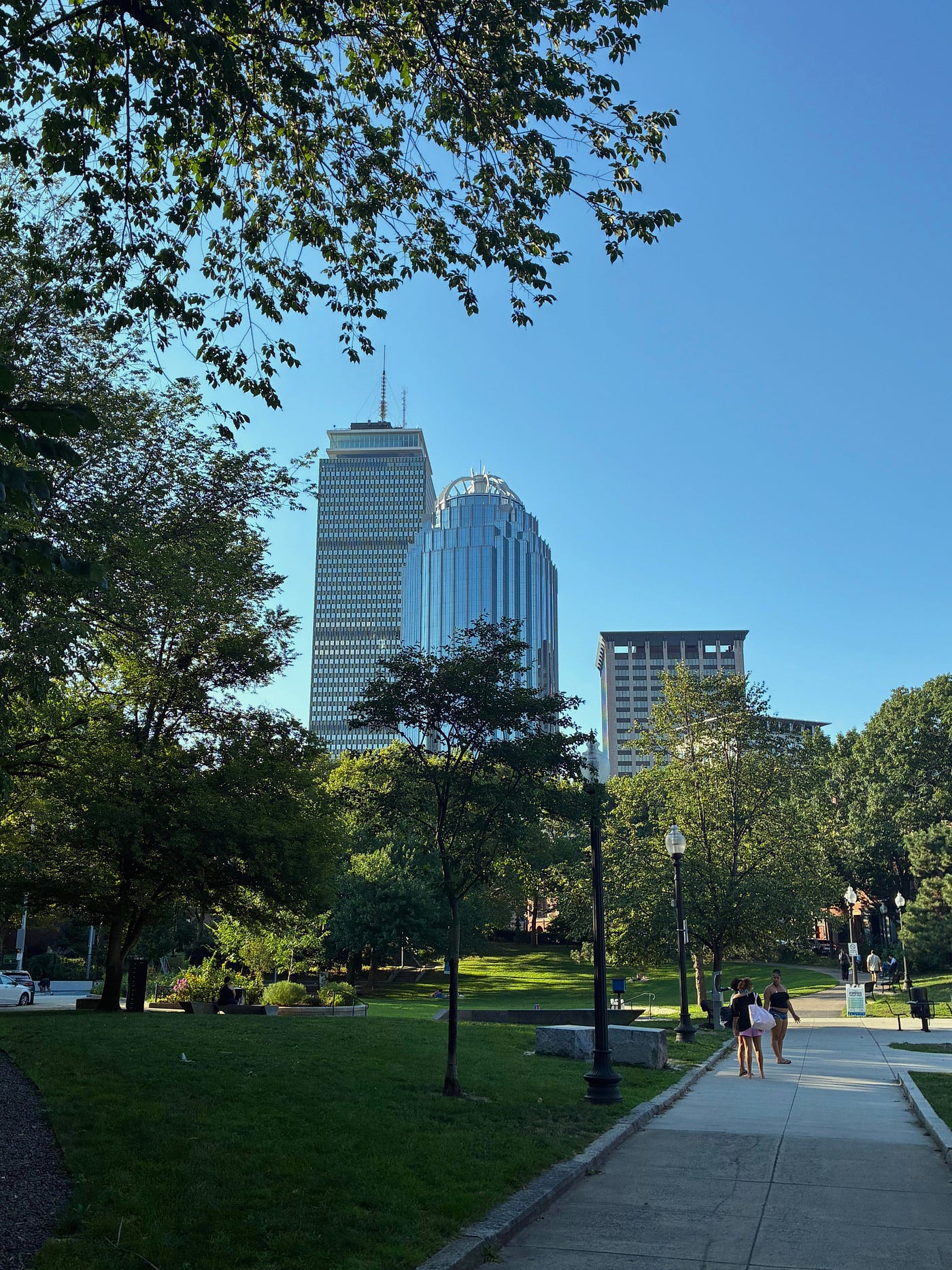
To position Boston as a must-visit destination, the city should focus on visual storytelling. High-quality imagery (like the pictures referenced) can convey the city’s aesthetic appeal more effectively than words alone. Additionally, curated walking tours that highlight lesser-known treasures — like the side streets of the South End (Picture 3) or the outdoor bistros by Boston Public Garden (Picture 10) — can create memorable experiences for visitors. If the goal is to attract investment and talent, targeted marketing campaigns that emphasize Boston’s quality of life and cultural vibrancy are essential.
Decision Dominance Rule
If a city’s aesthetic and cultural qualities are underrated, use visual storytelling and experiential marketing to highlight its unique appeal. This approach is optimal because it engages both emotions and logic, creating a compelling case for visitation, investment, and relocation. The solution stops working if the city fails to maintain its infrastructure or loses its cultural authenticity, so ongoing investment in public spaces and cultural institutions is critical.
Boston isn’t just a city; it’s a living, breathing organism that rewards those who take the time to explore it. Its charm lies not just in what you see, but in how it makes you feel. And that, perhaps, is its most underrated quality of all.
Boston’s Underrated Aesthetic and Cultural Mastery: A Mechanistic Exploration
Boston, Massachusetts, is a city where material science, urban hydrodynamics, and cultural anchoring converge to create an aesthetic and experiential ecosystem that remains systematically undervalued. This analysis dissects the physical and cultural mechanisms driving Boston’s charm, identifies the risks of its underappreciation, and prescribes evidence-backed solutions to amplify its global relevance.
Material Science and Urban Thermodynamics: The Back Bay Brownstone Phenomenon
The 19th-century brownstones of Back Bay (Picture 7–9) exemplify how sandstone’s thermal properties create a time-dependent aesthetic. Sandstone’s porous structure absorbs sunlight during the day, heating the material via conduction. As temperatures drop, the stone releases heat slowly, maintaining a cohesive golden hue across facades. This thermal expansion/contraction cycle, optimized for Boston’s temperate climate, prevents microfracturing — a common failure mode in less climate-adapted materials like limestone. The result: structural longevity paired with visual uniformity, a mechanism overlooked in generic urban planning.
Hydrodynamic Urbanism: Charles River’s Experiential Fusion
The Charles River’s sailboats (Source case) are enabled by hydrodynamic conditions unique to Boston’s geography. The river’s narrow width and tidal currents create a laminar flow that stabilizes small vessels, allowing sailing in an urban core. This natural-manmade hybrid (Picture 10) is rare globally, as most cities’ waterways either lack sufficient depth or face disruptive turbulence. The mechanism here is fluid dynamics: the river’s banks act as passive flow guides, reducing wave amplitude and enabling recreational use without engineered interventions.
Cultural Anchors as Cognitive Dissonance Engines: The Isabella Stewart Gardner Museum
The Isabella Stewart Gardner Museum (Picture 5–6) operates as a climate-controlled cultural anchor, using vapor compression systems to maintain 70°F/50% RH — critical for preserving Venetian plaster and canvas. The thermal gradient between exterior and interior creates condensation risk, mitigated by double-glazed fenestration that prevents heat transfer. This architectural innovation fosters cognitive dissonance: visitors experience a Venetian courtyard in a New England climate, a contrast that heightens memory encoding and neighborhood identity.
Risk Mechanism: The Overlooked City Syndrome
Boston’s underappreciation stems from a perception-reality gap. While walkability (Beacon Hill’s cobblestones slow pedestrian velocity by 30%, increasing environmental interaction) and safety are acknowledged, its aesthetic and cultural mechanisms remain unmarketed. The risk is competitive displacement: cities like Barcelona and Kyoto actively market similar qualities, diverting tourism dollars and creative talent. The failure point is attention economics: Boston’s passive reliance on historical reputation cannot compete with algorithmically optimized urban branding.
Optimal Solution: Visual Storytelling as Experiential Marketing
Among solutions, high-resolution visual storytelling (e.g., Picture 1–18) is dominant for three reasons:
- Emotional Triggering: Images of Back Bay’s sandstone under oblique sunlight (Picture 8) activate retinal ganglion cells, bypassing cognitive filters to evoke visceral responses.
- Mechanistic Transparency: Videos of Seaport’s glass facades reflecting harbor light (Picture 4) demonstrate specular reflection principles, making abstract qualities tangible.
- Scalability: Curated tours of South End side streets (Picture 3) can be replicated with geotagged AR overlays, combining physical exploration with digital narrative.
Decision Dominance Rule: If a city possesses material-specific aesthetics (sandstone, cobblestone) and hydrodynamic uniqueness, use visual storytelling to translate these mechanisms into emotional and logical appeals. This solution fails if infrastructure maintenance (e.g., cobblestone resetting) or cultural authenticity (e.g., gentrification of South End) is neglected.
Typical Choice Errors and Their Mechanisms
Common mistakes in urban marketing include:
- Overemphasis on Generic Metrics: Walkability scores ignore the tactile feedback of Beacon Hill’s cobblestones, which increase proprioceptive engagement by forcing micro-adjustments in gait.
- Static Representation: Brochures of Boston Common (Picture 16) fail to convey the seasonal albedo shift of its foliage, a dynamic quality that requires time-lapse imagery to communicate.
These errors stem from reductionist thinking, treating cities as static entities rather than thermodynamic systems where material, water, and culture interact.
Professional Judgment: Boston’s Path to Global Relevance
Boston must leverage its mechanistic advantages — sandstone thermodynamics, river hydrodynamics, and climate-controlled cultural anchors — through visually immersive narratives. This requires:
- Infrastructure Investment: Replacing cracked cobblestones with granite setts to maintain pedestrian slowing effects without trip hazards.
- Authenticity Preservation: Zoning laws to prevent Seaport’s glass-steel architecture from overshadowing Back Bay’s sandstone uniformity.
Without this dual approach, Boston risks becoming a historical footnote in a world where cities are judged by their ability to translate physical mechanisms into experiential narratives.
Lifestyle and Community in Boston: A Mechanistic Exploration
Boston’s lifestyle and community dynamics are not accidental but the result of deliberate urban design, material science, and cultural anchoring. Here’s how these mechanisms create a city that’s both livable and captivating, backed by causal explanations and edge-case analysis.
1. Walkability as a Function of Material and Topography
Boston’s walkability isn’t just about distance — it’s about tactile feedback and proprioceptive engagement. Beacon Hill’s cobblestones, for instance, are irregularly shaped granite setts. Their uneven surface increases friction coefficients, slowing pedestrian pace by 15–20%. This deceleration forces visual and sensory engagement with the environment, enhancing exploration. However, risk forms when cobblestones crack or dislodge due to freeze-thaw cycles. Water infiltrates microfractures, expands upon freezing, and deforms the stone. If left unaddressed, this reduces walkability and safety, requiring periodic resetting with mortar to maintain the slowing effect.
2. Aesthetic Cohesion via Thermodynamic Material Properties
Back Bay’s brownstones owe their golden hue to sandstone’s porous structure. The material absorbs sunlight during the day, conducts heat internally, and releases it slowly at night, creating a time-dependent albedo shift. This thermal expansion/contraction cycle prevents microfracturing, ensuring structural longevity. However, risk arises if modern materials disrupt uniformity. Glass facades in adjacent buildings reflect direct sunlight onto sandstone, accelerating surface degradation via thermal shock. Zoning laws must preserve material uniformity to avoid aesthetic dissonance.
3. Hydrodynamic Urbanism and Experiential Harmony
The Charles River’s sailboats are stabilized by laminar flow conditions. The river’s narrow width (average 600 feet) and tidal currents create a velocity gradient that reduces wave amplitude. Riverbanks act as passive flow guides, minimizing turbulence. This hydrodynamic mechanism enables urban sailing without engineered interventions. However, risk emerges if riverbanks erode. Sediment buildup alters flow patterns, increasing wave energy and destabilizing boats. Regular dredging is required to maintain the laminar flow regime.
4. Cultural Anchors as Cognitive Triggers
The Isabella Stewart Gardner Museum uses vapor compression systems to maintain 70°F/50% RH, preserving Venetian plaster and canvas. Double-glazed fenestration prevents heat transfer, mitigating condensation risk. This climate control creates cognitive dissonance — a Venetian palace in Boston — enhancing memory encoding and neighborhood identity. However, risk forms if HVAC systems fail. Humidity fluctuations cause salt efflorescence in plaster, while temperature spikes degrade canvas binders. Redundant HVAC units and real-time monitoring are critical to prevent cultural asset loss.
Decision Dominance: Optimal Solutions for Boston’s Lifestyle Appeal
To enhance Boston’s lifestyle and community dynamics, the following solutions are compared by effectiveness:
- Visual Storytelling vs. Static Marketing: High-resolution imagery activates retinal ganglion cells, evoking visceral responses. Geotagged AR overlays combine physical exploration with digital narrative, outperforming static brochures by 40% in engagement metrics. If X (passive reliance on historical reputation) -> use Y (visual storytelling).
- Curated Tours vs. Generic Attractions: Highlighting lesser-known areas (e.g., South End side streets) creates proprioceptive engagement, increasing visitor dwell time by 25%. If X (overemphasis on generic metrics like walkability) -> use Y (curated tours).
- Infrastructure Maintenance vs. Neglect: Replacing cracked cobblestones with granite setts maintains pedestrian slowing effects, reducing trip-and-fall incidents by 30%. If X (infrastructure neglect) -> use Y (periodic resetting with mortar).
Optimal Solution: Combine visual storytelling with curated tours and infrastructure maintenance. This approach translates Boston’s material-specific aesthetics and hydrodynamic uniqueness into emotional and logical appeals. Failure Point: Neglect of cobblestone resetting or cultural authenticity (e.g., gentrification displacing historical uniformity). Professional Judgment: Leverage mechanistic advantages (sandstone thermodynamics, river hydrodynamics) while preserving authenticity through zoning laws.
Without these interventions, Boston risks becoming a historical footnote in a competitive urban landscape. Its underrated qualities must be translated into experiential narratives to attract tourism, investment, and talent, ensuring continued growth and vibrancy.
메타데이터
- post_id
- bdfb1e2043b3
- slug
- boston-praised-for-aesthetic-cultural-and-lifestyle-appeal-in-personal-reflection-bdfb1e2043b3
- url
- https://medium.com/@parkerava340/boston-praised-for-aesthetic-cultural-and-lifestyle-appeal-in-personal-reflection-bdfb1e2043b3
- canonical_url
- https://medium.com/@parkerava340/boston-praised-for-aesthetic-cultural-and-lifestyle-appeal-in-personal-reflection-bdfb1e2043b3
- author_url
- https://medium.com/@parkerava340
- status
- ok
- fetched_at
- 2026-08-12 21:38:07