BeiDou’s Global Search and Rescue Capability Launches: New Opportunities for GPS/BeiDou Terminals
What Does BeiDou’s First Global Search and Rescue Capability Mean?
BeiDou’s Global Search and Rescue Capability Launches: New Opportunities for GPS/BeiDou Terminals
What Does BeiDou’s First Global Search and Rescue Capability Mean?
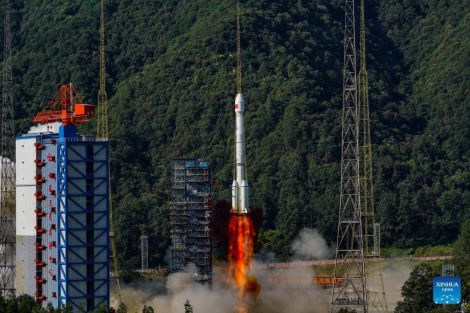
On September 19, 2018, at 22:07, China successfully launched its 37th and 38th BeiDou navigation satellites from the Xichang Satellite Launch Center. These two satellites carried a special payload — search and rescue equipment conforming to international satellite rescue standards for the first time.
This breakthrough means that the BeiDou system can not only provide global navigation services but also offer worldwide emergency alert and rescue support. For users worldwide, this marks a significant step from “navigation system” to “navigation + safety assurance platform.” (most.gov.cn)
What is the Global Satellite Search and Rescue System?
When a ship goes missing in the open sea, a plane encounters an emergency, or explorers are trapped in polar regions, how can distress signals be sent and precisely located in the shortest time?
The answer is the Global Satellite Search and Rescue System (Cospas-Sarsat).
This system is built and managed by multiple countries and international organizations. Its main mission is to receive distress beacon signals worldwide and quickly forward the alert information to rescue agencies, improving rescue efficiency and survival chances.
For a long time, GPS (USA), GLONASS (Russia), and Galileo (Europe) have been part of the global search and rescue service system. With the successful launch of BeiDou rescue payloads, China officially becomes an important component of the global medium-orbit satellite search and rescue system. (ip.people.com.cn)
Significance of BeiDou Joining the Global Search and Rescue System

For ordinary users, this may seem like just a new satellite feature.
But for the industry, its significance is far greater.
1. Enhanced Global Emergency Alert Capability
With terminals integrating BeiDou rescue functions, distress signals can be sent even in areas without cellular coverage.
Typical scenarios include:
· Offshore fishing vessels
· Commercial cargo ships
· Polar expeditions
· Desert exploration
· Mountain rescue
· Remote area operations
· International outdoor activities
Terminals equipped with BeiDou rescue capabilities will become essential tools for life safety.
2. Key Step Toward BeiDou Internationalization
From regional services to global services and integration into the global search and rescue system, BeiDou is gradually becoming part of the international satellite infrastructure network.
This demonstrates the maturity of China’s satellite navigation technology and enhances BeiDou’s international recognition and influence. (cttic.cn)
3. More Value for IoT Terminals
For GPS/BeiDou terminal manufacturers, adding rescue functions opens up more innovation space:
· Personal trackers
· Vehicle navigation terminals
· Maritime tracking devices
· Outdoor safety equipment
· Pet trackers
· Emergency communication terminals
· Industrial asset tracking devices
In the future, users will evaluate devices not only by “can it locate?” but also by “can it provide help in critical situations?”
GPS and BeiDou: From Positioning Competition to Capability Upgrade
In the past, GPS was the first system people thought of when it came to satellite navigation.
However, with the completion of BeiDou-3 global coverage, more terminals now support GPS+BeiDou dual-mode or even multi-mode positioning.
The advantages of multi-system compatibility are clear:
Faster Positioning Speed
Simultaneous reception from multiple satellite systems improves initial positioning efficiency.
Higher Positioning Stability
When one system’s signal is blocked, others can compensate.
Stronger Global Coverage
Supports cross-border logistics, international transport, and global asset management.
More Value-added Services
Including short message communication, high-precision positioning, and, in the future, global search and rescue capability.
The industry is no longer debating “GPS or BeiDou” but embracing “GPS+BeiDou+Galileo+GLONASS” multi-system integration.
Which Industries Will Benefit from Global Rescue Capabilities?
Maritime Industry
Offshore fishing vessels and cargo ships often operate in areas with weak network coverage.
With BeiDou search and rescue capabilities, distress signals can be sent quickly, improving maritime rescue efficiency.
Outdoor Adventure
Activities such as mountaineering, hiking, off-road driving, and cross-country expeditions are growing rapidly.
In case of emergencies in remote areas or mountains, satellite rescue functions become the last line of safety.
Logistics and Transportation
Cross-border logistics and hazardous material transportation increasingly demand real-time monitoring and emergency response.
BeiDou’s rescue capability further enhances transport safety.
Internet of Things (IoT)
More intelligent terminals will integrate GNSS positioning modules and satellite communication, achieving positioning, communication, and emergency alert in one solution.
Market Opportunities for GPS/BeiDou Modules
As BeiDou’s global service capability improves, industry applications continue to expand.
According to BeiDou system development plans, China’s satellite navigation industry has evolved from pure positioning to applications in smart transportation, smart logistics, smart maritime services, emergency rescue, and asset management.
For GPS/BeiDou module manufacturers:
Those who first develop high-reliability positioning and safety communication capabilities will gain a competitive advantage.
Especially in industrial IoT, vehicle networking, maritime devices, and global asset tracking, next-generation GNSS modules supporting BeiDou have immense market potential.
Conclusion

From precise positioning to global search and rescue services, BeiDou continues to expand the boundaries of satellite navigation.
The successful launch of the first BeiDou satellites carrying search and rescue payloads in 2018 marks not only a major technological breakthrough for China’s space program but also adds a new force to the global satellite rescue system.
In the future, as more GPS/BeiDou terminals gain global rescue capabilities, maritime navigation, outdoor exploration, and international logistics will all benefit from stronger safety assurance.
For the GNSS industry, this is not just a technology upgrade — it is a brand-new market opportunity.
메타데이터
- post_id
- be1f8a6c59ff
- slug
- beidous-global-search-and-rescue-capability-launches-new-opportunities-for-gps-beidou-terminals-be1f8a6c59ff
- url
- https://medium.com/@couchpotato0425/beidous-global-search-and-rescue-capability-launches-new-opportunities-for-gps-beidou-terminals-be1f8a6c59ff
- canonical_url
- https://medium.com/@couchpotato0425/beidous-global-search-and-rescue-capability-launches-new-opportunities-for-gps-beidou-terminals-be1f8a6c59ff
- author_url
- https://medium.com/@couchpotato0425
- status
- ok
- fetched_at
- 2026-07-10 03:40:03