The Real Scoop on Scope
Have you ever written a function, run your code, and all you get back is undefined? It’s frustrating, right? Before you throw your computer…
The Real Scoop on Scope
Have you ever written a function, run your code, and all you get back is undefined? It’s frustrating, right? Before you throw your computer out the window, let’s talk about why this happens. Chances are that the issue has something to do with scope.
[embed]
Today your computer lives to see another day because we’re diving into everything scope: what it is, how it works, and how you can master it.
The more I am introduced into the complexities of JavaScript and its endless functionality, the more I learn how crucial scope truly is. By the end of this post, you’ll understand:
1. What scope is.
2. How it’s used.
3. How you can use it effectively to write clean and efficient code.
4. Common pitfalls to avoid
5. Best practices for maintainable code.
What Is Scope?
Scope is like a set of rules that determines where variables, functions, and objects are accessible in your code. It’s the boundary within which a variable can be referenced.
At its core, JavaScript has three types of scope:
- Global Scope: Variables declared outside of any function or block have global scope. They’re accessible anywhere in your program.
- Function Scope: Variables declared inside a function are accessible only within that function.
- Block Scope: Variables declared with let or const inside a block (e.g., inside an if statement or a loop) are only accessible within that block.
Here’s a diagram to get a better grasp:
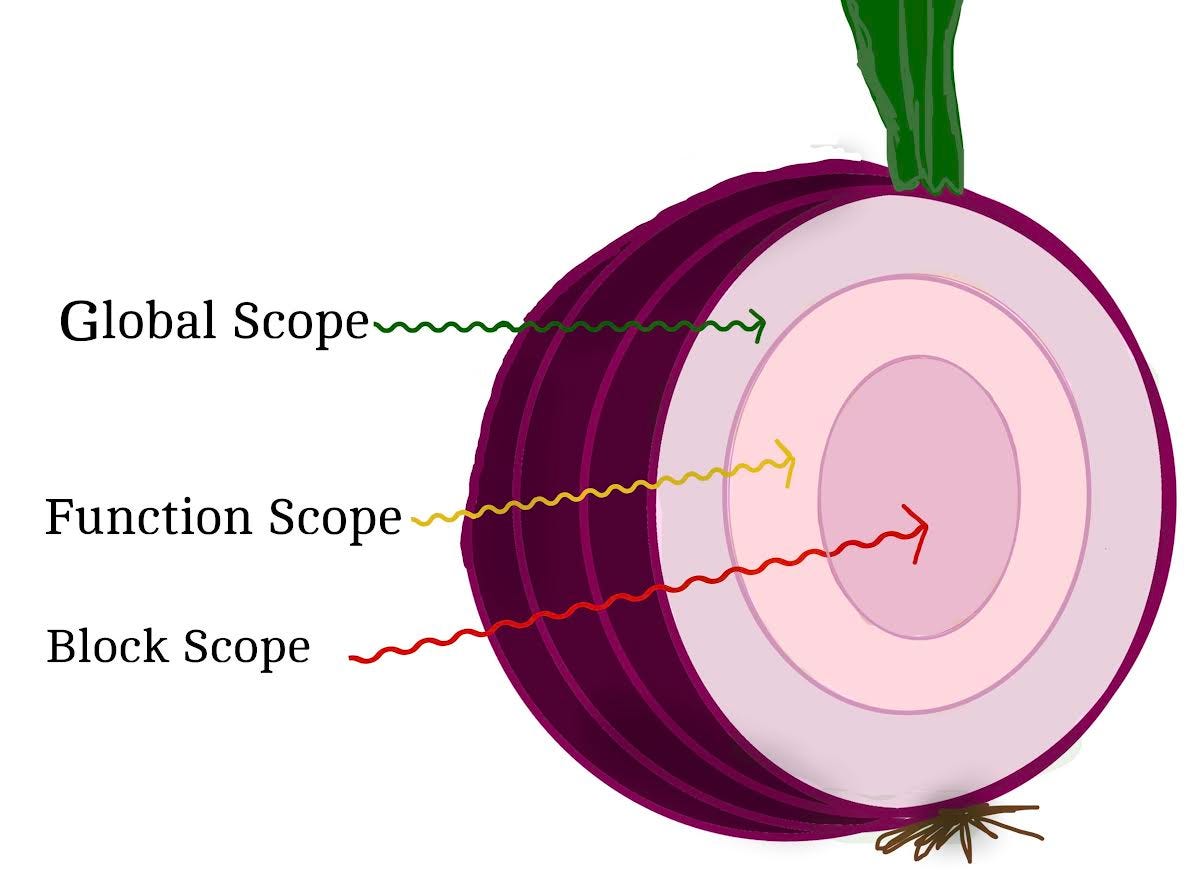
Diagram made by Blair Crumbly
Syntax and Usage of Scope
Let’s explore each type of scope with code examples.
1. Global Scope
A variable declared outside any function or block is part of the global scope. It can be accessed and modified from anywhere in your program.

While global variables are convenient, overusing them can lead to conflicts and bugs, especially in larger programs.
2. Function Scope
Variables that are declared inside a function are confined to that function’s scope. They’re not accessible outside the function.

3. Block Scope
let and const introduce block scope, which means variables declared inside a block (e.g., {}) are only accessible within that block.

Good Practices for Using Scope
- Minimize Global Variables: Too many global variables can lead to unintended side effects. Keep variables as localized as possible.
- Use const and let: Prefer const for variables that won’t change and let for those that will. Avoid var because it doesn’t respect block scope.
- Avoid Shadowing: Shadowing occurs when a variable in an inner scope has the same name as one in an outer scope. This can lead to confusion and bugs.

- Limit Scope Nesting: Too many nested scopes can make your code harder to read. Refactor when necessary to flatten nested logic.
Bad Practices to Avoid
- Unintentional Globals: Forgetting to use let or const can result in variables being added to the global scope, this could lead in unexpected behavior, hard-to-debug issues, and poor code maintainability.
Why? When variables are added to the global scope unintentionally, they become accessible and modifiable throughout the entire program. This can cause name conflicts with other variables or functions, especially in larger codebases or when using third-party libraries. Since global variables can be accessed and modified from anywhere, a small mistake in one part of the program (like reassigning the global variable) can inadvertently break unrelated parts of the code.

- Overusing Global variables: Using global variables excessively can make your program hard to debug and maintain
Why? In larger codebases, multiple parts of the program might unintentionally use the same variable name. Since global variables are accessible everywhere, this can lead to unintended overwrites and bugs.
3. Ignoring Hoisting: Using var (outdated) variables are hoisted to the top of their scope but are not initialized
Why? Ignoring hoisting and using var (instead of modern let or const) can lead to confusing, buggy, and hard-to-debug behavior because of how var interacts with JavaScript’s variable hoisting mechanism. When a var variable is hoisted, its declaration is moved to the top of its scope (global or function), but its initialization remains in place. This means that before the initialization line is executed, the variable exists but is set to undefined. This can lead to unexpected behavior. Seeing undefined might lead you to think the variable doesn’t exist, but it actually does — it just hasn’t been initialized yet.
How Scope Can Be Helpful
Scope helps keep your code organized and hide variables from being accessed or modified outside of their intended context. Which is particularly useful in modular code and object-oriented programming.
Closing Thoughts
Scope is one of the most fundamental concepts in JavaScript. Understanding it will make you a better developer, enabling you to write cleaner, more efficient, and less error-prone code. Whether you’re debugging undefined errors or working to keep your codebase organized, mastering scope is a crucial step toward becoming a JavaScript expert. Now, you’re one step closer to mastering it!
Happy coding!
메타데이터
- post_id
- be3ff4efd313
- slug
- the-real-scoop-on-scope-be3ff4efd313
- url
- https://medium.com/@blaircrumbly/the-real-scoop-on-scope-be3ff4efd313
- canonical_url
- https://medium.com/@blaircrumbly/the-real-scoop-on-scope-be3ff4efd313
- author_url
- https://medium.com/@blaircrumbly
- status
- ok
- fetched_at
- 2026-07-20 17:17:34