If God Is Spirit, Why Are We So Sure He’s a Male?
What the biblical authors actually wrote about God’s gender — and why it challenges modern assumptions.
If God Is Spirit, Why Are We So Sure He’s a Male?
What the biblical authors actually wrote about God’s gender — and why it challenges modern assumptions.

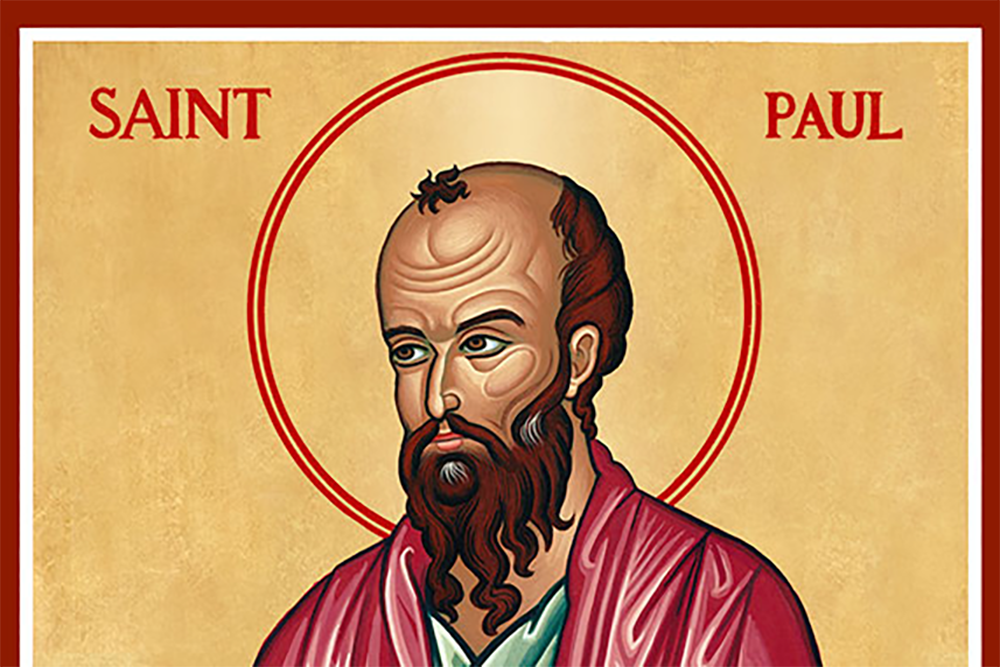
Image by Kapustin Igor on Shutterstock
God is a man.
Like it or lump it.
I know so because one of my readers told me so.
You see, I had unwittingly stumbled into an apparent heresy (something I seem to do a lot) where I mistakenly believed that it might be unnecessary and a bit silly to engender God. After all, God is spirit. But I guess even a spirit can have a penis because I was quickly corrected by one of my conservative Evangelical friends, who made it quite clear that God is a man — in no uncertain terms.
Let me set the scene for you.
I wrote an article not so long ago where I talked about how sometimes Christians can get hung up about words. As an example, I mentioned the time I changed the personal pronouns of God when reading the blessing from Numbers 6:24–26:
“The Lord bless you and keep you; the Lord make his face shine on you and be gracious to you; the Lord turn her face toward you and give you peace.”
As if to prove my point, a few of my readers took exception to how I applied a feminine term to God. One reader’s comment, in particular, stands out to me because, well… it revealed to me again the narrowness with which some people view and understand God — not that I blame my reader for clinging to these views. After all, most of us inherited our understanding of God from religious traditions shaped almost entirely by men.
Anyway, you can read the offending comment in full here, but this is the part that I’d like to focus on. My reader says:
“God self identifies as “Him”, so sure you can say sexuality/gender aren’t aspects of God in the same way as us humans, but to misgender Him after the whole Bible identifies Him one way goes too far.”
God is a man — it’s not up for discussion
There is so I disagree with in that comment, that I don’t even know where to begin. In just a few short lines of text, my reader unwittingly manages to demonstrate some of the unhelpful assumptions that underpin evangelical Christianity. Let me explain:
The Bible says so…
My reader argues that because God “called himself” a “Him” in the Bible, then he must be a he. Of course, to say that God calls himself a “he” is to make a few massive assumptions.
Firstly, to suggest that God “self identifies” as a male is to suggest that God himself wrote the Bible and chose the words for himself. Many Christians actually believe this to be the case. In fact, according to a survey by Pew Research, around 40% of Christians believe that the Bible is the perfect, inerrant word of God and should be taken literally. They believe that God told certain human beings what to write in the Bible, word for word. Therefore, it is completely accurate and not up for discussion.
Of course, this flies in the face of common sense. To say that a human being perfectly heard the voice of God and then perfectly understood it and perfectly wrote it down would be to describe something that has never happened either before or since. In fact, if someone came to you and said, “God spoke to me. I heard him clearly. I wrote it all down 100% accurately. It’s God’s perfect word,” you would dismiss them. You would probably think they were a bit crazy.
So, for someone to say to me, “God self-identifies as a man. The Bible says so,” is less a statement about the nature of God and more a statement about how one views the Bible. In the case of my reader, who views the Bible as God’s literal word, “God is a ‘he’ because he wrote the Bible, and so he chose that pronoun for himself.”
God was engendered by men… not himself
Personally, I’m afraid I have to disagree with the idea of the Bible being perfect. I can call it inspired, but I can’t call it perfect. Don’t get me wrong. I believe the Bible is a literary masterpiece — a 66-book compilation written over thousands of years by dozens of authors that somehow manages to tell one coherent and compelling story.
I read it, seek to understand it, wrestle with what it says, discuss it with others, and try to let its words shape me into a better person. I love the Bible, and I take the Bible seriously — But I don’t take it all literally.
That’s because all texts have a context.
And the books that make up the Bible were written in a different time, culture, and context than mine. As a white male living in a 21st-century Western nation, I have no idea what it was to be an ancient Jew living in first-century Palestine. And unless you’re an ancient Palestinian Jew who has somehow time-traveled to right now, you don’t either.
Not only that, I do not know how they viewed the world back then. I understand little about what they believed, their culture, social structures, systems, or the things that troubled them in those times.
Consequently, when I view these ancient Biblical stories through the lens of a 21st-century worldview, I am bound to distort those stories in some way, or at least understand them differently from how they were intended to be understood.
I know for sure that men wrote the Bible in a culture at a time in history where men ruled the roost. It was a patriarchal society. So, it is hardly surprising that people living in a deeply patriarchal culture most often spoke about God in masculine terms. Therefore, the people understood God as a ‘He’ rather than God giving himself that label. Men engendered God.
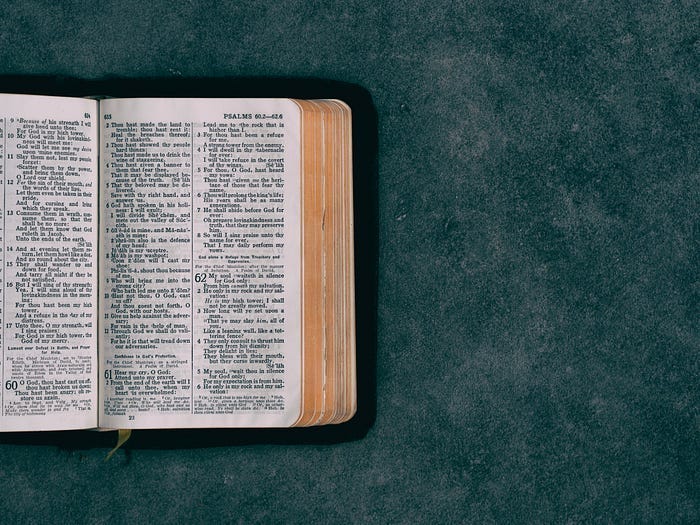
Photo by Aaron Burden on Unsplash
Bad news for people who believe that God is a Man
Let’s imagine that my friend — the guy who left the comment about God being a man — is right about the Bible being perfect. That would only further undermine his belief in the maleness of God.
Why?
Because if you take a more nuanced look at the language used to describe God in the Bible, you will find both the masculine and the feminine. In the Old Testament, you’ll come across a wealth of metaphors that portray God in feminine terms and with feminine qualities.
Let’s start at the very beginning: The first mention of God in Genesis 1:1–2:
“In the beginning, God created the heavens and the earth. And the earth was without order, and empty, and darkness was upon the face of the deep. And the Spirit of God moved upon the face of the waters.”
In verse 1, the word for God is a masculine noun. But in verse 2, God’s Spirit is described using the Hebrew word ruach, a grammatically feminine noun.
That’s right.
In the first two verses of the Bible, God is spoken about in both masculine and feminine terms.
According to Joan P. Schaupp, a Jewish scholar, “This introduction to Genesis has profound implications, which are being grasped as a growing number of scholars closely examine the original Hebrew text. Simply stated, God is described in both masculine and feminine imagery in the opening verses of Genesis. God (a masculine noun) creates by his Word, and life begins as the spirit (a feminine noun) of God hovers over the earth with her life-giving breath.”
Of course, there are plenty of other descriptions of the feminine nature of God throughout scripture. For example, in Deuteronomy 32:18, the word used for God is Eloah, who gives birth to Israel in groaning and as a woman giving birth.
Yes, the Bible describes God as a mother giving birth.
Yes, the Bible describes God as a mother hen, protecting her chicks under her wings.
I have to shake my head at people who make comments saying that God chose the pronoun “He” for him or herself because it’s in the Bible. Using the Bible to justify your belief that God is male is a poor use of scripture because there are images, illusions, metaphors, and descriptions of God in both masculine and feminine terms.
He or she is both and neither at the same time.
Words fail to describe God
Let’s be clear.
If God really is as wonderful, and magnificent and beautiful, and awesome as evangelical Christians imagine him, then there are really no words that could describe him, right?
Do you see what I did there? I prattled off a bunch of adjectives to try to describe God, but none of them fully encapsulates his nature or fully does him justice. Any attempt to describe God with human words is incomplete — if God is all that Christians believe he is.
In fact, I would go so far as to say that the words we use to describe God are, at best, metaphorical. We try to explain what God is like by using terms and images that are familiar to us.
For example, I am a father. I also had a father — a good father. I have had positive experiences of fathering. So, it seems logical that I might describe and understand God as a loving father. To another, the metaphor of God as a loving father is extremely unhelpful and unrelatable for reasons that should seem painfully obvious.
Could God be seen as a mother if that were more helpful?
After all, doesn’t God also have maternal qualities? Or would you say to a person whose only experience of a father is one of abuse and violence, “God is a man! A father! There is no other way to understand or experience God!”
When I was a small child, my solace and comfort were in the arms of my mother. Couldn’t I find the same in God?
What pronoun would God choose?
In 1 Corinthians 9:20–22, the apostle Paul, in his missionary journeys, explains that he is called to be all things to all people in order to reach them. In fact, Paul says to reach the Jews, he became a Jew. To reach the weak, he became weak. To reach the religious, he became religious. Now, if that’s okay for Paul, why couldn’t it be okay for God?
Can’t God be anything to anyone in order to reach them? Must he be a man? Could he be a woman? Maybe he is neither or both? And does it really matter?
No.
It doesn’t.
The words and labels that people use to describe God matter less than we think. I suspect that God doesn’t care much about the pronoun we attach to her. What matters to her is that we find ourselves connected and immersed in her love for us as her children.
So, what pronoun would God choose for him or herself?
I supposed if you were to ask him or her whether he or she was a ‘him’ or a ‘her,’ God might simply say to you:
“I am.”
The Wild One
I wrote this benediction some time back, but it seems appropriate to finish this article with these words — inadequate as they may be — describing the one to whom labels do not stick.
Now to the wild one To the one who cannot be controlled nor bought or sold in any temple
Now to the one who belongs to both none and all and who cannot be contained by roofs and walls or fences, or lines or labels or words or books of laws
Now to the one who cannot be given or taken away by the liver-spotted hands of gatekeepers in white-washed robes shouting, “There he goes, there he goes!” as if they know but do they know?
Now to the one who is on the breeze and in our lungs and on our lips our life’s first cry our final word
Now to the one to whom time and place bows the knee to the one who is somewhere and everywhere and nowhere in particular to the one who is already here and coming soon
Now the one who holds everything and all but none too tightly to the unrestrained lover who gives freely to all indiscriminately, without prejudice
Now to the wild one be glory and honor both now and forevermore
amen
Dan Foster is the author of “The Bible is Your Story: What the characters of Scripture reveal about the patterns shaping your life.”
The Backyard Church is not just a blog. It’s a real online community for people who have faith but can’t, don’t, or won’t go to church. Join today.
If you’re a writer or blogger who wants to grow your voice and build momentum online, I also run Bloggers Academy — a smaller community where I teach what I’ve learned growing from zero to 100,000+ followers. Learn more here
For more articles on life, faith, and spirituality, Sign-up for my newsletter. Also, feel free to send questions and story ideas to thebackyardchurch@gmail.com
메타데이터
- post_id
- be4825b52d82
- slug
- if-god-is-spirit-why-are-we-so-sure-hes-a-male-be4825b52d82
- url
- https://medium.com/backyard-theology/if-god-is-spirit-why-are-we-so-sure-hes-a-male-be4825b52d82
- canonical_url
- https://medium.com/backyard-theology/if-god-is-spirit-why-are-we-so-sure-hes-a-male-be4825b52d82
- author_url
- https://medium.com/@danfosterwriter
- status
- ok
- fetched_at
- 2026-06-28 14:26:31