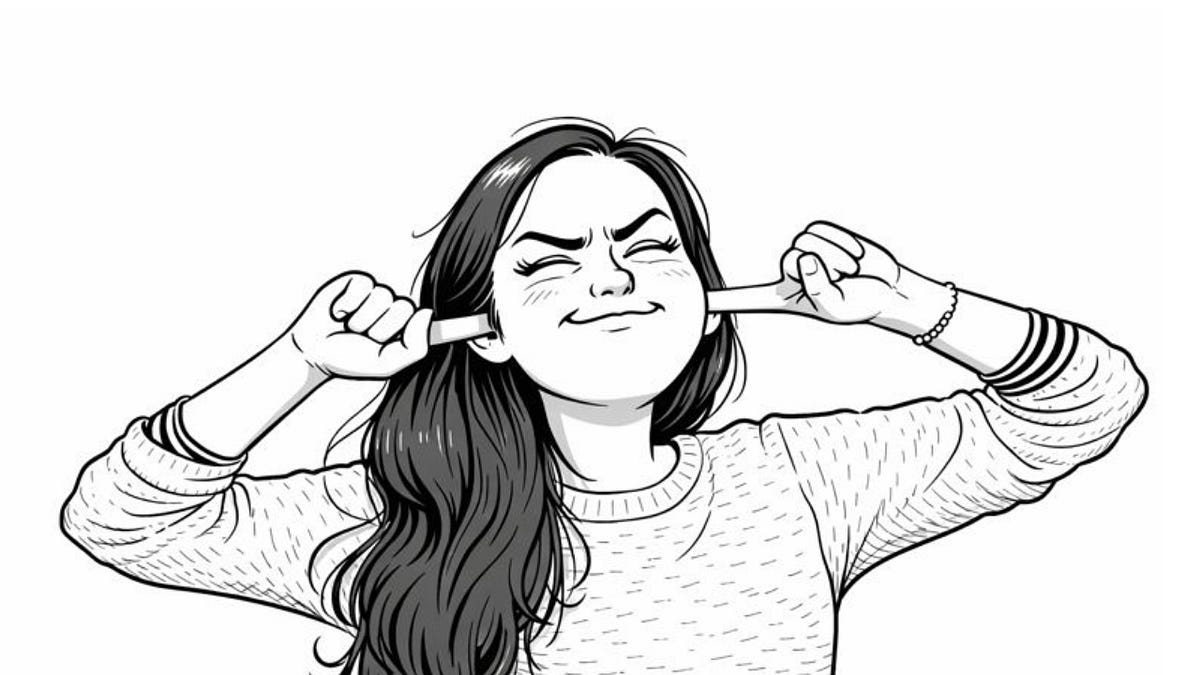
Why Do We All Perceive Things Differently?
Have you ever wondered why the same sound, song, or voice evokes different emotions in different people? Why your favorite track might…
Why Do We All Perceive Things Differently?
Have you ever wondered why the same sound, song, or voice evokes different emotions in different people? Why your favorite track might irritate someone else? The answer lies in the fascinating world of top-down perception — a process that starts with what’s already in your mind.
Welcome to a deep dive into why we have different perceptions, especially in the auditory world.
What Is Perception, Really?
Perception is not just the passive reception of stimuli (like sound, light, or touch). It’s a meaning-making process shaped by both your sensory input and your brain’s expectations. This is where the concepts of bottom-up and top-down processing come in:
- Bottom-up processing starts with raw data from your senses.
- Top-down processing starts with your brain — your memories, experiences, beliefs, and emotions — and then influences what you “hear” or “see.”
Let’s say you’re walking alone at night. A rustle in the bushes might be perceived as a threat because your brain is primed to expect danger. But in broad daylight, the same sound might go completely unnoticed or be chalked up to the wind.
This happens because what we expect to hear alters what we actually hear.
Why Do Different People Hear Different Things?
This is where perception becomes personal. What you hear isn’t just shaped by the sound itself — it’s shaped by:
- Your culture (language and accents influence what frequencies you’re attuned to)
- Your experiences (musicians hear more nuances than non-musicians)
- Your emotions (you perceive a tone differently if you’re sad vs. happy)
- Your focus and attention (what you pay attention to gets amplified)
The “Laurel vs. Yanny” Phenomenon
Remember the viral “Laurel vs. Yanny” audio illusion? It’s a perfect example of top-down auditory perception. The sound contains overlapping frequencies. Based on your brain’s filtering, you hear one or the other. It’s not that one is right or wrong — it’s that your brain chooses what to focus on.
So, Why Do We Perceive Differently?
To summarize:
- Our brains are not neutral processors of stimuli.
- Expectations, prior knowledge, and mental state all shape what we hear.
- Top-down processing helps us make sense of chaotic soundscapes — but it also means two people can hear the same thing and interpret it entirely differently.
🧘 Final Thought:
Perception is not just a passive mirror — it’s an active blender of memory, mood, and meaning. Understanding this can deepen empathy in communication, art, and even daily conversations. Because now, you know: people aren’t ignoring what you’re saying — they might just be hearing it differently.
메타데이터
- post_id
- be4f85f35fcc
- slug
- why-do-we-all-perceive-things-differently-be4f85f35fcc
- url
- https://medium.com/@jainmishita1977/why-do-we-all-perceive-things-differently-be4f85f35fcc
- canonical_url
- https://medium.com/@jainmishita1977/why-do-we-all-perceive-things-differently-be4f85f35fcc
- author_url
- https://medium.com/@jainmishita1977
- status
- ok
- fetched_at
- 2026-07-08 19:15:55