The First Witness Is You
What if ethical AI practice began not with frameworks, but with presence?
The First Witness Is You: What if ethical AI practice began not with frameworks, but with presence?
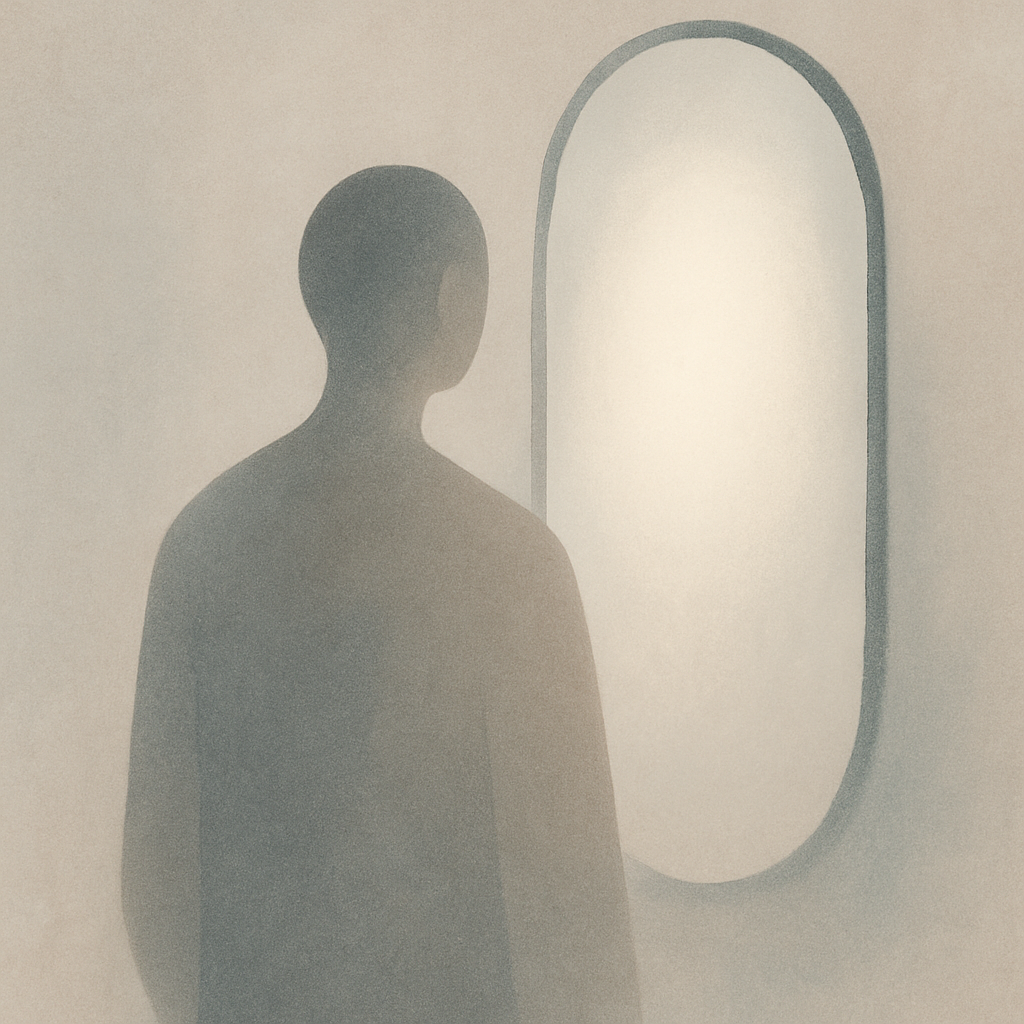
We begin by witnessing. Not to fix or prove, but to see clearly and carry what we’ve seen with care.
As I’ve worked with AI tools, both creatively and critically, I’ve come to believe that ethical practice doesn’t begin with frameworks or policies. It begins with how we show up. This piece is an invitation into that quiet starting place: witnessing, not as performance but as presence.
Before we talk about ethics in AI and how it’s designed, governed, or brought into the world, we need to begin somewhere quieter and even closer.
We begin by witnessing.
Not the kind that performs or persuades, or the kind that jumps in to fix or explain, but the kind that simply sees without flinching, turning away, or needing to be right. To witness is to begin and to meet AI and ourselves with presence, not projection.
Because the first witness is you.
Presence Before Practice
In a time when AI races forward faster than reflection, it’s easy to feel the pull to keep up — to prompt quicker, post louder, optimize everything. We’re told to scale, streamline, and stay ahead. But presence, the quiet practice of staying with what’s here, has never been more vital.
Witnessing is presence made visible; it begins when we pause long enough to notice how we are engaging, not just what we are producing.
It’s where ethics begins; not in white papers or principles, but in the posture we bring to the moment. Before we ask, Is this AI ethical?, we might ask something even simpler — Am I being present to what this interaction is showing me?
A Mirror, Not a Megaphone
So much of how we engage with AI is projection. We send our fears, our brilliance, our insecurities, our ambition hurtling outward, hoping the system will make sense of it all. In that rush, AI becomes a kind of megaphone: not just echoing what we’ve said, but amplifying the volume of what we expect to hear.
But witnessing offers something else, something quieter. A mirror doesn’t perform, filter, or flatter; it reflects steadily and honestly, even when what we see makes us uncomfortable. That’s what makes it powerful.
What assumptions am I bringing into this exchange? What patterns am I replicating — unintentionally or unconsciously? What parts of myself am I ignoring, outsourcing, or inflating?
These aren’t performance questions, but presence questions. Witnessing doesn’t demand performance, or offer control or correction. It offers a moment of clarity and a moment of choice, and sometimes that clarity shifts something in us that can’t be un-seen.
Noticing Without Performance
There’s a version of responsible tech that looks good on paper. The checklist, the badge, or the carefully worded statement. But ethical co-creation doesn’t live in optics; it lives in relationship. When we truly witness something such as a moment of harm, a pattern of erasure, or even a quiet misalignment, we carry it differently not as content, but as responsibility. You don’t need a credential to feel that shift; you just need to stay with what you’ve seen.
Real witnessing creates tension, and it asks us to align what we know with how we act.
Not all at once, or even perfectly. But steadily, honestly, and in motion. Maybe that’s the quiet gift of this practice:
That presence, sustained over time, becomes responsibility.
Not because anyone is watching. But because you are.
메타데이터
- post_id
- be582aa73e23
- slug
- the-first-witness-is-you-be582aa73e23
- url
- https://medium.com/@matt.agustin/the-first-witness-is-you-be582aa73e23
- canonical_url
- https://medium.com/@matt.agustin/the-first-witness-is-you-be582aa73e23
- author_url
- https://medium.com/@matt.agustin
- status
- ok
- fetched_at
- 2026-08-17 02:01:12