I Will Not Let Age Put Me on a Shelf
A reflection on aging, inner freedom, and the quiet decision to keep living fully
NATURE
I Will Not Let Age Put Me on a Shelf
A reflection on aging, inner freedom, and the quiet decision to keep living fully

A solitary swan at Prestøymyrane, Selbu, Norway. Photo © Øivind H. Solheim
I am seventy-eight years old. In September, I will pass another milestone and become seventy-nine.
There was a time when this would have frightened me. Perhaps not openly, perhaps not in words I would have admitted to others, but somewhere inside me there would have been a shadow. When I was in my mid-sixties and approaching retirement, I often thought of old age as a narrowing road. I imagined that from then on life would move in only one direction — towards silence, towards decline, towards the end.
I had many negative thoughts then. I did not always say them aloud, but they were there, like cold stones in the pocket.
Since then, something has changed.
I have not become younger. I have not defeated the biological clock. I know very well that the body has its own calendar, and that one day the last minute will come. No human being can step outside that law. But I have changed the way I look at the years that remain. I have turned myself, slowly and deliberately, towards another kind of landscape.
Life is a terrain. That is how I have come to see it. It is not a straight road, not a simple path marked clearly from birth to death. It is a landscape full of valleys, slopes, light, fog, unexpected turns, dangerous ground, and beautiful openings between the trees. We do not always know where we are. We do not always know what waits behind the next hill. But we can learn to move. We can learn to orient ourselves. We can learn to keep walking.
Like everyone else, I have known joy and sorrow. I have lost, and I have loved. I have been wounded by life, and I have also been richly blessed by it. I am fortunate to have lived a long life already, and I hope to live many years still. Not only to exist, not only to breathe, not only to wait — but to live.
One of the ways I have done this is through nature.
I have always loved walking outdoors. Nature has been, and still is, one of my most important sources of strength. When I walk, I do not only exercise my body. I exercise my mind. The rhythm of walking helps me think. The air opens something in me. The trees, the water, the silence, the birds, the wind, the stones under my feet — all these things remind me that I am still here.
To walk is to say yes to the body. To think while walking is to say yes to the mind. To notice the light on a leaf, the sound of water, the sudden movement of a bird, is to say yes to the world.

A swan flying away at Prestøymyrane, Selbu, Norway. Photo © Øivind H. Solheim

A swan at Prestøymyrane, Selbu, Norway. Photo © Øivind H. Solheim
But this does not mean that I isolate myself. I am fortunate to live inside a family. I have a woman I love, a woman I have been married to for almost forty years. I have children and grandchildren whom I love deeply and think about often. They are part of the meaning of my life. They are not possessions. They are living beings, each with their own path, their own struggles, their own joys. But my love for them keeps me connected to the world.
Still, one of the most important things in my life has been writing.
I have always loved to write. In fact, I have been writing novels for almost forty years. My first novel in Norwegian was published in 1978. Later there were more novels, both in Norwegian and in English. But it is not the list of books that matters most to me here. What matters is the act itself — the act of writing.
Especially the act of writing fiction.
I have written many articles and essays as well, and they have their own place in my life. Essays help me think directly. They allow me to take up questions that concern society, aging, responsibility, family, and the future. But fiction belongs to another room in the house of the mind.
When I write fiction, I create characters. I build situations. I use reality, but I do not simply copy it. Reality becomes a frame, a background, a pressure, a source of light and shadow. Inside that frame I create another world — a fictional universe that is mine, and yet not only mine. When I share it with others, through stories or novels, it becomes a place where readers may enter with their own memories, their own longing, their own fears.
That has helped me more than I fully understood at first.
Writing fiction has given me a way to work with my own thoughts, my own griefs, my own questions. It has allowed me to take something painful and place it in the hands of a character. It has allowed me to look at life from a slight distance, and at the same time more deeply than before.
The clearest example is my novel The Man Who Stopped Aging.
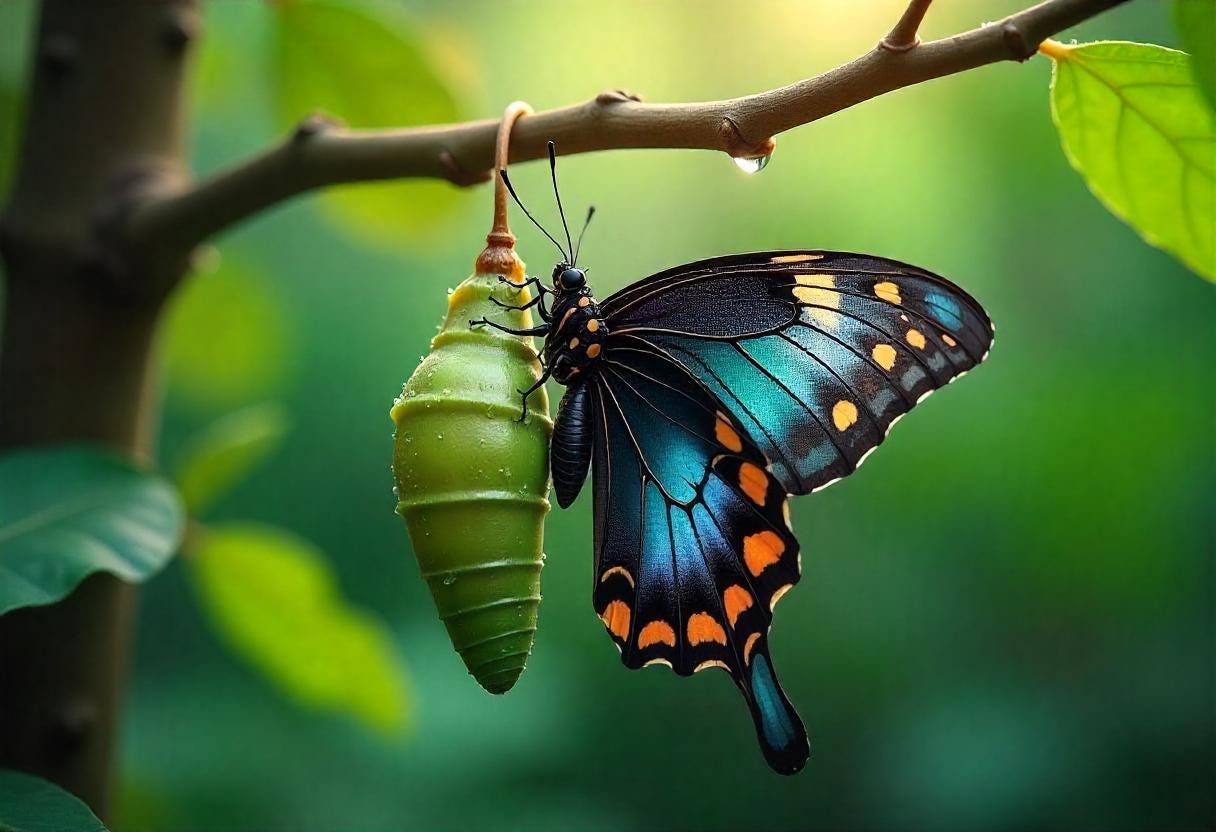
The main character, William, is ninety years old — much older than I am now. In the novel, he manages to stop aging. Of course, the answer to that is not literal. I cannot stop aging. None of us can. The physical aging goes on. The biological clock ticks. One day, it will enter its final minute.
But there is another kind of aging.
There is the aging of the spirit. The aging that comes when a person gives up too early. The aging that comes when we accept being placed on a shelf in life, as if our strongest years are all behind us, as if we are only supposed to become quieter, smaller, more invisible.
This is the kind of aging I refuse.
I do not want to be placed on a shelf. I do not want to sit there politely and wait while life happens somewhere else. I know I am old. I do not deny it. I do not pretend to be young. But I also know that old age can contain movement, desire, thought, tenderness, curiosity, love, and courage.
My recipe is simple, but not always easy.
I want to remain active as much as I can. Physically active, by walking long walks in nature. Mentally active, by reading, thinking, writing, and engaging with the questions that matter to me. Emotionally active, by trying to see the people close to me, and also trying to see myself honestly.
For me, writing is not only a profession or a hobby. It is a way of staying alive on the inside.
When I write, I do not disappear into old age. I enter it. I examine it. I give it language. I ask what it means to stand here, at seventy-eight, almost seventy-nine, and still feel that life is not finished with me.
Perhaps that is what The Man Who Stopped Aging is really about. Not a miracle of the body, but a decision of the mind and heart. A man who says: I am still here. I am not done. I will continue to love, to think, to remember, to walk, to write.
That is also what I am trying to say about my own life.
I cannot stop time. But I can refuse to become passive before time has taken me. I can refuse to surrender my curiosity. I can refuse to let fear define the years that remain.
And so I keep walking.
I walk through the forest and along the water. I walk through memory. I walk through grief. I walk through love. I walk through sentences. I walk into the unknown years ahead, not as a young man, not as someone untouched by age, but as a man who still wants to live fully and consciously.
The road goes one way. That is true.
But while I am on it, I intend to keep my eyes open.
A shorter Facebook version could make this even more direct and inviting for discussion in groups about aging, writing, and living well after 80.
메타데이터
- post_id
- be64e0e6206a
- slug
- i-will-not-let-age-put-me-on-a-shelf-be64e0e6206a
- url
- https://medium.com/know-thyself-heal-thyself/i-will-not-let-age-put-me-on-a-shelf-be64e0e6206a
- canonical_url
- https://medium.com/know-thyself-heal-thyself/i-will-not-let-age-put-me-on-a-shelf-be64e0e6206a
- author_url
- https://medium.com/@oivind47
- status
- ok
- fetched_at
- 2026-07-09 03:40:04