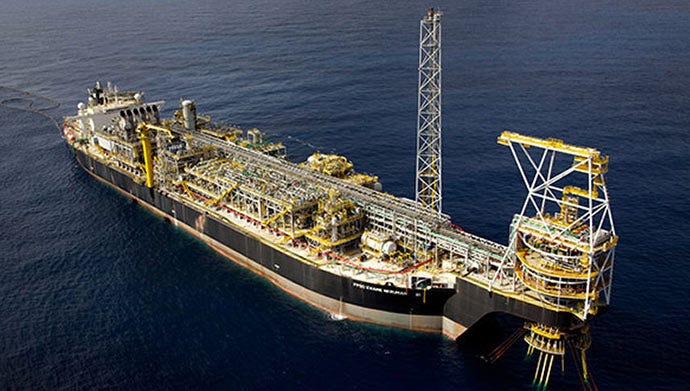
Floating Liquefied Natural Gas (FLNG) Market Growth, Trends, and Future Outlook
Introduction
Floating Liquefied Natural Gas (FLNG) Market Growth, Trends, and Future Outlook
Introduction
The Floating Liquefied Natural Gas (FLNG) market has gained significant momentum as the demand for natural gas continues to rise worldwide. FLNG technology enables the offshore extraction, liquefaction, and storage of natural gas, providing a cost-effective and flexible alternative to traditional onshore liquefaction facilities. This article explores the current trends, market dynamics, technological advancements, and future prospects of the FLNG market.
Market Overview
The FLNG market has witnessed remarkable growth due to increasing energy demands, advancements in offshore gas extraction, and the need for cost-efficient LNG production. FLNG units eliminate the need for extensive pipeline infrastructure and provide a viable solution for remote gas fields that are otherwise uneconomical to develop. Countries with vast offshore gas reserves, such as Australia, the United States, and Mozambique, are investing heavily in FLNG projects to enhance their LNG exports.
Key Market Drivers
Growing Natural Gas Demand — The transition toward cleaner energy sources has led to an increased reliance on natural gas, driving investments in FLNG projects.
Cost Efficiency — FLNG reduces capital expenditure compared to traditional onshore liquefaction plants, making it an attractive option for energy companies.
Flexibility and Mobility — FLNG facilities can be relocated to different gas fields, providing an adaptable solution for fluctuating market conditions.
Technological Advancements — Innovations in cryogenic technology, liquefaction processes, and modular design have improved FLNG efficiency and scalability.
Geopolitical Factors — The diversification of LNG supply sources has prompted countries to explore FLNG to secure energy independence and reduce reliance on traditional gas suppliers.
Challenges and Constraints
Despite its numerous advantages, the FLNG market faces several challenges:
High Initial Investment — The construction and deployment of FLNG units require substantial capital, which can be a barrier for smaller market players.
Operational Risks — Offshore operations are exposed to harsh weather conditions, leading to maintenance and safety concerns.
Regulatory Hurdles — Stringent environmental and safety regulations can impact project timelines and increase costs.
Technical Complexities — Managing offshore liquefaction processes requires advanced engineering expertise and operational efficiency.
Regional Insights
Asia-Pacific — The region is a key consumer of LNG, with major importers like China, Japan, and South Korea driving FLNG adoption. Australia has been a pioneer in FLNG projects, with developments such as Shell’s Prelude FLNG facility.
North America — The U.S. and Canada are exploring FLNG as an alternative to expand LNG exports, leveraging abundant shale gas reserves.
Europe — The energy crisis and diversification efforts have led European nations to consider FLNG solutions for enhanced energy security.
Africa — Emerging FLNG projects in Mozambique and Senegal are positioning Africa as a significant player in the global LNG market.
Future Outlook
The FLNG market is poised for substantial growth, driven by increasing investments in offshore gas resources and the global shift toward sustainable energy solutions. Technological advancements will continue to improve FLNG efficiency, reducing costs and enhancing environmental sustainability. With the demand for LNG expected to rise in the coming decades, FLNG is likely to play a critical role in meeting global energy needs while providing a flexible and economically viable solution for gas producers.
Conclusion
The FLNG market is set to expand as the world seeks cleaner, more efficient energy sources. While challenges exist, the benefits of FLNG, including cost savings, flexibility, and accessibility to remote gas fields, make it an attractive option for energy companies and governments alike. With ongoing advancements in technology and increasing investments, the FLNG sector is expected to shape the future of the LNG industry.
Related Reports:
메타데이터
- post_id
- be685d9b6876
- slug
- floating-liquefied-natural-gas-flng-market-growth-trends-and-future-outlook-be685d9b6876
- url
- https://medium.com/@devamrfr/floating-liquefied-natural-gas-flng-market-growth-trends-and-future-outlook-be685d9b6876
- canonical_url
- https://medium.com/@devamrfr/floating-liquefied-natural-gas-flng-market-growth-trends-and-future-outlook-be685d9b6876
- author_url
- https://medium.com/@devamrfr
- status
- ok
- fetched_at
- 2026-06-20 20:29:01