Structured Cabling Basics | Understanding Structured Cabling
Understanding Structured Cabling Basics
Structured Cabling Basics | Understanding Structured Cabling

Understanding Structured Cabling Basics
Cabling is an essential component of any communication network. There are certain structured cabling basics that the majority of installations follow. After all, phones and computers are now ubiquitous in every home and office. All this technology, however, means more cabling is required than ever before.
When it comes to communication systems, flexibility, simplicity and scalability are three qualities which are highly valued. Giving sufficient attention to your networking solution and investing in structured cabling can certainly help yield these benefits. Integrating structured cabling into your setup, therefore, should be a major priority.
Common phrases used for Structured Cabling
Structured cabling is in industry pharsing that details how a cable is installed to suit and accommodate all ranges of technology and hardware. However, many other phrases are used to describe this type of cabling. Such as:
- Data Cabling
- Computer Cabling
- IT Cabling
- Network Cabling
In essence the cabling remains the same.
What is Structured Cabling?
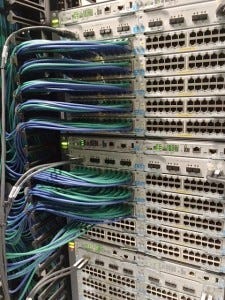
Modern organisations are packed full of a myriad of devices. Subsequently these have enhanced productivity and revolutionised the way that business is conducted. The Internet of Things may have reduced the need for cabling to some degree. However the fact remains that cabling is still a major part of any organisation’s communication network. PCs and phones need to be connected to central networks. The best way to achieve this is with direct cabling. But if all these different devices require unique cabling then things are going to get very complicated. So that’s where structured cabling steps in.
Structured cabling uses twisted pair Ethernet cables to create a uniform environment of connectivity. This welcomes both phone and PC networks. The cables in question are most commonly Cat5 or Cat6 Ethernet cables which are already established as the industry standard for data transmission. Both of these cables can be connected to RJ45 sockets which allow PCs and phones to communicate with central data centres and facilitate the flow of information.
The Benefits of Structuring your Data Cabling Installations
It’s important to understand what structured cabling is in order to understand how it can be incorporated into your organisation. But it’s also vital that you understand what the benefits of structured cabling can bring your business. Let’s take a look at the key benefits:
Data Cabling Installation
For more information on how to upgrade your structured cabling, or to install your first network, don’t hesitate to get in touch.
About NM Cabling Solutions — Network Cabling Specialist
NM Cabling is a technology, structured cabling and electrical integrator working throughout the United Kingdom.
We have created a comprehensive Knowledge Centre for our industry which can be viewed at https://www.nmcabling.co.uk/knowledge-centre/
Tags: Structured Cabling Basics What is Structured Cabling
Originally published at https://www.nmcabling.co.uk on January 28, 2020.
메타데이터
- post_id
- be84bbf930e8
- slug
- structured-cabling-basics-understanding-structured-cabling-be84bbf930e8
- url
- https://medium.com/@garycrilly/structured-cabling-basics-understanding-structured-cabling-be84bbf930e8
- canonical_url
- https://medium.com/@garycrilly/structured-cabling-basics-understanding-structured-cabling-be84bbf930e8
- author_url
- https://medium.com/@garycrilly
- status
- ok
- fetched_at
- 2026-07-29 07:39:48