Protecting Your Child From Bullying: A Complete Parent’s Handbook
Every parent hopes their child’s school years will be filled with friendship, discovery, and growth. When bullying enters the picture, that…
Protecting Your Child From Bullying: A Complete Parent’s Handbook
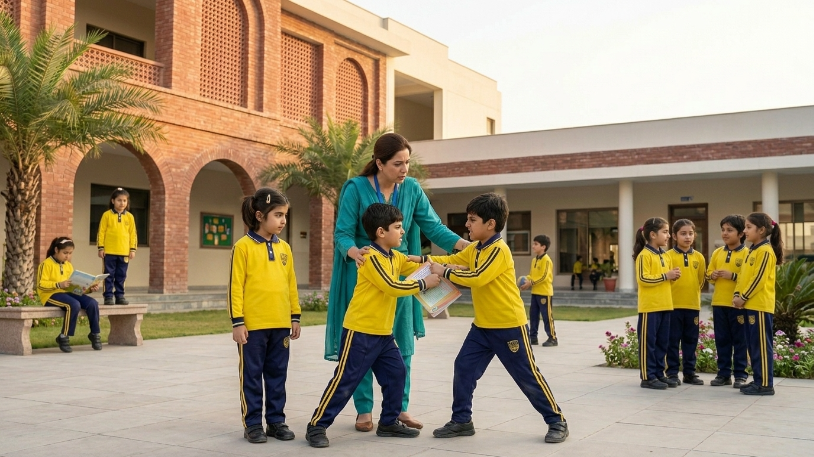
Every parent hopes their child’s school years will be filled with friendship, discovery, and growth. When bullying enters the picture, that hope can feel fragile. Children who are targeted often carry the weight silently — and parents, unsure of how to help, can feel equally lost. Knowing what to look for, what to say, and what to do transforms that helplessness into effective action.
This handbook gives parents a reliable, practical resource for every stage — from spotting the early signs to supporting long-term recovery.
Bullying Versus Normal Conflict: Why the Distinction Matters
What Bullying Actually Means
The word “bullying” is frequently used loosely — but its precise meaning matters, because the appropriate response depends on understanding what is actually occurring. Bullying involves three consistent elements:
- Intentional harm — the behavior is purposeful, not accidental or impulsive
- Repetition — it happens more than once, creating a pattern the targeted child cannot easily escape
- Power imbalance — the child responsible holds some advantage — size, social standing, age, or verbal ability — over the child being targeted
Childhood includes plenty of genuine conflict, occasional unkindness, and misunderstandings — none of which qualify as bullying by this definition. These still need adult support, but treating them as bullying when they are not can escalate ordinary peer friction unnecessarily. Equally, dismissing genuine bullying as “just kids being kids” causes real harm.
The Different Forms Bullying Takes
In the early primary years, bullying typically presents in recognizable patterns:
- Physical bullying — striking, shoving, kicking, or intentionally ruining a child’s property
- Verbal bullying — persistent mockery, name-calling, or language specifically chosen to wound
- Social or relational bullying — deliberate exclusion, rumor-spreading, or manipulation of peer relationships
- Intimidation — repeated use of threatening body language, tone, or expressions to create ongoing fear
Social bullying is consistently underestimated by adults, yet it causes measurable emotional damage — and is widespread even among children in their first years of school.
Reading the Signs: Is Your Child Being Bullied?
Behavioral Shifts That Deserve Attention
Young children lack the language and emotional sophistication to say clearly, “I am being bullied.” Their distress finds expression in other ways. Take note of:
- Resistance to school that appears suddenly or builds gradually over time
- Emotional shifts — increased withdrawal, tearfulness, anxiety, or unprovoked irritability
- Physical symptoms on school mornings, particularly stomachaches or headaches, without an underlying health cause
- Regression to earlier childhood behaviors — resuming thumb-sucking, bedwetting, or clinging to parents
- Disruption to appetite or nighttime sleep
- Personal items — stationery, clothing, or belongings — returned home damaged or not returned at all
- Consistent avoidance of named peers, specific school areas, or familiar walking routes
None of these signals is definitive in isolation. Several appearing simultaneously, however, point clearly toward a need for gentle investigation and prompt communication with the school. For a broader look at understanding children’s inner emotional lives, read Raising Emotionally Intelligent Children — What It Means and Why It Matters.
Conversations That Help Children Open Up
Lowering the Barriers to Disclosure
Children stay silent about bullying for understandable reasons — fear of disbelief, worry about retaliation, shame, and uncertainty about adult reactions. Building a habit of warm, low-stakes daily conversation about school means disclosure is more likely to happen before a situation becomes serious.
Conversation starters that tend to open rather than close:
- “Who made you laugh today? Was anyone unkind?”
- “Is there any part of school that you would rather skip if you could?”
- “Has anyone been making you feel left out or uncomfortable recently?”
Leading with “Are you being bullied?” can close the conversation before it begins — children may not recognize the word as applying to their experience and will answer no even when something harmful is ongoing.
Responding in a Way That Builds Trust
A child who speaks up about mistreatment is taking a significant risk. The parent’s response in that moment either deepens trust or erodes it. The most effective responses share these qualities:
- Affirm and believe — “I am so glad you told me. What is happening is not right, and none of it is your fault.”
- Regulate your own reaction — if a parent appears distressed or angry, children often feel guilty for disclosing and become less forthcoming
- Investigate gently — open questions that gather detail without creating pressure: what happened, when, how often, who else was present
- Offer steady support — make clear that you will take action and stand by your child, without overpromising specific results
Engaging the School Effectively
How to Report and What to Request
Once a parent has established that bullying is occurring, the school needs to be informed without delay. Approaching that conversation well improves the outcome:
- Seek a scheduled private meeting with the class teacher or a member of leadership — informal hallway exchanges rarely lead to substantive action
- Present your child’s account clearly and calmly, with specific incidents and dates where possible
- Describe the impact on your child’s well-being rather than attributing character judgments to the child responsible
- Ask directly what the school’s investigation procedure involves and what the expected timeline is
- Confirm a follow-up date and return to the conversation if no meaningful progress has been made
To understand how a strong parent-school relationship supports your child’s broader development, read why parent-teacher communication is one of the most powerful tools in your child’s education.
What Good School Practice Looks Like
When a school responds appropriately to a bullying report, parents can expect:
- A thorough investigation conducted without unnecessary delay
- Clear communication back to the reporting parent about what was found and what action will follow
- Specific, named measures introduced to protect the targeted child
- Verification that the harmful behavior has stopped following intervention
- Discreet handling of all information shared by the family
Where the school’s response is insufficient — particularly where the behavior continues after intervention has supposedly occurred — escalation to senior leadership is appropriate. Formal complaint routes exist for situations where internal processes fail.
Rebuilding Your Child After Bullying
A Thoughtful Approach to Recovery
Bullying leaves marks that do not disappear the moment the behavior stops. Children who have been targeted often need deliberate, patient support to restore their confidence and trust. Effective recovery strategies include:
- Establishing and maintaining predictable, warm daily routines that communicate safety and stability
- Noticing and naming positive social moments — a successful playdate, a kind interaction, a comfortable school morning — to gradually rebuild a positive sense of peer connection
- Prioritizing at least one genuine, mutually positive friendship within the school environment
- Returning often to the message that the bullying reflected a failure in the other child, never in them
- Remaining alert for signs that distress is not reducing — or is intensifying — as weeks pass
For research-backed guidance on raising emotionally resilient children, read “How to Raise a Resilient Child — The Early Childhood Guide Every Parent Needs”.
When to Seek Specialist Help
Some children recover naturally with consistent parental support and appropriate school intervention. Others need additional professional input — particularly when distress is severe, when anxiety is generalizing beyond school, or when daily functioning is noticeably affected. Engaging a child psychologist early, rather than waiting to see if things improve, is a sound and caring decision. A school that genuinely prioritizes child welfare will support and encourage families in accessing this kind of help.
Why ITH School Parents Trust the School’s Approach
Safety as a Foundational Value
At ITH School, the safety and dignity of every child form the foundation of the school’s culture — not an afterthought. Bullying prevention is woven into daily school life through structured development of emotional awareness, social confidence, and values-driven behavior. When concerns arise, a well-defined response process ensures they are handled with seriousness, speed, and compassion.
Teachers Who Truly Know Every Child
The deliberately small class sizes across the primary campus allow teachers to observe every child’s peer relationships and emotional state in detail. Shifts in a child’s social dynamics, mood, or engagement are noticed early — often before parents are aware something has changed. Intervention happens quickly, and every response is shaped by genuine knowledge of the individual child. Read more about the impact of this approach in why small class sizes make a big difference in your child’s early education.
Character Built Into the Curriculum
From the earliest years through Grade Five, ITH School’s curriculum actively develops the social and emotional competencies that make respectful relationships sustainable. Students graduate each year with stronger self-awareness, greater empathy, and a clearer understanding of their responsibility toward peers. This is not aspirational — it is built into every classroom interaction. To see what this looks like in practice, read A Nurturing Classroom Environment — Why ITH School Feels Like a Second Home.
No child should have to face their school day with fear. The ITH School admissions team is available to discuss the school’s child safety framework and answer any questions families may have. Connect with the admissions team on WhatsApp to speak directly or arrange a visit, and view the campus location at 01 Block A, Chaudhry Road, KCHS Phase 1, Defense Road, to see the environment your child would be joining.
At ITH School, protection, support, and belonging are not promises — they are daily practice. Join the community on **Facebook, [Instagram](https://www.instagram.com/ithschool/), [LinkedIn](https://www.linkedin.com/company/ithschool/), and [X](https://x.com/IthSchool)**.
메타데이터
- post_id
- bea6e5cba1f7
- slug
- protecting-your-child-from-bullying-a-complete-parents-handbook-bea6e5cba1f7
- url
- https://medium.com/@ithschool/protecting-your-child-from-bullying-a-complete-parents-handbook-bea6e5cba1f7
- canonical_url
- https://medium.com/@ithschool/protecting-your-child-from-bullying-a-complete-parents-handbook-bea6e5cba1f7
- author_url
- https://medium.com/@ithschool
- status
- ok
- fetched_at
- 2026-06-21 15:33:18