Filling in the Lean Canvas, One Box at a Time (#9): Key Metrics
Metrics shape behavior. It’s a simple truth, but one that’s often misunderstood or overlooked. Over my years as an operations consultant…
Filling in the Lean Canvas, One Box at a Time (#9): Key Metrics
Metrics shape behavior. It’s a simple truth, but one that’s often misunderstood or overlooked. Over my years as an operations consultant, I’ve seen firsthand how the numbers people choose to measure can define them.
This is part 9 of my Lean Canvas series, focusing on Key Metrics. If you missed part 8 (Cost Structure), you can catch up here. To explore the entire series, visit the publication page at https://medium.com/thebeatenroad and do the clicky clicky.

Image generated using Midjourney
If a business measures cost savings, it becomes penny-pinching. If it tracks attendance, it becomes a clock-punching machine. And if it focuses on revenue alone, it risks becoming a profit-hungry, short-sighted operation — what I sometimes call a “capitalistic backstabber.”
Metrics aren’t just numbers; they’re guideposts. They determine what you prioritize, how you make decisions, and ultimately, what you become as a business. This is why the Key Metrics box in the Lean Canvas is so much more than a list of KPIs. It’s a tool for alignment, clarity, and focus.
Let’s dive into what this box is all about, why it matters, and how to fill it effectively.
Explanation of the Key Metrics Box
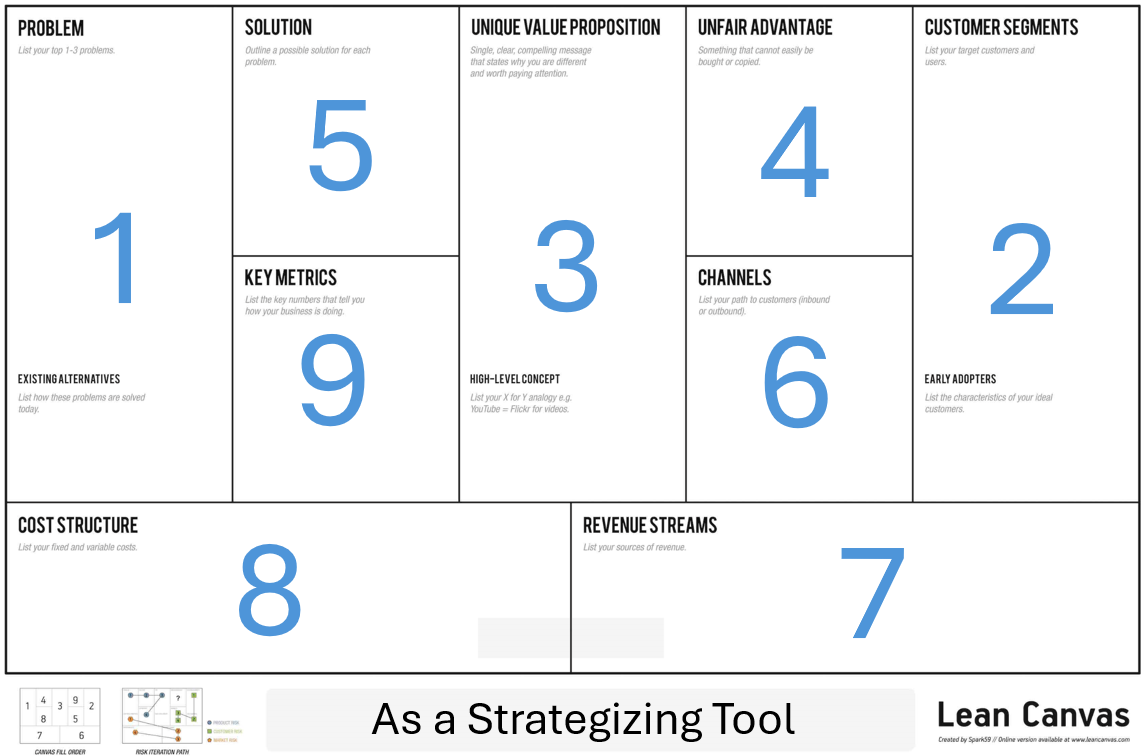
The Key Metrics box asks you to identify the handful of numbers that will help you gauge the health and progress of your business. These metrics should answer the critical question:
“Are we moving in the right direction?”
Key Metrics are not vanity metrics. They’re not about looking good on a dashboard. They’re about identifying the vital signs that will keep your business alive and thriving. Think of them as your business’s pulse, blood pressure, and oxygen levels.
Why Key Metrics Matter
Key Metrics don’t just reflect your business — they shape it. What you measure, you become. This is why it’s so important to choose metrics that align with your vision and values.
Here’s an example: Many companies measure sales performance by revenue alone. This leads to salespeople who close deals at any cost, sacrificing long-term customer trust. Instead, if you measure customer satisfaction or repeat sales, your sales team will focus on building relationships that last.
For startups, the stakes are even higher. Early-stage companies don’t have the luxury of wasted effort. Choosing the wrong metrics can lead to misaligned priorities, wasted resources, and a business that veers off course. The right metrics, on the other hand, keep you laser-focused on what truly matters.
What to Fill in the Key Metrics Box
Choosing the right Key Metrics requires two things: clarity of purpose and a strong connection to your business strategy. The best way to achieve this is to tie your metrics to your vision and mission.
Here’s an example for a hypothetical startup:
Vision: Simplify hospital accounting so administrators can focus on patient care.
Mission: Provide affordable, easy-to-use SaaS tools for small- and medium-sized hospitals.
From this, you can derive metrics like:
- Traction: Number of hospitals using the software.
- Impact: Average time saved per hospital.
- Retention: Percentage of customers renewing subscriptions.
- Efficiency: Customer Acquisition Cost (CAC).
But let’s say you’re still shaping your vision and mission. Here’s another approach: Use your Lean Canvas as a guide.
“We want to make $X revenue by selling through Y channels to Z customers, by providing W solution for their V problem.”
For our hospital accounting software startup, this might translate to:
“We want to make $100,000 ARR by selling through direct outreach to small- and medium-sized hospitals, by providing easy-to-use SaaS tools that simplify accounting processes.”
From this statement, you can derive Key Metrics like:
- Revenue Streams ($100,000 ARR): Monitor Monthly Recurring Revenue (MRR) to track progress toward your annual goal.
- Channels (direct outreach): Measure conversion rates from demos or sales calls.
- Customer Segments (small- and medium-sized hospitals): Track the percentage of target hospitals contacted and converted.
- Solution (SaaS tools): Monitor usage metrics like the number of logins or features used per hospital.
- Problem (simplify accounting processes): Measure time saved per hospital compared to manual processes.
This approach ensures that your Key Metrics are directly tied to your strategy, making them both actionable and meaningful.
How to Validate Your Key Metrics
Choosing metrics is one thing. Ensuring they’re the right ones is another. Here’s how to validate your Key Metrics:
1. Tie Metrics to Decisions
Ask yourself: What decision will this metric help me make? For example, if CAC exceeds the lifetime value of a customer, you may need to rethink your marketing or sales strategy.
2. Start with a Few Critical Metrics
Focus on 3–5 metrics that truly matter. For an early-stage SaaS startup, this might mean tracking MRR, demo conversion rates, and customer retention.
3. Test Metrics for Actionability
A good metric doesn’t just reflect performance — it tells you what to do next. If your demo conversion rate is low, it signals a need to refine your demo process.
4. Use Industry Benchmarks
Compare your metrics to industry standards to gauge performance. For example, if SaaS retention rates in healthcare average 85%, aim to meet or exceed that benchmark.
Common Pitfalls
The wrong metrics can be worse than no metrics at all. Here are some pitfalls to avoid:
1. Measuring Vanity Metrics
Numbers like website visits or social media followers might look impressive, but they rarely translate to meaningful business outcomes.
2. Copying Metrics from Others
Just because another startup tracks a certain metric doesn’t mean it’s right for you. For instance, measuring daily active users might make sense for a social media app but not for hospital accounting software.
3. Chasing Investor-Friendly Metrics
Metrics like growth rates or total users may attract investor interest, but they’re not always aligned with your business’s long-term health.
4. Overloading Your Dashboard
Too many metrics dilute focus. Stick to a handful that directly impact your strategy.
How the Key Metrics Box Affects Other Boxes
Key Metrics are interconnected with every other element of your Lean Canvas:
Revenue Streams: Metrics like MRR or Customer Lifetime Value help track the sustainability of your revenue model.
Channels: Conversion rates and CAC indicate whether your chosen channels are cost-effective.
Customer Segments: Retention rates and satisfaction scores reveal whether your product resonates with your target audience.
Solution: Usage metrics or Net Promoter Score (NPS) can highlight how well your solution addresses the problem.
Problem: Metrics like time saved or errors reduced validate whether your solution effectively addresses the customer’s pain point.
Final Thoughts
Key Metrics are more than numbers — they’re the lens through which you view and shape your business. Choosing the right metrics requires discipline, clarity, and a deep understanding of your goals.
For early-stage startups, the stakes are high. Every metric you choose to track (or ignore) has the potential to shape your strategy and behavior. That’s why it’s so important to ground your metrics in your vision, mission, and Lean Canvas.
Remember: You become what you measure. Choose wisely, and use the Key Metrics box to focus your energy, align your team, and drive meaningful progress. Now, go fill in that final box and let your numbers tell the right story.
About Me As an entrepreneur, consultant, and trainer, I’ve spent the last dozen years helping startup founders navigate the highs and lows of the investment landscape. My goal is to help entrepreneurs face these challenges while staying true to their purpose. Follow along for candid insights on entrepreneurship, investor dynamics, and creating value that lasts beyond the bottom line.
I am the founder of Funding Pitchcraft and the creator of Impress Every Investor, dedicated to helping entrepreneurs make their best impression at every stage.
👏🏼 if you 🩵 and share if you ❤️ the article. Or drop in a line for a conversation.
메타데이터
- post_id
- bea8c2a67233
- slug
- filling-in-the-lean-canvas-one-box-at-a-time-9-key-metrics-bea8c2a67233
- url
- https://medium.com/thebeatenroad/filling-in-the-lean-canvas-one-box-at-a-time-9-key-metrics-bea8c2a67233
- canonical_url
- https://medium.com/thebeatenroad/filling-in-the-lean-canvas-one-box-at-a-time-9-key-metrics-bea8c2a67233
- author_url
- https://medium.com/@raviwarrier
- status
- ok
- fetched_at
- 2026-07-23 00:52:37




