How I Ranked #3 on Google in 45 Days (As a Complete Beginner)
I was an intern. My boss handed me a task that terrified me: Make our new IT academy rank on Google.
How I Ranked #3 on Google in 45 Days (As a Complete Beginner)
I was an intern. My boss handed me a task that terrified me: Make our new IT academy rank on Google.
The problem? I’d just learned SEO the day before.
Six weeks later, we were ranked #3 for “Best IT Academy in Gandhinagar.”

This isn’t a humblebrag — it’s proof that SEO isn’t magic or luck. It’s systematic. And if you’re a founder trying to rank your local business, a marketer starting with SEO, or a hiring manager evaluating someone’s ability to execute under pressure — this story is for you.
Let me walk you through exactly what we did, why it worked, and how you can replicate it.
Part 1: The Situation (And Why It Mattered)
Pyx IT Academy was brand new. Fresh website, zero digital footprint, zero social presence. It taught programming, digital marketing, and business development to students.
The market? Gandhinagar’s academy space was packed. Dozens of competitors, many already ranking, many with bigger budgets.
The goal: When someone searched “Best IT Academy in Gandhinagar,” our academy’s name needed to show up at the top.
The problem: I had no idea what I was doing.
But my boss believed in learning by doing. So at the start of Month 1, I had: a website, a vague task, and one month to make a difference.
What I didn’t know then: That constraint — the rush, the pressure, the newness — actually forced me to focus on what actually matters instead of getting lost in SEO rabbit holes.
Part 2: The Playbook (What We Actually Did, Week by Week)
Week 1–2: Research Phase
I didn’t jump into tactics. I did my homework.
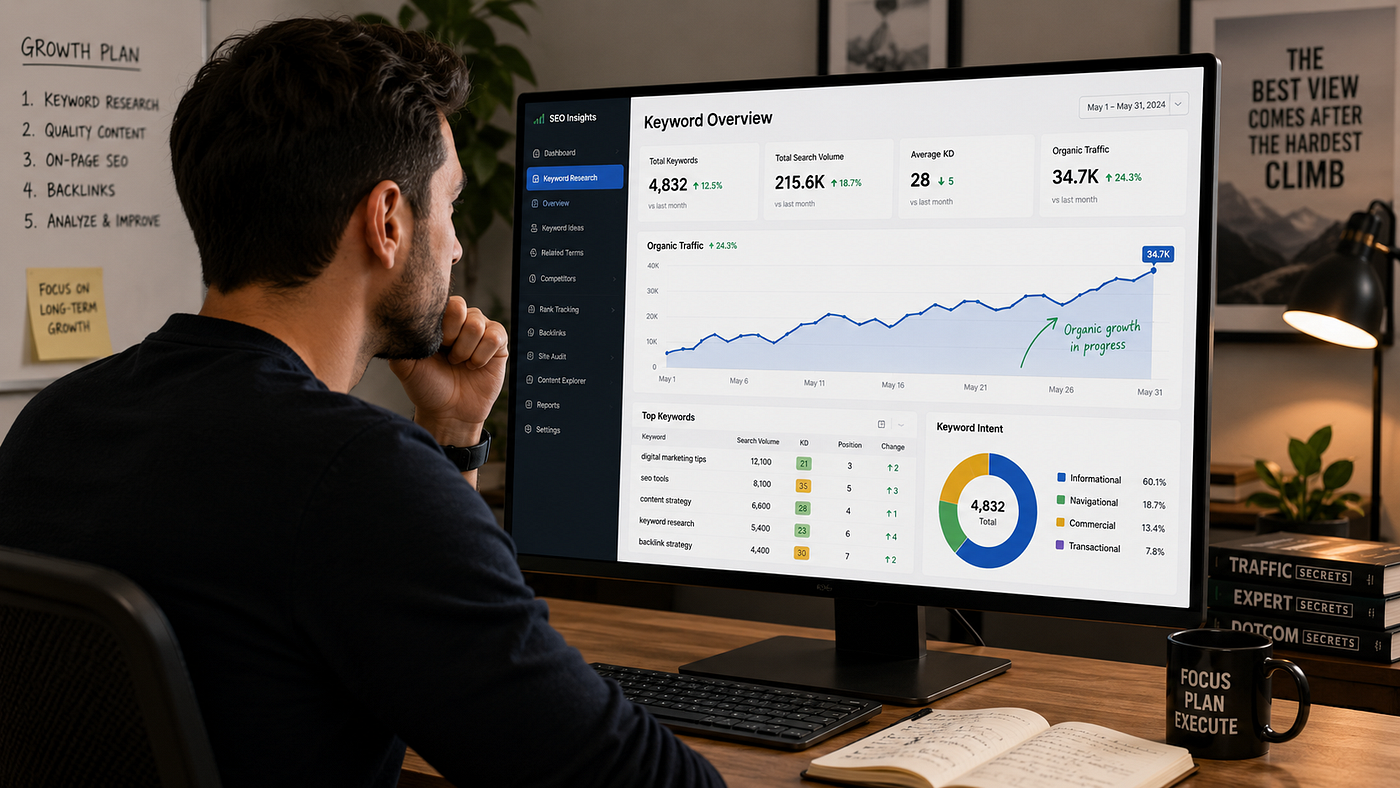
Keyword Research:
• Searched variations manually: “Best IT academy in Gandhinagar,” “digital marketing course in Gandhinagar,” “programming training in Gandhinagar,” “IT academy near me”
• Identified which keywords had search volume + low-to-medium competition
• Set “Best IT Academy in Gandhinagar” as the primary target
Competitor Analysis:
• Found the top-ranking academies in our space
• Studied their websites: structure, keywords, content, social accounts
• Checked their social presence — where they were active, how they engaged
• Took notes on what worked, what felt weak
This took roughly two weeks of grind, but it saved us from guessing later.
Week 3: Foundation (The unglamorous but Critical Work)
Here’s where most people fail — they skip this. We didn’t.
What we set up:
• Google Business Profile: Fully optimized with academy details, location, services, keywords
• Website Technical Foundation: Canonical tags, robots.txt file, meta tags, schema markup for local business
• Social Accounts: Instagram, Facebook, YouTube — all created, branded consistently, linked back
• Brand Identity: Colors, fonts, visual style locked in
Why this matters: Without this foundation, all your efforts afterward are just noise. Google needs a clean, trustworthy signal. We gave it to her.
Week 4: The Big Bet (Where the Real Magic Happened)
Alright, here’s where we actually moved the needle.
Alt Tags on Every Image:
This was the game changer. I added our primary keyword to the alt text of every relevant image on the website and social media. Not spammy, natural language:
• “Best IT Academy classroom in Gandhinagar”
• “Digital marketing course training in Gandhinagar”
• “Programming workshop for students”
Why? Google crawls images. It reads alt text. By systematically placing our primary keyword in alt tags, we signaled relevance across the entire property.
Strategic Keyword Placement:
• Homepage headers (H1, H2, H3 hierarchy)
• Natural placements in body copy (not forced)
• Image captions
• Google Business Profile (services, descriptions, posts)
• Social media bios and captions
Content Creation (In Parallel):
• Instagram & YouTube became our content hubs
• Consistent posting (Academy announcements, student success stories, course previews)
• Every post tied back to our keywords naturally
• High-quality, branded visuals (thanks to our locked-in brand identity)
The Catalyst: Webinar
My boss and I organized a webinar: “The Future of Digital Marketing & Career Opportunities.” We invited students and industry contacts.
This did three things:
• Created fresh, relevant content
• Generated engagement (comments, shares, questions)
• Built authority signals (people listening, sharing, engaging)
Google loves authority signals. One webinar won’t rank you, but it’s one more signal pointing to legitimacy.
Weeks 4–6: The Ongoing Work
• Reviews: Encouraged students and parents to leave Google reviews. Responded to every single one (positive and constructive).
• Content Iteration: Analyzed what posts got engagement. Created more of that.
• Monitoring: Checked Google Search Console and Analytics weekly to see what keywords were appearing, which pages were getting clicks.
This phase wasn’t sexy. It was maintenance. But it was essential.
Part 3: The Results
Primary Keyword: “Best IT Academy in Gandhinagar” → Ranked #3
Traffic Lift: Moving from lower positions to Top 3 in organic search typically generates 50–100%+ increase in visibility and inquiries (based on typical local SEO performance + student inquiries received).
Secondary Impact:
• Multiple keywords started ranking (long-tail variations like “IT academy near me,” “programming course,” etc.)
• Google Business Profile got consistent views
• Student inquiries increased noticeably
• Social accounts became active, engaged community hubs
The Personal Win: My boss noticed. Within weeks, I got promoted to handle the main IT company’s marketing account and started learning Business Development. That project opened doors.
But here’s what mattered more than the promotion: I realized SEO wasn’t magic. It was a process.
Part 4: The Extractable Framework (Your Playbook)
Don’t just take my word for it. Here’s the framework we used, broken down so you can replicate it:
The Local SEO Checklist
Phase 1: Research (Week 1–2)
• Identify 3–5 primary keywords (include location + service)
• Research secondary keywords (long-tail variations)
• Analyze top 5 competitors — what are they ranking for? How?
• Audit their website structure, content strategy, social presence
Phase 2: Foundation (Week 3)
• Optimize Google Business Profile (complete all fields, add services, local info)
• Set up canonical tags on all pages
• Create/update robots.txt
• Add proper meta tags (title, description) to every page
• Implement schema markup for local business
• Lock in brand identity (colors, fonts, tone)
• Create social accounts & link back to website
Phase 3: Optimization (Week 4)
• Add primary keywords to alt text on every relevant image (natural language, not forced)
• Place keywords strategically in page headers (H1, H2, H3 hierarchy)
• Create 5–10 pieces of cornerstone content addressing your primary keywords
• Plan and execute 1–2 authority-building pieces (webinars, guides, case studies)
• Design consistent, branded social content
Phase 4: Ongoing (Week 5+)
• Encourage and respond to reviews (Google, platforms relevant to your industry)
• Publish fresh content consistently (1–2x per week minimum)
• Monitor Google Search Console and Analytics (which keywords are working? Which pages?)
• Iterate based on data (double down on what converts)
Part 5: What Surprised Me (And What I’d Do Differently)
The Biggest Surprise:
I expected SEO to be complicated. I thought I’d need advanced tools, complicated strategies, years of experience. But it wasn’t. It was consistency + fundamentals. I had just learned these tactics the month before. I wasn’t an expert. I wasn’t using sophisticated software. I was placing keywords strategically, creating content consistently, and tracking basic metrics. And it worked.
That was the surprise: Systems beat expertise in the early stages. A beginner following a clear process beats an expert overthinking it.
What I’d Do Differently Now:
-
Start Google Search Console earlier. Track keyword impressions and click-through rates from day one. I relied too much on intuition instead of data.
-
Build links intentionally. We didn’t have a backlink strategy. In a less competitive space, it didn’t matter. But in 2024, even local SEO benefits from 3–5 high-quality backlinks.
-
Content gap analysis. Spend more time understanding what questions students and parents are actually asking. Build content answering those questions specifically.
-
Technical SEO audit first. Check page speed, mobile responsiveness, crawl issues — before you optimize keywords.
The Takeaway
SEO doesn’t require genius. It requires clarity, consistency, and a system.
If you’re a founder tired of paying agencies, a marketer learning SEO, or someone evaluating talent for your team — remember the Pyx IT Academy story. A beginner, under pressure, with a system, outperformed complexity.
That’s the model.
Want to go deeper?
I’m on LinkedIn sharing marketing wins and lessons. Follow along for case studies, frameworks, and the occasional rant about why SEO fundamentals still beat hacks in 2026.
메타데이터
- post_id
- beacd7cc6bef
- slug
- how-i-ranked-3-on-google-in-45-days-as-a-complete-beginner-beacd7cc6bef
- url
- https://medium.com/@nidhi-patel-marketer/how-i-ranked-3-on-google-in-45-days-as-a-complete-beginner-beacd7cc6bef
- canonical_url
- https://medium.com/@nidhi-patel-marketer/how-i-ranked-3-on-google-in-45-days-as-a-complete-beginner-beacd7cc6bef
- author_url
- https://medium.com/@nidhi-patel-marketer
- status
- ok
- fetched_at
- 2026-07-13 14:34:01